Abies Nordmanniana Complete Guide: Botany, Care, Uses & Safety
 Flora Medical GlobalPublished: 4/10/2026Updated: 6/20/202618 min read
Editorial Disclaimer: This article is for informational and educational purposes only. It is not a substitute for professional medical advice, diagnosis, or treatment. Always consult a qualified healthcare provider or certified herbalist before using any plant for medicinal purposes, especially if you are pregnant, nursing, taking medication, or have a medical condition.
01What is Abies Nordmanniana?
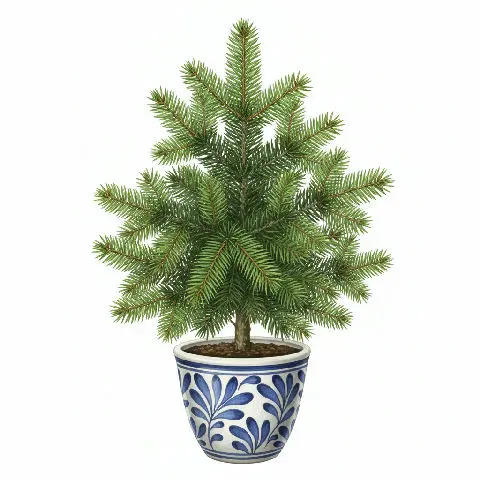
Abies nordmanniana, commonly known as the Nordmann Fir or Caucasian Fir, is a majestic evergreen coniferous tree belonging to the Pinaceae family, a group renowned for its resinous trees and shrubs.
Most thin plant articles flatten everything into a summary. This guide does the opposite by following Abies Nordmanniana through identification, care, handling, and the questions that real readers actually ask.
The linked plant page remains the main internal reference point for this article, but the goal here is to turn that raw data into a readable, structured, and genuinely useful guide.
- Majestic evergreen conifer, native to Caucasus region.
- Prized ornamental and Christmas tree for its dense, dark green foliage.
- Essential oil used traditionally for respiratory support and aromatherapy.
- Rich in monoterpenes like alpha-pinene and bornyl acetate.
- Generally considered non-toxic externally, but essential oil requires dilution.
- Ecological importance in montane forest ecosystems.
This guide is designed to help the reader move from scattered facts to practical understanding. Instead of relying on a thin summary, it pulls together the identity, uses, care profile, safety notes, and evidence context around Abies Nordmanniana so the article works as a real reference rather than a keyword page.
02Botanical Identity of Abies Nordmanniana
Abies Nordmanniana should be anchored to the correct taxonomic identity before any discussion of care, use, or safety begins.
| Common name | Abies Nordmanniana |
|---|---|
| Scientific name | Abies nordmannianaW |
| Family | Pinaceae |
| Order | Pinales |
| Genus | Abies |
| Species epithet | nordmanniana |
| Author citation | (Stev.) Spach |
| Synonyms | Abies pectinata var. nordmanniana, Abies nordmanniana var. equi-trojani |
| Common names | নর্ডমান ফার, Nordmann Fir |
| Origin | Caucasus (Georgia, Russia, Turkey, Azerbaijan, Armenia) |
| Life cycle | Perennial |
| Growth habit | Tree |
Using the accepted scientific name Abies nordmanniana helps readers avoid confusion caused by old synonyms, loose common names, or inconsistent plant labels.
Family and order placement also matter because they explain recurring structural traits, likely relatives, and the kinds of mistakes readers often make when they rely on appearance alone.
Correct naming is not a small detail. A plant can collect multiple common names, outdated synonyms, and marketing labels over time, so using Abies nordmanniana consistently reduces the risk of confusion, bad care advice, and even safety mistakes.
03Identifying Abies Nordmanniana
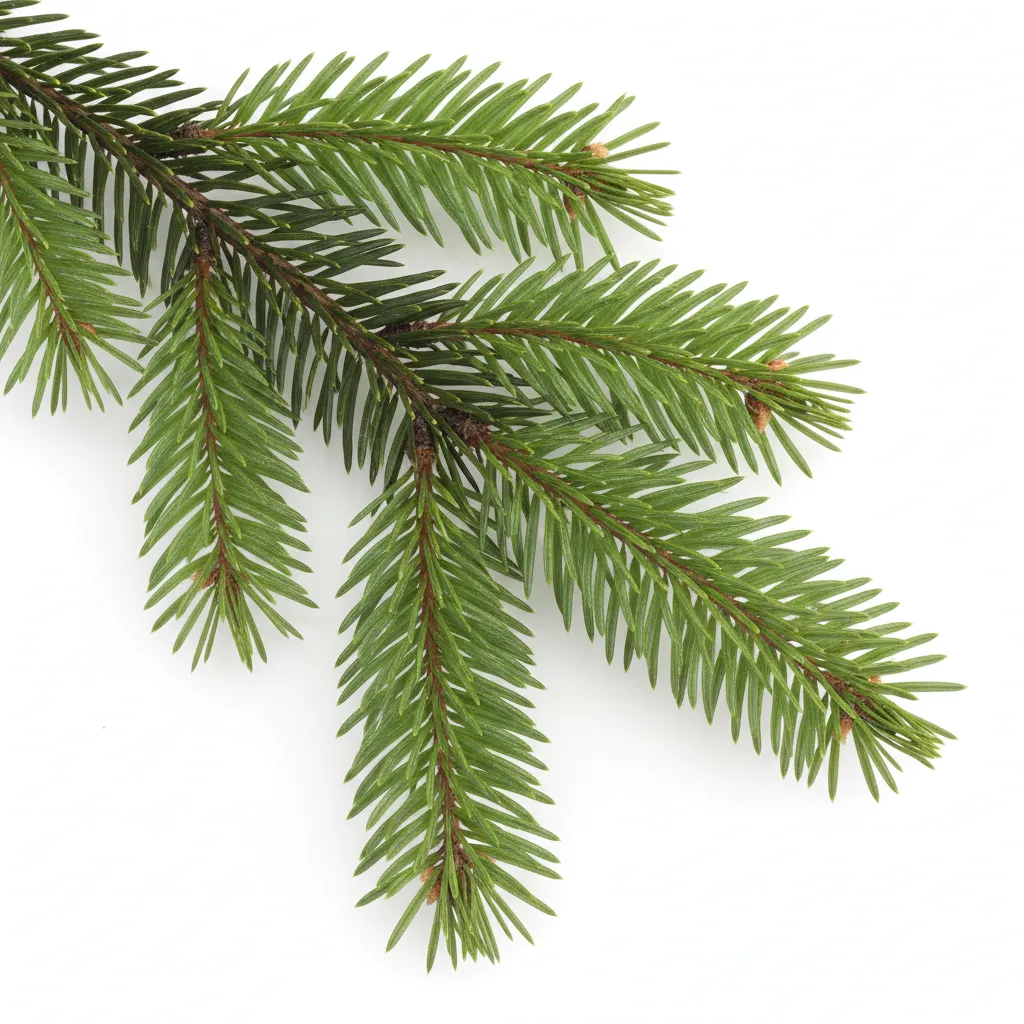
A practical reading of the plant starts with visible structure:
- Leaf: Needles are flat, soft to touch, 1.8-3.5 cm long, 2-3 mm wide, grooved above, dark glossy green on top, with two prominent white stomatal bands.
- Stem: Young stems are green, often covered with fine reddish-brown hairs, becoming smooth and gray-brown with age. They are straight and robust.
- Root: A deep taproot is formed when young, developing into a widespread, moderately deep, fibrous lateral root system, providing good anchorage in.
- Flower: Abies nordmanniana is monoecious, bearing separate male and female cones on the same tree. Male (pollen) cones are oblong-ovoid, yellowish-green.
- Fruit: The 'fruit' is technically a seed cone (strobilus). Cones are erect, cylindrical, 10-18 cm long and 4-7 cm broad, green when young, ripening to.
- Seed: Seeds are winged (often referred to as samaras), 7-10 mm long, with a broad, flat wing about 1.5-2 cm long, aiding wind dispersal. They are shed in.
Microscopic or internal identification notes deepen the picture, especially for processed material: Trichomes are generally absent on the needles of Abies nordmanniana, contributing to their smooth texture. Anomocytic stomata, characterized by guard cells surrounded by ordinary epidermal cells, are present in longitudinal rows. Powdered needles reveal fragments of epidermal tissue with sunken stomata, tracheids with bordered pits, resin canal fragments, and crystal.
In overall habit, the plant is described as Tree with a mature height around 20-30 m and spread of variable width depending on site.
04Abies Nordmanniana: Habitat & Distribution
The native or historically recorded center of distribution for Abies Nordmanniana is Caucasus (Georgia, Russia, Turkey, Azerbaijan, Armenia). That origin is more than background trivia; it explains how the plant responds to heat, moisture, shade, and seasonal change.
The plant is associated with the following countries or range markers: Georgia, Russian Caucasus, Turkey.
Environmental notes in the live record add more context: Natural habitat: Montane forests of the Caucasus Mountains and northern Turkey, specifically from sea level up to 2100 meters. Climate zones: USDA Hardiness Zones 4-7. Altitude range: 0-2100 meters. Annual rainfall needs: Prefers areas with 700-1500 mm of annual rainfall, ideally well-distributed throughout the year, thriving in cool, humid conditions.
In cultivation terms, the main ecological clues are: Full Sun or Partial Shade; Weekly (for established trees, more for young trees or dry periods); Well-drained loam, slightly acidic to neutral (pH 5.0-7.0); 4-7; Perennial; Tree.
Physiology data reinforce the habitat story: Exhibits good cold hardiness and tolerates heavy clay soils; susceptible to drought stress in arid conditions and intolerant of atmospheric pollution. C3 photosynthesis, typical for temperate woody plants. Moderate to high transpiration rates, requiring consistent soil moisture; adaptations like sunken stomata help conserve water in drier periods.
05Abies Nordmanniana: Traditional Importance
Abies nordmanniana holds strong cultural significance primarily as the iconic Christmas tree in many Western countries. Its excellent needle retention, pleasant aroma, and classic conical shape have made it the most popular choice for festive decorations during the holiday season, symbolizing cheer, family gatherings, and tradition. While it doesn't hold specific historical roles within Ayurvedic, TCM, or Unani.
Traditional context matters, but it should always be separated from modern certainty. Historical use can guide questions, yet it does not automatically prove present-day clinical effectiveness.
Cultural context gives the article depth that pure care instructions cannot provide. Plants like Abies Nordmanniana are often remembered through naming traditions, household practice, healing systems, foodways, ornamental use, ritual value, or local ecological knowledge.
At the same time, cultural value should be handled responsibly. Traditional respect for a plant does not automatically prove every modern claim, and a modern study does not erase the meaning the plant has held in communities over time. Both sides belong in a careful guide.
06Medicinal Properties of Abies Nordmanniana
The main benefit themes associated with the plant include: Abies nordmanniana, commonly known as the Nordmann fir, while primarily cultivated for ornamental and Christmas tree purposes, possesses a rich history of.
The evidence matrix gives a more careful picture of those claims: Nordmann Fir essential oil is used in aromatherapy for relaxation and respiratory support. Ethnopharmacological observations, consumer reports. Traditional Use / Anecdotal. While specific clinical trials on A. nordmanniana are limited, the general properties of Abies essential oils support these uses. The essential oil exhibits antiseptic properties suitable for minor skin applications. Chemical analysis, antimicrobial assays of Abies species essential oils. In vitro / Mechanistic. Terpenes common in fir oils, such as alpha-pinene, have demonstrated antimicrobial activity against various bacteria and fungi in laboratory settings. Topical application of fir-derived products can alleviate muscle and joint discomfort. Observational studies, traditional remedies, some topical analgesic formulations. Traditional Use / Limited Clinical. The warming and circulatory stimulating effects of essential oils like those from fir are often applied topically for pain relief, though specific A. nordmanniana data is scarce. Nordmann Fir needles, when infused, can provide a soothing beverage for respiratory ailments. Historical records, ethnobotanical surveys of conifer use. Traditional Use / Folk Practice. Infusions from various fir species have been traditionally consumed for their expectorant and decongestant qualities, likely due to volatile compounds.
The stored evidence confidence for this profile is traditional. That should shape how strongly any benefit statement is interpreted.
For non-medicinal or mostly ornamental contexts, the safest approach is to keep the claims modest. A plant may still be valuable ecologically, visually, or culturally without being promoted as a treatment.
- Abies nordmanniana, commonly known as the Nordmann fir, while primarily cultivated for ornamental and Christmas tree purposes, possesses a rich history of.
07Abies Nordmanniana: Chemical Constituents
The broader constituent profile includes The essential oil of Abies nordmanniana is primarily composed of monoterpenes and sesquiterpenes. Key constituents.
The detailed phytochemistry file adds these markers: alpha-Pinene, Monoterpene, Needles, bark, resin, 20-40%of essential oil; Bornyl Acetate, Monoterpene ester, Needles, resin, 15-30%of essential oil; Limonene, Monoterpene, Needles, resin, 5-15%of essential oil; Camphene, Monoterpene, Needles, resin, 5-10%of essential oil; Abietic Acid, Diterpene resin acid, Resin, Variableof resin; Gallic Acid, Phenolic acid, Bark, needles, Tracemg/g dry weight; Catechin, Flavonoid, Bark, needles, Tracemg/g dry weight.
Compound profiles also shift with plant part, age, season, processing, and storage. The chemistry of a fresh leaf, dried root, or concentrated extract should never be treated as automatically identical.
Phytochemistry matters because the plant's practical effects are shaped by real compounds, not by reputation alone. Even so, a compound list should be understood as part of a larger picture that includes concentration, plant part, harvest timing, processing, and storage conditions.
08How to Use Abies Nordmanniana
Recorded preparation and use methods include Essential Oil Diffusion — Add a few drops of Nordmann Fir essential oil to an ultrasonic diffuser to purify air, uplift mood, and support respiratory health. Topical Application (Diluted) — Blend Nordmann Fir essential oil with a carrier oil (e.g., jojoba, almond) at 1-2% dilution for massage on sore muscles, joints, or chest rubs for. Steam Inhalation — Add 2-3 drops of essential oil to a bowl of hot water, cover head with a towel, and inhale the steam for respiratory relief (exercise caution with hot water). Herbal Infusion (Needles) — Steep fresh or dried needles in hot water to create a soothing tea, traditionally used for mild respiratory discomfort (ensure proper plant. Resin Salve — Process the tree's resin into a topical salve with beeswax and carrier oils for application to minor cuts, splinters, or skin irritations for its antiseptic. Bath Soak — Add 5-10 drops of essential oil, diluted in a dispersant like Epsom salts or a carrier oil, to a warm bath for a relaxing and invigorating experience. Poultice (Needles) — Crush fresh needles and apply directly as a poultice to soothe localized inflammation or draw out splinters, a traditional folk remedy. Room Spray — Mix essential oil with distilled water and a small amount of witch hazel or alcohol in a spray bottle to freshen rooms and imbue a forest-like aroma.
Edibility and processing notes matter here as well: Not edible.
For garden-focused readers, this section often overlaps with practical garden use: cut flowers, pollinator support, habitat value, decorative placement, culinary handling, or any carefully documented traditional application.
- Identify the exact species and plant part first.
- Match the preparation to the intended use.
- Check safety, interactions, and processing details before routine use or large-scale handling.
09Is Abies Nordmanniana Safe? Precautions & Cautions
The first safety note is direct: The plant itself is generally considered non-toxic to humans and pets, though ingestion of large quantities of needles or bark could cause mild gastrointestinal upset due to fiber content or resins. The essential oil is the primary.
Specific warnings recorded for this plant include Abies nordmanniana is generally considered safe for external use in diluted forms, such as in aromatherapy or topical preparations for minor skin irritations. When used in therapeutic concentrations, particularly as essential oil, Abies nordmanniana can cause skin irritation or allergic reactions in sensitive.
Quality-control notes add another warning: High risk of adulteration or substitution with other fir species essential oils, or synthetic terpenes; careful sourcing is crucial.
No plant should be described as universally safe. Identity, dose, plant part, preparation style, age, pregnancy status, medication use, allergies, and contamination risk all change the answer.
Safety sections exist to slow the reader down in a good way. Even a plant with a long history of use can become problematic when identity is wrong, preparation is inconsistent, contamination is present, or personal factors like age, pregnancy, allergies, or medication use are ignored.
10Growing Abies Nordmanniana Successfully
The cultivation record emphasizes these practical steps:
- Site Selection — Prefers cool, moist climates with well-drained, slightly acidic to neutral soils; can tolerate heavy clay if drainage is adequate.
- Light Requirements — Thrives in full sun to partial shade, with young trees benefiting from some shade protection, especially in hotter climates.
- Watering — Requires consistent moisture, particularly during dry periods and in its establishment phase; avoid waterlogging.
- Soil Preparation — Amend heavy soils with organic matter to improve drainage and aeration; ensure a pH between 5.0 and 7.0 for optimal growth.
- Propagation — Primarily propagated by seed, which benefits from stratification for improved germination.
The broader growth environment is described like this: Natural habitat: Montane forests of the Caucasus Mountains and northern Turkey, specifically from sea level up to 2100 meters. Climate zones: USDA Hardiness Zones 4-7. Altitude range: 0-2100 meters. Annual rainfall needs: Prefers areas with 700-1500 mm of annual rainfall, ideally well-distributed throughout the year, thriving in cool, humid conditions.
Planning becomes easier when these traits are kept in view: Tree; 20-30 m; Moderate; Intermediate.
In practice, healthy cultivation comes from systems thinking rather than one-off tricks. Site choice, drainage, timing, spacing, pruning, feeding, and observation all reinforce one another.
11Caring for Abies Nordmanniana: Light, Water & Soil
The most useful care snapshot is this: Light: Full Sun or Partial Shade; Water: Weekly (for established trees, more for young trees or dry periods); Soil: Well-drained loam, slightly acidic to neutral (pH 5.0-7.0); Humidity: Medium to High; Temperature: -25 to 25°C; USDA zone: 4-7.
Outdoors, light, water, and soil must be read together. The same watering schedule can be too much in dense clay and too little in a porous sandy bed.
| Light | Full Sun or Partial Shade |
|---|---|
| Water | Weekly (for established trees, more for young trees or dry periods) |
| Soil | Well-drained loam, slightly acidic to neutral (pH 5.0-7.0) |
| Humidity | Medium to High |
| Temperature | -25 to 25°C |
| USDA zone | 4-7 |
Light, water, and soil should never be treated as separate checkboxes. A plant in stronger light often dries faster, soil texture changes how quickly water moves, and temperature plus humidity influence how stress appears in leaves and roots.
For Abies Nordmanniana, the safest care approach is to treat Full Sun or Partial Shade, Weekly (for established trees, more for young trees or dry periods), and Well-drained loam, slightly acidic to neutral (pH 5.0-7.0) as linked decisions rather than isolated tips. If one condition shifts, the other two usually need to be reconsidered as well.
12How to Propagate Abies Nordmanniana
Documented propagation routes include Seeds: Collect mature cones in autumn, dry them to release seeds. Stratify seeds cold (4°C) for 30-90 days before sowing in spring. Cuttings: Semi-hardwood.
Propagation works best when the parent stock is healthy, correctly identified, and handled in the right season. That sounds obvious, but it is exactly where many failures begin.
- Seeds: Collect mature cones in autumn, dry them to release seeds. Stratify seeds cold (4°C) for 30-90 days before sowing in spring. Cuttings: Semi-hardwood.
Propagation works best when the reader matches method to biology. Some plants respond readily to cuttings, some to division, some to seed, and others require more patience or more exact seasonal timing.
A successful propagation guide therefore starts with healthy parent material and realistic expectations. Weak stock, rushed handling, and poor aftercare can make even a technically correct method fail.
13Pests, Diseases & Disorders
The recorded problem list includes Pests: Aphids (e.g., Balsam woolly aphid, although less common on A. nordmanniana than other firs), spider mites, fir. maintain tree health to deter bark beetles. Fungal diseases: Root rot (in waterlogged soils), needle cast diseases. remove affected needles/branches for needle cast/cankers; ensure good air circulation. Nutrient deficiencies: Yellowing needles can indicate nitrogen or iron deficiency. for iron deficiency, chelated iron soil drench may be needed, or adjust soil pH if too alkaline. Common problems also.
Garden problems are often ecological rather than mysterious. Crowding, poor airflow, overwatering, wrong siting, and delayed observation create the conditions that pests and disease exploit.
The smartest response sequence is observation first, environmental correction second, and treatment only after the real pattern is clear.
- Pests: Aphids (e.g., Balsam woolly aphid, although less common on A. nordmanniana than other firs), spider mites, fir.
- Maintain tree health to deter bark beetles. Fungal diseases: Root rot (in waterlogged soils), needle cast diseases.
- Remove affected needles/branches for needle cast/cankers
- Ensure good air circulation. Nutrient deficiencies: Yellowing needles can indicate nitrogen or iron deficiency.
- For iron deficiency, chelated iron soil drench may be needed, or adjust soil pH if too alkaline. Common problems also.
14How to Harvest Abies Nordmanniana
Storage guidance from the quality-control record reads as follows: Essential oil should be stored in cool, dark, airtight containers to prevent oxidation and maintain chemical integrity for up to 2-3 years.
For a garden-focused plant, harvesting may mean seed collection, cut stems, flowers, foliage, or propagation material rather than edible or medicinal processing.
Whatever the purpose, the rule is the same: harvest clean material, label it clearly, and store it in a way that preserves identity and condition.
Harvest and storage determine whether a plant's quality is preserved after it leaves the bed, pot, field, or wild source. Clean timing, correct plant part selection, and careful drying or handling all matter more than many readers expect.
For Abies Nordmanniana, this means the reader should think beyond collection. Material that is poorly labeled, overheated, damp in storage, or mixed with the wrong part of the plant can quickly lose value or create confusion later.
15Designing a Garden with Abies Nordmanniana
Useful companions or placement partners include Rhododendrons; Hostas; Ferns; Azaleas; Blueberries.
In a garden border or planting plan, Abies Nordmanniana is easiest to use well when exposure, soil rhythm, and seasonal sequence are matched rather than improvised.
- Rhododendrons
- Hostas
- Ferns
- Azaleas
- Blueberries
Companion planting and design are not only aesthetic decisions. They affect airflow, root competition, moisture sharing, harvest access, visibility, and the general logic of the planting scheme.
With Abies Nordmanniana, good placement means thinking about mature size, maintenance rhythm, and how neighboring plants change the feel and function of the space. A plant can be healthy on its own and still be poorly placed within the broader composition.
That is why the best design advice combines biology with usability. The planting should look coherent, but it should also make watering, pruning, harvest, and pest observation easier rather than harder.
16Research on Abies Nordmanniana
The evidence matrix points to several recurring themes: Nordmann Fir essential oil is used in aromatherapy for relaxation and respiratory support. Ethnopharmacological observations, consumer reports. Traditional Use / Anecdotal. While specific clinical trials on A. nordmanniana are limited, the general properties of Abies essential oils support these uses. The essential oil exhibits antiseptic properties suitable for minor skin applications. Chemical analysis, antimicrobial assays of Abies species essential oils. In vitro / Mechanistic. Terpenes common in fir oils, such as alpha-pinene, have demonstrated antimicrobial activity against various bacteria and fungi in laboratory settings. Topical application of fir-derived products can alleviate muscle and joint discomfort. Observational studies, traditional remedies, some topical analgesic formulations. Traditional Use / Limited Clinical. The warming and circulatory stimulating effects of essential oils like those from fir are often applied topically for pain relief, though specific A. nordmanniana data is scarce. Nordmann Fir needles, when infused, can provide a soothing beverage for respiratory ailments. Historical records, ethnobotanical surveys of conifer use. Traditional Use / Folk Practice. Infusions from various fir species have been traditionally consumed for their expectorant and decongestant qualities, likely due to volatile compounds.
The compiled source count behind the live profile is 8. That does not guarantee certainty, but it does suggest the record has been cross-checked beyond a single note.
Analytical testing notes also strengthen the evidence base: Gas Chromatography-Mass Spectrometry (GC-MS) for compositional analysis, refractive index, specific gravity, and optical rotation for essential oil purity.
A careful evidence section should say what is known, what is plausible, and what remains uncertain. Readers are better served by clear limits than by exaggerated confidence.
Evidence note: this section blends the live plant record, local ethnobotanical activity data, chemistry records, and the linked Flora Medical Global plant profile for Abies Nordmanniana.
17Buying Abies Nordmanniana: Expert Tips
Quality markers worth checking include Bornyl acetate, alpha-pinene, and limonene are key marker compounds for quality assessment of Abies nordmanniana essential oil.
Adulteration and substitution risk should not be ignored: High risk of adulteration or substitution with other fir species essential oils, or synthetic terpenes; careful sourcing is crucial.
When buying Abies Nordmanniana, start with verified botanical identity. The label, scientific name, and the source page should agree before you judge price, size, or claimed benefits.
For living plants, inspect roots, stem firmness, foliage health, and early pest signs. For dried or processed material, look for batch clarity, clean aroma, absence of mold, and any sign that the product has been over-processed to disguise poor quality.
Buying advice should begin with identity. The label, scientific name, visible condition, and seller credibility should agree before price or convenience becomes the deciding factor.
18Frequently Asked Questions
What is Abies Nordmanniana best known for?
Abies nordmanniana, commonly known as the Nordmann Fir or Caucasian Fir, is a majestic evergreen coniferous tree belonging to the Pinaceae family, a group renowned for its resinous trees and shrubs.
Is Abies Nordmanniana beginner-friendly?
That depends on the growing environment and the intended use. Some plants are easy to grow but not simple to use medicinally, while others are the opposite.
How much light does Abies Nordmanniana need?
Full Sun or Partial Shade
How often should Abies Nordmanniana be watered?
Weekly (for established trees, more for young trees or dry periods)
Can Abies Nordmanniana be propagated at home?
Yes, but the best method depends on whether the species responds best to seed, cuttings, division, offsets, or other propagation routes.
Does Abies Nordmanniana have safety concerns?
The plant itself is generally considered non-toxic to humans and pets, though ingestion of large quantities of needles or bark could cause mild gastrointestinal upset due to fiber content or resins. The essential oil is the primary.
What is the biggest mistake people make with Abies Nordmanniana?
The most common mistake is applying generic advice instead of matching the plant to its real environment, identity, and limits.
Where can I verify more information about Abies Nordmanniana?
Start with the Flora Medical Global plant profile: https://www.floramedicalglobal.com/garden-plants/abies-nordmanniana
Why do sources sometimes disagree about Abies Nordmanniana?
Different references may use different synonyms, plant parts, cultivation conditions, or evidence standards. That is why taxonomy and source quality both matter.
19Abies Nordmanniana: References & Further Reading
Authoritative sources and related guides:
- Wikipedia — background reference
- PubMed — peer-reviewed studies
- Kew POWO — botanical reference
- NCBI PMC — open-access research
- WHO — global health authority
Related on Flora Medical Global
Reviewed by the Flora Medical Global Botanical Review Panel
Multi-disciplinary editorial group · Botany · Ethnobotany · Herbal-medicine literature
Who reviewed this: This page was checked by the Flora Medical Global Botanical Review Panel — an in-house editorial group of botany graduates, ethnobotany researchers, and horticulture practitioners who collectively maintain our 7,000+ plant encyclopedia. Meet the team.
Our 4-step verification process
1. Taxonomic verification
Scientific names and synonyms cross-checked against Kew POWO, World Flora Online, and The Plant List.
2. Phytochemical & medicinal cross-reference
Active compounds, traditional uses, and reported activities are cross-referenced with PubMed, USDA Dr. Duke's database, and peer-reviewed ethnobotanical literature.
3. Conservation & distribution check
Distribution, ecology, and conservation status confirmed against GBIF occurrence records and the IUCN Red List.
4. Editorial & safety review
Every entry passes an editorial pass for clarity, originality, and safety notices (toxicity, contraindications, dosage caveats) before publication.
Last reviewed:
Important medical disclaimer: This content is for educational and research purposes only. It is not medical advice and is not a substitute for consultation with a licensed healthcare provider. Do not use any herb to self-treat a medical condition without professional guidance.
Explore Our Platforms
 InfiniCore DataWorks
 Nex-Automata
Comments (0)
No comments yet. Be the first!