
Overview & Introduction
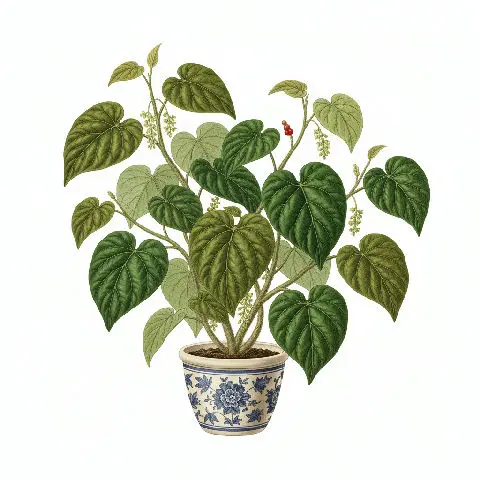
Abuta, known scientifically as Abuta grandifolia, is a robust and striking woody liana belonging to the Menispermaceae family, renowned for its impressive climbing capabilities.
The interesting part about Abuta is that the plant can be discussed from several angles at once: visible form, environmental behavior, traditional context, and modern quality control.
Use this guide as a practical reference, then compare it with the detailed plant profile at https://www.floramedicalglobal.com/plant/abuta whenever you want to confirm the source page itself.
- Abuta grandifolia is a woody liana native to the Amazon rainforest, belonging to the Menispermaceae family.
- Traditionally used by indigenous communities for pain, inflammation, fever, and as a diuretic.
- Rich in isoquinoline alkaloids and flavonoids, which contribute to its potential medicinal actions.
- May act as a muscle relaxant and possess diuretic properties, requiring caution regarding potassium levels.
- Limited scientific research supports many traditional uses
- Further clinical studies are needed.
- Avoid during pregnancy and breastfeeding, and consult a healthcare professional due to potential drug interactions, especially with.
Botanical Profile & Taxonomy
Abuta should be anchored to the correct taxonomic identity before any discussion of care, use, or safety begins.
| Common name | Abuta |
|---|---|
| Scientific name | Abuta grandifolia |
| Family | Menispermaceae |
| Order | Ranunculales |
| Genus | Abuta |
| Species epithet | grandifolia |
| Author citation | Mart. |
| Basionym | Cocculus grandifolius Mart. |
| Synonyms | Abuta concolor Benth.(https://www.gbif.org/species/3830630)Abuta concolor. |
| Common names | এবুটা, Abuta |
| Local names | Bagawe, Bagamowe, Bagabab, Bagabey, Dayawi uo, Cajón yura, Buuyutoci, Kau panka, Acahuesë, Bagamoe, Bagamo gome, Bagamo |
| Origin | South America, primarily the Amazon basin |
| Life cycle | Perennial |
| Growth habit | Vine |
Using the accepted scientific name Abuta grandifolia helps readers avoid confusion caused by old synonyms, loose common names, or inconsistent plant labels.
Family and order placement also matter because they explain recurring structural traits, likely relatives, and the kinds of mistakes readers often make when they rely on appearance alone.
Physical Description & Morphology

A practical reading of the plant starts with visible structure: Leaf: Large, simple, entire, ovate to elliptic, leathery texture, prominent venation, typically dark green. Stem: Woody, robust, twining, often reaches significant lengths, bark can be smooth or slightly rough. Root: Fibrous and extensive, deeply anchored, sometimes thickened. Flower: Small, inconspicuous, often greenish-yellow or cream-colored, arranged in axillary inflorescences. Fruit: Drupe, typically ovoid to subglobose, turning red or orange when ripe, containing a single seed. Seed: Kidney-shaped or crescent-shaped, characteristic of Menispermaceae family.
Microscopic or internal identification notes deepen the picture, especially for processed material: Both unicellular and multicellular, non-glandular trichomes are present on the epidermal surfaces of leaves and young stems, contributing to their. Anomocytic stomata are predominantly observed on the abaxial (lower) surface of the leaves, facilitating gas exchange. Microscopic examination of powdered material reveals fragments of lignified vessels, parenchyma cells, starch grains, and various forms of calcium.
In overall habit, the plant is described as Vine with a mature height around 5-10 m and spread of Typically 0.2-5 m depending on species.
Natural Habitat & Distribution
The native or historically recorded center of distribution for Abuta is South America, primarily the Amazon basin. That origin is more than background trivia; it explains how the plant responds to heat, moisture, shade, and seasonal change.
The plant is associated with the following countries or range markers: Brazil, Colombia, Ecuador, Guyana, Peru, Suriname, Venezuela.
Environmental notes in the live record add more context: Abuta grandifolia is native to the humid, tropical regions of Central and South America, particularly thriving in the Amazon rainforest. Its ideal growing environment mimics these conditions and can be described as follows: - **Climate**: Abuta requires a warm, tropical climate with average temperatures ranging from 20°C to 30°C (68°F to 86°F). It prefers.
In cultivation terms, the main ecological clues are: Bright, indirect light; Every 2-3 days, or when top inch of soil is dry (in warm, humid conditions); Rich, well-draining, organic-rich loam; 10-11; Perennial; Vine.
Physiology data reinforce the habitat story: Demonstrates resilience to varying light intensities and exhibits moderate tolerance to short periods of drought stress within its established. C3 photosynthesis, common among tropical plants, enabling efficient carbon fixation under typical rainforest conditions. Exhibits relatively high transpiration rates in its humid native environment, supported by an efficient deep root system for consistent water uptake.
Traditional & Cultural Significance
Highly significant in indigenous Amazonian traditional medicine for centuries, used by shamans and healers for a wide range of ailments and rituals.
Ethnobotanical records also show how this plant has been framed across different places: Poison in Guiana (Famshawe, D.B. 1949. Checklist of the indigenous woody plants of British Guiana. Forestry Bulletin No. 3. Forest Dept., British Guina.).
Local names help show how different communities notice and classify the plant: Bagawe, Bagamowe, Bagabab, Bagabey, Dayawi uo, Cajón yura, Buuyutoci, Kau panka, Acahuesë, Bagamoe.
Traditional context matters, but it should always be separated from modern certainty. Historical use can guide questions, yet it does not automatically prove present-day clinical effectiveness.
Cultural context gives the article depth that pure care instructions cannot provide. Plants like Abuta are often remembered through naming traditions, household practice, healing systems, foodways, ornamental use, ritual value, or local ecological knowledge.
Medicinal Properties & Health Benefits
The main benefit themes associated with the plant include: Abuta grandifolia, commonly known as Abuta, is a South American vine with a rich history of traditional medicinal use. Its primary therapeutic applications.
The evidence matrix gives a more careful picture of those claims: Pain relief (stomach, joint, migraine). Ethnobotanical Surveys. Traditional Use. Abuta has a long-standing history of use by Kichwa, Shuar, and Shipibo-Conibo peoples for various types of pain. Diuretic activity. Animal Studies (often referencing related species). Limited Preclinical. Some studies on related Cissampelos species suggest diuretic effects, warranting caution regarding potassium levels. Muscle relaxation. In vitro/Animal Studies (alkaloid research). Limited Preclinical. The presence of curariform alkaloids in Abuta suggests potential muscle relaxant properties, consistent with traditional applications. Anti-inflammatory properties. In vitro/Animal Studies. Limited Preclinical. Flavonoids and certain alkaloids found in Abuta may contribute to its anti-inflammatory effects, supporting traditional uses.
The stored evidence confidence for this profile is traditional. That should shape how strongly any benefit statement is interpreted.
For medicinal content, the key discipline is to distinguish traditional use, mechanism-based plausibility, and human clinical support. Those are related ideas, but they are not the same thing.
- Abuta grandifolia, commonly known as Abuta, is a South American vine with a rich history of traditional medicinal use. Its primary therapeutic applications.
Chemical Constituents & Phytochemistry
The broader constituent profile includes Abuta grandifolia is rich in alkaloids, with notable compounds including protoberberines (e.g., berberine.).
The detailed phytochemistry file adds these markers: Butuamine, Isoquinoline Alkaloid, Root, Bark, Variablemg/g dry weight; Hayatin, Bisbenzylisoquinoline Alkaloid, Root, Bark, Variablemg/g dry weight; Cissampeloflavone, Chalcone-flavone dimer, Leaves, Variablemg/g dry weight; Menispermine, Isoquinoline Alkaloid, Root, Bark, Variablemg/g dry weight; Quercetin glycosides, Flavonoid, Leaves, Variablemg/g dry weight.
Compound profiles also shift with plant part, age, season, processing, and storage. The chemistry of a fresh leaf, dried root, or concentrated extract should never be treated as automatically identical.
Phytochemistry matters because the plant's practical effects are shaped by real compounds, not by reputation alone. Even so, a compound list should be understood as part of a larger picture that includes concentration, plant part, harvest timing, processing, and storage conditions.
How to Use — Preparations & Dosage
Recorded preparation and use methods include Decoction — The bark and root are commonly prepared as a decoction by simmering in water, traditionally consumed for internal ailments like pain and inflammation. Tincture — Alcoholic extracts of the bark or root are prepared to concentrate active compounds, offering a potent form for internal use, often administered in drops. Poultice — Fresh or dried and rehydrated leaves can be crushed and applied externally as a poultice to wounds, skin infections, or areas of localized pain. Infusion — Dried leaves can be steeped in hot water to create an herbal tea, often used for milder complaints or as a general tonic. Capsules/Extracts — Standardized powdered extracts or encapsulated forms are available in some markets, offering a convenient and measurable dosage. Topical Liniments — Extracts can be incorporated into oils or balms for external application as liniments to soothe muscle aches, joint pain, or inflammatory conditions. Traditional Ceremonial Drinks — In indigenous cultures, specific preparations of Abuta may be incorporated into ceremonial contexts for healing or spiritual purposes. Syrups — Infusions or decoctions can be sweetened and reduced to form syrups, particularly for respiratory issues or as a palatable way to administer the herb.
The plant part most closely linked to use is recorded as Leaves, roots, bark, seeds, flowers, or whole plant cited in related taxa.
Edibility and processing notes matter here as well: Not edible.
Preparation defines the outcome. Tea, decoction, tincture, powder, fresh plant material, cooked food use, and concentrated extract cannot be discussed as if they were interchangeable.
- Identify the exact species and plant part first.
- Match the preparation to the intended use.
- Check safety, interactions, and processing details before routine use or large-scale handling.
Safety Profile, Side Effects & Contraindications
The first safety note is direct: Potentially toxic due to alkaloids, especially in high doses. Use with extreme caution and under expert supervision. Not for pregnant/nursing individuals or those with heart/neuromuscular conditions. Not recommended for self-medication.
Specific warnings recorded for this plant include Abuta grandifolia is generally considered safe when used in moderation for its traditional medicinal purposes, particularly in topical applications for wound. Information regarding the side effects of Abuta grandifolia is limited due to its traditional use and lack of extensive clinical trials. However, based on its.
Quality-control notes add another warning: High risk of adulteration due to potential confusion with other Abuta species or related Menispermaceae, necessitating rigorous botanical identification.
No plant should be described as universally safe. Identity, dose, plant part, preparation style, age, pregnancy status, medication use, allergies, and contamination risk all change the answer.
Safety sections exist to slow the reader down in a good way. Even a plant with a long history of use can become problematic when identity is wrong, preparation is inconsistent, contamination is present, or personal factors like age, pregnancy, allergies, or medication use are ignored.
Growing & Cultivation Guide
The cultivation record emphasizes these practical steps: Climate — Thrives in warm, humid tropical climates with consistent rainfall and high humidity, mimicking its native Amazonian environment. Soil Requirements — Prefers rich, well-draining, organic-heavy soils, ideally with a slightly acidic to neutral pH, similar to rainforest floor conditions. Propagation — Can be propagated from fresh seeds, which may require scarification, or more reliably from stem cuttings taken from mature plants. Support Structure — As a vigorous liana, Abuta grandifolia requires a robust support structure, such as a trellis, arbor, or established trees, to climb and reach. Watering — Requires consistent moisture; the soil should be kept continuously damp but not waterlogged. Avoid prolonged dry periods. Sunlight Exposure — Benefits from partial shade to full sun, adapting to climb from the forest understory into the canopy. Pest and Disease Management — Generally resilient, but monitor for common tropical plant pests like aphids or scale insects, and ensure good air circulation to prevent.
The broader growth environment is described like this: Abuta grandifolia is native to the humid, tropical regions of Central and South America, particularly thriving in the Amazon rainforest. Its ideal growing environment mimics these conditions and can be described as follows: - **Climate**: Abuta requires a warm, tropical climate with average temperatures ranging from 20°C to 30°C (68°F to 86°F). It prefers.
Planning becomes easier when these traits are kept in view: Vine; 5-10 m; Typically 0.2-5 m depending on species; Moderate; Advanced.
In practice, healthy cultivation comes from systems thinking rather than one-off tricks. Site choice, drainage, timing, spacing, pruning, feeding, and observation all reinforce one another.
Light, Water & Soil Requirements
The most useful care snapshot is this: Light: Bright, indirect light; Water: Every 2-3 days, or when top inch of soil is dry (in warm, humid conditions); Soil: Rich, well-draining, organic-rich loam; Humidity: High (70-90%); Temperature: 20-30°C (68-86°F); USDA zone: 10-11.
Container details matter too: Large, sturdy pot with drainage (if cultivated outside native habitat), with a trellis; Every 1-2 years, or when root-bound.
Outdoors, light, water, and soil must be read together. The same watering schedule can be too much in dense clay and too little in a porous sandy bed.
| Light | Bright, indirect light |
|---|---|
| Water | Every 2-3 days, or when top inch of soil is dry (in warm, humid conditions) |
| Soil | Rich, well-draining, organic-rich loam |
| Humidity | High (70-90%) |
| Temperature | 20-30°C (68-86°F) |
| USDA zone | 10-11 |
Light, water, and soil should never be treated as separate checkboxes. A plant in stronger light often dries faster, soil texture changes how quickly water moves, and temperature plus humidity influence how stress appears in leaves and roots.
Propagation Methods
Documented propagation routes include Seed propagation, stem cuttings.
Propagation works best when the parent stock is healthy, correctly identified, and handled in the right season. That sounds obvious, but it is exactly where many failures begin.
- Seed propagation, stem cuttings.
Propagation works best when the reader matches method to biology. Some plants respond readily to cuttings, some to division, some to seed, and others require more patience or more exact seasonal timing.
A successful propagation guide therefore starts with healthy parent material and realistic expectations. Weak stock, rushed handling, and poor aftercare can make even a technically correct method fail.
For Abuta, the real goal is not simply to produce another plant, but to produce a correctly identified, vigorous, well-established plant that continues growing without hidden stress from the first stage.
Pest & Disease Management
The recorded problem list includes Pest infestations (spider mites, mealybugs) in dry conditions, root rot from overwatering, lack of flowering/fruiting.
For medicinal species, pest pressure is not only a horticultural issue. It also affects harvest cleanliness, storage stability, and confidence in the final material.
The smartest response sequence is observation first, environmental correction second, and treatment only after the real pattern is clear.
- Pest infestations (spider mites, mealybugs) in dry conditions, root rot from overwatering, lack of flowering/fruiting.
Pest and disease management is strongest when it begins before visible damage becomes severe. Routine observation, clean handling, sensible spacing, air movement, and balanced watering reduce many problems before treatment is even needed.
When symptoms do appear on Abuta, the most reliable response is diagnostic rather than reactive. Yellowing, spots, wilt, chewing, and stunting can all have multiple causes, so a rushed treatment can waste time or worsen the problem.
Harvesting, Storage & Processing
The plant part most often associated with harvest or processing is Leaves, roots, bark, seeds, flowers, or whole plant cited in related taxa.
Storage guidance from the quality-control record reads as follows: Dried plant material should be stored in cool, dark, and airtight containers to effectively preserve the integrity and stability of its active chemical constituents.
For medicinal plants, harvesting cannot be separated from processing. The right plant part, the right timing, and the right drying conditions all shape quality and safety.
Whatever the purpose, the rule is the same: harvest clean material, label it clearly, and store it in a way that preserves identity and condition.
Harvest and storage determine whether a plant's quality is preserved after it leaves the bed, pot, field, or wild source. Clean timing, correct plant part selection, and careful drying or handling all matter more than many readers expect.
Companion Planting & Garden Design
Useful companions or placement partners include Other tropical plants that thrive in high humidity and indirect light; such as ferns; philodendrons; and other vining plants.
In a home herb garden or medicinal bed, Abuta should be placed where harvesting is easy, labeling remains clear, and neighboring plants do not create confusion at collection time.
- Other tropical plants that thrive in high humidity and indirect light
- Such as ferns
- Philodendrons
- And other vining plants.
Companion planting and design are not only aesthetic decisions. They affect airflow, root competition, moisture sharing, harvest access, visibility, and the general logic of the planting scheme.
With Abuta, good placement means thinking about mature size, maintenance rhythm, and how neighboring plants change the feel and function of the space. A plant can be healthy on its own and still be poorly placed within the broader composition.
Scientific Research & Evidence Base
The evidence matrix points to several recurring themes: Pain relief (stomach, joint, migraine). Ethnobotanical Surveys. Traditional Use. Abuta has a long-standing history of use by Kichwa, Shuar, and Shipibo-Conibo peoples for various types of pain. Diuretic activity. Animal Studies (often referencing related species). Limited Preclinical. Some studies on related Cissampelos species suggest diuretic effects, warranting caution regarding potassium levels. Muscle relaxation. In vitro/Animal Studies (alkaloid research). Limited Preclinical. The presence of curariform alkaloids in Abuta suggests potential muscle relaxant properties, consistent with traditional applications. Anti-inflammatory properties. In vitro/Animal Studies. Limited Preclinical. Flavonoids and certain alkaloids found in Abuta may contribute to its anti-inflammatory effects, supporting traditional uses.
Ethnobotanical activity records add historical reference trails: Poison — Guiana [Famshawe, D.B. 1949. Checklist of the indigenous woody plants of British Guiana. Forestry Bulletin No. 3. Forest Dept., British Guina.].
The compiled source count behind the live profile is 3. That does not guarantee certainty, but it does suggest the record has been cross-checked beyond a single note.
Analytical testing notes also strengthen the evidence base: Quality assessment typically involves HPLC-UV for alkaloid profiling, Thin-Layer Chromatography (TLC) for preliminary identification, and detailed macroscopic and microscopic.
A careful evidence section should say what is known, what is plausible, and what remains uncertain. Readers are better served by clear limits than by exaggerated confidence.
Evidence note: this section blends the live plant record, local ethnobotanical activity data, chemistry records, and the linked Flora Medical Global plant profile for Abuta.
Buying Guide & Expert Tips
Quality markers worth checking include Key marker compounds include the isoquinoline alkaloids butuamine, buturoidine, and hayatin, alongside flavonoids like cissampeloflavone.
Adulteration and substitution risk should not be ignored: High risk of adulteration due to potential confusion with other Abuta species or related Menispermaceae, necessitating rigorous botanical identification.
When buying Abuta, start with verified botanical identity. The label, scientific name, and the source page should agree before you judge price, size, or claimed benefits.
For living plants, inspect roots, stem firmness, foliage health, and early pest signs. For dried or processed material, look for batch clarity, clean aroma, absence of mold, and any sign that the product has been over-processed to disguise poor quality.
Buying advice should begin with identity. The label, scientific name, visible condition, and seller credibility should agree before price or convenience becomes the deciding factor.
Frequently Asked Questions
What is Abuta best known for?
Abuta, known scientifically as Abuta grandifolia, is a robust and striking woody liana belonging to the Menispermaceae family, renowned for its impressive climbing capabilities.
Is Abuta beginner-friendly?
That depends on the growing environment and the intended use. Some plants are easy to grow but not simple to use medicinally, while others are the opposite.
How much light does Abuta need?
Bright, indirect light
How often should Abuta be watered?
Every 2-3 days, or when top inch of soil is dry (in warm, humid conditions)
Can Abuta be propagated at home?
Yes, but the best method depends on whether the species responds best to seed, cuttings, division, offsets, or other propagation routes.
Does Abuta have safety concerns?
Potentially toxic due to alkaloids, especially in high doses. Use with extreme caution and under expert supervision. Not for pregnant/nursing individuals or those with heart/neuromuscular conditions. Not recommended for self-medication.
What is the biggest mistake people make with Abuta?
The most common mistake is applying generic advice instead of matching the plant to its real environment, identity, and limits.
Where can I verify more information about Abuta?
Start with the Flora Medical Global plant profile: https://www.floramedicalglobal.com/plant/abuta
Why do sources sometimes disagree about Abuta?
Different references may use different synonyms, plant parts, cultivation conditions, or evidence standards. That is why taxonomy and source quality both matter.
Trusted Scientific References & Further Reading
Authoritative sources and related guides:
- Wikipedia — background reference
- PubMed — peer-reviewed studies
- Kew POWO — botanical reference
- NCBI PMC — open-access research
- WHO — global health authority