
Overview & Introduction
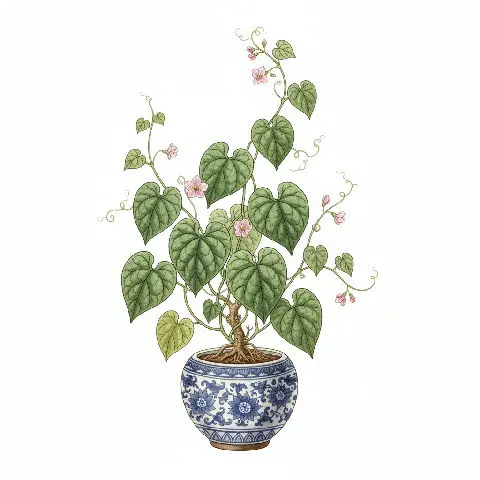
Antigonon leptopus, widely known as Coral Vine, Chain of Love, or Mexican Creeper, is an exuberant, fast-growing perennial vine belonging to the Polygonaceae family.
A good article on Antigonon Leptopus should not stop at one-line claims. Readers need taxonomy, habitat, safety, cultivation, and evidence in the same place so they can make sound decisions.
Use this guide as a practical reference, then compare it with the detailed plant profile at https://www.floramedicalglobal.com/garden-plants/antigonon-leptopus whenever you want to confirm the source page itself.
- Antigonon leptopus is a fast-growing, ornamental vine from Mexico.
- Known for its vibrant pink, heart-shaped flowers and tendril-climbing habit.
- Traditionally used for anti-inflammatory, antioxidant, and wound-healing properties.
- Edible parts include tuberous roots (nutty flavor) and young leaves.
- Requires full sun, well-drained soil, and structural support for cultivation.
- Exercise caution due to potential invasive growth and lack of extensive safety data.
Botanical Profile & Taxonomy
Antigonon Leptopus should be anchored to the correct taxonomic identity before any discussion of care, use, or safety begins.
| Common name | Antigonon Leptopus |
|---|---|
| Scientific name | Antigonon leptopus |
| Family | Polygonaceae |
| Order | Caryophyllales |
| Genus | Antigonon |
| Species epithet | leptopus |
| Author citation | Hook. & Arn. |
| Synonyms | Antigonon leptopus Hook. & Arn., Antigonon caracasense |
| Common names | করাল লতার, Coral Vine |
| Local names | Antigone à pied grêle, Liane antigone, Liane corail, Sandwich Island creeper, bellisima, Belle mexicaine (La), antigone, Mexican creeper, antigone à pied grêle, Antigone à pied grêle, Liane corail, Liane-corail, Beyisima, amor-agarradinho, Mexican-creeper |
| Origin | Mesoamerica (Mexico, Guatemala, El Salvador) |
| Life cycle | Perennial |
| Growth habit | Vine |
Using the accepted scientific name Antigonon leptopus helps readers avoid confusion caused by old synonyms, loose common names, or inconsistent plant labels.
Family and order placement also matter because they explain recurring structural traits, likely relatives, and the kinds of mistakes readers often make when they rely on appearance alone.
Physical Description & Morphology
A practical reading of the plant starts with visible structure: Leaf: Alternate, simple, petiolate, ovate to deltoid with cordate (heart-shaped) base, entire margin, acute apex, green (sometimes variegated), 2-10 cm. Stem: Slender, branched, angled, somewhat woody at the base, herbaceous towards tip, green to reddish-brown, equipped with tendrils for climbing. Root: Fibrous root system with perennial, tuberous, fleshy storage roots, allowing drought tolerance. Flower: Small (1-2 cm diameter), perfect, in profuse terminal and axillary racemes or panicles. Five tepals (petal-like sepals), typically bright pink. Fruit: Small, dry, obovoid achene, approximately 8-12 mm long, enclosed by the persistent tepals. Seed: Small, dark brown, ovoid to triangular, contained within the achene. Dispersed by wind and animals; can float.
Microscopic or internal identification notes deepen the picture, especially for processed material: Glandular and non-glandular trichomes may be present, varying in density and morphology across different plant parts, particularly on young stems. Anomocytic stomata are commonly observed, scattered irregularly on the abaxial leaf surface. Powdered material reveals fragments of epidermal cells, anomocytic stomata, various trichomes, spiral and pitted vessels, starch grains (especially).
In overall habit, the plant is described as Vine with a mature height around 3-5 m and spread of Typically 1-5 m or more with support.
Natural Habitat & Distribution
The native or historically recorded center of distribution for Antigonon Leptopus is Mesoamerica (Mexico, Guatemala, El Salvador). That origin is more than background trivia; it explains how the plant responds to heat, moisture, shade, and seasonal change.
The plant is associated with the following countries or range markers: Mexico.
Environmental notes in the live record add more context: Naturally grows in tropical and subtropical regions. It is native to forests edges, disturbed areas, and coastal thickets in Mexico. Thrives in USDA hardiness zones 8-11. Typically found from sea level up to 1000 meters altitude. Requires annual rainfall between 1000-2000 mm, but can tolerate drier conditions once established due to its root tuber reserves.
In cultivation terms, the main ecological clues are: Full Sun; Weekly; Well-draining sandy loam to loamy soil, pH 6.0-7.5; 9-11; Perennial; Vine.
Physiology data reinforce the habitat story: Highly tolerant to heat and drought stress; can defoliate under extreme dryness and rapidly regrow with sufficient moisture. C3 photosynthesis, typical for most dicotyledonous plants, efficiently utilizing sunlight for carbon fixation. Moderate to high transpiration rates in full sun, but exhibits drought tolerance mechanisms like defoliation to conserve water during dry periods.
Traditional & Cultural Significance
Antigonon leptopus lacks deep historical cultural significance within major formalized traditional health systems like Ayurveda, TCM, or Unani. Its primary traditional uses are localized to folk medicine practices in its native Mexico, Central America, and the Caribbean. In these regions, it has been used anecdotally for its purported medicinal qualities, but without extensive documentation akin to classic.
Ethnobotanical records also show how this plant has been framed across different places: Steam-Bath in Haiti (Brutus, T.C., and A.V. Pierce-Noel. 1960. Les Plantes et les Legumes d'Hati qui Guerissent. Imprimerie De L'Etat, Port-Au-Prince, Haiti.).
Local names help show how different communities notice and classify the plant: Antigone à pied grêle, Liane antigone, Liane corail, Sandwich Island creeper, bellisima, Belle mexicaine (La), antigone, Mexican creeper, antigone à pied grêle, Antigone à pied grêle, Liane corail, Liane-corail, Beyisima.
Traditional context matters, but it should always be separated from modern certainty. Historical use can guide questions, yet it does not automatically prove present-day clinical effectiveness.
Medicinal Properties & Health Benefits
The main benefit themes associated with the plant include: Anti-inflammatory Properties — Traditionally, the plant's extracts have been used to soothe inflammation, potentially due to the presence of flavonoids and. Antioxidant Activity — Rich in polyphenols, Coral Vine is believed to possess strong antioxidant capabilities, helping to neutralize free radicals and protect. Wound Healing — In some indigenous practices, poultices made from the leaves were applied topically to minor cuts and abrasions to promote faster healing and. Digestive Aid — Certain traditional remedies suggest that infusions from Antigonon leptopus could assist with digestive discomfort, acting as a mild. Antidiabetic Potential — Preliminary studies or traditional observations hint at a potential role in managing blood sugar levels, though the exact mechanisms. Antimicrobial Effects — Extracts may exhibit mild antimicrobial properties against certain bacteria and fungi, historically used to combat minor infections. Diuretic Action — Folk medicine has sometimes employed the plant as a diuretic, aiding in the excretion of excess fluids and supporting kidney function. Respiratory Support — Traditional preparations, such as teas, were occasionally consumed to alleviate symptoms of respiratory ailments like coughs or mild.
The evidence matrix gives a more careful picture of those claims: Traditional use for anti-inflammatory purposes. Traditional practice observation. Ethnobotanical. No specific clinical trials, but historical use suggests potential efficacy. Possesses antioxidant activity. Phytochemical screening. Preliminary In Vitro. Presence of flavonoids and phenolics supports antioxidant potential, warrants further investigation. Used for minor wound healing in traditional practices. Community knowledge. Anecdotal/Traditional. Topical application of leaf poultices reported, likely due to astringent and antimicrobial properties.
The stored evidence confidence for this profile is traditional. That should shape how strongly any benefit statement is interpreted.
For non-medicinal or mostly ornamental contexts, the safest approach is to keep the claims modest. A plant may still be valuable ecologically, visually, or culturally without being promoted as a treatment.
- Anti-inflammatory Properties — Traditionally, the plant's extracts have been used to soothe inflammation, potentially due to the presence of flavonoids and.
- Antioxidant Activity — Rich in polyphenols, Coral Vine is believed to possess strong antioxidant capabilities, helping to neutralize free radicals and protect.
- Wound Healing — In some indigenous practices, poultices made from the leaves were applied topically to minor cuts and abrasions to promote faster healing and.
- Digestive Aid — Certain traditional remedies suggest that infusions from Antigonon leptopus could assist with digestive discomfort, acting as a mild.
- Antidiabetic Potential — Preliminary studies or traditional observations hint at a potential role in managing blood sugar levels, though the exact mechanisms.
- Antimicrobial Effects — Extracts may exhibit mild antimicrobial properties against certain bacteria and fungi, historically used to combat minor infections.
- Diuretic Action — Folk medicine has sometimes employed the plant as a diuretic, aiding in the excretion of excess fluids and supporting kidney function.
- Respiratory Support — Traditional preparations, such as teas, were occasionally consumed to alleviate symptoms of respiratory ailments like coughs or mild.
- Analgesic Effects — Anecdotal evidence suggests some traditional uses for pain relief, possibly by interfering with pain signaling pathways.
- Cardiovascular Health — Certain compounds within the plant might contribute to cardiovascular well-being by supporting healthy blood pressure or lipid.
Chemical Constituents & Phytochemistry
The broader constituent profile includes Flavonoids — Quercetin, kaempferol, and their glycosides are often found, contributing to antioxidant. Phenolic Acids — Gallic acid, caffeic acid, and ferulic acid are common, known for their strong antioxidant and. Saponins — Triterpenoid saponins may be present, which can exhibit foaming properties and have been associated with. Alkaloids — Trace amounts of various alkaloids might contribute to the plant's overall bioactivity, though specific. Anthocyanins — Pigments responsible for the pink to magenta color of the flowers, these compounds are potent. Tannins — Hydrolyzable and condensed tannins are often found, providing astringent properties, useful in traditional. Polysaccharides — Complex carbohydrates that can possess immunomodulatory effects and contribute to the plant's. Steroids/Phytosterols — Beta-sitosterol and other plant sterols may be present, known for their potential to lower. Fatty Acids — Essential fatty acids found in the seeds or roots could contribute to nutritional value and cellular. Vitamins and Minerals — The leaves and roots, being edible, would contain essential vitamins (e.g., Vitamin C) and.
The detailed phytochemistry file adds these markers: Quercetin, Flavonoid, Leaves, flowers, Variablemg/g dry weight; Gallic Acid, Phenolic Acid, Leaves, roots, Variablemg/g dry weight; Kaempferol, Flavonoid, Leaves, Variablemg/g dry weight; Anthocyanins (e.g., Cyanidin-3-glucoside), Flavonoid Glycoside, Flowers, Variablemg/g fresh weight; Beta-sitosterol, Phytosterol, Roots, Tracemg/g dry weight; Tannins, Polyphenol, Leaves, roots, Moderate% dry weight.
Compound profiles also shift with plant part, age, season, processing, and storage. The chemistry of a fresh leaf, dried root, or concentrated extract should never be treated as automatically identical.
How to Use — Preparations & Dosage
Recorded preparation and use methods include Edible Root Preparation — Tuberous roots can be harvested, thoroughly cleaned, boiled or roasted, and consumed as a starchy vegetable, often described as having a nutty flavor. Leafy Green Cooking — Young leaves and tender shoots can be gathered, blanched or sautéed, and used in stir-fries, soups, or as a side dish, sometimes served with vermicelli. Flower Infusion (Tea) — Fresh or dried flowers can be steeped in hot water to create a mild, potentially soothing herbal tea, traditionally used for respiratory or digestive. Topical Poultice — Crushed fresh leaves can be prepared as a poultice and applied externally to minor skin irritations, cuts, or bruises for traditional wound care. Culinary Garnish — The vibrant flowers serve as an attractive and edible garnish for salads, desserts, or beverages, adding a pop of color and subtle flavor. Extract Preparation — For concentrated traditional uses, leaves or roots may be macerated in alcohol or water to create tinctures or decoctions, to be used under expert guidance. Juice or Smoothie Ingredient — Fresh leaves can be blended into juices or smoothies, potentially for their nutritional content and traditional health benefits. Decorative Element — Beyond internal use, the entire vine is widely used ornamentally to create beautiful natural screens and coverings.
The plant part most closely linked to use is recorded as Leaves, roots, tubers, stems, or fruit cited in related taxa.
Edibility and processing notes matter here as well: Not edible.
For garden-focused readers, this section often overlaps with practical garden use: cut flowers, pollinator support, habitat value, decorative placement, culinary handling, or any carefully documented traditional application.
- Identify the exact species and plant part first.
- Match the preparation to the intended use.
- Check safety, interactions, and processing details before routine use or large-scale handling.
Safety Profile, Side Effects & Contraindications
The first safety note is direct: Antigonon leptopus is generally considered non-toxic to humans and pets based on available evidence, with no widespread reports of severe poisoning. However, all parts of the plant, especially the leaves and flowers, contain secondary.
Specific warnings recorded for this plant include Pregnancy and Lactation — Due to insufficient research, pregnant and breastfeeding women should avoid medicinal use of Antigonon leptopus. Children — The use of Coral Vine in children for medicinal purposes is not recommended without expert medical advice. Pre-existing Conditions — Individuals with chronic health conditions, particularly diabetes or those on blood-thinning medications, should consult a. Allergic Sensitivities — People with known allergies to Polygonaceae family members should exercise caution or avoid contact/ingestion. Dosage — Adhere to traditional dosages or use under the guidance of a qualified herbalist, as standardized dosing for medicinal use is not established. External Use — Topical application should be limited to minor issues, and a patch test is advisable to check for skin sensitivity. Invasive Species Management — While not a human health risk, responsible cultivation practices are important to prevent its spread into natural ecosystems. Allergic Reactions — Individuals sensitive to plants in the Polygonaceae family might experience skin irritation or mild allergic responses upon contact or. Gastrointestinal Upset — Excessive consumption of leaves or roots, especially raw, could potentially lead to mild digestive discomfort like bloating or nausea. Invasive Growth — While not a direct health effect, its aggressive growth habit can displace native plants, impacting local ecosystems and requiring careful.
Quality-control notes add another warning: Low risk of deliberate adulteration due to its common ornamental status, but misidentification with other vines is possible.
No plant should be described as universally safe. Identity, dose, plant part, preparation style, age, pregnancy status, medication use, allergies, and contamination risk all change the answer.
Growing & Cultivation Guide
The cultivation record emphasizes these practical steps: Soil Preference — Prefers fertile, well-drained soil; avoid overly rich nitrogenous soils to prevent excessive foliage growth at the expense of flowering. Light Requirements — Thrives in full sun exposure, which is crucial for abundant flowering and vigorous growth. Watering — Requires regular watering, especially during dry periods, but is drought-tolerant once established, regrowing strongly after rain. Support Structure — As a climbing vine, it needs a strong trellis, fence, or arbor for support, which it ascends using tendrils. Pruning — Prune regularly to manage its vigorous growth, encourage bushier habit, and promote continuous flowering. Propagation — Easily propagated from seeds, which it produces prolifically, or via cuttings, which root readily. Weed Potential — Be mindful of its invasive potential in some regions.
The broader growth environment is described like this: Naturally grows in tropical and subtropical regions. It is native to forests edges, disturbed areas, and coastal thickets in Mexico. Thrives in USDA hardiness zones 8-11. Typically found from sea level up to 1000 meters altitude. Requires annual rainfall between 1000-2000 mm, but can tolerate drier conditions once established due to its root tuber reserves.
Planning becomes easier when these traits are kept in view: Vine; 3-5 m; Typically 1-5 m or more with support; Beginner.
In practice, healthy cultivation comes from systems thinking rather than one-off tricks. Site choice, drainage, timing, spacing, pruning, feeding, and observation all reinforce one another.
Light, Water & Soil Requirements
The most useful care snapshot is this: Light: Full Sun; Water: Weekly; Soil: Well-draining sandy loam to loamy soil, pH 6.0-7.5; Humidity: Medium; Temperature: 15-35°C; USDA zone: 9-11.
Outdoors, light, water, and soil must be read together. The same watering schedule can be too much in dense clay and too little in a porous sandy bed.
| Light | Full Sun |
|---|---|
| Water | Weekly |
| Soil | Well-draining sandy loam to loamy soil, pH 6.0-7.5 |
| Humidity | Medium |
| Temperature | 15-35°C |
| USDA zone | 9-11 |
Light, water, and soil should never be treated as separate checkboxes. A plant in stronger light often dries faster, soil texture changes how quickly water moves, and temperature plus humidity influence how stress appears in leaves and roots.
For Antigonon Leptopus, the safest care approach is to treat Full Sun, Weekly, and Well-draining sandy loam to loamy soil, pH 6.0-7.5 as linked decisions rather than isolated tips. If one condition shifts, the other two usually need to be reconsidered as well.
Propagation Methods
Documented propagation routes include Seeds:** Collect seeds from mature, dried pods in late fall. Soak seeds in warm water for 24 hours to improve germination. Sow in well-draining seed-starting.
Propagation works best when the parent stock is healthy, correctly identified, and handled in the right season. That sounds obvious, but it is exactly where many failures begin.
- Seeds:** Collect seeds from mature, dried pods in late fall. Soak seeds in warm water for 24 hours to improve germination. Sow in well-draining seed-starting.
Propagation works best when the reader matches method to biology. Some plants respond readily to cuttings, some to division, some to seed, and others require more patience or more exact seasonal timing.
A successful propagation guide therefore starts with healthy parent material and realistic expectations. Weak stock, rushed handling, and poor aftercare can make even a technically correct method fail.
Pest & Disease Management
The recorded problem list includes Common Pests:** Aphids, mealybugs, scale insects, whiteflies. **Organic Solutions:** For aphids and mealybugs, use a. stunted growth may suggest general nutrient deficiency. **Organic Solutions:** Apply chelated iron for chlorosis or a.
Garden problems are often ecological rather than mysterious. Crowding, poor airflow, overwatering, wrong siting, and delayed observation create the conditions that pests and disease exploit.
The smartest response sequence is observation first, environmental correction second, and treatment only after the real pattern is clear.
- Common Pests:** Aphids, mealybugs, scale insects, whiteflies. **Organic Solutions:** For aphids and mealybugs, use a.
- Stunted growth may suggest general nutrient deficiency. **Organic Solutions:** Apply chelated iron for chlorosis or a.
Pest and disease management is strongest when it begins before visible damage becomes severe. Routine observation, clean handling, sensible spacing, air movement, and balanced watering reduce many problems before treatment is even needed.
Harvesting, Storage & Processing
The plant part most often associated with harvest or processing is Leaves, roots, tubers, stems, or fruit cited in related taxa.
Storage guidance from the quality-control record reads as follows: Dried plant material should be stored in airtight containers away from light and moisture to preserve active compounds and prevent degradation.
For a garden-focused plant, harvesting may mean seed collection, cut stems, flowers, foliage, or propagation material rather than edible or medicinal processing.
Whatever the purpose, the rule is the same: harvest clean material, label it clearly, and store it in a way that preserves identity and condition.
Harvest and storage determine whether a plant's quality is preserved after it leaves the bed, pot, field, or wild source. Clean timing, correct plant part selection, and careful drying or handling all matter more than many readers expect.
For Antigonon Leptopus, this means the reader should think beyond collection. Material that is poorly labeled, overheated, damp in storage, or mixed with the wrong part of the plant can quickly lose value or create confusion later.
Companion Planting & Garden Design
Useful companions or placement partners include Bougainvillea; Mandevilla; Passion Flower; Jasmine; Alamanda.
In a garden border or planting plan, Antigonon Leptopus is easiest to use well when exposure, soil rhythm, and seasonal sequence are matched rather than improvised.
- Bougainvillea
- Mandevilla
- Passion Flower
- Jasmine
- Alamanda
Companion planting and design are not only aesthetic decisions. They affect airflow, root competition, moisture sharing, harvest access, visibility, and the general logic of the planting scheme.
With Antigonon Leptopus, good placement means thinking about mature size, maintenance rhythm, and how neighboring plants change the feel and function of the space. A plant can be healthy on its own and still be poorly placed within the broader composition.
That is why the best design advice combines biology with usability. The planting should look coherent, but it should also make watering, pruning, harvest, and pest observation easier rather than harder.
Scientific Research & Evidence Base
The evidence matrix points to several recurring themes: Traditional use for anti-inflammatory purposes. Traditional practice observation. Ethnobotanical. No specific clinical trials, but historical use suggests potential efficacy. Possesses antioxidant activity. Phytochemical screening. Preliminary In Vitro. Presence of flavonoids and phenolics supports antioxidant potential, warrants further investigation. Used for minor wound healing in traditional practices. Community knowledge. Anecdotal/Traditional. Topical application of leaf poultices reported, likely due to astringent and antimicrobial properties.
Ethnobotanical activity records add historical reference trails: Steam-Bath — Haiti [Brutus, T.C., and A.V. Pierce-Noel. 1960. Les Plantes et les Legumes d'Hati qui Guerissent. Imprimerie De L'Etat, Port-Au-Prince, Haiti.].
The compiled source count behind the live profile is 8. That does not guarantee certainty, but it does suggest the record has been cross-checked beyond a single note.
Analytical testing notes also strengthen the evidence base: Standard chromatographic techniques (HPLC, HPTLC) for phytochemical profiling, alongside macroscopic and microscopic identification methods.
A careful evidence section should say what is known, what is plausible, and what remains uncertain. Readers are better served by clear limits than by exaggerated confidence.
Evidence note: this section blends the live plant record, local ethnobotanical activity data, chemistry records, and the linked Flora Medical Global plant profile for Antigonon Leptopus.
Buying Guide & Expert Tips
Quality markers worth checking include Quercetin and gallic acid could serve as marker compounds for identification and standardization due to their prevalence in Polygonaceae.
Adulteration and substitution risk should not be ignored: Low risk of deliberate adulteration due to its common ornamental status, but misidentification with other vines is possible.
When buying Antigonon Leptopus, start with verified botanical identity. The label, scientific name, and the source page should agree before you judge price, size, or claimed benefits.
For living plants, inspect roots, stem firmness, foliage health, and early pest signs. For dried or processed material, look for batch clarity, clean aroma, absence of mold, and any sign that the product has been over-processed to disguise poor quality.
Buying advice should begin with identity. The label, scientific name, visible condition, and seller credibility should agree before price or convenience becomes the deciding factor.
Frequently Asked Questions
What is Antigonon Leptopus best known for?
Antigonon leptopus, widely known as Coral Vine, Chain of Love, or Mexican Creeper, is an exuberant, fast-growing perennial vine belonging to the Polygonaceae family.
Is Antigonon Leptopus beginner-friendly?
That depends on the growing environment and the intended use. Some plants are easy to grow but not simple to use medicinally, while others are the opposite.
How much light does Antigonon Leptopus need?
Full Sun
How often should Antigonon Leptopus be watered?
Weekly
Can Antigonon Leptopus be propagated at home?
Yes, but the best method depends on whether the species responds best to seed, cuttings, division, offsets, or other propagation routes.
Does Antigonon Leptopus have safety concerns?
Antigonon leptopus is generally considered non-toxic to humans and pets based on available evidence, with no widespread reports of severe poisoning. However, all parts of the plant, especially the leaves and flowers, contain secondary.
What is the biggest mistake people make with Antigonon Leptopus?
The most common mistake is applying generic advice instead of matching the plant to its real environment, identity, and limits.
Where can I verify more information about Antigonon Leptopus?
Start with the Flora Medical Global plant profile: https://www.floramedicalglobal.com/garden-plants/antigonon-leptopus
Why do sources sometimes disagree about Antigonon Leptopus?
Different references may use different synonyms, plant parts, cultivation conditions, or evidence standards. That is why taxonomy and source quality both matter.
Trusted Scientific References & Further Reading
Authoritative sources and related guides:
- Wikipedia — background reference
- PubMed — peer-reviewed studies
- Kew POWO — botanical reference
- NCBI PMC — open-access research
- WHO — global health authority