Complete Guide to Burdock: Care, Uses, Safety & Images
 Flora Medical GlobalPublished: 4/10/2026Updated: 6/20/202620 min read
Editorial Disclaimer: This article is for informational and educational purposes only. It is not a substitute for professional medical advice, diagnosis, or treatment. Always consult a qualified healthcare provider or certified herbalist before using any plant for medicinal purposes, especially if you are pregnant, nursing, taking medication, or have a medical condition.
01What is Burdock?
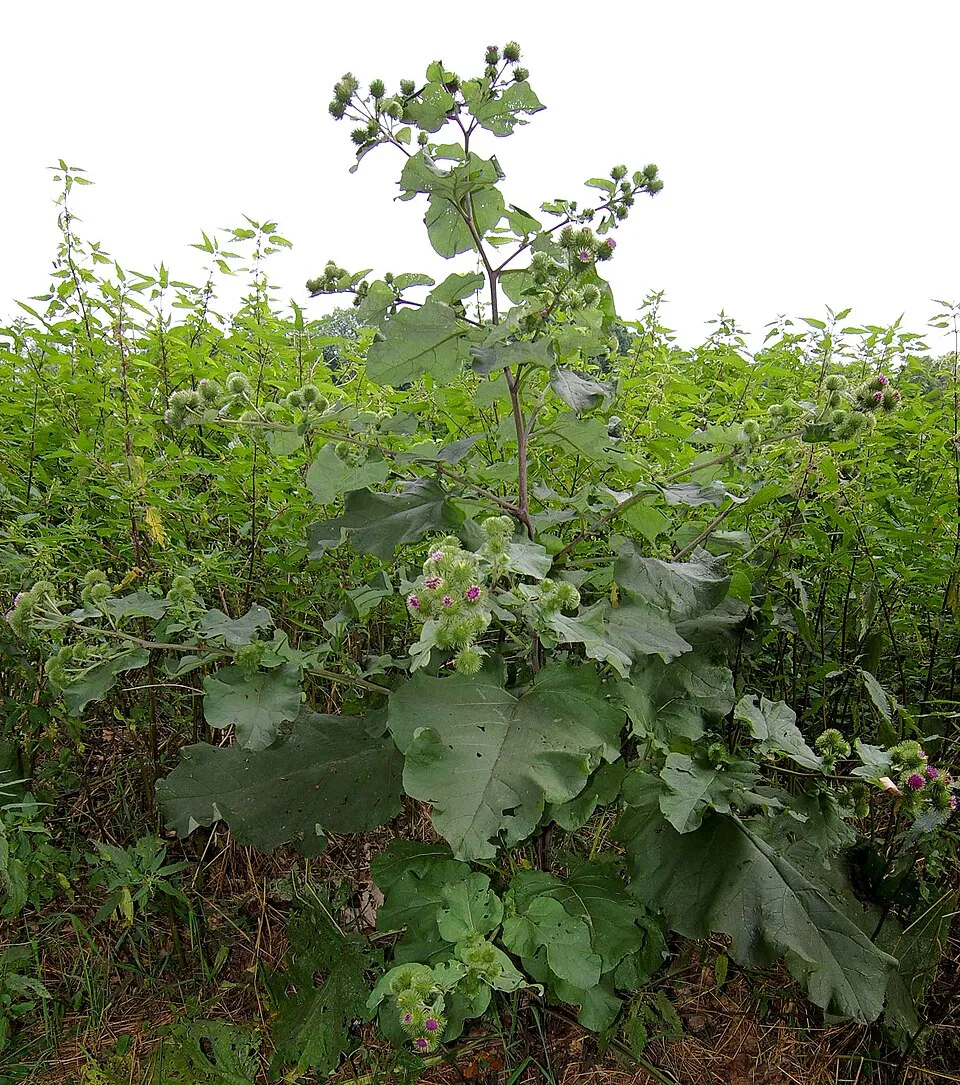
Arctium lappa, universally recognized as greater burdock, gobō, or niúban, is a robust biennial herbaceous plant thriving in the Asteraceae family.
Most thin plant articles flatten everything into a summary. This guide does the opposite by following Burdock through identification, care, handling, and the questions that real readers actually ask.
The aim is simple: make the article detailed enough for serious readers while keeping the structure clear enough for fast scanning and confident decision-making.
- Traditional alterative and depurative herb, renowned for 'blood purification'.
- Key for dermatological conditions like eczema, psoriasis, and acne.
- Rich in inulin, lignans (arctiin, arctigenin), and phenolic acids.
- Used culinarily as gobō in East Asian cuisine, especially Japan.
- Exhibits anti-inflammatory, antioxidant, diuretic, and lymphatic stimulant actions.
- Caution advised for pregnant/lactating individuals, diabetics, and those on anticoagulants or with Asteraceae allergies.
This guide is designed to help the reader move from scattered facts to practical understanding. Instead of relying on a thin summary, it pulls together the identity, uses, care profile, safety notes, and evidence context around Burdock so the article works as a real reference rather than a keyword page.
02Burdock Botanical Profile
Burdock should be anchored to the correct taxonomic identity before any discussion of care, use, or safety begins.
| Common name | Burdock |
|---|---|
| Scientific name | Arctium lappaW |
| Family | Asteraceae |
| Order | Asterales |
| Genus | Arctium |
| Species epithet | lappa |
| Author citation | L. |
| Synonyms | Arctium edule Beger(https://www.gbif.org/species/7749670)Arctium lappa Willd. |
| Common names | বড়োগাছো, লাপ্পা, বেগার বাটন, Greater Burdock, Edible Burdock, Lappa, Beggar's Buttons, गोजी, रतनजोत |
| Local names | Bardana maggiore, Cedor y Wrach, Cedowrach, Almindelig Fuglegræs, Cribau'r Bleiddiau, Bardane commune, Baw Mwci, Cyngaf, Ciog, Cacamwci, Cedowrach Mwyaf, Benved |
| Origin | Eurasia (Europe, temperate Asia) |
| Life cycle | Perennial |
| Growth habit | Tree |
Using the accepted scientific name Arctium lappa helps readers avoid confusion caused by old synonyms, loose common names, or inconsistent plant labels.
Family and order placement also matter because they explain recurring structural traits, likely relatives, and the kinds of mistakes readers often make when they rely on appearance alone.
03What Burdock Looks Like
Microscopic or internal identification notes deepen the picture, especially for processed material: Non-glandular, multicellular, uniseriate trichomes are present on leaves and stems, contributing to defense and potentially reducing water loss. Anisocytic or anomocytic stomata are commonly observed on the abaxial surface of the leaves, facilitating gas exchange. Powdered root reveals abundant parenchyma cells containing inulin, fragments of vessels with reticulate or scalariform thickening, and occasional.
In overall habit, the plant is described as Tree with a mature height around Typically 0.5-4 m and spread of Typically 0.5-3 m.
In real-world identification, the most helpful approach is to read the plant as a whole. Habit, size, stem texture, leaf arrangement, flower form, and any distinctive surface detail all matter. For Burdock, morphology is not only a descriptive topic; it is the foundation of correct recognition.
That is especially important when the plant is sold, dried, trimmed, or processed. Once a specimen is no longer growing naturally in front of the reader, small structural clues become more valuable. Leaf shape, venation, root form, bark character, and reproductive features all help confirm identity.
04Burdock: Habitat & Distribution
The native or historically recorded center of distribution for Burdock is Eurasia (Europe, temperate Asia). That origin is more than background trivia; it explains how the plant responds to heat, moisture, shade, and seasonal change.
The plant is associated with the following countries or range markers: China, Europe, Japan, Korea.
Environmental notes in the live record add more context: Natural habitat includes disturbed sites, roadsides, waste ground, and woodland edges. It thrives in temperate climate zones, specifically USDA hardiness zones 3-9. It can grow from sea level up to elevations of approximately 2000 meters. Requires annual rainfall between 500-1000 mm, preferring consistent moisture.
In cultivation terms, the main ecological clues are: Full Sun; Weekly; Well-drained, deep, loamy soil with a pH of 6.0-7.5; Often 6-10; species-dependent; Perennial; Tree.
Physiology data reinforce the habitat story: Exhibits tolerance to disturbed soils and moderate drought conditions, with its deep taproot providing access to deeper water reserves during dry. C3 photosynthesis Moderate to high transpiration rates, requiring consistent soil moisture for optimal growth, aided by its deep taproot.
05Cultural Significance of Burdock
In Traditional Chinese Medicine (TCM), the seeds (Niúbāngzǐ) are extensively used to clear heat, relieve toxicity, and soothe skin conditions, often found in formulas for common colds, fevers, and eruptions. It is classified as an herb that 'releases the exterior' and 'clears heat.' In Japanese culture, the root (gobō) is a culinary staple, prepared in dishes like kinpira gobō and used in teas. European folk.
Ethnobotanical records also show how this plant has been framed across different places: Abscess in China (ANON. 1974. A barefoot doctor's manual. DHEW Publication No. (NIH): 75-695.); Abscess in China (Leung, Albert Y. 1980. Encyclopedia of common natural ingredients. John Wiley and Sons, N.Y.); Acne in US (Duke, 1992 ); Alexiteric in China (ANON. 1974. A barefoot doctor's manual. DHEW Publication No. (NIH): 75-695.); Alterative in Iraq (Al-Rawi, Ali. 1964. Medicinal Plants of Iraq. Tech. Bull. No. 15. Ministry of Agriculture, Directorate General of Agricultural Research Projects.); Alterative in Elsewhere (Uphof, J.C. Th. 1968. Dictionary of economic plants. 2nd ed. Verlag von J. Cramer.); Alterative in Elsewhere (Duke, 1992 ); Alterative in China (Shih-chen, Li. 1973. Chinese medinal herbs. Georgetown Press, San Francisco.).
Local names help show how different communities notice and classify the plant: Bardana maggiore, Cedor y Wrach, Cedowrach, Almindelig Fuglegræs, Cribau'r Bleiddiau, Bardane commune, Baw Mwci, Cyngaf, Ciog, Cacamwci.
Traditional context matters, but it should always be separated from modern certainty. Historical use can guide questions, yet it does not automatically prove present-day clinical effectiveness.
06Medicinal Properties of Burdock
The main benefit themes associated with the plant include:
- Anti-inflammatory — Burdock root exhibits significant anti-inflammatory properties, attributed to compounds like arctigenin and phenolic acids, which modulate. Detoxifying/Depurative — Acts as a potent blood purifier, aiding the body's natural elimination of metabolic waste and toxins through the liver and kidneys.
- Dermatological Support — Highly valued for treating various skin conditions such as eczema, psoriasis, acne, and seborrhoeic dermatitis by clearing 'toxic.
- Lymphatic System Stimulant — Promotes healthy lymphatic flow, essential for immune function, fluid balance, and the efficient removal of cellular waste.
- Digestive Aid — Its bitter principles stimulate digestive secretions, while the mucilaginous fiber (inulin) supports gut health and can relieve constipation.
- Diuretic Action — Encourages increased urine production, facilitating the excretion of excess fluids and waste, contributing to its overall depurative effects.
- Antioxidant Properties — Rich in phenolic acids and flavonoids, burdock helps neutralize free radicals, protecting cells from oxidative stress and damage.
- Antimicrobial Activity — Contains polyacetylenes and other compounds that demonstrate inhibitory effects against certain bacteria and fungi, offering.
The evidence matrix gives a more careful picture of those claims: Anti-inflammatory properties. In vitro, animal studies, some human observational. Moderate. Arctigenin and other compounds inhibit pro-inflammatory mediators like nitric oxide and prostaglandins. Dermatological support for conditions like eczema and psoriasis. Traditional use, clinical observations, some in vitro data. Moderate. Its alterative and detoxifying actions are believed to improve skin health by reducing systemic inflammation and toxin burden. Detoxification and blood purification. Traditional belief, some in vitro data on liver enzymes and diuretic effects. Low to moderate. Acts as a diuretic and diaphoretic, supporting the eliminatory organs in processing and expelling waste. Blood sugar regulation. Animal studies, in vitro. Low. The high inulin content may contribute to glycemic control by influencing gut microbiota and glucose absorption.
The stored evidence confidence for this profile is traditional. That should shape how strongly any benefit statement is interpreted.
For medicinal content, the key discipline is to distinguish traditional use, mechanism-based plausibility, and human clinical support. Those are related ideas, but they are not the same thing.
- Anti-inflammatory — Burdock root exhibits significant anti-inflammatory properties, attributed to compounds like arctigenin and phenolic acids, which modulate.
- Detoxifying/Depurative — Acts as a potent blood purifier, aiding the body's natural elimination of metabolic waste and toxins through the liver and kidneys.
- Dermatological Support — Highly valued for treating various skin conditions such as eczema, psoriasis, acne, and seborrhoeic dermatitis by clearing 'toxic.
- Lymphatic System Stimulant — Promotes healthy lymphatic flow, essential for immune function, fluid balance, and the efficient removal of cellular waste.
- Digestive Aid — Its bitter principles stimulate digestive secretions, while the mucilaginous fiber (inulin) supports gut health and can relieve constipation.
- Diuretic Action — Encourages increased urine production, facilitating the excretion of excess fluids and waste, contributing to its overall depurative effects.
- Antioxidant Properties — Rich in phenolic acids and flavonoids, burdock helps neutralize free radicals, protecting cells from oxidative stress and damage.
- Antimicrobial Activity — Contains polyacetylenes and other compounds that demonstrate inhibitory effects against certain bacteria and fungi, offering.
- Hepatoprotective Effects — Supports liver function, aiding in the processing and elimination of toxins, which is crucial for overall detoxification and skin.
- Hypoglycemic Potential — The high inulin content may help regulate blood sugar levels by slowing glucose absorption and acting as a prebiotic to improve gut.
07Burdock Phytochemistry
The broader constituent profile includes:
- Sesquiterpene Lactones — Key compounds include arctigenin and arctiin, known for their significant anti-inflammatory.
- Inulin — A fructan polysaccharide, this prebiotic fiber constitutes a substantial portion of the root, supporting gut.
- Phenolic Acids — Primarily caffeic acid and chlorogenic acid, these compounds are potent antioxidants and contribute.
- Lignans — Arctigenin and its glycoside arctiin are prominent lignans, exhibiting phytoestrogenic, anti-tumor, and.
- Flavonoids — Compounds like quercetin and luteolin are present, contributing to the plant's overall antioxidant and.
- Polyacetylenes — Unique to Asteraceae, these compounds such as arctinone and arctinal possess notable antimicrobial.
- Mucilage — Comprising various polysaccharides, mucilage provides demulcent and soothing properties, particularly.
- Volatile Oils — Present in smaller quantities, these contribute to the plant's characteristic aroma and may offer.
- Tannins — Provide astringent properties, contributing to its traditional use in skin conditions and as a general tonic.
- Plant Sterols — Including beta-sitosterol, which may contribute to cholesterol-lowering and anti-inflammatory effects.
The detailed phytochemistry file adds these markers: Arctiin, Lignan glycoside, Root, seed, Variable% of dry weight; Arctigenin, Lignan aglycone, Root, seed, Variable% of dry weight; Inulin, Fructan (polysaccharide), Root, 27-45% of dry weight; Caffeic acid, Phenolic acid, Root, leaf, Moderatemg/g; Chlorogenic acid, Phenolic acid, Root, leaf, Moderatemg/g; Arctinone, Polyacetylene, Root, Low% of dry weight.
Local chemistry records also support the profile: ASCORBIC-ACID in Root (20.0-85.0 ppm); CAFFEIC-ACID in Root (not available-2500.0 ppm); CHLOROGENIC-ACID in Root (not available-not available ppm); ZINC in Root (0.5-2.2 ppm); MAGNESIUM in Root (1262.0-5370.0 ppm); SELENIUM in Root (0.3-1.4 ppm); BETA-CAROTENE in Root (11.0-45.0 ppm); ATROPINE in Root (0.3-30.0 ppm).
Compound profiles also shift with plant part, age, season, processing, and storage. The chemistry of a fresh leaf, dried root, or concentrated extract should never be treated as automatically identical.
08Burdock Preparations & Dosage
Recorded preparation and use methods include:
- Decoction — Sliced or chopped fresh or dried burdock root (3-18g) simmered in water for 15-20 minutes, then strained and consumed as a tea, typically 1-3 times daily.
- Tincture — An alcohol extract of the root, commonly prepared at a 1:5 ratio in 25% alcohol, with a typical dosage of 6-12 ml daily, divided into several doses.
- Infusion — Dried burdock leaves or seeds steeped in hot water for 10-15 minutes can be used as a milder tea, primarily for their diuretic or mild laxative effects.
- Culinary Use — Young burdock roots (gobō) are prepared as a vegetable, often stir-fried, pickled, added to soups, or braised, particularly in Japanese and Korean cuisine. Poultice/Compress — Freshly grated or powdered root mixed with a little water can be applied topically as a poultice to soothe skin irritations, boils, or minor wounds.
- Powdered Root — Dried root can be ground into a powder and encapsulated, or added to smoothies and meals for a convenient way to consume its beneficial compounds. Topical Oils/Salves — Burdock root infused in a carrier oil can be used to make salves or balms for external application to support skin health and alleviate discomfort.
The plant part most closely linked to use is recorded as Leaves, bark, roots, seeds, or berries cited in related taxa.
Edibility and processing notes matter here as well: Varies by species and plant part; verify before use.
Preparation defines the outcome. Tea, decoction, tincture, powder, fresh plant material, cooked food use, and concentrated extract cannot be discussed as if they were interchangeable.
- Identify the exact species and plant part first.
- Match the preparation to the intended use.
- Check safety, interactions, and processing details before routine use or large-scale handling.
09Is Burdock Safe? Precautions & Cautions
The first safety note is direct: Arctium lappa is generally considered safe when used appropriately, particularly the cultivated root. However, misidentification with poisonous plants like young foxglove (Digitalis purpurea) or Deadly Nightshade (Atropa belladonna) while.
Specific warnings recorded for this plant include:
- Pregnancy and Lactation — Avoid use during pregnancy and breastfeeding due to insufficient safety data and potential uterine stimulant effects. Bleeding Disorders/Anticoagulants — Exercise caution or avoid if on anticoagulant medications (e.g., warfarin) due to potential antiplatelet activity. Diabetes/Hypoglycemic Drugs — Monitor blood glucose levels closely if using burdock, as it may potentiate the effects of blood sugar-lowering medications.
- Allergy to Asteraceae — Contraindicated for individuals with known allergies to plants in the daisy family, such as ragweed, chrysanthemums, or marigolds. Dehydration/Diuretic Medications — Use with caution if already dehydrated or taking pharmaceutical diuretics, to prevent excessive fluid loss.
- Diarrhea — Avoid use if experiencing diarrhea, as its eliminative properties may exacerbate symptoms.
- Children — Consult a qualified healthcare professional before administering burdock to children due to limited safety research in pediatric populations.
- Detoxification flare-ups — Initial use may temporarily worsen skin conditions as toxins are mobilized for elimination.
- Allergic reactions — Individuals sensitive to the Asteraceae family (ragweed, chrysanthemums) may experience allergic responses.
- Gastrointestinal upset — Some users may experience mild bloating, gas, or stomach discomfort, especially with high doses.
Quality-control notes add another warning: Potential for substitution with other Arctium species (e.g., A. minus) or other Asteraceae roots, necessitating careful botanical and chemical identification.
No plant should be described as universally safe. Identity, dose, plant part, preparation style, age, pregnancy status, medication use, allergies, and contamination risk all change the answer.
10Growing Burdock Successfully
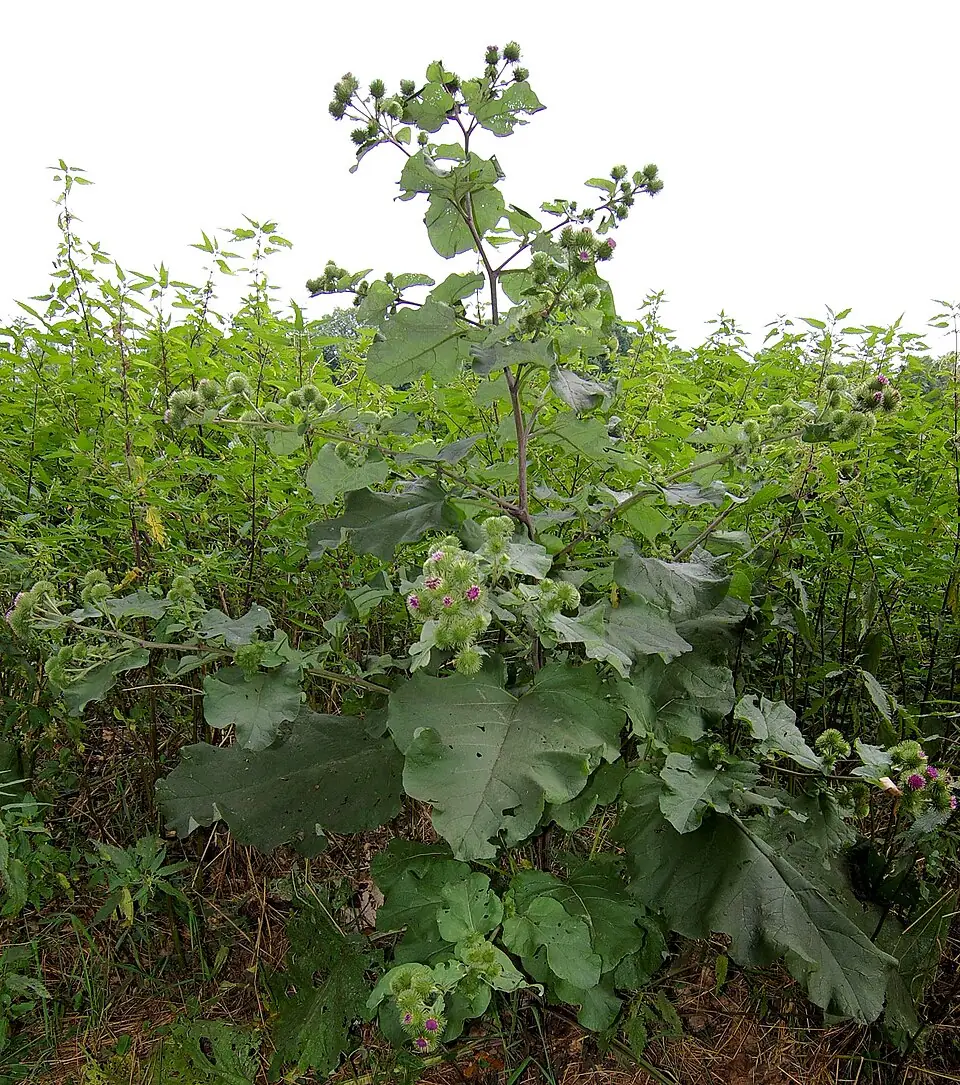
The cultivation record emphasizes these practical steps:
- Soil Preference — Thrives in deep, loose, well-drained, fertile loam soils to accommodate its long taproot.
- Sun Exposure — Prefers full sun but can tolerate partial shade, though root development may be less robust.
- Propagation — Primarily propagated from seeds, which are best direct-sown in early spring or late autumn.
- Spacing — Seeds should be planted about 1 inch deep and thinned to 6-12 inches apart in rows 2-3 feet apart to allow ample root growth.
- Watering — Requires consistent moisture, especially during dry periods, to ensure lush growth and prevent root hardening.
- Harvesting — Roots are typically harvested in the late autumn of the first year or early spring of the second year before flowering, when they are most tender and potent.
- Pests and Diseases — Generally robust, but watch for aphids, leaf miners, and powdery mildew; good air circulation helps prevent fungal issues.
The broader growth environment is described like this: Natural habitat includes disturbed sites, roadsides, waste ground, and woodland edges. It thrives in temperate climate zones, specifically USDA hardiness zones 3-9. It can grow from sea level up to elevations of approximately 2000 meters. Requires annual rainfall between 500-1000 mm, preferring consistent moisture.
Planning becomes easier when these traits are kept in view: Tree; Typically 0.5-4 m; Typically 0.5-3 m; Moderate; Intermediate.
In practice, healthy cultivation comes from systems thinking rather than one-off tricks. Site choice, drainage, timing, spacing, pruning, feeding, and observation all reinforce one another.
11Burdock: Light, Water & Soil Needs
The most useful care snapshot is this: Light: Full Sun; Water: Weekly; Soil: Well-drained, deep, loamy soil with a pH of 6.0-7.5; Humidity: Medium; Temperature: -30 to 30°C; USDA zone: Often 6-10; species-dependent.
Outdoors, light, water, and soil must be read together. The same watering schedule can be too much in dense clay and too little in a porous sandy bed.
| Light | Full Sun |
|---|---|
| Water | Weekly |
| Soil | Well-drained, deep, loamy soil with a pH of 6.0-7.5 |
| Humidity | Medium |
| Temperature | -30 to 30°C |
| USDA zone | Often 6-10; species-dependent |
Light, water, and soil should never be treated as separate checkboxes. A plant in stronger light often dries faster, soil texture changes how quickly water moves, and temperature plus humidity influence how stress appears in leaves and roots.
For Burdock, the safest care approach is to treat Full Sun, Weekly, and Well-drained, deep, loamy soil with a pH of 6.0-7.5 as linked decisions rather than isolated tips. If one condition shifts, the other two usually need to be reconsidered as well.
12How to Propagate Burdock
Documented propagation routes include Arctium lappa is primarily propagated by seeds. Direct sow seeds outdoors in spring after the last frost or in late summer. Prepare a well-drained seedbed.
Propagation works best when the parent stock is healthy, correctly identified, and handled in the right season. That sounds obvious, but it is exactly where many failures begin.
- Arctium lappa is primarily propagated by seeds. Direct sow seeds outdoors in spring after the last frost or in late summer. Prepare a well-drained seedbed.
Propagation works best when the reader matches method to biology. Some plants respond readily to cuttings, some to division, some to seed, and others require more patience or more exact seasonal timing.
A successful propagation guide therefore starts with healthy parent material and realistic expectations. Weak stock, rushed handling, and poor aftercare can make even a technically correct method fail.
13Managing Burdock Problems
The recorded problem list includes Common pests include aphids, which can be sprayed off with water or treated with neem oil. Leaf miners can cause. remove affected leaves. Slugs and snails may chew on young leaves and can be deterred with diatomaceous earth or beer. improve air circulation and use organic fungicides like neem oil or baking soda solution. Nutrient deficiencies are.
For medicinal species, pest pressure is not only a horticultural issue. It also affects harvest cleanliness, storage stability, and confidence in the final material.
The smartest response sequence is observation first, environmental correction second, and treatment only after the real pattern is clear.
- Common pests include aphids, which can be sprayed off with water or treated with neem oil. Leaf miners can cause.
- Remove affected leaves. Slugs and snails may chew on young leaves and can be deterred with diatomaceous earth or beer.
- Improve air circulation and use organic fungicides like neem oil or baking soda solution. Nutrient deficiencies are.
14Burdock: Harvest, Storage & Processing
The plant part most often associated with harvest or processing is Leaves, bark, roots, seeds, or berries cited in related taxa.
Storage guidance from the quality-control record reads as follows: Dried root should be stored in cool, dark, airtight containers to protect against moisture, light, and oxidation, preserving its active constituents for up to 2-3 years.
For medicinal plants, harvesting cannot be separated from processing. The right plant part, the right timing, and the right drying conditions all shape quality and safety.
Whatever the purpose, the rule is the same: harvest clean material, label it clearly, and store it in a way that preserves identity and condition.
Harvest and storage determine whether a plant's quality is preserved after it leaves the bed, pot, field, or wild source. Clean timing, correct plant part selection, and careful drying or handling all matter more than many readers expect.
15Designing a Garden with Burdock
Useful companions or placement partners include Carrots; radish; lettuce; spinach.
In a home herb garden or medicinal bed, Burdock should be placed where harvesting is easy, labeling remains clear, and neighboring plants do not create confusion at collection time.
- Carrots
- Radish
- Lettuce
- Spinach
Companion planting and design are not only aesthetic decisions. They affect airflow, root competition, moisture sharing, harvest access, visibility, and the general logic of the planting scheme.
With Burdock, good placement means thinking about mature size, maintenance rhythm, and how neighboring plants change the feel and function of the space. A plant can be healthy on its own and still be poorly placed within the broader composition.
That is why the best design advice combines biology with usability. The planting should look coherent, but it should also make watering, pruning, harvest, and pest observation easier rather than harder.
16What Science Says About Burdock
The evidence matrix points to several recurring themes: Anti-inflammatory properties. In vitro, animal studies, some human observational. Moderate. Arctigenin and other compounds inhibit pro-inflammatory mediators like nitric oxide and prostaglandins. Dermatological support for conditions like eczema and psoriasis. Traditional use, clinical observations, some in vitro data. Moderate. Its alterative and detoxifying actions are believed to improve skin health by reducing systemic inflammation and toxin burden. Detoxification and blood purification. Traditional belief, some in vitro data on liver enzymes and diuretic effects. Low to moderate. Acts as a diuretic and diaphoretic, supporting the eliminatory organs in processing and expelling waste. Blood sugar regulation. Animal studies, in vitro. Low. The high inulin content may contribute to glycemic control by influencing gut microbiota and glucose absorption.
Ethnobotanical activity records add historical reference trails: Abscess — China [ANON. 1974. A barefoot doctor's manual. DHEW Publication No. (NIH): 75-695.]; Abscess — China [Leung, Albert Y. 1980. Encyclopedia of common natural ingredients. John Wiley and Sons, N.Y.]; Acne — US [Duke, 1992 *]; Alexiteric — China [ANON. 1974. A barefoot doctor's manual. DHEW Publication No. (NIH): 75-695.]; Alterative — Iraq [Al-Rawi, Ali. 1964. Medicinal Plants of Iraq. Tech. Bull. No. 15. Ministry of Agriculture, Directorate General of Agricultural Research Projects.]; Alterative — Elsewhere [Uphof, J.C. Th. 1968. Dictionary of economic plants. 2nd ed. Verlag von J. Cramer.].
The compiled source count behind the live profile is 8. That does not guarantee certainty, but it does suggest the record has been cross-checked beyond a single note.
Analytical testing notes also strengthen the evidence base: HPLC for quantification of marker compounds, TLC for identification, microscopy for botanical identity, and screening for heavy metals, pesticides, and microbial contaminants.
A careful evidence section should say what is known, what is plausible, and what remains uncertain. Readers are better served by clear limits than by exaggerated confidence.
Evidence note: this section blends the live plant record, local ethnobotanical activity data, chemistry records, and the linked Flora Medical Global plant profile for Burdock.
17Buying Burdock: Expert Tips
Quality markers worth checking include Arctiin, arctigenin, caffeic acid derivatives, and inulin are commonly used as chemical markers for quality assessment.
Adulteration and substitution risk should not be ignored: Potential for substitution with other Arctium species (e.g., A. minus) or other Asteraceae roots, necessitating careful botanical and chemical identification.
When buying Burdock, start with verified botanical identity. The label, scientific name, and the source page should agree before you judge price, size, or claimed benefits.
For living plants, inspect roots, stem firmness, foliage health, and early pest signs. For dried or processed material, look for batch clarity, clean aroma, absence of mold, and any sign that the product has been over-processed to disguise poor quality.
Buying advice should begin with identity. The label, scientific name, visible condition, and seller credibility should agree before price or convenience becomes the deciding factor.
18Common Questions About Burdock
What is Burdock best known for?
Arctium lappa, universally recognized as greater burdock, gobō, or niúban, is a robust biennial herbaceous plant thriving in the Asteraceae family.
Is Burdock beginner-friendly?
That depends on the growing environment and the intended use. Some plants are easy to grow but not simple to use medicinally, while others are the opposite.
How much light does Burdock need?
Full Sun
How often should Burdock be watered?
Weekly
Can Burdock be propagated at home?
Yes, but the best method depends on whether the species responds best to seed, cuttings, division, offsets, or other propagation routes.
Does Burdock have safety concerns?
Arctium lappa is generally considered safe when used appropriately, particularly the cultivated root. However, misidentification with poisonous plants like young foxglove (Digitalis purpurea) or Deadly Nightshade (Atropa belladonna) while.
What is the biggest mistake people make with Burdock?
The most common mistake is applying generic advice instead of matching the plant to its real environment, identity, and limits.
Where can I verify more information about Burdock?
Start with the Flora Medical Global plant profile: https://www.floramedicalglobal.com/medicinal-plants/burdock
Why do sources sometimes disagree about Burdock?
Different references may use different synonyms, plant parts, cultivation conditions, or evidence standards. That is why taxonomy and source quality both matter.
19Burdock: References & Further Reading
Authoritative sources and related guides:
- Wikipedia — background reference
- PubMed — peer-reviewed studies
- Kew POWO — botanical reference
- NCBI PMC — open-access research
- WHO — global health authority
Related on Flora Medical Global
Reviewed by the Flora Medical Global Botanical Review Panel
Multi-disciplinary editorial group · Botany · Ethnobotany · Herbal-medicine literature
Who reviewed this: This page was checked by the Flora Medical Global Botanical Review Panel — an in-house editorial group of botany graduates, ethnobotany researchers, and horticulture practitioners who collectively maintain our 7,000+ plant encyclopedia. Meet the team.
Our 4-step verification process
1. Taxonomic verification
Scientific names and synonyms cross-checked against Kew POWO, World Flora Online, and The Plant List.
2. Phytochemical & medicinal cross-reference
Active compounds, traditional uses, and reported activities are cross-referenced with PubMed, USDA Dr. Duke's database, and peer-reviewed ethnobotanical literature.
3. Conservation & distribution check
Distribution, ecology, and conservation status confirmed against GBIF occurrence records and the IUCN Red List.
4. Editorial & safety review
Every entry passes an editorial pass for clarity, originality, and safety notices (toxicity, contraindications, dosage caveats) before publication.
Last reviewed:
Important medical disclaimer: This content is for educational and research purposes only. It is not medical advice and is not a substitute for consultation with a licensed healthcare provider. Do not use any herb to self-treat a medical condition without professional guidance.
Explore Our Platforms
 InfiniCore DataWorks
 Nex-Automata
Comments (0)
No comments yet. Be the first!