
Overview & Introduction
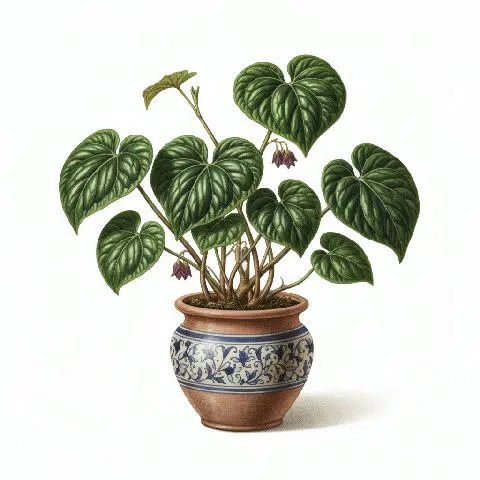
Asarum europaeum, commonly known as European wild ginger or hazelwort, is a distinctive rhizomatous perennial herb belonging to the Aristolochiaceae family.
Most thin plant articles flatten everything into a summary. This guide does the opposite by following Asarum Europaeum through identification, care, handling, and the questions that real readers actually ask.
The linked plant page remains the main internal reference point for this article, but the goal here is to turn that raw data into a readable, structured, and genuinely useful guide.
- European Wild Ginger (Asarum europaeum) is a toxic, rhizomatous perennial from the Aristolochiaceae family, distinct from true ginger.
- Historically valued for emetic, purgative, and diuretic properties, its use is now highly restricted due to severe toxicity.
- Contains nephrotoxic and carcinogenic aristolochic acids, alongside aromatic but potentially cytotoxic asarones.
- Modern research acknowledges its phytochemical profile and potential antimicrobial effects, but safe human therapeutic use is not possible.
- Strict contraindications exist for pregnant/lactating women, kidney patients, cancer patients, and children due to life-threatening risks.
Botanical Profile & Taxonomy
Asarum Europaeum should be anchored to the correct taxonomic identity before any discussion of care, use, or safety begins.
| Common name | Asarum Europaeum |
|---|---|
| Scientific name | Asarum europaeum |
| Family | Aristolochiaceae |
| Order | Piperales |
| Genus | Asarum |
| Species epithet | europaeum |
| Author citation | L. |
| Synonyms | Asarum canadense, Asarum europaeum var. majus |
| Common names | ইউরোপীয় বুনো আদা, European Wild Ginger |
| Local names | Asaret d'Europe, Asaret, Cabaret, Oreille-d'homme, Roussin, Baccaro comune, Asaret d'Europe, Alannan, Cam Ebol y Gerddi, Blanksennep, Borstsenap, Cyfoglys, Carn-yr-Ebol y Gerddi, Akurmustarður, Ager-Sennep, Dat |
| Origin | Europe (central, southern, and eastern) |
| Life cycle | Perennial |
| Growth habit | Herb |
Using the accepted scientific name Asarum europaeum helps readers avoid confusion caused by old synonyms, loose common names, or inconsistent plant labels.
Family and order placement also matter because they explain recurring structural traits, likely relatives, and the kinds of mistakes readers often make when they rely on appearance alone.
Physical Description & Morphology
A practical reading of the plant starts with visible structure: Leaf: Leaves are kidney-shaped to heart-shaped (reniform to cordate), glossy, dark green, leathery, and evergreen. They grow in pairs, opposite each other. Stem: Stems are very short, creeping, and typically hidden by the foliage, arising from a shallow, branching rhizome. They are usually greenish-brown or. Root: Possesses a shallow, creeping, branched rhizomatous root system. The rhizomes are fleshy, aromatic, and responsible for the plant's spread. Roots. Flower: Flowers are inconspicuous, solitary, bell-shaped, and usually hidden beneath the leaves, close to the ground. They are purplish-brown to. Fruit: The fruit is a fleshy, capsule-like structure containing several seeds. It is roughly globular, dehiscent, and somewhat inconspicuous, ripening in. Seed: Seeds are small, dark, and pear-shaped, approximately 3-4 mm long. They possess an elaiosome (a fleshy appendage), which attracts ants for.
Microscopic or internal identification notes deepen the picture, especially for processed material: Non-glandular, uniseriate trichomes are present on leaves and stems, often long and multicellular, contributing to the plant's hairy texture and. Anomocytic stomata are commonly observed on the abaxial (lower) leaf surface, characterized by irregular subsidiary cells that do not differ in. Powdered rhizome reveals fragments of parenchyma cells containing simple or compound starch grains, vessel elements with scalariform or reticulate.
In overall habit, the plant is described as Herb with a mature height around 10-20 cm and spread of Typically 0.2-5 m depending on species.
Natural Habitat & Distribution
The native or historically recorded center of distribution for Asarum Europaeum is Europe (central, southern, and eastern). That origin is more than background trivia; it explains how the plant responds to heat, moisture, shade, and seasonal change.
The plant is associated with the following countries or range markers: Europe (widespread).
Environmental notes in the live record add more context: Asarum europaeum naturally thrives in cool, moist, and shady environments. Its native habitat includes temperate deciduous woodlands across Europe, typically growing under the canopy of broadleaf trees. It prefers climatic zones that experience well-defined seasons, including cold winters. Altitude range is generally from sea level up to 1,500 meters.
In cultivation terms, the main ecological clues are: Full Shade; Weekly; Rich, humus-rich, well-draining loamy soil with a pH of 5.5 to 7.0 (slightly acidic to neutral). 3-7; Perennial; Herb.
Physiology data reinforce the habitat story: Tolerant to cold temperatures and moderate drought once established, but sensitive to prolonged direct sun exposure and extreme aridity, which can. C3 photosynthesis Moderate transpiration rates, requires consistent soil moisture but is sensitive to waterlogging, which can lead to root rot.
Traditional & Cultural Significance
Asarum europaeum holds no known cultural significance in Ayurveda, TCM, or Unani medicine, as it is not indigenous to Asia. Its cultural significance is rooted in European folk medicine and horticulture. In medieval Europe, it was a common ingredient in various medicinal preparations, particularly for its emetic and purgative properties. It was sometimes called 'snakewort' due to its appearance or believed efficacy.
Ethnobotanical records also show how this plant has been framed across different places: Diaphoretic in Elsewhere (Uphof, J.C. Th. 1968. Dictionary of economic plants. 2nd ed. Verlag von J. Cramer.); Emetic in Turkey (Steinmetz, E.F. 1957. codex Vegetabilis. Published by the author, Amsterdam.); Emetic in France (Uphof, J.C. Th. 1968. Dictionary of economic plants. 2nd ed. Verlag von J. Cramer.); Emmenagogue in Turkey (Steinmetz, E.F. 1957. codex Vegetabilis. Published by the author, Amsterdam.); Fever in Turkey (Steinmetz, E.F. 1957. codex Vegetabilis. Published by the author, Amsterdam.); Poison in Turkey (Steinmetz, E.F. 1957. codex Vegetabilis. Published by the author, Amsterdam.); Purgative in Turkey (Steinmetz, E.F. 1957. codex Vegetabilis. Published by the author, Amsterdam.); Sternutatory in Turkey (Steinmetz, E.F. 1957. codex Vegetabilis. Published by the author, Amsterdam.).
Local names help show how different communities notice and classify the plant: Asaret d'Europe, Asaret, Cabaret, Oreille-d'homme, Roussin, Baccaro comune, Asaret d'Europe, Alannan, Cam Ebol y Gerddi, Blanksennep, Borstsenap, Cyfoglys, Carn-yr-Ebol y Gerddi, Akurmustarður.
Traditional context matters, but it should always be separated from modern certainty. Historical use can guide questions, yet it does not automatically prove present-day clinical effectiveness.
Medicinal Properties & Health Benefits
The main benefit themes associated with the plant include: Respiratory Expectorant — Traditionally used to clear respiratory passages and relieve coughs, potentially due to asarone’s mild spasmolytic effects on. Digestive Carminative — Historically employed to alleviate bloating and cramps, with in vitro studies suggesting asarone compounds may relax intestinal smooth. Analgesic Properties — Applied topically in folk medicine for headaches and neuralgic pain, possibly through local counter-irritant or anti-inflammatory. Antioxidant Support — Contains lignans and flavonoids that exhibit free-radical scavenging activity in laboratory assays, contributing to cellular protection. Diuretic Action — Noted in historical texts and some anecdotal reports for promoting increased urinary frequency, but this effect is mild and far outweighed. Anti-inflammatory Effects (Historical) — Certain constituents, particularly flavonoids, may inhibit pro-inflammatory enzymes, aligning with traditional uses. Emetic Agent (Historical) — Historically utilized to induce vomiting, a potent emetic property attributed to its strong irritant compounds, a practice now. Purgative Action (Historical) — Employed in medieval medicine as a strong purgative to induce bowel movements, reflecting its historical use for.
The evidence matrix gives a more careful picture of those claims: Respiratory Support (historical). Historical records, anecdotal reports. Ethnobotanical/Traditional. Historically used for coughs and bronchial congestion, though direct human clinical evidence is lacking and safety is a major concern due to toxicity. Antioxidant Activity. Laboratory assays (DPPH scavenging, ORAC). In Vitro. Lignans and flavonoids show free radical scavenging ability in test tube studies, but safe human relevance is unconfirmed and internal use is contraindicated. Nephrotoxicity & Carcinogenicity. Case studies, epidemiological studies, animal models, molecular toxicology. Clinical (Human & Animal). Well-established link between aristolochic acids and severe kidney damage (nephropathy) and urothelial cancers in humans, leading to global bans. Antimicrobial Potential. Microbiological assays (agar diffusion, MIC). In Vitro. Essential oil components, including asarone, have shown inhibitory effects against various microbes and fungi in laboratory settings.
The stored evidence confidence for this profile is traditional. That should shape how strongly any benefit statement is interpreted.
For non-medicinal or mostly ornamental contexts, the safest approach is to keep the claims modest. A plant may still be valuable ecologically, visually, or culturally without being promoted as a treatment.
- Respiratory Expectorant — Traditionally used to clear respiratory passages and relieve coughs, potentially due to asarone’s mild spasmolytic effects on.
- Digestive Carminative — Historically employed to alleviate bloating and cramps, with in vitro studies suggesting asarone compounds may relax intestinal smooth.
- Analgesic Properties — Applied topically in folk medicine for headaches and neuralgic pain, possibly through local counter-irritant or anti-inflammatory.
- Antioxidant Support — Contains lignans and flavonoids that exhibit free-radical scavenging activity in laboratory assays, contributing to cellular protection.
- Diuretic Action — Noted in historical texts and some anecdotal reports for promoting increased urinary frequency, but this effect is mild and far outweighed.
- Anti-inflammatory Effects (Historical) — Certain constituents, particularly flavonoids, may inhibit pro-inflammatory enzymes, aligning with traditional uses.
- Emetic Agent (Historical) — Historically utilized to induce vomiting, a potent emetic property attributed to its strong irritant compounds, a practice now.
- Purgative Action (Historical) — Employed in medieval medicine as a strong purgative to induce bowel movements, reflecting its historical use for.
- Antimicrobial Potential — Modern research indicates potential antimicrobial and antifungal activity in extracts, likely due to its essential oil components.
- Circulatory Stimulant (Historical) — In traditional European herbalism, it was sometimes used to stimulate circulation, particularly in cases of coldness or.
Chemical Constituents & Phytochemistry
The broader constituent profile includes Aristolochic Acids — Primarily Aristolochic acid I and II, historically noted for anti-inflammatory effects but now. Asarone — Volatile phenylpropanoid, including alpha- and beta-asarone, contributing to the plant's characteristic. Lignans — Compounds such as sesamin-like derivatives, which contribute to the plant's antioxidant capacity by. Flavonoids — Includes kaempferol derivatives, known for their antioxidant and potential anti-inflammatory activities. Essential Oils — A complex mixture of volatile compounds, including asarone, responsible for the plant's pungent aroma. Phenolic Acids — Derivatives like caffeic acid or ferulic acid, which are common plant antioxidants and may contribute. Tannins — Present in many plants, tannins can contribute astringent properties, historically relevant for poultices. Saponins — Glycosides that can have expectorant and anti-inflammatory properties, potentially contributing to.
The detailed phytochemistry file adds these markers: Aristolochic Acid I, Nitrophenanthrene carboxylic acid, Rhizome, leaves, whole plant, Variablemg/g; alpha-Asarone, Phenylpropanoid, Rhizome, essential oil, 0.1-1.5%; beta-Asarone, Phenylpropanoid, Rhizome, essential oil, 0.05-1.0%; Kaempferol, Flavonoid, Leaves, Tracemg/g; Sesamin-like compounds, Lignan, Rhizome, Tracemg/g; Aristolochic Acid II, Nitrophenanthrene carboxylic acid, Rhizome, leaves, whole plant, Variablemg/g; Caffeic Acid, Phenolic Acid, Leaves, Tracemg/g.
Compound profiles also shift with plant part, age, season, processing, and storage. The chemistry of a fresh leaf, dried root, or concentrated extract should never be treated as automatically identical.
How to Use — Preparations & Dosage
Recorded preparation and use methods include Dried Rhizome Powder (Historical) — Historically administered in very small doses (e.g., 0.25-0.5g) mixed with honey or warm water for respiratory or digestive complaints, used. Tincture Preparation (Caution) — A dilute tincture (e.g., 1:5 in 40% ethanol) might have been prepared for external use or extremely low-dose internal application, strictly under. Topical Poultice (External Only) — Root powder mixed with beeswax or a carrier oil to form a warming poultice for chest congestion or localized pain, applied externally for short. Infusion/Decoction (Not Recommended) — While traditionally made into teas, this method is largely discouraged today due to the high risk of extracting nephrotoxic aristolochic. Herbal Snuff (Historical) — In medieval times, dried and powdered rhizome was used as a snuff for headaches, a practice abandoned due to potential mucous membrane irritation. Essential Oil (External Research Only) — Essential oils, rich in asarone, are sometimes extracted but strictly for external aromatic applications or research purposes, never for. Homeopathic Preparations — May be found in highly diluted homeopathic remedies, where the risk of toxicity is negligible due to extreme dilution, following specific homeopathic.
The plant part most closely linked to use is recorded as Leaves, roots, bark, seeds, flowers, or whole plant cited in related taxa.
Edibility and processing notes matter here as well: Not edible.
For garden-focused readers, this section often overlaps with practical garden use: cut flowers, pollinator support, habitat value, decorative placement, culinary handling, or any carefully documented traditional application.
- Identify the exact species and plant part first.
- Match the preparation to the intended use.
- Check safety, interactions, and processing details before routine use or large-scale handling.
Safety Profile, Side Effects & Contraindications
The first safety note is direct: Asarum europaeum is classified as a toxic plant. The entire plant, especially the rhizomes and roots, contains compounds like alpha- and beta-asarone, which are considered genotoxic, carcinogenic, and hepatotoxic in animal studies.
Specific warnings recorded for this plant include Strict Contraindication in Pregnancy/Lactation — Absolutely forbidden for pregnant or breastfeeding women due to severe potential for fetal harm. Avoid with Kidney Disease — Contraindicated in individuals with any pre-existing kidney conditions, reduced renal function, or a history of urothelial cancers. Professional Consultation Essential — Use only under the direct supervision of a highly qualified medical herbalist or physician, and only for external. Limited Duration and Dosage — If used at all (which is generally discouraged), intake should be extremely low-dose and for very short durations, with careful. External Use Caution — Even topical applications require a mandatory patch test to avoid severe skin irritation and should never be applied to broken or. Interaction with Medications — May interact dangerously with nephrotoxic drugs (e.g., NSAIDs, certain antibiotics) or chemotherapy agents, significantly. Not for Children — Completely unsuitable for use in children under 12 years of age due to their increased susceptibility to toxic compounds and lower body mass. Nephrotoxicity — Long-term or even moderate-dose intake can lead to severe, irreversible kidney damage, including acute kidney injury and aristolochic acid. Carcinogenicity — Aristolochic acids are potent carcinogens, strongly linked to urothelial cancers, particularly in the urinary tract, bladder, and kidneys. Gastrointestinal Distress — Common adverse effects include severe nausea, vomiting, abdominal pain, and diarrhea, even at historically prescribed doses.
Quality-control notes add another warning: High risk of adulteration with other Asarum species or cheaper plant materials; historically, sometimes substituted for true ginger, leading to serious health issues.
No plant should be described as universally safe. Identity, dose, plant part, preparation style, age, pregnancy status, medication use, allergies, and contamination risk all change the answer.
Growing & Cultivation Guide
The cultivation record emphasizes these practical steps: Habitat Mimicry — Thrives in moist, shady deciduous woodland environments, requiring dappled sunlight or full shade to prevent leaf scorch and mimic its natural. Soil Requirements — Prefers rich, humus-laden, well-draining soil with a slightly acidic to neutral pH (6.0-7.0), essential for healthy rhizome development and nutrient. Propagation — Can be propagated by seed, which benefits from cold stratification, or more commonly and reliably by division of its creeping rhizomes in early spring or. Watering — Requires consistently moist soil, especially during dry spells; however, avoid waterlogging to prevent root rot and ensure proper aeration. Fertilization — Benefits from an annual application of organic compost or a balanced slow-release fertilizer in spring to support lush growth and maintain soil fertility. Pest and Disease Management — Generally resistant to most pests and diseases, but slugs and snails may occasionally feed on leaves; ensure good air circulation to prevent fungal issues in humid conditions.
The broader growth environment is described like this: Asarum europaeum naturally thrives in cool, moist, and shady environments. Its native habitat includes temperate deciduous woodlands across Europe, typically growing under the canopy of broadleaf trees. It prefers climatic zones that experience well-defined seasons, including cold winters. Altitude range is generally from sea level up to 1,500 meters.
Planning becomes easier when these traits are kept in view: Herb; 10-20 cm; Typically 0.2-5 m depending on species; Beginner.
In practice, healthy cultivation comes from systems thinking rather than one-off tricks. Site choice, drainage, timing, spacing, pruning, feeding, and observation all reinforce one another.
Light, Water & Soil Requirements
The most useful care snapshot is this: Light: Full Shade; Water: Weekly; Soil: Rich, humus-rich, well-draining loamy soil with a pH of 5.5 to 7.0 (slightly acidic to neutral). Humidity: Medium; Temperature: -25-25°C; USDA zone: 3-7.
Outdoors, light, water, and soil must be read together. The same watering schedule can be too much in dense clay and too little in a porous sandy bed.
| Light | Full Shade |
|---|---|
| Water | Weekly |
| Soil | Rich, humus-rich, well-draining loamy soil with a pH of 5.5 to 7.0 (slightly acidic to neutral). |
| Humidity | Medium |
| Temperature | -25-25°C |
| USDA zone | 3-7 |
Light, water, and soil should never be treated as separate checkboxes. A plant in stronger light often dries faster, soil texture changes how quickly water moves, and temperature plus humidity influence how stress appears in leaves and roots.
For Asarum Europaeum, the safest care approach is to treat Full Shade, Weekly, and Rich, humus-rich, well-draining loamy soil with a pH of 5.5 to 7.0 (slightly acidic to neutral). as linked decisions rather than isolated tips. If one condition shifts, the other two usually need to be reconsidered as well.
Propagation Methods
Documented propagation routes include Seeds: Collect seeds when ripe (typically late spring/early summer). Sow fresh seeds directly in a prepared seedbed or pots; they require a period of cold stratification (mimicking winter) to germinate, often taking 1-2 years. Division: The most reliable method. In early spring or.
Propagation works best when the parent stock is healthy, correctly identified, and handled in the right season. That sounds obvious, but it is exactly where many failures begin.
- Seeds: Collect seeds when ripe (typically late spring/early summer). Sow fresh seeds directly in a prepared seedbed or pots
- They require a period of cold stratification (mimicking winter) to germinate, often taking 1-2 years. Division: The most reliable method. In early spring or.
Propagation works best when the reader matches method to biology. Some plants respond readily to cuttings, some to division, some to seed, and others require more patience or more exact seasonal timing.
Pest & Disease Management
The recorded problem list includes Pests: Generally resistant due to its inherent toxicity. Occasionally, slugs and snails might graze on young foliage; hand-picking or organic slug baits can be used. Fungal Diseases: Can be susceptible to root rot if soil is waterlogged; ensuring good drainage is crucial. Leaf spot diseases are rare but can occur in overly humid, poorly ventilated. remove affected leaves and ensure air circulation. Nutrient Deficiencies: Yellowing leaves (chlorosis) can indicate. applying chelated iron or amending soil with acidic organic matter can help. Stunted growth can indicate general. replenish soil with compost. Organically, maintaining healthy soil with good drainage and robust organic content is.
Garden problems are often ecological rather than mysterious. Crowding, poor airflow, overwatering, wrong siting, and delayed observation create the conditions that pests and disease exploit.
The smartest response sequence is observation first, environmental correction second, and treatment only after the real pattern is clear.
- Pests: Generally resistant due to its inherent toxicity. Occasionally, slugs and snails might graze on young foliage
- Hand-picking or organic slug baits can be used. Fungal Diseases: Can be susceptible to root rot if soil is waterlogged
- Ensuring good drainage is crucial. Leaf spot diseases are rare but can occur in overly humid, poorly ventilated.
- Remove affected leaves and ensure air circulation. Nutrient Deficiencies: Yellowing leaves (chlorosis) can indicate.
- Applying chelated iron or amending soil with acidic organic matter can help. Stunted growth can indicate general.
- Replenish soil with compost. Organically, maintaining healthy soil with good drainage and robust organic content is.
Harvesting, Storage & Processing
The plant part most often associated with harvest or processing is Leaves, roots, bark, seeds, flowers, or whole plant cited in related taxa.
Storage guidance from the quality-control record reads as follows: Dried rhizomes and extracts should be stored in airtight, dark containers, preferably in cool conditions, to prevent degradation of volatile compounds and oxidation of other.
For a garden-focused plant, harvesting may mean seed collection, cut stems, flowers, foliage, or propagation material rather than edible or medicinal processing.
Whatever the purpose, the rule is the same: harvest clean material, label it clearly, and store it in a way that preserves identity and condition.
Harvest and storage determine whether a plant's quality is preserved after it leaves the bed, pot, field, or wild source. Clean timing, correct plant part selection, and careful drying or handling all matter more than many readers expect.
Companion Planting & Garden Design
Useful companions or placement partners include Hosta; Ferns (e.g. Dryopteris filix-mas); Bleeding Heart (Dicentra spectabilis); Primroses (Primula vulgaris); Pulmonaria (Lungwort).
In a garden border or planting plan, Asarum Europaeum is easiest to use well when exposure, soil rhythm, and seasonal sequence are matched rather than improvised.
- Hosta
- Ferns (e.g).
- Dryopteris filix-mas)
- Bleeding Heart (Dicentra spectabilis)
- Primroses (Primula vulgaris)
- Pulmonaria (Lungwort).
Companion planting and design are not only aesthetic decisions. They affect airflow, root competition, moisture sharing, harvest access, visibility, and the general logic of the planting scheme.
With Asarum Europaeum, good placement means thinking about mature size, maintenance rhythm, and how neighboring plants change the feel and function of the space. A plant can be healthy on its own and still be poorly placed within the broader composition.
Scientific Research & Evidence Base
The evidence matrix points to several recurring themes: Respiratory Support (historical). Historical records, anecdotal reports. Ethnobotanical/Traditional. Historically used for coughs and bronchial congestion, though direct human clinical evidence is lacking and safety is a major concern due to toxicity. Antioxidant Activity. Laboratory assays (DPPH scavenging, ORAC). In Vitro. Lignans and flavonoids show free radical scavenging ability in test tube studies, but safe human relevance is unconfirmed and internal use is contraindicated. Nephrotoxicity & Carcinogenicity. Case studies, epidemiological studies, animal models, molecular toxicology. Clinical (Human & Animal). Well-established link between aristolochic acids and severe kidney damage (nephropathy) and urothelial cancers in humans, leading to global bans. Antimicrobial Potential. Microbiological assays (agar diffusion, MIC). In Vitro. Essential oil components, including asarone, have shown inhibitory effects against various microbes and fungi in laboratory settings.
Ethnobotanical activity records add historical reference trails: Diaphoretic — Elsewhere [Uphof, J.C. Th. 1968. Dictionary of economic plants. 2nd ed. Verlag von J. Cramer.]; Emetic — Turkey [Steinmetz, E.F. 1957. codex Vegetabilis. Published by the author, Amsterdam.]; Emetic — France [Uphof, J.C. Th. 1968. Dictionary of economic plants. 2nd ed. Verlag von J. Cramer.]; Emmenagogue — Turkey [Steinmetz, E.F. 1957. codex Vegetabilis. Published by the author, Amsterdam.]; Fever — Turkey [Steinmetz, E.F. 1957. codex Vegetabilis. Published by the author, Amsterdam.]; Poison — Turkey [Steinmetz, E.F. 1957. codex Vegetabilis. Published by the author, Amsterdam.].
The compiled source count behind the live profile is 5. That does not guarantee certainty, but it does suggest the record has been cross-checked beyond a single note.
Analytical testing notes also strengthen the evidence base: HPLC-DAD or LC-MS/MS for precise quantification of aristolochic acids and asarones; GC-MS for detailed essential oil profiling and authenticity.
A careful evidence section should say what is known, what is plausible, and what remains uncertain. Readers are better served by clear limits than by exaggerated confidence.
Buying Guide & Expert Tips
Quality markers worth checking include Alpha- and beta-asarone for essential oil content and purity; Aristolochic acids I and II for critical toxicity assessment and quantification.
Adulteration and substitution risk should not be ignored: High risk of adulteration with other Asarum species or cheaper plant materials; historically, sometimes substituted for true ginger, leading to serious health issues.
When buying Asarum Europaeum, start with verified botanical identity. The label, scientific name, and the source page should agree before you judge price, size, or claimed benefits.
For living plants, inspect roots, stem firmness, foliage health, and early pest signs. For dried or processed material, look for batch clarity, clean aroma, absence of mold, and any sign that the product has been over-processed to disguise poor quality.
Frequently Asked Questions
What is Asarum Europaeum best known for?
Asarum europaeum, commonly known as European wild ginger or hazelwort, is a distinctive rhizomatous perennial herb belonging to the Aristolochiaceae family.
Is Asarum Europaeum beginner-friendly?
That depends on the growing environment and the intended use. Some plants are easy to grow but not simple to use medicinally, while others are the opposite.
How much light does Asarum Europaeum need?
Full Shade
How often should Asarum Europaeum be watered?
Weekly
Can Asarum Europaeum be propagated at home?
Yes, but the best method depends on whether the species responds best to seed, cuttings, division, offsets, or other propagation routes.
Does Asarum Europaeum have safety concerns?
Asarum europaeum is classified as a toxic plant. The entire plant, especially the rhizomes and roots, contains compounds like alpha- and beta-asarone, which are considered genotoxic, carcinogenic, and hepatotoxic in animal studies.
What is the biggest mistake people make with Asarum Europaeum?
The most common mistake is applying generic advice instead of matching the plant to its real environment, identity, and limits.
Where can I verify more information about Asarum Europaeum?
Start with the Flora Medical Global plant profile: https://www.floramedicalglobal.com/garden-plants/asarum-europaeum
Trusted Scientific References & Further Reading
Authoritative sources and related guides:
- Wikipedia — background reference
- PubMed — peer-reviewed studies
- Kew POWO — botanical reference
- NCBI PMC — open-access research
- WHO — global health authority