Complete Guide to Autumn Crocus: Benefits, Uses, Care & Safety
 Flora Medical GlobalPublished: 4/10/2026Updated: 6/20/202620 min read
Editorial Disclaimer: This article is for informational and educational purposes only. It is not a substitute for professional medical advice, diagnosis, or treatment. Always consult a qualified healthcare provider or certified herbalist before using any plant for medicinal purposes, especially if you are pregnant, nursing, taking medication, or have a medical condition.
01Autumn Crocus: An Overview
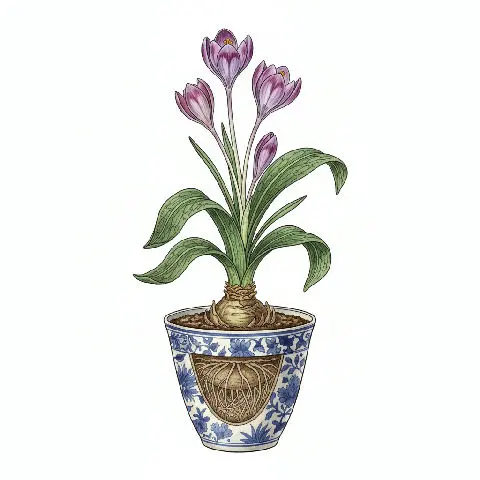
Autumn Crocus, scientifically known as Colchicum autumnale, is a captivating yet highly toxic perennial herbaceous plant belonging to the Colchicaceae family.
Most thin plant articles flatten everything into a summary. This guide does the opposite by following Autumn Crocus through identification, care, handling, and the questions that real readers actually ask.
The linked plant page remains the main internal reference point for this article, but the goal here is to turn that raw data into a readable, structured, and genuinely useful guide.
- Extremely poisonous plant, never consume directly.
- Primary source of the pharmaceutical compound colchicine.
- Colchicine is vital for treating acute gout and Familial Mediterranean Fever.
- Colchicine requires strict medical prescription and dosage control.
- Known for its potent antimitotic and anti-inflammatory properties.
- Historically used with severe toxicity risks, now a pharmaceutical source.
This guide is designed to help the reader move from scattered facts to practical understanding. Instead of relying on a thin summary, it pulls together the identity, uses, care profile, safety notes, and evidence context around Autumn Crocus so the article works as a real reference rather than a keyword page.
02Autumn Crocus Botanical Profile
Autumn Crocus should be anchored to the correct taxonomic identity before any discussion of care, use, or safety begins.
| Common name | Autumn Crocus |
|---|---|
| Scientific name | Colchicum autumnaleW |
| Family | Colchicaceae |
| Order | Liliales |
| Genus | Colchicum |
| Species epithet | autumnale |
| Author citation | L. |
| Synonyms | Colchicum autumnale f. pannonicum (Griseb. & Schenk) Domin, Colchicum autumnale subsp. vernum (Reichard) Nyman, Colchicum autumnale f. transsilvanicum (Schur) Domin, Colchicum autumnale f. milosi Gajic, Colchicum autumnale var. elatius Simonk., Bulbocodium antumnale (L.) Lapeyr., Colchicum autumnale var. vernale (Hoffm.) Nyman, Colchicum autumnale f. radei Gajic, Colchicum autumnale var. album Gray, Colchicum autumnale f. bulgaricum (Velen.) Domin, Colchicum autumnale f. macropetala Gajic, Colchicum autumnale var. pannonicum (Griseb. & Schenk) Baker |
| Common names | শরৎ কুমকুম, মেডো শ্যাফ্রন, নেকেড লেডিস, Autumn Crocus, Meadow Saffron, Naked Ladies, शरत कुमकुम, मेड़ो सैफ्रन |
| Local names | Meddyges Felen, Saffrwm y Gweunydd, Colchique d'automne, Colchique d'automne, Safran des prés, Saffrwm y Ddôl, Rudeninis vėlyvis, Herfsttijloos, Høst-tidløs, Colchico d'autunno, Saffrwm Gweirgloddiau, Nøgen jomfru, Herbst-Zeitlose |
| Origin | Mediterranean region, from the Iberian Peninsula and North Africa east to Turkey and the Caucasus, and north to Central Europe. |
| Life cycle | Perennial |
| Growth habit | Tree |
Using the accepted scientific name Colchicum autumnale helps readers avoid confusion caused by old synonyms, loose common names, or inconsistent plant labels.
Family and order placement also matter because they explain recurring structural traits, likely relatives, and the kinds of mistakes readers often make when they rely on appearance alone.
03Autumn Crocus: Physical Characteristics
A practical reading of the plant starts with visible structure:
- Leaf: Emerges in spring (March-May) after flowering. Leaves are broad, lanceolate to oblong-elliptic, glossy dark green, 20-40 cm (8-16 inches) long.
- Stem: Not visible; flowers appear directly from the underground corm. The actual stem is a very short, inconspicuous internode within the corm, from which.
- Root: Fibrous roots emerge from the base of the corm, extending shallowly into the soil.
- Flower: Funnel-shaped, crocus-like flowers that are typically pinkish-purple to lilac, sometimes white, 4-6 cm (1.5-2.5 inches) long, with six prominent.
- Fruit: A three-celled capsule (loculicidal capsule) that develops underground after autumn fertilization. It is brought to the surface in spring (May-June).
- Seed: Small, spherical to ovoid, brownish-black, approximately 2-3 mm in diameter. Dispersal is by dehiscence of the capsule, often aided by ants due to.
Microscopic or internal identification notes deepen the picture, especially for processed material: Trichomes are generally absent on the aerial parts of the Autumn Crocus, though root hairs are characteristic of the corm's epidermal layer. The leaves predominantly feature anomocytic (ranunculaceous) stomata, which are irregularly arranged and lack specific subsidiary cells surrounding. Microscopic examination of the powdered corm reveals fragments of epidermal cells, anomocytic stomata, abundant starch grains, spiral and annular.
In overall habit, the plant is described as Tree with a mature height around Typically 0.2-10 m depending on species and spread of Typically 0.2-5 m depending on species.
04Where Autumn Crocus Grows
The native or historically recorded center of distribution for Autumn Crocus is Mediterranean region, from the Iberian Peninsula and North Africa east to Turkey and the Caucasus, and north to Central Europe. That origin is more than background trivia; it explains how the plant responds to heat, moisture, shade, and seasonal change.
Explore Our Platforms
 InfiniCore DataWorks
 Nex-Automata
The plant is associated with the following countries or range markers: Austria, Belgium, Czechoslovakia, France, Germany, Great Britain, Italy, Netherlands, Poland, Romania, Switzerland, Ukraine.
Environmental notes in the live record add more context: Natural habitat includes moist, grassy meadows, pastures, and deciduous woodlands. It thrives in temperate climate zones, specifically USDA hardiness zones 4 to 9. It can be found from sea level up to altitudes of approximately 1,500 meters. It prefers areas with moderate annual rainfall, typically requiring 700 to 1,200 mm of precipitation per year.
In cultivation terms, the main ecological clues are: Full Sun; Weekly; Well-draining, humus-rich loam with a pH of 6.0 to 7.0; Species-dependent; Perennial; Tree.
Physiology data reinforce the habitat story: Successfully adapts to seasonal environmental changes by entering dormancy during dry summer periods and tolerating cold temperatures during winter. C3 photosynthesis, typical for temperate herbaceous plants, optimized for growth in its native European habitats. Exhibits moderate water use efficiency; requires adequate moisture during spring growth, becoming drought-tolerant during summer dormancy.
05Autumn Crocus: Traditional Importance
Although botanically named Crocus, it is not a true crocus and has a distinct cultural and medicinal history. Its potent toxicity meant it was generally avoided in traditional medicine systems like Ayurveda, TCM, and Unani, which emphasize herbal safety and nuanced preparations. Its primary medicinal use emerged in Western medicine, with early records dating back to ancient Greece for treating joint pain and.
Ethnobotanical records also show how this plant has been framed across different places: Alterative in Turkey (Steinmetz, E.F. 1957. codex Vegetabilis. Published by the author, Amsterdam.); Diuretic in Turkey (Steinmetz, E.F. 1957. codex Vegetabilis. Published by the author, Amsterdam.); Laxative in Turkey (Steinmetz, E.F. 1957. codex Vegetabilis. Published by the author, Amsterdam.); Leukemia in Greece (Hartwell, J.L. 1967-71. Plants used against cancer. A survey. Lloydia 30-34.); Poison in Turkey (Steinmetz, E.F. 1957. codex Vegetabilis. Published by the author, Amsterdam.); Rheumatism in Turkey (Steinmetz, E.F. 1957. codex Vegetabilis. Published by the author, Amsterdam.); Rheumatism in Elsewhere (Uphof, J.C. Th. 1968. Dictionary of economic plants. 2nd ed. Verlag von J. Cramer.); Sudorific in Turkey (Steinmetz, E.F. 1957. codex Vegetabilis. Published by the author, Amsterdam.).
Local names help show how different communities notice and classify the plant: Meddyges Felen, Saffrwm y Gweunydd, Colchique d'automne, Colchique d'automne, Safran des prés, Saffrwm y Ddôl, Rudeninis vėlyvis, Herfsttijloos, Høst-tidløs, Colchico d'autunno, Saffrwm Gweirgloddiau.
Traditional context matters, but it should always be separated from modern certainty. Historical use can guide questions, yet it does not automatically prove present-day clinical effectiveness.
06Autumn Crocus Health Benefits
The main benefit themes associated with the plant include:
- Acute Gout Flare Management — Colchicine, derived from Autumn Crocus, effectively mitigates acute gout attacks by inhibiting neutrophil migration and. Familial Mediterranean Fever (FMF) Prevention — Colchicine is a cornerstone treatment for preventing recurrent inflammatory episodes in Familial Mediterranean.
- Anti-inflammatory Action — The primary alkaloid, colchicine, exerts potent anti-inflammatory effects by disrupting microtubule assembly, which is crucial for.
- Antimitotic Activity — Colchicine binds to tubulin, inhibiting microtubule polymerization, a mechanism utilized in research and historically in conditions.
- Pain Relief in Inflammatory Conditions — Historically, the plant’s active compounds were used, with extreme caution, for their analgesic properties in various.
- Modulation of Immune Response — Colchicine influences immune cell function, which contributes to its efficacy in managing certain autoimmune-like and.
- Historical Rheumatoid Arthritis Treatment — Early Western herbalism records indicate its use for rheumatoid arthritis, though its toxicity led to its.
- Traditional Western Herbalism Use — Documented historical applications by skilled practitioners for swelling, joint pain, and other inflammatory ailments.
The evidence matrix gives a more careful picture of those claims: Acute Gout Flare Management. Randomized Controlled Trials, Meta-analyses. High. Colchicine, the active compound extracted from Autumn Crocus, is a well-established and FDA-approved pharmaceutical for acute gout. Familial Mediterranean Fever (FMF) Prevention. Randomized Controlled Trials, Cohort Studies. High. Colchicine is the cornerstone pharmacological treatment for preventing recurrent inflammatory episodes in Familial Mediterranean Fever patients. Anti-inflammatory Properties. In vitro, In vivo, Clinical Studies on Colchicine. High. Colchicine's mechanism of action involves disrupting microtubule assembly, thereby inhibiting inflammatory cell functions and cytokine release. Rheumatoid Arthritis Treatment (Historical). Historical accounts, anecdotal. Low. Historically used for rheumatoid arthritis, but direct plant use is dangerous, and modern medicine has superseded it with safer alternatives.
The stored evidence confidence for this profile is traditional. That should shape how strongly any benefit statement is interpreted.
For medicinal content, the key discipline is to distinguish traditional use, mechanism-based plausibility, and human clinical support. Those are related ideas, but they are not the same thing.
- Acute Gout Flare Management — Colchicine, derived from Autumn Crocus, effectively mitigates acute gout attacks by inhibiting neutrophil migration and.
- Familial Mediterranean Fever (FMF) Prevention — Colchicine is a cornerstone treatment for preventing recurrent inflammatory episodes in Familial Mediterranean.
- Anti-inflammatory Action — The primary alkaloid, colchicine, exerts potent anti-inflammatory effects by disrupting microtubule assembly, which is crucial for.
- Antimitotic Activity — Colchicine binds to tubulin, inhibiting microtubule polymerization, a mechanism utilized in research and historically in conditions.
- Pain Relief in Inflammatory Conditions — Historically, the plant’s active compounds were used, with extreme caution, for their analgesic properties in various.
- Modulation of Immune Response — Colchicine influences immune cell function, which contributes to its efficacy in managing certain autoimmune-like and.
- Historical Rheumatoid Arthritis Treatment — Early Western herbalism records indicate its use for rheumatoid arthritis, though its toxicity led to its.
- Traditional Western Herbalism Use — Documented historical applications by skilled practitioners for swelling, joint pain, and other inflammatory ailments.
- Potential Anti-fibrotic Research — Colchicine has been investigated for its role in preventing or reducing fibrosis in various organs due to its.
- Cell Biology Research Tool — Valued in scientific research for its specific interaction with tubulin, making it an essential tool for studying cell division.
07Autumn Crocus Phytochemistry
The broader constituent profile includes:
- Tropolone Alkaloids — The defining class of compounds in Colchicum autumnale, including colchicine, demecolcine.
- Colchicine — The most significant active alkaloid, known for its powerful antimitotic action by binding to tubulin.
- Demecolcine — A related tropolone alkaloid, also antimitotic but generally considered less toxic than colchicine.
- Colchicoside — A glycosidic derivative of colchicine, which acts as a prodrug, being hydrolyzed in the body to release.
- Colchiceine — An hydrolysis product of colchicine, which also contributes to the plant's overall toxicity profile.
- Flavonoids — Present in smaller quantities, these compounds may offer minor antioxidant or anti-inflammatory.
- Phenolic Acids — Contribute to the plant's broader phytochemical profile, though not considered primary active.
- Lipids and Fatty Acids — Found as structural components and energy reserves within the corm and seeds, without.
- Sugars and Polysaccharides — Basic carbohydrates that serve as energy storage and structural support for the plant.
The detailed phytochemistry file adds these markers: Colchicine, Tropolone Alkaloid, Corm, Seeds, Leaves, Flowers, 0.2-0.6%of dried corm weight; Demecolcine, Tropolone Alkaloid, Corm, Seeds, 0.01-0.05%of dried corm weight; Colchicoside, Glycosidic Alkaloid, Corm, Seeds, Variableof dried plant material; Colchiceine, Tropolone Alkaloid, Corm, Traceof dried corm weight; Luteolin, Flavonoid, Leaves, Flowers, TraceN/A.
Local chemistry records also support the profile: APIGENIN in Tuber (not available-not available ppm); COLCHICINE in Tuber (800.0-12300.0 ppm); SALICYLIC-ACID in Plant (not available-not available ppm); BENZOIC-ACID in Tuber (not available-not available ppm); DEMECOLCINE in Plant (not available-not available ppm); COLCHAMINE in Tuber (not available-not available ppm); STARCH in Tuber (not available-210000.0 ppm); CHELIDONIC-ACID in Plant (not available-not available ppm).
Compound profiles also shift with plant part, age, season, processing, and storage. The chemistry of a fresh leaf, dried root, or concentrated extract should never be treated as automatically identical.
08Autumn Crocus Preparations & Dosage
Recorded preparation and use methods include:
- Pharmaceutical Extraction — The only safe and recommended method of utilizing Colchicum autumnale is through industrial-scale extraction and purification of its active compound.
- Prescription Medication — Colchicine, as a purified pharmaceutical, is strictly available by prescription and administered under precise medical supervision for conditions like.
- Strict Dosage Control — Due to its narrow therapeutic index and extreme toxicity, colchicine dosage is meticulously regulated by healthcare professionals to prevent severe.
- Avoid Self-Medication — Direct consumption of any part of the Autumn Crocus plant is profoundly dangerous, highly toxic, and can be fatal; self-medication is unequivocally contraindicated. Traditional Preparations (Historical Context) — Historically, highly diluted or specially processed forms were used by expert traditional practitioners, but these methods are. Topical Application (Limited Historical Use) — Some historical accounts mention external applications, but systemic absorption can occur, making this method highly risky and not.
The plant part most closely linked to use is recorded as Leaves, roots, bark, seeds, flowers, or whole plant cited in related taxa.
Edibility and processing notes matter here as well: Species- and plant-part-dependent; verify before use.
Preparation defines the outcome. Tea, decoction, tincture, powder, fresh plant material, cooked food use, and concentrated extract cannot be discussed as if they were interchangeable.
- Identify the exact species and plant part first.
- Match the preparation to the intended use.
- Check safety, interactions, and processing details before routine use or large-scale handling.
09Autumn Crocus Side Effects & Safety
The first safety note is direct: Autumn Crocus is highly toxic. Toxicity classification is Severe (Class 1) by the American Association of Poison Control Centers. All parts of the plant are poisonous, especially the corms and seeds, which contain the highest.
Specific warnings recorded for this plant include:
- Highly Toxic Plant — All parts of Colchicum autumnale are extremely poisonous and must never be consumed directly by humans or animals; it is not safe for herbal self-treatment.
- Prescription Only — Colchicine, its active compound, is a potent medication available only by prescription and requires strict medical supervision due to its.
- Narrow Therapeutic Window — The margin between a therapeutically effective dose and a toxic, potentially fatal dose of colchicine is very small, necessitating.
- Pregnancy and Breastfeeding — Colchicine is contraindicated during pregnancy due to its teratogenic potential and should be avoided by breastfeeding mothers.
- Drug Interactions — Colchicine interacts significantly with numerous medications, particularly CYP3A4 inhibitors and P-glycoprotein inhibitors, which can.
- Liver and Kidney Impairment — Patients with hepatic or renal dysfunction require substantial dose adjustments or complete avoidance of colchicine due to.
- Children and Elderly — These populations are particularly vulnerable to colchicine toxicity and require extreme caution, with specific dosage guidelines and.
- Gastrointestinal Distress — Severe symptoms include burning sensation in the mouth and throat, intense nausea, intractable vomiting, abdominal pain, and.
- Organ Damage — Can lead to acute liver failure, severe kidney damage, and significant bone marrow suppression, resulting in blood dyscrasias like aplastic.
Quality-control notes add another warning: High risk of misidentification with edible wild plants like wild garlic or leeks, leading to severe, often fatal, poisoning incidents.
No plant should be described as universally safe. Identity, dose, plant part, preparation style, age, pregnancy status, medication use, allergies, and contamination risk all change the answer.
10Autumn Crocus Cultivation Guide
The cultivation record emphasizes these practical steps:
- Climate and Soil — Colchicum autumnale thrives in temperate regions, preferring well-drained, humus-rich soil, often found in neutral to alkaline conditions within.
- Light Requirements — Prefers full sun to partial shade, adapting well to woodland edge environments where it receives ample light during its spring leaf growth and.
- Watering — Requires moderate moisture during its active growth phase in spring; it is relatively drought-tolerant during its summer dormancy when the leaves die back.
- Propagation — Primarily propagated by division of its corms in late summer, after the leaves have withered, or from seed, though seed germination can be slow and.
- Planting Depth — Corms should be planted approximately 10-15 cm deep, allowing sufficient depth for root development and the characteristic emergence of its autumn.
- Pest and Disease Management — Generally robust, but emerging leaves can be susceptible to slug damage, and corms may suffer from rot in persistently waterlogged or.
- Harvest — For pharmaceutical purposes, corms are typically harvested after the leaves have died back, when alkaloid concentrations are optimal, though this is for.
The broader growth environment is described like this: Natural habitat includes moist, grassy meadows, pastures, and deciduous woodlands. It thrives in temperate climate zones, specifically USDA hardiness zones 4 to 9. It can be found from sea level up to altitudes of approximately 1,500 meters. It prefers areas with moderate annual rainfall, typically requiring 700 to 1,200 mm of precipitation per year.
Planning becomes easier when these traits are kept in view: Tree; Typically 0.2-10 m depending on species; Typically 0.2-5 m depending on species; Moderate; Intermediate.
In practice, healthy cultivation comes from systems thinking rather than one-off tricks. Site choice, drainage, timing, spacing, pruning, feeding, and observation all reinforce one another.
11Autumn Crocus Growing Conditions
The most useful care snapshot is this: Light: Full Sun; Water: Weekly; Soil: Well-draining, humus-rich loam with a pH of 6.0 to 7.0; Humidity: Medium; Temperature: -20-30°C; USDA zone: Species-dependent.
Outdoors, light, water, and soil must be read together. The same watering schedule can be too much in dense clay and too little in a porous sandy bed.
| Light | Full Sun |
|---|---|
| Water | Weekly |
| Soil | Well-draining, humus-rich loam with a pH of 6.0 to 7.0 |
| Humidity | Medium |
| Temperature | -20-30°C |
| USDA zone | Species-dependent |
Light, water, and soil should never be treated as separate checkboxes. A plant in stronger light often dries faster, soil texture changes how quickly water moves, and temperature plus humidity influence how stress appears in leaves and roots.
For Autumn Crocus, the safest care approach is to treat Full Sun, Weekly, and Well-draining, humus-rich loam with a pH of 6.0 to 7.0 as linked decisions rather than isolated tips. If one condition shifts, the other two usually need to be reconsidered as well.
12Autumn Crocus Propagation Methods
Documented propagation routes include The primary propagation method for Autumn Crocus is by division of corms. Annually, mature corms produce offsets. In late summer after the leaves have died. seeds can be sown fresh in autumn, but germination is often erratic and may take several years to produce flowering plants.
Propagation works best when the parent stock is healthy, correctly identified, and handled in the right season. That sounds obvious, but it is exactly where many failures begin.
- The primary propagation method for Autumn Crocus is by division of corms. Annually, mature corms produce offsets. In late summer after the leaves have died.
- Seeds can be sown fresh in autumn, but germination is often erratic and may take several years to produce flowering plants.
Propagation works best when the reader matches method to biology. Some plants respond readily to cuttings, some to division, some to seed, and others require more patience or more exact seasonal timing.
13Pests, Diseases & Disorders
The recorded problem list includes Common problems for Autumn Crocus include slug and snail damage to emerging leaves and flowers. Fusarium Basal Rot can.
For medicinal species, pest pressure is not only a horticultural issue. It also affects harvest cleanliness, storage stability, and confidence in the final material.
The smartest response sequence is observation first, environmental correction second, and treatment only after the real pattern is clear.
- Common problems for Autumn Crocus include slug and snail damage to emerging leaves and flowers. Fusarium Basal Rot can.
Pest and disease management is strongest when it begins before visible damage becomes severe. Routine observation, clean handling, sensible spacing, air movement, and balanced watering reduce many problems before treatment is even needed.
When symptoms do appear on Autumn Crocus, the most reliable response is diagnostic rather than reactive. Yellowing, spots, wilt, chewing, and stunting can all have multiple causes, so a rushed treatment can waste time or worsen the problem.
14Autumn Crocus: Harvest, Storage & Processing
The plant part most often associated with harvest or processing is Leaves, roots, bark, seeds, flowers, or whole plant cited in related taxa.
Storage guidance from the quality-control record reads as follows: Dried corms and seeds should be stored in cool, dry, dark conditions, protected from light and moisture, to preserve alkaloid stability and potency.
For medicinal plants, harvesting cannot be separated from processing. The right plant part, the right timing, and the right drying conditions all shape quality and safety.
Whatever the purpose, the rule is the same: harvest clean material, label it clearly, and store it in a way that preserves identity and condition.
15Companion Plants for Autumn Crocus
Useful companions or placement partners include Hosta; Ferns; Cyclamen hederifolium; Snowdrops; Anemone blanda.
In a home herb garden or medicinal bed, Autumn Crocus should be placed where harvesting is easy, labeling remains clear, and neighboring plants do not create confusion at collection time.
Companion planting and design are not only aesthetic decisions. They affect airflow, root competition, moisture sharing, harvest access, visibility, and the general logic of the planting scheme.
With Autumn Crocus, good placement means thinking about mature size, maintenance rhythm, and how neighboring plants change the feel and function of the space. A plant can be healthy on its own and still be poorly placed within the broader composition.
That is why the best design advice combines biology with usability. The planting should look coherent, but it should also make watering, pruning, harvest, and pest observation easier rather than harder.
16Research on Autumn Crocus
The evidence matrix points to several recurring themes: Acute Gout Flare Management. Randomized Controlled Trials, Meta-analyses. High. Colchicine, the active compound extracted from Autumn Crocus, is a well-established and FDA-approved pharmaceutical for acute gout. Familial Mediterranean Fever (FMF) Prevention. Randomized Controlled Trials, Cohort Studies. High. Colchicine is the cornerstone pharmacological treatment for preventing recurrent inflammatory episodes in Familial Mediterranean Fever patients. Anti-inflammatory Properties. In vitro, In vivo, Clinical Studies on Colchicine. High. Colchicine's mechanism of action involves disrupting microtubule assembly, thereby inhibiting inflammatory cell functions and cytokine release. Rheumatoid Arthritis Treatment (Historical). Historical accounts, anecdotal. Low. Historically used for rheumatoid arthritis, but direct plant use is dangerous, and modern medicine has superseded it with safer alternatives.
Ethnobotanical activity records add historical reference trails: Alterative — Turkey [Steinmetz, E.F. 1957. codex Vegetabilis. Published by the author, Amsterdam.]; Diuretic — Turkey [Steinmetz, E.F. 1957. codex Vegetabilis. Published by the author, Amsterdam.]; Laxative — Turkey [Steinmetz, E.F. 1957. codex Vegetabilis. Published by the author, Amsterdam.]; Leukemia — Greece [Hartwell, J.L. 1967-71. Plants used against cancer. A survey. Lloydia 30-34.]; Poison — Turkey [Steinmetz, E.F. 1957. codex Vegetabilis. Published by the author, Amsterdam.]; Rheumatism — Turkey [Steinmetz, E.F. 1957. codex Vegetabilis. Published by the author, Amsterdam.].
The compiled source count behind the live profile is 8. That does not guarantee certainty, but it does suggest the record has been cross-checked beyond a single note.
Analytical testing notes also strengthen the evidence base: HPLC for precise alkaloid quantification, TLC for qualitative identification, and macroscopic/microscopic examination for botanical authenticity.
A careful evidence section should say what is known, what is plausible, and what remains uncertain. Readers are better served by clear limits than by exaggerated confidence.
17Autumn Crocus Buying Guide
Quality markers worth checking include Colchicine, demecolcine, and colchicoside are critical marker compounds for identification and quantification, typically analyzed by HPLC-UV or LC-MS.
Adulteration and substitution risk should not be ignored: High risk of misidentification with edible wild plants like wild garlic or leeks, leading to severe, often fatal, poisoning incidents.
When buying Autumn Crocus, start with verified botanical identity. The label, scientific name, and the source page should agree before you judge price, size, or claimed benefits.
For living plants, inspect roots, stem firmness, foliage health, and early pest signs. For dried or processed material, look for batch clarity, clean aroma, absence of mold, and any sign that the product has been over-processed to disguise poor quality.
18Frequently Asked Questions
What is Autumn Crocus best known for?
Autumn Crocus, scientifically known as Colchicum autumnale, is a captivating yet highly toxic perennial herbaceous plant belonging to the Colchicaceae family.
Is Autumn Crocus beginner-friendly?
That depends on the growing environment and the intended use. Some plants are easy to grow but not simple to use medicinally, while others are the opposite.
How much light does Autumn Crocus need?
Full Sun
How often should Autumn Crocus be watered?
Weekly
Can Autumn Crocus be propagated at home?
Yes, but the best method depends on whether the species responds best to seed, cuttings, division, offsets, or other propagation routes.
Does Autumn Crocus have safety concerns?
Autumn Crocus is highly toxic. Toxicity classification is Severe (Class 1) by the American Association of Poison Control Centers. All parts of the plant are poisonous, especially the corms and seeds, which contain the highest.
What is the biggest mistake people make with Autumn Crocus?
The most common mistake is applying generic advice instead of matching the plant to its real environment, identity, and limits.
Where can I verify more information about Autumn Crocus?
Start with the Flora Medical Global plant profile: https://www.floramedicalglobal.com/medicinal-plants/autumn-crocus
19Autumn Crocus: Scientific References
Authoritative sources and related guides:
- Wikipedia — background reference
- PubMed — peer-reviewed studies
- Kew POWO — botanical reference
- NCBI PMC — open-access research
- WHO — global health authority
Related on Flora Medical Global
Reviewed by the Flora Medical Global Botanical Review Panel
Multi-disciplinary editorial group · Botany · Ethnobotany · Herbal-medicine literature
Who reviewed this: This page was checked by the Flora Medical Global Botanical Review Panel — an in-house editorial group of botany graduates, ethnobotany researchers, and horticulture practitioners who collectively maintain our 7,000+ plant encyclopedia. Meet the team.
Our 4-step verification process
1. Taxonomic verification
Scientific names and synonyms cross-checked against Kew POWO, World Flora Online, and The Plant List.
2. Phytochemical & medicinal cross-reference
Active compounds, traditional uses, and reported activities are cross-referenced with PubMed, USDA Dr. Duke's database, and peer-reviewed ethnobotanical literature.
3. Conservation & distribution check
Distribution, ecology, and conservation status confirmed against GBIF occurrence records and the IUCN Red List.
4. Editorial & safety review
Every entry passes an editorial pass for clarity, originality, and safety notices (toxicity, contraindications, dosage caveats) before publication.
Last reviewed:
Important medical disclaimer: This content is for educational and research purposes only. It is not medical advice and is not a substitute for consultation with a licensed healthcare provider. Do not use any herb to self-treat a medical condition without professional guidance.
Explore Our Platforms
Comments (0)
No comments yet. Be the first!