
Overview & Introduction
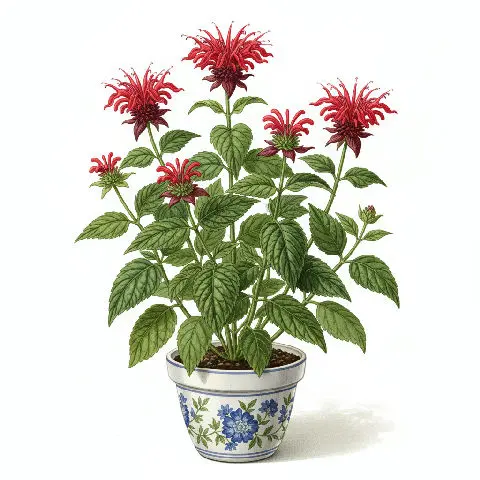
Monarda didyma, commonly known as Bee Balm, Bergamot, or Oswego Tea, is a captivating herbaceous perennial belonging to the Lamiaceae (mint) family.
A good article on Bee Balm should not stop at one-line claims. Readers need taxonomy, habitat, safety, cultivation, and evidence in the same place so they can make sound decisions.
The aim is simple: make the article detailed enough for serious readers while keeping the structure clear enough for fast scanning and confident decision-making.
- Monarda didyma, or Bee Balm, is a North American native perennial in the mint family.
- Known for its vibrant flowers, square stems, and minty-citrus aroma.
- Traditionally used by Indigenous peoples for medicinal teas and culinary purposes.
- Key active compound is thymol, offering strong antimicrobial and antiseptic benefits.
- Used to support respiratory health, digestion, and topical wound healing.
- Valued for its role as a pollinator attractant and its historical significance during the American Revolution.
This guide is designed to help the reader move from scattered facts to practical understanding. Instead of relying on a thin summary, it pulls together the identity, uses, care profile, safety notes, and evidence context around Bee Balm so the article works as a real reference rather than a keyword page.
Botanical Profile & Taxonomy
Bee Balm should be anchored to the correct taxonomic identity before any discussion of care, use, or safety begins.
| Common name | Bee Balm |
|---|---|
| Scientific name | Monarda didyma |
| Family | Lamiaceae |
| Order | Lamiales |
| Genus | Monarda |
| Species epithet | didyma |
| Author citation | L. |
| Synonyms | Monarda oswegoensis W.P.C.Barton, Monarda kalmiana Pursh, Monarda purpurea Lam., Monarda purpurascens Wender., Monarda coccinea Michx., Monarda didyma var. angustifolia Torr., Monarda contorta C.Morren, Monarda didynama Stokes |
| Common names | বি বাম, ওসওয়েগো টি, বার্গামট, হর্সমিন্ট, Bee Balm, Oswego Tea, Bergamot, Horsemint, बी बाम, ओसवेगो चाय, बर्गमोट, घोड़ामिंट |
| Local names | Monarde didyme, Scharlach-Goldmelisse, hestemynte, Scharlach-Indianernessel, monarda, bee balm, blodröd temynta, monarda dvojmocná, Bergamotplant, Oswego tea, etasjeblomst, Scharlach-Monarde |
| Origin | Eastern North America (United States, Canada) |
| Life cycle | Perennial |
| Growth habit | Tree |
Using the accepted scientific name Monarda didyma helps readers avoid confusion caused by old synonyms, loose common names, or inconsistent plant labels.
Family and order placement also matter because they explain recurring structural traits, likely relatives, and the kinds of mistakes readers often make when they rely on appearance alone.
Physical Description & Morphology
A practical reading of the plant starts with visible structure: Leaf: Opposite, ovate to lanceolate, serrated margins, 7-15 cm long, dark green, often with a reddish tint, aromatic when crushed, with prominent veins. Stem: Square, erect, branched, 0.6-1.5 meters tall, sometimes purplish, sparsely hairy to glabrous. Root: Fibrous, shallow, rhizomatous root system forming clumps. Flower: Tubular, two-lipped (labiate), scarlet red to purplish-pink, less commonly white. Arranged in dense, globose, terminal heads (verticillasters) 5-8. Fruit: Small, dry, smooth, dark brown nutlets (achenes), contained within the persistent calyx. Seed: Approximately 1-2 mm long, ovoid to oblong, dark brown, smooth surface. Dispersal primarily by gravity, some wind dispersal possible.
Microscopic or internal identification notes deepen the picture, especially for processed material: Both glandular and non-glandular trichomes are present; glandular trichomes are often capitate or peltate, responsible for essential oil production. Diacytic stomata are characteristic of the Lamiaceae family, where two subsidiary cells are arranged perpendicular to the guard cells. Powdered material reveals fragments of epidermal cells with diacytic stomata, glandular and non-glandular trichomes, vessel elements with various.
In overall habit, the plant is described as Tree with a mature height around Scarlet beebalm is native to Eastern Nor and spread of Typically 0.5-3 m.
Natural Habitat & Distribution
The native or historically recorded center of distribution for Bee Balm is Eastern North America (United States, Canada). That origin is more than background trivia; it explains how the plant responds to heat, moisture, shade, and seasonal change.
The plant is associated with the following countries or range markers: Canada, United States.
Environmental notes in the live record add more context: Natural habitat includes moist woodlands, stream banks, and open meadows across eastern and central North America. Thrives in USDA Hardiness Zones 4-9. Prefers loamy, humus-rich soil but adapts to poorer soils. Altitude range typically from sea level up to 1500 meters. Requires evenly moist soil and annual rainfall of 75-150 cm, but can tolerate some.
In cultivation terms, the main ecological clues are: Full Sun; Weekly; Well-drained loam with a high organic matter content, pH 6.0-7.0; Often 6-10; species-dependent; Perennial; Tree.
Physiology data reinforce the habitat story: Shows some tolerance to drought once established but prefers consistent moisture; susceptible to fungal diseases like powdery mildew under high. Monarda didyma utilizes C3 photosynthesis, typical for most temperate zone plants. Exhibits moderate to high transpiration rates, especially in full sun and well-watered conditions, contributing to its preference for moist habitats.
Traditional & Cultural Significance
Monarda didyma holds deep cultural significance, primarily within various Native American tribes of Eastern North America. It was a cornerstone of healing and daily life for groups like the Oswego, Cherokee, Iroquois, and Delaware nations. The Oswego people famously brewed a pungent, flavorful tea from its leaves, known as Oswego Tea, which gained prominence as a substitute for imported British tea during the.
Ethnobotanical records also show how this plant has been framed across different places: Apertif in German (Steinmetz, E.F. 1957. codex Vegetabilis. Published by the author, Amsterdam.); Carminative in English (Steinmetz, E.F. 1957. codex Vegetabilis. Published by the author, Amsterdam.); Digestive in English (Steinmetz, E.F. 1957. codex Vegetabilis. Published by the author, Amsterdam.); Emmenagogue in US (Steinmetz, E.F. 1957. codex Vegetabilis. Published by the author, Amsterdam.); Hair-Oil in US(Amerindian) (Uphof, J.C. Th. 1968. Dictionary of economic plants. 2nd ed. Verlag von J. Cramer.); Hemostat in US (Steinmetz, E.F. 1957. codex Vegetabilis. Published by the author, Amsterdam.); Medicine in US(Appalachia) (Duke, 1992 *); Stimulant in French (Steinmetz, E.F. 1957. codex Vegetabilis. Published by the author, Amsterdam.).
Local names help show how different communities notice and classify the plant: Monarde didyme, Scharlach-Goldmelisse, hestemynte, Scharlach-Indianernessel, monarda, bee balm, blodröd temynta, monarda dvojmocná, Bergamotplant, Oswego tea.
Traditional context matters, but it should always be separated from modern certainty. Historical use can guide questions, yet it does not automatically prove present-day clinical effectiveness.
Medicinal Properties & Health Benefits
The main benefit themes associated with the plant include: Antimicrobial Activity — Monarda didyma exhibits strong antimicrobial properties, primarily due to its high thymol content, which can combat various bacteria. Respiratory Support — Traditional use as an expectorant and decongestant makes Bee Balm beneficial for upper respiratory problems, colds, flu, and coughs. Digestive Aid — Infusions of Bee Balm have been historically used to alleviate digestive discomforts such as gas, bloating, diarrhea, and nausea, promoting. Anti-inflammatory Effects — The plant's constituents may possess anti-inflammatory properties, offering relief from localized inflammation, muscle aches, and. Topical Wound Healing — Applied as a poultice or infused oil, Bee Balm can aid in the healing of minor wounds, cuts, and skin irritations, leveraging its. Oral Health Support — A strong infusion used as a mouthwash can provide relief from sore throats, toothaches, and mouth sores due to its antiseptic and. Fever Reduction — Traditionally, Bee Balm tea was consumed to help reduce fevers, likely through its diaphoretic action that promotes sweating and cools the. Immune System Modulation — The presence of various bioactive compounds may support and modulate the immune system, enhancing the body's natural defenses.
The evidence matrix gives a more careful picture of those claims: Relief from upper respiratory symptoms (colds, flu, coughs). Ethnobotanical records, Historical accounts. Traditional Use / Anecdotal. Widely documented use by Indigenous peoples of North America and early American colonists for respiratory ailments. Antimicrobial and antiseptic effects for wounds and infections. Phytochemical analysis, Microbiological assays. In vitro / Traditional Use. Presence of thymol supports traditional topical applications for skin issues and suggests strong antimicrobial potential. Digestive aid for gas, nausea, and diarrhea. Ethnobotanical records. Traditional Use / Anecdotal. Historically consumed as a tea to soothe various gastrointestinal discomforts. Anti-inflammatory and pain-relieving properties for muscle aches and sore throats. Ethnobotanical records, Chemical constituent analysis. Traditional Use / Phytochemical basis. Used topically for muscle spasms and as a gargle, supported by the presence of anti-inflammatory compounds.
The stored evidence confidence for this profile is traditional. That should shape how strongly any benefit statement is interpreted.
For medicinal content, the key discipline is to distinguish traditional use, mechanism-based plausibility, and human clinical support. Those are related ideas, but they are not the same thing.
- Antimicrobial Activity — Monarda didyma exhibits strong antimicrobial properties, primarily due to its high thymol content, which can combat various bacteria.
- Respiratory Support — Traditional use as an expectorant and decongestant makes Bee Balm beneficial for upper respiratory problems, colds, flu, and coughs.
- Digestive Aid — Infusions of Bee Balm have been historically used to alleviate digestive discomforts such as gas, bloating, diarrhea, and nausea, promoting.
- Anti-inflammatory Effects — The plant's constituents may possess anti-inflammatory properties, offering relief from localized inflammation, muscle aches, and.
- Topical Wound Healing — Applied as a poultice or infused oil, Bee Balm can aid in the healing of minor wounds, cuts, and skin irritations, leveraging its.
- Oral Health Support — A strong infusion used as a mouthwash can provide relief from sore throats, toothaches, and mouth sores due to its antiseptic and.
- Fever Reduction — Traditionally, Bee Balm tea was consumed to help reduce fevers, likely through its diaphoretic action that promotes sweating and cools the.
- Immune System Modulation — The presence of various bioactive compounds may support and modulate the immune system, enhancing the body's natural defenses.
- Antispasmodic Properties — Bee Balm has been used to calm muscle spasms, including those associated with whooping cough, providing relief from involuntary.
- Insect Repellent — The strong aromatic compounds, particularly thymol, act as a natural insect repellent, useful in salves or as a diffused essential oil.
Chemical Constituents & Phytochemistry
The broader constituent profile includes Monoterpenes — The most prominent monoterpene is thymol, a potent antiseptic and antifungal compound responsible for. Phenolic Acids — Compounds like rosmarinic acid and caffeic acid are present, known for their antioxidant and. Flavonoids — Various flavonoids, such as apigenin and luteolin, contribute to the plant's antioxidant and. Tannins — These astringent compounds are responsible for some of Bee Balm’s traditional uses in wound healing and as a. Sesquiterpenes — While less abundant than monoterpenes, some sesquiterpenes may be present, contributing to the. Glycosides — These compounds can have diverse pharmacological activities, though specific ones in Monarda didyma. Sterols — Plant sterols are present, which can have cholesterol-lowering and anti-inflammatory effects. Volatile Oils — The essential oil of Monarda didyma is rich in the aforementioned monoterpenes, providing its.
The detailed phytochemistry file adds these markers: Thymol, Monoterpene phenol, Leaves, Flowers (Essential oil), Varies% of essential oil; Carvacrol, Monoterpene phenol, Leaves, Flowers (Essential oil), Varies% of essential oil; p-Cymene, Monoterpene hydrocarbon, Leaves, Flowers (Essential oil), Varies% of essential oil; Gamma-Terpinene, Monoterpene hydrocarbon, Leaves, Flowers (Essential oil), Varies% of essential oil; Rosmarinic Acid, Phenolic acid, Leaves, Varies% dry weight; Luteolin, Flavonoid, Leaves, Flowers, Trace% dry weight.
Local chemistry records also support the profile: URSOLIC-ACID in Leaf (not available-not available ppm); THYMOL in Plant (5.0-50.0 ppm); 1,8-CINEOLE in Flower (not available-22.0 ppm); 1,8-CINEOLE in Leaf (30.0-50.0 ppm); 1,8-CINEOLE in Plant (100.0-2735.0 ppm); LIMONENE in Flower (not available-10.0 ppm); LIMONENE in Leaf (25.0-40.0 ppm); LIMONENE in Plant (2.0-1300.0 ppm).
Compound profiles also shift with plant part, age, season, processing, and storage. The chemistry of a fresh leaf, dried root, or concentrated extract should never be treated as automatically identical.
How to Use — Preparations & Dosage
Recorded preparation and use methods include Herbal Tea (Infusion) — Steep 1-2 teaspoons of dried leaves and flowers in hot water for 5-10 minutes to make 'Oswego Tea' for respiratory or digestive relief. Steam Inhalation — Add fresh or dried leaves to a bowl of hot water for aromatic steam to clear sinuses and soothe respiratory passages. Topical Poultice — Crush fresh leaves and flowers to apply directly to minor wounds, insect bites, or skin irritations for antiseptic and soothing effects. Herbal Bath — Place fresh or dried leaves in a muslin bag and add to bathwater to relieve sore muscles and promote relaxation. Mouthwash/Gargle — Prepare a strong infusion to use as a gargle for sore throats, mouth sores, or toothaches, utilizing its antimicrobial properties. Culinary Uses — Incorporate fresh petals into salads for a spicy flavor and vibrant color, or use leaves to flavor jellies, sorbets, syrups, and marinades for wild game. Infused Honey/Elixir — Infuse Bee Balm into honey or create an herbal elixir for a tasty and medicinal preparation, particularly beneficial for coughs and colds.
The plant part most closely linked to use is recorded as Leaves, bark, roots, seeds, or berries cited in related taxa.
Edibility and processing notes matter here as well: Varies by species and plant part; verify before use.
Preparation defines the outcome. Tea, decoction, tincture, powder, fresh plant material, cooked food use, and concentrated extract cannot be discussed as if they were interchangeable.
- Identify the exact species and plant part first.
- Match the preparation to the intended use.
- Check safety, interactions, and processing details before routine use or large-scale handling.
Safety Profile, Side Effects & Contraindications
The first safety note is direct: Monarda didyma is generally considered safe for culinary and medicinal use in recommended doses. High concentrations of the essential oil, especially thymol, can be skin irritants for sensitive individuals, potentially causing dermatitis.
Specific warnings recorded for this plant include Pregnancy and Lactation — Avoid use during pregnancy and breastfeeding due to insufficient safety data and potential uterine stimulant effects. Children — Use with caution in young children, preferably under the guidance of a healthcare professional, and always in diluted forms. Skin Irritation — Perform a patch test before extensive topical application, especially for individuals with sensitive skin, to check for reactions. Internal Use — Adhere to recommended dosages for internal consumption; excessive intake may lead to adverse effects. Allergy — Individuals with known allergies to plants in the mint family (Lamiaceae) should exercise caution. Drug Interactions — Consult a healthcare provider before use if taking any medications, particularly anticoagulants or those metabolized by the liver. Quality and Purity — Ensure the source of Bee Balm is reputable to avoid contamination or misidentification, especially when foraging. Allergic Reactions — Individuals sensitive to plants in the Lamiaceae family may experience skin irritation or allergic reactions. Skin Sensitivity — Topical application of concentrated essential oil or strong preparations may cause skin irritation in sensitive individuals.
Quality-control notes add another warning: Risk of adulteration with other Monarda species (e.g., M. fistulosa) or unrelated Lamiaceae species; proper botanical identification is crucial.
No plant should be described as universally safe. Identity, dose, plant part, preparation style, age, pregnancy status, medication use, allergies, and contamination risk all change the answer.
Growing & Cultivation Guide
The cultivation record emphasizes these practical steps: Site Selection — Plant Monarda didyma in a location with full sun to partial shade for optimal growth and flowering. Soil Requirements — Prefers moist, well-draining soil, but can tolerate heavy clay soils if kept consistently moist. Propagation — Best propagated by root division in spring or by seeds; seeds require stratification and take 10-40 days to germinate. Watering — Requires consistent moisture, especially during dry periods; avoid letting the soil dry out completely. Pest and Disease Management — Prone to powdery mildew, particularly in humid conditions; select resistant cultivars or ensure good air circulation to mitigate.
The broader growth environment is described like this: Natural habitat includes moist woodlands, stream banks, and open meadows across eastern and central North America. Thrives in USDA Hardiness Zones 4-9. Prefers loamy, humus-rich soil but adapts to poorer soils. Altitude range typically from sea level up to 1500 meters. Requires evenly moist soil and annual rainfall of 75-150 cm, but can tolerate some.
Planning becomes easier when these traits are kept in view: Tree; Scarlet beebalm is native to Eastern Nor; Typically 0.5-3 m; Intermediate.
In practice, healthy cultivation comes from systems thinking rather than one-off tricks. Site choice, drainage, timing, spacing, pruning, feeding, and observation all reinforce one another.
Light, Water & Soil Requirements
The most useful care snapshot is this: Light: Full Sun; Water: Weekly; Soil: Well-drained loam with a high organic matter content, pH 6.0-7.0; Humidity: Medium; Temperature: -30-30°C; USDA zone: Often 6-10; species-dependent.
Outdoors, light, water, and soil must be read together. The same watering schedule can be too much in dense clay and too little in a porous sandy bed.
| Light | Full Sun |
|---|---|
| Water | Weekly |
| Soil | Well-drained loam with a high organic matter content, pH 6.0-7.0 |
| Humidity | Medium |
| Temperature | -30-30°C |
| USDA zone | Often 6-10; species-dependent |
Light, water, and soil should never be treated as separate checkboxes. A plant in stronger light often dries faster, soil texture changes how quickly water moves, and temperature plus humidity influence how stress appears in leaves and roots.
For Bee Balm, the safest care approach is to treat Full Sun, Weekly, and Well-drained loam with a high organic matter content, pH 6.0-7.0 as linked decisions rather than isolated tips. If one condition shifts, the other two usually need to be reconsidered as well.
Propagation Methods
Documented propagation routes include Seeds: Sow seeds indoors 6-8 weeks before the last frost, barely covering with soil, or direct sow outdoors after last frost. Seeds require light for.
Propagation works best when the parent stock is healthy, correctly identified, and handled in the right season. That sounds obvious, but it is exactly where many failures begin.
- Seeds: Sow seeds indoors 6-8 weeks before the last frost, barely covering with soil, or direct sow outdoors after last frost. Seeds require light for.
Propagation works best when the reader matches method to biology. Some plants respond readily to cuttings, some to division, some to seed, and others require more patience or more exact seasonal timing.
A successful propagation guide therefore starts with healthy parent material and realistic expectations. Weak stock, rushed handling, and poor aftercare can make even a technically correct method fail.
For Bee Balm, the real goal is not simply to produce another plant, but to produce a correctly identified, vigorous, well-established plant that continues growing without hidden stress from the first stage.
Pest & Disease Management
The recorded problem list includes Common pests: Spider mites (especially in hot, dry conditions), thrips, and aphids. Organic solutions: Introduce. use neem oil spray; blast with strong water spray. Fungal diseases: Powdery mildew is very common, particularly in humid, crowded. apply chelated iron foliar spray; ensure good drainage.
For medicinal species, pest pressure is not only a horticultural issue. It also affects harvest cleanliness, storage stability, and confidence in the final material.
The smartest response sequence is observation first, environmental correction second, and treatment only after the real pattern is clear.
- Common pests: Spider mites (especially in hot, dry conditions), thrips, and aphids. Organic solutions: Introduce.
- Use neem oil spray
- Blast with strong water spray. Fungal diseases: Powdery mildew is very common, particularly in humid, crowded.
- Apply chelated iron foliar spray
- Ensure good drainage.
Harvesting, Storage & Processing
The plant part most often associated with harvest or processing is Leaves, bark, roots, seeds, or berries cited in related taxa.
Storage guidance from the quality-control record reads as follows: Dried plant material should be stored in airtight, dark containers in a cool, dry place to prevent loss of volatile oils and degradation of active compounds, maintaining.
For medicinal plants, harvesting cannot be separated from processing. The right plant part, the right timing, and the right drying conditions all shape quality and safety.
Whatever the purpose, the rule is the same: harvest clean material, label it clearly, and store it in a way that preserves identity and condition.
Harvest and storage determine whether a plant's quality is preserved after it leaves the bed, pot, field, or wild source. Clean timing, correct plant part selection, and careful drying or handling all matter more than many readers expect.
Companion Planting & Garden Design
Useful companions or placement partners include Coneflower (Echinacea purpurea); Phlox (Phlox paniculata); Tall Garden Phlox; Liatris (Liatris spicata); Rudbeckia (Rudbeckia hirta).
In a home herb garden or medicinal bed, Bee Balm should be placed where harvesting is easy, labeling remains clear, and neighboring plants do not create confusion at collection time.
- Coneflower (Echinacea purpurea)
- Phlox (Phlox paniculata)
- Tall Garden Phlox
- Liatris (Liatris spicata)
- Rudbeckia (Rudbeckia hirta)
Companion planting and design are not only aesthetic decisions. They affect airflow, root competition, moisture sharing, harvest access, visibility, and the general logic of the planting scheme.
With Bee Balm, good placement means thinking about mature size, maintenance rhythm, and how neighboring plants change the feel and function of the space. A plant can be healthy on its own and still be poorly placed within the broader composition.
Scientific Research & Evidence Base
The evidence matrix points to several recurring themes: Relief from upper respiratory symptoms (colds, flu, coughs). Ethnobotanical records, Historical accounts. Traditional Use / Anecdotal. Widely documented use by Indigenous peoples of North America and early American colonists for respiratory ailments. Antimicrobial and antiseptic effects for wounds and infections. Phytochemical analysis, Microbiological assays. In vitro / Traditional Use. Presence of thymol supports traditional topical applications for skin issues and suggests strong antimicrobial potential. Digestive aid for gas, nausea, and diarrhea. Ethnobotanical records. Traditional Use / Anecdotal. Historically consumed as a tea to soothe various gastrointestinal discomforts. Anti-inflammatory and pain-relieving properties for muscle aches and sore throats. Ethnobotanical records, Chemical constituent analysis. Traditional Use / Phytochemical basis. Used topically for muscle spasms and as a gargle, supported by the presence of anti-inflammatory compounds.
Ethnobotanical activity records add historical reference trails: Apertif — German [Steinmetz, E.F. 1957. codex Vegetabilis. Published by the author, Amsterdam.]; Carminative — English [Steinmetz, E.F. 1957. codex Vegetabilis. Published by the author, Amsterdam.]; Digestive — English [Steinmetz, E.F. 1957. codex Vegetabilis. Published by the author, Amsterdam.]; Emmenagogue — US [Steinmetz, E.F. 1957. codex Vegetabilis. Published by the author, Amsterdam.]; Hair-Oil — US(Amerindian) [Uphof, J.C. Th. 1968. Dictionary of economic plants. 2nd ed. Verlag von J. Cramer.]; Hemostat — US [Steinmetz, E.F. 1957. codex Vegetabilis. Published by the author, Amsterdam.].
The compiled source count behind the live profile is 8. That does not guarantee certainty, but it does suggest the record has been cross-checked beyond a single note.
Analytical testing notes also strengthen the evidence base: Gas Chromatography-Mass Spectrometry (GC-MS) for essential oil composition, High-Performance Liquid Chromatography (HPLC) for phenolic compounds, and macroscopic/microscopic.
A careful evidence section should say what is known, what is plausible, and what remains uncertain. Readers are better served by clear limits than by exaggerated confidence.
Evidence note: this section blends the live plant record, local ethnobotanical activity data, chemistry records, and the linked Flora Medical Global plant profile for Bee Balm.
Buying Guide & Expert Tips
Quality markers worth checking include Thymol and carvacrol are key marker compounds for standardization, reflecting the plant's primary medicinal properties.
Adulteration and substitution risk should not be ignored: Risk of adulteration with other Monarda species (e.g., M. fistulosa) or unrelated Lamiaceae species; proper botanical identification is crucial.
When buying Bee Balm, start with verified botanical identity. The label, scientific name, and the source page should agree before you judge price, size, or claimed benefits.
For living plants, inspect roots, stem firmness, foliage health, and early pest signs. For dried or processed material, look for batch clarity, clean aroma, absence of mold, and any sign that the product has been over-processed to disguise poor quality.
Buying advice should begin with identity. The label, scientific name, visible condition, and seller credibility should agree before price or convenience becomes the deciding factor.
Frequently Asked Questions
What is Bee Balm best known for?
Monarda didyma, commonly known as Bee Balm, Bergamot, or Oswego Tea, is a captivating herbaceous perennial belonging to the Lamiaceae (mint) family.
Is Bee Balm beginner-friendly?
That depends on the growing environment and the intended use. Some plants are easy to grow but not simple to use medicinally, while others are the opposite.
How much light does Bee Balm need?
Full Sun
How often should Bee Balm be watered?
Weekly
Can Bee Balm be propagated at home?
Yes, but the best method depends on whether the species responds best to seed, cuttings, division, offsets, or other propagation routes.
Does Bee Balm have safety concerns?
Monarda didyma is generally considered safe for culinary and medicinal use in recommended doses. High concentrations of the essential oil, especially thymol, can be skin irritants for sensitive individuals, potentially causing dermatitis.
What is the biggest mistake people make with Bee Balm?
The most common mistake is applying generic advice instead of matching the plant to its real environment, identity, and limits.
Where can I verify more information about Bee Balm?
Start with the Flora Medical Global plant profile: https://www.floramedicalglobal.com/plant/bee-balm
Why do sources sometimes disagree about Bee Balm?
Different references may use different synonyms, plant parts, cultivation conditions, or evidence standards. That is why taxonomy and source quality both matter.