Complete Guide to Begonia Amphioxus: Uses, Growing, Care & Safety
 Flora Medical GlobalPublished: 4/10/2026Updated: 6/20/202619 min read
Editorial Disclaimer: This article is for informational and educational purposes only. It is not a substitute for professional medical advice, diagnosis, or treatment. Always consult a qualified healthcare provider or certified herbalist before using any plant for medicinal purposes, especially if you are pregnant, nursing, taking medication, or have a medical condition.
01Introduction to Begonia Amphioxus
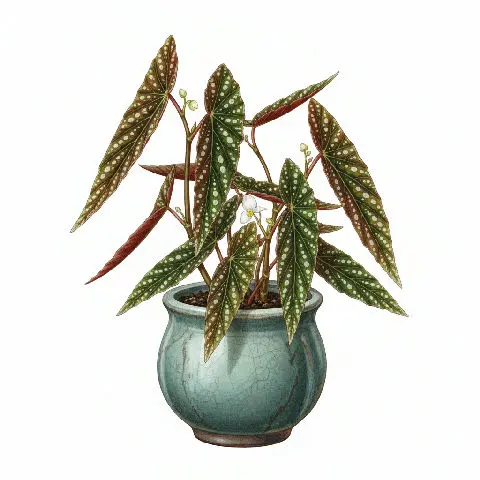
Begonia amphioxus, often recognized by its evocative common names such as 'Dart Begonia' or 'Butterfly Begonia', stands as a captivating and highly coveted species within the diverse Begoniaceae family.
A good article on Begonia Amphioxus should not stop at one-line claims. Readers need taxonomy, habitat, safety, cultivation, and evidence in the same place so they can make sound decisions.
The linked plant page remains the main internal reference point for this article, but the goal here is to turn that raw data into a readable, structured, and genuinely useful guide.
- Unique Foliage — Celebrated for its distinct lance-shaped leaves with vivid green and crimson markings, resembling butterfly wings.
- Bornean Origin — Native to the humid primary forests of Sarawak, Borneo, thriving in the understory.
- Horticultural Rarity — Highly sought-after ornamental species, particularly for specialized collections and terrariums.
- High Humidity Needs — Thrives exclusively in environments with 60-100% humidity and stable warm temperatures.
- No Documented Medicinal Use — Currently lacks established traditional or scientific medicinal applications for human health.
- Phytochemistry Underexplored — Specific chemical constituents and pharmacological activities are largely unknown and require dedicated.
02Begonia Amphioxus Botanical Profile
Begonia Amphioxus should be anchored to the correct taxonomic identity before any discussion of care, use, or safety begins.
| Common name | Begonia Amphioxus |
|---|---|
| Scientific name | Begonia amphioxusW |
| Family | Begoniaceae |
| Order | Cucurbitales |
| Genus | Begonia |
| Species epithet | amphioxus |
| Author citation | G. Don |
| Common names | বেগোনিয়া অ্যামফিওক্সাস, Begonia Amphioxus |
| Origin | Bornean rainforests of Southeast Asia (Malaysia, Indonesia) |
| Growth habit | Tree |
Using the accepted scientific name Begonia amphioxus helps readers avoid confusion caused by old synonyms, loose common names, or inconsistent plant labels.
Family and order placement also matter because they explain recurring structural traits, likely relatives, and the kinds of mistakes readers often make when they rely on appearance alone.
Correct naming is not a small detail. A plant can collect multiple common names, outdated synonyms, and marketing labels over time, so using Begonia amphioxus consistently reduces the risk of confusion, bad care advice, and even safety mistakes.
03What Begonia Amphioxus Looks Like
A practical reading of the plant starts with visible structure:
- Leaf: Narrow, lanceolate to amphioxus (dart-like) shape, 7-12 cm long and 1-2.5 cm wide. The upper surface is light to dark green with distinctive darker.
- Stem: Short, often creeping or semi-erect, rather succulent, reddish or green, branching sparsely from the base. Internodes are relatively short.
- Root: Fibrous root system, often shallow or surface-dwelling, adapted to colonizing rocky crevices or thin organic layers in its natural habitat.
- Flower: Inconspicuous, small, white to pale pink, typically with 2 petals for female flowers and 4 for male flowers. Arranged in small cymes. Blooming can.
- Fruit: Small capsule, roughly 3-valved, containing numerous tiny seeds. Rarely observed in typical indoor cultivation.
- Seed: Miniscule, dust-like seeds, typical of many Begonia species, requiring specific conditions for germination.
Microscopic or internal identification notes deepen the picture, especially for processed material: Trichomes are typically simple, multicellular, and uniseriate, sometimes with a glandular head, varying in density and form across different plant. Stomata are generally anomocytic or anisocytic, common types found within the Begoniaceae family, distributed predominantly on the abaxial (lower). Powdered material would reveal fragments of epidermal cells, calcium oxalate crystals (raphides, druses, or prismatic forms), vascular elements.
In overall habit, the plant is described as Tree with a mature height around local conditions and spread of variable width depending on site.
04Begonia Amphioxus: Habitat & Distribution
The native or historically recorded center of distribution for Begonia Amphioxus is Bornean rainforests of Southeast Asia (Malaysia, Indonesia). That origin is more than background trivia; it explains how the plant responds to heat, moisture, shade, and seasonal change.
Explore Our Platforms
 InfiniCore DataWorks
 Nex-Automata
The plant is associated with the following countries or range markers: Malaysia (Borneo, Sarawak).
Environmental notes in the live record add more context: Natural habitat: Understory of lowland primary rainforests. Climate zones: Tropical, specifically hot and humid equatorial climates. Altitude range: Typically found at low to moderate altitudes, often below 500 meters above sea level. Annual rainfall needs: Requires consistent high rainfall mirroring its rainforest origins, typically exceeding 2000 mm.
In cultivation terms, the main ecological clues are: Bright Indirect; Weekly; Chunky, airy, well-draining mix of orchid bark, perlite, sphagnum moss, coco coir; pH 5.5-6.5; Tree.
Physiology data reinforce the habitat story: Highly sensitive to cold stress, exhibiting rapid leaf drop below 50°F (15°C); also susceptible to desiccation and wilting under low humidity. Primarily C3 photosynthesis, typical for understory plants in humid tropical environments where light intensity is often limited. Exhibits relatively high transpiration rates due to large leaf surface area and adaptation to high humidity, necessitating consistent soil moisture.
05Begonia Amphioxus: Traditional Importance
Begonia amphioxus holds no documented historical use in Ayurveda, TCM, or Unani. There is no historical folklore, religious texts, or traditional ceremonies associated with this specific species. Its cultural significance is primarily modern, limited to its status as a highly prized collector's plant within the contemporary rare plant hobby, symbolizing horticultural expertise and dedication for those who.
Traditional context matters, but it should always be separated from modern certainty. Historical use can guide questions, yet it does not automatically prove present-day clinical effectiveness.
Cultural context gives the article depth that pure care instructions cannot provide. Plants like Begonia Amphioxus are often remembered through naming traditions, household practice, healing systems, foodways, ornamental use, ritual value, or local ecological knowledge.
At the same time, cultural value should be handled responsibly. Traditional respect for a plant does not automatically prove every modern claim, and a modern study does not erase the meaning the plant has held in communities over time. Both sides belong in a careful guide.
06Begonia Amphioxus: Benefits & Healing Properties
The main benefit themes associated with the plant include:
- Lack of Documented Traditional Medicinal Use — Ethnobotanical records from its native Bornean communities show minimal to no traditional application of.
- Absence of Modern Pharmacological Research — Current scientific inquiry into Begonia amphioxus has largely focused on its horticultural aspects and genetic.
- Potential for Future Phytochemical Discovery — While presently unstudied, like other Begonia species, B. amphioxus may contain various plant compounds such as.
- Ornamental and Aesthetic Value — Its primary 'benefit' is its significant ornamental appeal, offering psychological well-being and aesthetic pleasure to plant.
- Subject of Horticultural Study — The plant serves as a valuable subject for horticultural research, contributing to knowledge about rare plant cultivation.
- Conservation Interest — As a sought-after species, interest in Begonia amphioxus can drive conservation efforts for its natural habitat and promote.
- Educational Tool for Botany — Its unique morphology and specific habitat requirements make it an excellent educational specimen for teaching botany, plant.
The evidence matrix gives a more careful picture of those claims: Begonia amphioxus is primarily valued for its unique and striking ornamental foliage. Horticultural Documentation. Observational. Widely recognized and sought after in the horticultural community for its distinct aesthetic appeal. Optimal cultivation of Begonia amphioxus requires high humidity and stable warm temperatures. Cultivation Trials/Expert Consensus. Empirical. Numerous growers and botanical guides consistently report these conditions as critical for healthy growth and survival. There is a significant absence of documented traditional medicinal uses for Begonia amphioxus. Literature Survey. Ethnobotanical Review. Scarcity of information in ethnobotanical literature from its native Bornean region indicates no established traditional medicinal application. The phytochemistry and pharmacological activity of Begonia amphioxus are currently largely unexplored in scientific literature. Review of Scientific Databases. Scientific Consensus. Limited peer-reviewed publications specifically address the biomedical properties or chemical constituents of this species.
The stored evidence confidence for this profile is traditional. That should shape how strongly any benefit statement is interpreted.
For non-medicinal or mostly ornamental contexts, the safest approach is to keep the claims modest. A plant may still be valuable ecologically, visually, or culturally without being promoted as a treatment.
- Lack of Documented Traditional Medicinal Use — Ethnobotanical records from its native Bornean communities show minimal to no traditional application of.
- Absence of Modern Pharmacological Research — Current scientific inquiry into Begonia amphioxus has largely focused on its horticultural aspects and genetic.
- Potential for Future Phytochemical Discovery — While presently unstudied, like other Begonia species, B. amphioxus may contain various plant compounds such as.
- Ornamental and Aesthetic Value — Its primary 'benefit' is its significant ornamental appeal, offering psychological well-being and aesthetic pleasure to plant.
- Subject of Horticultural Study — The plant serves as a valuable subject for horticultural research, contributing to knowledge about rare plant cultivation.
- Conservation Interest — As a sought-after species, interest in Begonia amphioxus can drive conservation efforts for its natural habitat and promote.
- Educational Tool for Botany — Its unique morphology and specific habitat requirements make it an excellent educational specimen for teaching botany, plant.
07Active Compounds in Begonia Amphioxus
The broader constituent profile includes:
- Calcium Oxalates — These organic salts are commonly found in many Begonia species, including likely Begonia amphioxus.
- Flavonoids — While not specifically identified in Begonia amphioxus, flavonoids are ubiquitous plant polyphenols often.
- Triterpenoids — These diverse compounds are common in the plant kingdom, and other Begonia species contain various.
- Saponins — Glycosidic compounds that can exhibit detergent-like properties, saponins are found in some Begonias and.
- Tannins — Polyphenolic compounds with astringent properties, tannins are generally present in many plant tissues and.
- Alkaloids — While less common in Begoniaceae compared to other families, the potential for trace amounts of.
- Organic Acids — Beyond calcium oxalate, various organic acids are fundamental to plant metabolism and are likely.
The detailed phytochemistry file adds these markers: Calcium Oxalate, Organic Salt, Leaves, Stems, Roots, UndeterminedN/A; Flavonoids (Hypothesized), Polyphenols, Leaves, UndeterminedN/A; Triterpenoids (Hypothesized), Terpenes, Whole Plant, UndeterminedN/A; Saponins (Hypothesized), Glycosides, Whole Plant, UndeterminedN/A; Tannins (Hypothesized), Polyphenols, Leaves, Stems, UndeterminedN/A.
Compound profiles also shift with plant part, age, season, processing, and storage. The chemistry of a fresh leaf, dried root, or concentrated extract should never be treated as automatically identical.
08How to Use Begonia Amphioxus
Recorded preparation and use methods include:
- Ornamental Display — Primarily cultivated as an exquisite ornamental plant, ideal for display in specialized collections, botanical gardens, or as a unique houseplant in.
- Terrarium Specimen — Best utilized within a terrarium or vivarium setup, which naturally provides the high humidity and stable temperatures crucial for its survival and thriving.
- Propagation by Stem Cuttings — Propagate during spring or early summer by taking healthy stem cuttings several inches long, removing lower leaves, dipping in rooting hormone, and.
- Propagation by Leaf Cuttings — Under ideal humid conditions, dropped leaves may root naturally; intentional leaf cuttings can also be used, similar to stem cuttings, in a propagation container.
- Seed Propagation — Collect dried flower heads to harvest seeds, store them over winter, and sow in spring in a warm, moist medium for germination.
- Water Propagation — Stem cuttings can also be rooted in water, with a gradual transition to soil by incrementally adding soil to the water over time to ease the shock of potting.
- Educational and Research Plant — Serves as a valuable subject for botanical study, horticultural experimentation, and educational purposes due to its unique characteristics and.
For indoor readers, “how to use” usually means how the plant is placed, styled, handled, propagated, and maintained within the living space rather than how it is taken internally.
- Identify the exact species and plant part first.
- Match the preparation to the intended use.
- Check safety, interactions, and processing details before routine use or large-scale handling.
09Begonia Amphioxus Side Effects & Safety
The first safety note is direct: Toxicity classification: Mildly toxic due to calcium oxalates. Toxic parts: All parts of the plant, especially leaves and stems, are considered toxic if ingested. Symptoms of overdose (ingestion): Oral irritation, burning sensation in the.
Specific warnings recorded for this plant include Avoid Ingestion — Begonia amphioxus should be kept out of reach of children and pets, as ingestion of any plant part may cause oral irritation and. Handle with Care — Individuals with sensitive skin should wear gloves when handling the plant to prevent potential dermal irritation from plant sap or calcium. Allergen Awareness — Those with known plant allergies or respiratory sensitivities should exercise caution when in close proximity to the plant, especially. Environmental Control for Health — Ensure adequate air circulation within high-humidity enclosures like terrariums to mitigate the risk of fungal infections. Pest Management — Implement proactive and non-toxic pest control measures, such as neem oil or insecticidal soap, to manage thrips and other pests, avoiding. No Medicinal Use — It is critical to reiterate that Begonia amphioxus has no established medicinal safety profile for internal human use due to a complete. Horticultural Use Only — This plant is strictly for ornamental and horticultural purposes; it should not be prepared or consumed for any purported health benefits. Skin Irritation — Contact with the sap or broken leaves of Begonia amphioxus may cause mild dermal irritation, redness, or itching in sensitive individuals. Oral and Gastrointestinal Discomfort — Ingestion of any part of the plant, while not extensively studied for this specific species, is likely to cause.
Quality-control notes add another warning: Low for medicinal use due to absence of market; for horticultural trade, misidentification with other Begonia species is a potential risk.
No plant should be described as universally safe. Identity, dose, plant part, preparation style, age, pregnancy status, medication use, allergies, and contamination risk all change the answer.
10Growing Begonia Amphioxus Successfully
The cultivation record emphasizes these practical steps:
- Soil Requirements — Utilize a well-draining yet rich substrate, such as a high-quality peat mix or houseplant soil enriched with limestone chips, oyster shells, or.
- Light Conditions — Provide bright, indirect light or occasional partial sun; avoid direct sunlight which can cause leaf burn. Fluorescent lights in a terrarium, positioned 8-12 inches away, are ideal, or a north-facing window.
- Watering Protocol — Water consistently, up to three times a week in summer and once a week in winter, allowing the soil to dry slightly between waterings. Use.
- Temperature Management — Maintain high and constant temperatures, ideally around 85°F (30°C), never allowing it to drop below 50°F (15°C) to prevent leaf drop and.
- Humidity Levels — Crucially, Begonia amphioxus demands high humidity, optimally 60-80% during the day and 80-100% at night. A terrarium or enclosed environment is.
- Fertilization Schedule — Feed weekly or bi-weekly during the growing season with a liquid fertilizer diluted to one-quarter strength; reduce to once a month in winter, or maintain consistent feeding if grown in a heated terrarium.
The broader growth environment is described like this: Natural habitat: Understory of lowland primary rainforests. Climate zones: Tropical, specifically hot and humid equatorial climates. Altitude range: Typically found at low to moderate altitudes, often below 500 meters above sea level. Annual rainfall needs: Requires consistent high rainfall mirroring its rainforest origins, typically exceeding 2000 mm.
Planning becomes easier when these traits are kept in view: Tree; Intermediate.
In practice, healthy cultivation comes from systems thinking rather than one-off tricks. Site choice, drainage, timing, spacing, pruning, feeding, and observation all reinforce one another.
11Caring for Begonia Amphioxus: Light, Water & Soil
The most useful care snapshot is this: Light: Bright Indirect; Water: Weekly; Soil: Chunky, airy, well-draining mix of orchid bark, perlite, sphagnum moss, coco coir; pH 5.5-6.5; Temperature: 20-28°C.
Indoors, the plant responds to microclimate more than many people expect. Window direction, airflow, heating, and room humidity can change the care rhythm quickly.
| Light | Bright Indirect |
|---|---|
| Water | Weekly |
| Soil | Chunky, airy, well-draining mix of orchid bark, perlite, sphagnum moss, coco coir; pH 5.5-6.5 |
| Temperature | 20-28°C |
Light, water, and soil should never be treated as separate checkboxes. A plant in stronger light often dries faster, soil texture changes how quickly water moves, and temperature plus humidity influence how stress appears in leaves and roots.
For Begonia Amphioxus, the safest care approach is to treat Bright Indirect, Weekly, and Chunky, airy, well-draining mix of orchid bark, perlite, sphagnum moss, coco coir; pH 5.5-6.5 as linked decisions rather than isolated tips. If one condition shifts, the other two usually need to be reconsidered as well.
12Propagating Begonia Amphioxus
Documented propagation routes include Seeds: Extremely difficult to obtain and germinate for home growers. Cuttings: Stem cuttings with at least one node and a leaf are most common. Dip cut end in.
Propagation works best when the parent stock is healthy, correctly identified, and handled in the right season. That sounds obvious, but it is exactly where many failures begin.
- Seeds: Extremely difficult to obtain and germinate for home growers. Cuttings: Stem cuttings with at least one node and a leaf are most common. Dip cut end in.
Propagation works best when the reader matches method to biology. Some plants respond readily to cuttings, some to division, some to seed, and others require more patience or more exact seasonal timing.
A successful propagation guide therefore starts with healthy parent material and realistic expectations. Weak stock, rushed handling, and poor aftercare can make even a technically correct method fail.
13Managing Begonia Amphioxus Problems
The recorded problem list includes Common pests: Spider mites, mealybugs, thrips (check undersides of leaves). Fungal diseases: Powdery mildew, botrytis.
Indoor problems usually start quietly: mites, mealybugs, scale, root stress, weak light, or stale soil structure. Routine inspection is what keeps small issues from becoming full infestations.
The smartest response sequence is observation first, environmental correction second, and treatment only after the real pattern is clear.
- Common pests: Spider mites, mealybugs, thrips (check undersides of leaves). Fungal diseases: Powdery mildew, botrytis.
Pest and disease management is strongest when it begins before visible damage becomes severe. Routine observation, clean handling, sensible spacing, air movement, and balanced watering reduce many problems before treatment is even needed.
When symptoms do appear on Begonia Amphioxus, the most reliable response is diagnostic rather than reactive. Yellowing, spots, wilt, chewing, and stunting can all have multiple causes, so a rushed treatment can waste time or worsen the problem.
14How to Harvest Begonia Amphioxus
Storage guidance from the quality-control record reads as follows: For live plants, stability is maintained in controlled, high-humidity, warm environments; cuttings require consistent moisture and high humidity for successful rooting and.
For indoor plants, this section often translates into trimming, leaf cleanup, offset collection, occasional flower removal, and safe handling of spent growth.
Whatever the purpose, the rule is the same: harvest clean material, label it clearly, and store it in a way that preserves identity and condition.
Harvest and storage determine whether a plant's quality is preserved after it leaves the bed, pot, field, or wild source. Clean timing, correct plant part selection, and careful drying or handling all matter more than many readers expect.
For Begonia Amphioxus, this means the reader should think beyond collection. Material that is poorly labeled, overheated, damp in storage, or mixed with the wrong part of the plant can quickly lose value or create confusion later.
15Companion Plants for Begonia Amphioxus
Useful companions or placement partners include Fittonia; Selaginella; Peperomia (small types); jewel Orchids; other high-humidity loving rainforest understory plants typically found in terrariums or cloches.
In indoor styling, Begonia Amphioxus usually works best beside plants that share similar moisture expectations but offer contrast in texture, height, or silhouette.
- Fittonia
- Selaginella
- Peperomia (small types)
- Jewel Orchids
- Other high-humidity loving rainforest understory plants typically found in terrariums or cloches
Companion planting and design are not only aesthetic decisions. They affect airflow, root competition, moisture sharing, harvest access, visibility, and the general logic of the planting scheme.
With Begonia Amphioxus, good placement means thinking about mature size, maintenance rhythm, and how neighboring plants change the feel and function of the space. A plant can be healthy on its own and still be poorly placed within the broader composition.
16What Science Says About Begonia Amphioxus
The evidence matrix points to several recurring themes: Begonia amphioxus is primarily valued for its unique and striking ornamental foliage. Horticultural Documentation. Observational. Widely recognized and sought after in the horticultural community for its distinct aesthetic appeal. Optimal cultivation of Begonia amphioxus requires high humidity and stable warm temperatures. Cultivation Trials/Expert Consensus. Empirical. Numerous growers and botanical guides consistently report these conditions as critical for healthy growth and survival. There is a significant absence of documented traditional medicinal uses for Begonia amphioxus. Literature Survey. Ethnobotanical Review. Scarcity of information in ethnobotanical literature from its native Bornean region indicates no established traditional medicinal application. The phytochemistry and pharmacological activity of Begonia amphioxus are currently largely unexplored in scientific literature. Review of Scientific Databases. Scientific Consensus. Limited peer-reviewed publications specifically address the biomedical properties or chemical constituents of this species.
The compiled source count behind the live profile is 3. That does not guarantee certainty, but it does suggest the record has been cross-checked beyond a single note.
Analytical testing notes also strengthen the evidence base: Not applicable for medicinal quality control; horticultural identity is confirmed through detailed morphological comparison and genetic barcoding.
A careful evidence section should say what is known, what is plausible, and what remains uncertain. Readers are better served by clear limits than by exaggerated confidence.
Evidence note: this section blends the live plant record, local ethnobotanical activity data, chemistry records, and the linked Flora Medical Global plant profile for Begonia Amphioxus.
17Choosing Quality Begonia Amphioxus
Quality markers worth checking include Currently undetermined due to lack of specific phytochemical research; potential future markers could include specific flavonoid glycosides or unique triterpenoids if identified.
Adulteration and substitution risk should not be ignored: Low for medicinal use due to absence of market; for horticultural trade, misidentification with other Begonia species is a potential risk.
When buying Begonia Amphioxus, start with verified botanical identity. The label, scientific name, and the source page should agree before you judge price, size, or claimed benefits.
For living plants, inspect roots, stem firmness, foliage health, and early pest signs. For dried or processed material, look for batch clarity, clean aroma, absence of mold, and any sign that the product has been over-processed to disguise poor quality.
Buying advice should begin with identity. The label, scientific name, visible condition, and seller credibility should agree before price or convenience becomes the deciding factor.
18Frequently Asked Questions
What is Begonia Amphioxus best known for?
Begonia amphioxus, often recognized by its evocative common names such as 'Dart Begonia' or 'Butterfly Begonia', stands as a captivating and highly coveted species within the diverse Begoniaceae family.
Is Begonia Amphioxus beginner-friendly?
That depends on the growing environment and the intended use. Some plants are easy to grow but not simple to use medicinally, while others are the opposite.
How much light does Begonia Amphioxus need?
Bright Indirect
How often should Begonia Amphioxus be watered?
Weekly
Can Begonia Amphioxus be propagated at home?
Yes, but the best method depends on whether the species responds best to seed, cuttings, division, offsets, or other propagation routes.
Does Begonia Amphioxus have safety concerns?
Toxicity classification: Mildly toxic due to calcium oxalates. Toxic parts: All parts of the plant, especially leaves and stems, are considered toxic if ingested. Symptoms of overdose (ingestion): Oral irritation, burning sensation in the.
What is the biggest mistake people make with Begonia Amphioxus?
The most common mistake is applying generic advice instead of matching the plant to its real environment, identity, and limits.
Where can I verify more information about Begonia Amphioxus?
Start with the Flora Medical Global plant profile: https://www.floramedicalglobal.com/indoor-plants/begonia-amphioxus
Why do sources sometimes disagree about Begonia Amphioxus?
Different references may use different synonyms, plant parts, cultivation conditions, or evidence standards. That is why taxonomy and source quality both matter.
19Begonia Amphioxus: References & Further Reading
Authoritative sources and related guides:
- Wikipedia — background reference
- PubMed — peer-reviewed studies
- Kew POWO — botanical reference
- NCBI PMC — open-access research
- WHO — global health authority
Related on Flora Medical Global
Reviewed by the Flora Medical Global Botanical Review Panel
Multi-disciplinary editorial group · Botany · Ethnobotany · Herbal-medicine literature
Who reviewed this: This page was checked by the Flora Medical Global Botanical Review Panel — an in-house editorial group of botany graduates, ethnobotany researchers, and horticulture practitioners who collectively maintain our 7,000+ plant encyclopedia. Meet the team.
Our 4-step verification process
1. Taxonomic verification
Scientific names and synonyms cross-checked against Kew POWO, World Flora Online, and The Plant List.
2. Phytochemical & medicinal cross-reference
Active compounds, traditional uses, and reported activities are cross-referenced with PubMed, USDA Dr. Duke's database, and peer-reviewed ethnobotanical literature.
3. Conservation & distribution check
Distribution, ecology, and conservation status confirmed against GBIF occurrence records and the IUCN Red List.
4. Editorial & safety review
Every entry passes an editorial pass for clarity, originality, and safety notices (toxicity, contraindications, dosage caveats) before publication.
Last reviewed:
Explore Our Platforms
Comments (0)
No comments yet. Be the first!