Complete Guide to Belladonna: Care, Uses, Safety & Images
 Flora Medical GlobalPublished: 4/10/2026Updated: 6/20/202619 min read
Editorial Disclaimer: This article is for informational and educational purposes only. It is not a substitute for professional medical advice, diagnosis, or treatment. Always consult a qualified healthcare provider or certified herbalist before using any plant for medicinal purposes, especially if you are pregnant, nursing, taking medication, or have a medical condition.
01Introduction to Belladonna
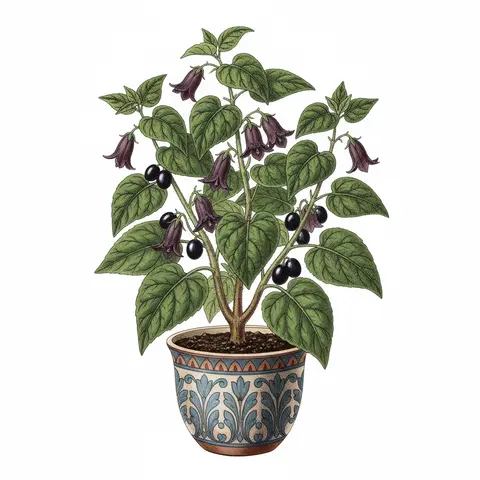
Atropa belladonna L., universally recognized as belladonna or deadly nightshade, is a profoundly potent perennial herbaceous plant within the Solanaceae family, which notably includes common food crops like tomatoes and potatoes, alongside tobacco.
The interesting part about Belladonna is that the plant can be discussed from several angles at once: visible form, environmental behavior, traditional context, and modern quality control.
Use this guide as a practical reference, then compare it with the detailed plant profile at https://www.floramedicalglobal.com/medicinal-plants/belladonna whenever you want to confirm the source page itself.
- Atropa belladonna, or deadly nightshade, is a highly toxic plant native to Europe, North Africa, and Western Asia.
- It contains potent tropane alkaloids, primarily atropine, scopolamine, and hyoscyamine, responsible for its pharmacological effects.
- While historically used and still utilized in highly controlled pharmaceutical preparations for specific medical conditions, it is.
- Its effects include pupil dilation, reduced secretions, antispasmodic action, and profound central nervous system disturbances.
- Severe side effects, including hallucinations, coma, and death, can occur even at low doses
- FDA has issued warnings against its presence in over-the-counter products, especially for infants.
02Botanical Identity of Belladonna
Belladonna should be anchored to the correct taxonomic identity before any discussion of care, use, or safety begins.
| Common name | Belladonna |
|---|---|
| Scientific name | Atropa belladonna">Atropa belladonna L.W |
| Family | Solanaceae |
| Order | Solanales |
| Genus | Atropa |
| Species epithet | belladonna L. |
| Author citation | N. Iran |
| Synonyms | Belladonna baccifera Lam., Belladonna trichotoma Moench, 1794, Atropa acuminata Royle, Atropa paschkewiczii Kreyer |
| Common names | বেলাডোনা, ডেডলি নাইটশেড, Deadly Nightshade, Belladonna, Devil's Berries, Death Cherries, Naughty Man's Cherries, Divale, हलकुसी, बेलेडोन्ना, जंगली रसभरी |
| Local names | Belladone, Wolfskers, beladama, Echte Tollkirsche, Gedor-Wrach Wenwynllyd, Belladonna, Ceirios y Gŵr Drwg, Codwarth, Tollkirsche, Vaistinė šunvyšnė, Belladone, Bouton-noir, Atrope belladone, Galnebær |
| Origin | Europe, North Africa, Western Asia |
| Life cycle | Perennial |
| Growth habit | s | Forb/herb Subshrub | |
Using the accepted scientific name Atropa belladonna L. helps readers avoid confusion caused by old synonyms, loose common names, or inconsistent plant labels.
Family and order placement also matter because they explain recurring structural traits, likely relatives, and the kinds of mistakes readers often make when they rely on appearance alone.
03Identifying Belladonna
Microscopic or internal identification notes deepen the picture, especially for processed material: Both glandular and non-glandular trichomes are present; glandular trichomes are usually multicellular with a multicellular head, while non-glandular. Anisocytic stomata, characterized by three subsidiary cells of unequal size surrounding the guard cells, are predominantly found on the abaxial leaf. Powdered material reveals fragments of epidermal cells with anisocytic stomata, various glandular and non-glandular trichomes, calcium oxalate.
In overall habit, the plant is described as s | Forb/herb
Subshrub | with a mature height around Typically 0.5-4 m and spread of Typically 0.5-3 m.
In real-world identification, the most helpful approach is to read the plant as a whole. Habit, size, stem texture, leaf arrangement, flower form, and any distinctive surface detail all matter. For Belladonna, morphology is not only a descriptive topic; it is the foundation of correct recognition.
04Native Range of Belladonna
The native or historically recorded center of distribution for Belladonna is Europe, North Africa, Western Asia. That origin is more than background trivia; it explains how the plant responds to heat, moisture, shade, and seasonal change.
Explore Our Platforms
 InfiniCore DataWorks
 Nex-Automata
The plant is associated with the following countries or range markers: Afghanistan, Algeria, Austria, Belgium, Czech Republic, France, Germany, Greece, Hungary, Iran, Italy, Morocco.
Environmental notes in the live record add more context: Natural habitat in shaded, calcareous, nitrogen-rich soils of woodland clearings, forest edges, and waste grounds. Found in temperate regions from Western Europe to North Africa and parts of Central Asia. Altitude range typically from sea level up to 1500 meters. Requires annual rainfall of at least 600-800 mm, preferring consistent moisture but not.
In cultivation terms, the main ecological clues are: Partial Shade; Weekly; Humus-rich, well-draining, calcareous loam with a pH of 6.0-7.5. Often 6-10; species-dependent; Perennial; s | Forb/herb
Subshrub |.
Physiology data reinforce the habitat story: Tolerant to shade and calcareous soils; sensitive to drought stress, which can impact growth and alkaloid production. C3 photosynthesis Moderate to high transpiration rate, requiring consistent soil moisture for optimal growth.
05Cultural Significance of Belladonna
Historically, Belladonna holds little direct significance in traditional Ayurvedic or classical TCM texts, which tend to prefer less dangerous indigenous alternatives for similar indications. In Unani medicine, plants with properties similar to Belladonna (often termed 'Datura' or 'Deadly Nightshade') were known and used with extreme caution, particularly as external liniments to alleviate pain and inflammation.
Ethnobotanical records also show how this plant has been framed across different places: Secondary-metabolite activity often reported in related shrub taxa in Albania; Algeria; Austria; Belgium; Bulgaria; Corse; Czechia-Slovakia; France; Germany; Great Britain; Greece; Hungary; Iran; Italy; Krym; Lebanon-Syria; Morocco; NW. Balkan Pen. Netherlands; North Caucasus; Poland; Portugal; Romania; Sardegna; Sicilia (https://api.gbif.org/v1/species/3802655; https://api.gbif.org/v1/species/3802655/vernacularNames?limit=100; https://api.gbif.org/v1/species/3802655/synonyms?limit=100; https://api.gbif.org/v1/species/3802655/distributions?limit=200; AI heuristic estimate from taxonomy/common-name patterns; verify manually.); Secondary-metabolite activity often reported in related shrub taxa in Albania; Algeria; Austria; Belgium; Bulgaria; Corse; Czechia-Slovakia; France; Germany; Great Britain; Greece; Hungary; Iran; Italy; Krym; Lebanon-Syria; Morocco; NW. Balkan Pen. Netherlands; North Caucasus; Poland; Portugal; Romania; Sardegna; Sicilia (https://api.gbif.org/v1/species/3802655; https://api.gbif.org/v1/species/3802655/vernacularNames?limit=100; https://api.gbif.org/v1/species/3802655/synonyms?limit=100; https://api.gbif.org/v1/species/3802655/distributions?limit=200; AI heuristic estimate from taxonomy/common-name patterns; verify manually.); Secondary-metabolite activity often reported in related shrub taxa in Albania; Algeria; Austria; Belgium; Bulgaria; Corse; Czechia-Slovakia; France; Germany; Great Britain; Greece; Hungary; Iran; Italy; Krym; Lebanon-Syria; Morocco; NW. Balkan Pen. Netherlands; North Caucasus; Poland; Portugal; Romania; Sardegna; Sicilia (https://api.gbif.org/v1/species/3802655; https://api.gbif.org/v1/species/3802655/vernacularNames?limit=100; https://api.gbif.org/v1/species/3802655/synonyms?limit=100; https://api.gbif.org/v1/species/3802655/distributions?limit=200; AI heuristic estimate from taxonomy/common-name patterns; verify manually.).
Local names help show how different communities notice and classify the plant: Belladone, Wolfskers, beladama, Echte Tollkirsche, Gedor-Wrach Wenwynllyd, Belladonna, Ceirios y Gŵr Drwg, Codwarth, Tollkirsche, Vaistinė šunvyšnė.
Traditional context matters, but it should always be separated from modern certainty. Historical use can guide questions, yet it does not automatically prove present-day clinical effectiveness.
06Belladonna Health Benefits
The main benefit themes associated with the plant include:
- Antispasmodic Action — Historically, the tropane alkaloids from belladonna have been utilized in controlled pharmaceutical preparations to relax smooth.
- Mydriatic Effect — Atropine, a primary alkaloid, is pharmacologically employed to dilate pupils for ophthalmic examinations and to treat certain eye.
- Anticholinergic Agent — Belladonna alkaloids exert anticholinergic effects, reducing the activity of the parasympathetic nervous system, which can decrease.
- Bradycardia Treatment — Atropine is a critical medicine used in emergency settings to increase heart rate in cases of severe bradycardia (slow heart rate) by.
- Organophosphate Poisoning Antidote — Atropine is a frontline treatment for poisoning by organophosphate insecticides or nerve agents, counteracting their.
- Motion Sickness Prevention — Scopolamine, another key alkaloid, is used in transdermal patches or oral forms to prevent nausea and vomiting associated with.
- Historical Anodyne — In traditional and historical contexts, belladonna preparations were sometimes applied topically for their anodyne (pain-relieving).
- Reduction of Secretions — Due to its anticholinergic properties, belladonna has been used in controlled medical settings to reduce excessive secretions in.
The evidence matrix gives a more careful picture of those claims: Antispasmodic action for gastrointestinal and urinary smooth muscles. Clinical observations, pharmacological studies, historical pharmaceutical use. Moderate to High. Atropine in controlled doses is effective in relaxing smooth muscles, alleviating spasms associated with various conditions. Mydriatic effect for ophthalmic examinations and treatment. Pharmacological studies, extensive clinical application. High. Atropine is a standard and highly effective agent for pupil dilation in ophthalmology. Antidote for organophosphate and carbamate poisoning. Clinical trials, emergency medicine protocols, pharmacological studies. High. Atropine is critical in reversing the cholinergic crisis induced by these poisons, saving lives in acute exposures. Prevention and treatment of motion sickness. Clinical trials, pharmacological studies (specifically scopolamine). Moderate to High. Scopolamine, a belladonna alkaloid, is widely used as an antiemetic for motion sickness, often via transdermal patches.
The stored evidence confidence for this profile is traditional. That should shape how strongly any benefit statement is interpreted.
For medicinal content, the key discipline is to distinguish traditional use, mechanism-based plausibility, and human clinical support. Those are related ideas, but they are not the same thing.
- Antispasmodic Action — Historically, the tropane alkaloids from belladonna have been utilized in controlled pharmaceutical preparations to relax smooth.
- Mydriatic Effect — Atropine, a primary alkaloid, is pharmacologically employed to dilate pupils for ophthalmic examinations and to treat certain eye.
- Anticholinergic Agent — Belladonna alkaloids exert anticholinergic effects, reducing the activity of the parasympathetic nervous system, which can decrease.
- Bradycardia Treatment — Atropine is a critical medicine used in emergency settings to increase heart rate in cases of severe bradycardia (slow heart rate) by.
- Organophosphate Poisoning Antidote — Atropine is a frontline treatment for poisoning by organophosphate insecticides or nerve agents, counteracting their.
- Motion Sickness Prevention — Scopolamine, another key alkaloid, is used in transdermal patches or oral forms to prevent nausea and vomiting associated with.
- Historical Anodyne — In traditional and historical contexts, belladonna preparations were sometimes applied topically for their anodyne (pain-relieving).
- Reduction of Secretions — Due to its anticholinergic properties, belladonna has been used in controlled medical settings to reduce excessive secretions in.
- Homeopathic Applications — Highly diluted belladonna preparations are used in homeopathy for various conditions like fever, inflammation, or pain, though the.
07Belladonna: Chemical Constituents
The broader constituent profile includes:
- Tropane Alkaloids — The most significant active constituents, including atropine (a racemic mixture of D- and.
- Flavonoids — Various flavonoid glycosides are present, contributing to the plant's overall phytochemical profile but.
- Coumarins — Minor amounts of coumarin derivatives may be found, which typically have anticoagulant or.
- Volatile Oils — Small quantities of volatile compounds are present, contributing to the plant's characteristic, often.
- Tannins — Trace amounts of tannins may be found, which are astringent compounds, but they do not contribute.
- Amino Acids — Essential and non-essential amino acids are present as fundamental building blocks for plant proteins.
- Sugars and Starches — Carbohydrates like glucose, fructose, and starch are present, serving as primary energy storage.
- Pigments — Various plant pigments, including anthocyanins, contribute to the coloration of the flowers and berries.
The detailed phytochemistry file adds these markers: Atropine, Tropane alkaloid, Leaves, roots, 0.3-0.6% (in dried leaves); Scopolamine (Hyoscine), Tropane alkaloid, Leaves, roots, 0.05-0.1% (in dried leaves); Hyoscyamine, Tropane alkaloid, Leaves, roots, 0.2-0.4% (in dried leaves); Tropine, Tropane base, All parts, Trace%; Belladonnine, Tropane alkaloid, All parts, Trace%.
Compound profiles also shift with plant part, age, season, processing, and storage. The chemistry of a fresh leaf, dried root, or concentrated extract should never be treated as automatically identical.
08Using Belladonna: Methods & Dosage
Recorded preparation and use methods include:
- Pharmaceutical Extracts — Active alkaloids (atropine, scopolamine) are isolated and standardized for use in prescription medications, never for self-preparation. Topical Preparations (Historical) — Historically, belladonna plasters or liniments were applied externally for localized pain or muscle spasms, though systemic absorption and.
- Compounded Suppositories — In controlled medical settings, belladonna extracts, often combined with other substances like opium, have been compounded into suppositories for.
- Homeopathic Dilutions — Extremely diluted forms are used in homeopathy, where the active compounds are practically absent; however, the FDA has issued warnings against belladonna-containing homeopathic products, particularly for infants.
- Ophthalmic Solutions — Atropine eye drops, derived from belladonna alkaloids, are prescribed by ophthalmologists for pupil dilation and to treat certain inflammatory eye. Oral Medications (Prescription Only) — Atropine or scopolamine are components of certain prescription drugs used for gastrointestinal disorders, motion sickness, or as.
- Antidote Administration — Atropine is administered parenterally (e.g., intravenously) by medical professionals as an antidote for specific types of poisoning.
The plant part most closely linked to use is recorded as Leaves, bark, roots, seeds, or berries cited in related taxa.
Edibility and processing notes matter here as well: Varies by species and plant part; verify before use.
Preparation defines the outcome. Tea, decoction, tincture, powder, fresh plant material, cooked food use, and concentrated extract cannot be discussed as if they were interchangeable.
- Identify the exact species and plant part first.
- Match the preparation to the intended use.
- Check safety, interactions, and processing details before routine use or large-scale handling.
09Belladonna: Safety & Side Effects
The first safety note is direct: Extremely toxic plant. All parts are poisonous, especially berries (attractive to children), leaves, and roots; a few berries can be fatal to a child. Toxicity classification: Class 1 Poison. Symptoms of overdose (anticholinergic).
Specific warnings recorded for this plant include:
- Extreme Toxicity — All parts of Atropa belladonna are highly poisonous, containing potent tropane alkaloids; ingestion is likely unsafe and potentially lethal.
- Pregnancy and Breastfeeding — Belladonna is likely unsafe during pregnancy and breastfeeding; it can reduce milk production and pass toxic compounds into breast milk, posing severe risks to the infant.
- Children — Belladonna is extremely dangerous for children; consuming as few as two berries can be fatal, and severe adverse events, including death, have been linked to homeopathic teething products containing it.
- Cardiovascular Conditions — Contraindicated in individuals with heart conditions, as it can cause rapid heartbeat and worsen existing issues like tachycardia.
- Glaucoma — Specifically narrow-angle glaucoma, as belladonna's mydriatic effect can exacerbate the condition by increasing intraocular pressure.
- Gastrointestinal Conditions — Can worsen conditions like ulcerative colitis, reflux disease, or obstructive GI disorders by slowing gut motility.
- Drug Interactions — Interacts significantly with anticholinergic drugs, increasing the risk of severe side effects, and can reduce the effectiveness of.
Quality-control notes add another warning: High risk of adulteration with other Solanaceae plants, such as Datura species or less potent Atropa species, which may have different alkaloid profiles or concentrations.
No plant should be described as universally safe. Identity, dose, plant part, preparation style, age, pregnancy status, medication use, allergies, and contamination risk all change the answer.
10How to Grow Belladonna
The cultivation record emphasizes these practical steps:
- Soil Preference — Thrives best in well-drained, fertile, calcareous soils with a neutral to slightly alkaline pH.
- Light Requirements — Prefers partial shade, especially in warmer climates, though it can tolerate full sun in cooler, moist conditions.
- Propagation — Can be propagated from seeds, which may require stratification for optimal germination, or by root division in the autumn or early spring.
- Sowing and Spacing — Seeds should be sown shallowly, about 0.5 cm deep; mature plants require ample space, typically 60-90 cm apart, due to their robust growth.
- Watering — Requires consistent moisture, especially during dry periods, but avoid waterlogging which can lead to root rot.
- Fertilization — Benefits from organic matter enrichment or a balanced slow-release fertilizer in spring, though excessive nitrogen can reduce alkaloid production.
- Pest and Disease Management — Generally resistant to most common pests and diseases, but can be susceptible to fungal issues in overly damp conditions.
The broader growth environment is described like this: Natural habitat in shaded, calcareous, nitrogen-rich soils of woodland clearings, forest edges, and waste grounds. Found in temperate regions from Western Europe to North Africa and parts of Central Asia. Altitude range typically from sea level up to 1500 meters. Requires annual rainfall of at least 600-800 mm, preferring consistent moisture but not.
Planning becomes easier when these traits are kept in view: s | Forb/herb
Subshrub |; Typically 0.5-4 m; Typically 0.5-3 m; Moderate; Advanced.
In practice, healthy cultivation comes from systems thinking rather than one-off tricks. Site choice, drainage, timing, spacing, pruning, feeding, and observation all reinforce one another.
11Caring for Belladonna: Light, Water & Soil
The most useful care snapshot is this: Light: Partial Shade; Water: Weekly; Soil: Humus-rich, well-draining, calcareous loam with a pH of 6.0-7.5. Humidity: Medium; Temperature: 10-25°C; USDA zone: Often 6-10; species-dependent.
Outdoors, light, water, and soil must be read together. The same watering schedule can be too much in dense clay and too little in a porous sandy bed.
| Light | Partial Shade |
|---|---|
| Water | Weekly |
| Soil | Humus-rich, well-draining, calcareous loam with a pH of 6.0-7.5. |
| Humidity | Medium |
| Temperature | 10-25°C |
| USDA zone | Often 6-10; species-dependent |
Light, water, and soil should never be treated as separate checkboxes. A plant in stronger light often dries faster, soil texture changes how quickly water moves, and temperature plus humidity influence how stress appears in leaves and roots.
For Belladonna, the safest care approach is to treat Partial Shade, Weekly, and Humus-rich, well-draining, calcareous loam with a pH of 6.0-7.5. as linked decisions rather than isolated tips. If one condition shifts, the other two usually need to be reconsidered as well.
12Propagating Belladonna
Documented propagation routes include Seeds: Best sown fresh in autumn or stratified for 4 weeks at 4°C then spring sown. Germination can be erratic and slow (4-10 weeks). Plant 0.5 cm deep in.
Propagation works best when the parent stock is healthy, correctly identified, and handled in the right season. That sounds obvious, but it is exactly where many failures begin.
- Seeds: Best sown fresh in autumn or stratified for 4 weeks at 4°C then spring sown. Germination can be erratic and slow (4-10 weeks). Plant 0.5 cm deep in.
Propagation works best when the reader matches method to biology. Some plants respond readily to cuttings, some to division, some to seed, and others require more patience or more exact seasonal timing.
A successful propagation guide therefore starts with healthy parent material and realistic expectations. Weak stock, rushed handling, and poor aftercare can make even a technically correct method fail.
13Managing Belladonna Problems
The recorded problem list includes Pests: Spider mites (red spiders) and aphids can be problematic, especially in dry conditions. Organic solutions:. overall stunted growth points to general nutrient lack. Organic solutions: Supplement with balanced organic fertilizer.
For medicinal species, pest pressure is not only a horticultural issue. It also affects harvest cleanliness, storage stability, and confidence in the final material.
The smartest response sequence is observation first, environmental correction second, and treatment only after the real pattern is clear.
Pest and disease management is strongest when it begins before visible damage becomes severe. Routine observation, clean handling, sensible spacing, air movement, and balanced watering reduce many problems before treatment is even needed.
14How to Harvest Belladonna
The plant part most often associated with harvest or processing is Leaves, bark, roots, seeds, or berries cited in related taxa.
Storage guidance from the quality-control record reads as follows: Dried plant material should be stored in cool, dry, and dark conditions, protected from light and moisture, to minimize the degradation of light-sensitive tropane alkaloids and.
For medicinal plants, harvesting cannot be separated from processing. The right plant part, the right timing, and the right drying conditions all shape quality and safety.
Whatever the purpose, the rule is the same: harvest clean material, label it clearly, and store it in a way that preserves identity and condition.
15Belladonna in Garden Design
Useful companions or placement partners include N/A (due to toxicity and specific growing requirements; typically not companion planted intentionally).
In a home herb garden or medicinal bed, Belladonna should be placed where harvesting is easy, labeling remains clear, and neighboring plants do not create confusion at collection time.
Companion planting and design are not only aesthetic decisions. They affect airflow, root competition, moisture sharing, harvest access, visibility, and the general logic of the planting scheme.
With Belladonna, good placement means thinking about mature size, maintenance rhythm, and how neighboring plants change the feel and function of the space. A plant can be healthy on its own and still be poorly placed within the broader composition.
That is why the best design advice combines biology with usability. The planting should look coherent, but it should also make watering, pruning, harvest, and pest observation easier rather than harder.
16Belladonna: Scientific Evidence
The evidence matrix points to several recurring themes: Antispasmodic action for gastrointestinal and urinary smooth muscles. Clinical observations, pharmacological studies, historical pharmaceutical use. Moderate to High. Atropine in controlled doses is effective in relaxing smooth muscles, alleviating spasms associated with various conditions. Mydriatic effect for ophthalmic examinations and treatment. Pharmacological studies, extensive clinical application. High. Atropine is a standard and highly effective agent for pupil dilation in ophthalmology. Antidote for organophosphate and carbamate poisoning. Clinical trials, emergency medicine protocols, pharmacological studies. High. Atropine is critical in reversing the cholinergic crisis induced by these poisons, saving lives in acute exposures. Prevention and treatment of motion sickness. Clinical trials, pharmacological studies (specifically scopolamine). Moderate to High. Scopolamine, a belladonna alkaloid, is widely used as an antiemetic for motion sickness, often via transdermal patches.
Ethnobotanical activity records add historical reference trails: Secondary-metabolite activity often reported in related shrub taxa — Albania; Algeria; Austria; Belgium; Bulgaria; Corse; Czechia-Slovakia; France; Germany; Great Britain; Greece; Hungary; Iran; Italy; Krym; Lebanon-Syria; Morocco; NW. Balkan Pen. Netherlands; North Caucasus; Poland; Portugal; Romania; Sardegna; Sicilia [https://api.gbif.org/v1/species/3802655; https://api.gbif.org/v1/species/3802655/vernacularNames?limit=100; https://api.gbif.org/v1/species/3802655/synonyms?limit=100; https://api.gbif.org/v1/species/3802655/distributions?limit=200; AI heuristic estimate from taxonomy/common-name patterns; verify manually.]; Secondary-metabolite activity often reported in related shrub taxa — Albania; Algeria; Austria; Belgium; Bulgaria; Corse; Czechia-Slovakia; France; Germany; Great Britain; Greece; Hungary; Iran; Italy; Krym; Lebanon-Syria; Morocco; NW. Balkan Pen. Netherlands; North Caucasus; Poland; Portugal; Romania; Sardegna; Sicilia [https://api.gbif.org/v1/species/3802655; https://api.gbif.org/v1/species/3802655/vernacularNames?limit=100; https://api.gbif.org/v1/species/3802655/synonyms?limit=100; https://api.gbif.org/v1/species/3802655/distributions?limit=200; AI heuristic estimate from taxonomy/common-name patterns; verify manually.]; Secondary-metabolite activity often reported in related shrub taxa — Albania; Algeria; Austria; Belgium; Bulgaria; Corse; Czechia-Slovakia; France; Germany; Great Britain; Greece; Hungary; Iran; Italy; Krym; Lebanon-Syria; Morocco; NW. Balkan Pen. Netherlands; North Caucasus; Poland; Portugal; Romania; Sardegna; Sicilia [https://api.gbif.org/v1/species/3802655; https://api.gbif.org/v1/species/3802655/vernacularNames?limit=100; https://api.gbif.org/v1/species/3802655/synonyms?limit=100; https://api.gbif.org/v1/species/3802655/distributions?limit=200; AI heuristic estimate from taxonomy/common-name patterns; verify manually.].
The compiled source count behind the live profile is 8. That does not guarantee certainty, but it does suggest the record has been cross-checked beyond a single note.
Analytical testing notes also strengthen the evidence base: High-Performance Liquid Chromatography (HPLC), Gas Chromatography-Mass Spectrometry (GC-MS) for precise quantification of individual alkaloids; macroscopic and microscopic.
A careful evidence section should say what is known, what is plausible, and what remains uncertain. Readers are better served by clear limits than by exaggerated confidence.
17Belladonna Buying Guide
Quality markers worth checking include Atropine, scopolamine (hyoscyamine) as primary active and toxic markers.
Adulteration and substitution risk should not be ignored: High risk of adulteration with other Solanaceae plants, such as Datura species or less potent Atropa species, which may have different alkaloid profiles or concentrations.
When buying Belladonna, start with verified botanical identity. The label, scientific name, and the source page should agree before you judge price, size, or claimed benefits.
For living plants, inspect roots, stem firmness, foliage health, and early pest signs. For dried or processed material, look for batch clarity, clean aroma, absence of mold, and any sign that the product has been over-processed to disguise poor quality.
18Common Questions About Belladonna
What is Belladonna best known for?
Atropa belladonna L., universally recognized as belladonna or deadly nightshade, is a profoundly potent perennial herbaceous plant within the Solanaceae family, which notably includes common food crops like tomatoes and potatoes, alongside tobacco.
Is Belladonna beginner-friendly?
That depends on the growing environment and the intended use. Some plants are easy to grow but not simple to use medicinally, while others are the opposite.
How much light does Belladonna need?
Partial Shade
How often should Belladonna be watered?
Weekly
Can Belladonna be propagated at home?
Yes, but the best method depends on whether the species responds best to seed, cuttings, division, offsets, or other propagation routes.
Does Belladonna have safety concerns?
Extremely toxic plant. All parts are poisonous, especially berries (attractive to children), leaves, and roots; a few berries can be fatal to a child. Toxicity classification: Class 1 Poison. Symptoms of overdose (anticholinergic).
What is the biggest mistake people make with Belladonna?
The most common mistake is applying generic advice instead of matching the plant to its real environment, identity, and limits.
Where can I verify more information about Belladonna?
Start with the Flora Medical Global plant profile: https://www.floramedicalglobal.com/medicinal-plants/belladonna
19Sources & Further Reading on Belladonna
Authoritative sources and related guides:
- Wikipedia — background reference
- PubMed — peer-reviewed studies
- Kew POWO — botanical reference
- NCBI PMC — open-access research
- WHO — global health authority
Related on Flora Medical Global
Reviewed by the Flora Medical Global Botanical Review Panel
Multi-disciplinary editorial group · Botany · Ethnobotany · Herbal-medicine literature
Who reviewed this: This page was checked by the Flora Medical Global Botanical Review Panel — an in-house editorial group of botany graduates, ethnobotany researchers, and horticulture practitioners who collectively maintain our 7,000+ plant encyclopedia. Meet the team.
Our 4-step verification process
1. Taxonomic verification
Scientific names and synonyms cross-checked against Kew POWO, World Flora Online, and The Plant List.
2. Phytochemical & medicinal cross-reference
Active compounds, traditional uses, and reported activities are cross-referenced with PubMed, USDA Dr. Duke's database, and peer-reviewed ethnobotanical literature.
3. Conservation & distribution check
Distribution, ecology, and conservation status confirmed against GBIF occurrence records and the IUCN Red List.
4. Editorial & safety review
Every entry passes an editorial pass for clarity, originality, and safety notices (toxicity, contraindications, dosage caveats) before publication.
Last reviewed:
Important medical disclaimer: This content is for educational and research purposes only. It is not medical advice and is not a substitute for consultation with a licensed healthcare provider. Do not use any herb to self-treat a medical condition without professional guidance.
Explore Our Platforms
Comments (0)
No comments yet. Be the first!