Bilberry Complete Guide: Care, Uses, Benefits & Tips
 Flora Medical GlobalPublished: 4/10/2026Updated: 6/20/202620 min read
Editorial Disclaimer: This article is for informational and educational purposes only. It is not a substitute for professional medical advice, diagnosis, or treatment. Always consult a qualified healthcare provider or certified herbalist before using any plant for medicinal purposes, especially if you are pregnant, nursing, taking medication, or have a medical condition.
01Introduction to Bilberry
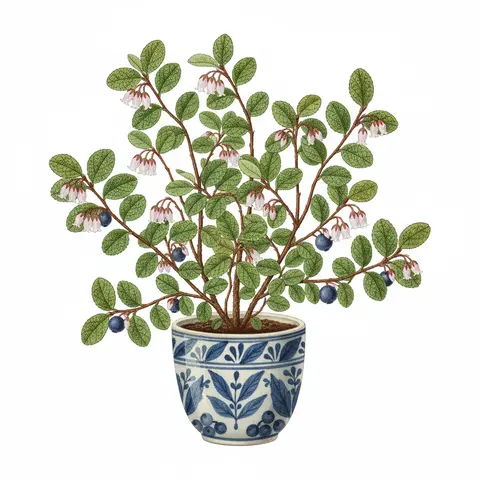
Bilberry (Vaccinium myrtillus), a resilient deciduous shrub, is a treasure of the Ericaceae family, widely distributed across the cooler, temperate zones of Europe, parts of Asia, and even some regions of North America, where it is sometimes mistaken for true blueberries.
Most thin plant articles flatten everything into a summary. This guide does the opposite by following Bilberry through identification, care, handling, and the questions that real readers actually ask.
The linked plant page remains the main internal reference point for this article, but the goal here is to turn that raw data into a readable, structured, and genuinely useful guide.
- Potent Antioxidant Powerhouse — Rich in anthocyanins, Bilberry offers exceptional free radical scavenging capabilities.
- Renowned for Vision Support — Historically and scientifically recognized for enhancing eye health and improving night vision.
- Anti-inflammatory & Metabolic Benefits — Contributes to reducing inflammation and supporting healthy blood glucose and lipid levels.
- Native European Superberry — A wild, deciduous shrub thriving in cool, acidic forest environments.
- Versatile Usage — Consumed fresh, dried, in juices, or as standardized extracts for various health applications.
02Bilberry: Taxonomy & Classification
Bilberry should be anchored to the correct taxonomic identity before any discussion of care, use, or safety begins.
| Common name | Bilberry |
|---|---|
| Scientific name | Vaccinium myrtillusW |
| Family | Ericaceae |
| Order | Ericales |
| Genus | Vaccinium |
| Species epithet | myrtillus |
| Author citation | L. |
| Synonyms | Myrtillus nigra Gilib., Vaccinium myrtillus var. myrtillus, Vaccinium myrtillus var. minoriflora Sennen & Elías, Myrtillus niger Gilib. |
| Common names | বিলবেরি, ব্লুবেরি ইন ইউরোপীয়, Bilberry, Blaeberry, Whortleberry, Whinberry, European Blueberry, जंगली ब्लूबेरी, बिलबेरी |
| Local names | Blaubeere, Heidelbeere, Llusen, Airelle myrtille, Myrtille, Maurette, Brimbelle, Aðalbláberjalyng, Llusi Duon Bach, Blauwe bosbes, Blåbær, Llus, Heidelbeere, Lluswydd Cyffredin, Lluswydden, Almindelig blåbær |
| Origin | Northern Europe, Northern Asia, and Northwestern North America |
| Life cycle | Perennial |
| Growth habit | Tree |
Using the accepted scientific name Vaccinium myrtillus helps readers avoid confusion caused by old synonyms, loose common names, or inconsistent plant labels.
Family and order placement also matter because they explain recurring structural traits, likely relatives, and the kinds of mistakes readers often make when they rely on appearance alone.
03Identifying Bilberry
A practical reading of the plant starts with visible structure:
- Leaf: Small, oval to ovate, pointed at the tip, serrated margins, leathery texture, about 1-3 cm long and 0.5-1.5 cm wide. Turns reddish-brown in autumn.
- Stem: Greenish or reddish-brown, smooth, slender, branched, and creeping or ascending.
- Root: Fibrous and shallow, forming a dense mat.
- Flower: Small, bell-shaped, pendulous, white to pinkish, solitary or in small clusters axillary along the stem. Petals are fused at the base.
- Fruit: Small, globose berry, 0.5-1 cm in diameter, dark blue to black with a waxy bloom when ripe. Juicy and dark purple internally.
- Seed: Numerous, tiny, egg-shaped seeds within the berry pulp.
Field identification becomes easier when these traits are kept in view: Frequently adulterated with other Vaccinium species (e.g., Vaccinium uliginosum, Vaccinium myrtilloides, Aronia melanocarpa, Ribes nigrum), and. High-resolution macro photos of: 1. Whole plant in natural habitat. 2. Close-up of green, acutely angled stem with two prominent ridges. 3. Adaxial. Vaccinium uliginosum (Bog Bilberry/Northern Bilberry) - distinguished by terete (not angled) stems, glaucous-blue leaves, and less flavorful berries.
Microscopic or internal identification notes deepen the picture, especially for processed material: Both glandular and non-glandular trichomes may be present, though often sparsely, on the stems and leaves, serving protective or secretory functions. Anomocytic stomata are commonly observed on the abaxial (lower) surface of Bilberry leaves, characterized by subsidiary cells that are. Powdered Bilberry fruit reveals fragments of dark purple epidermis with adhering pulp cells, anthocyanin-rich parenchyma, spiral or annular xylem.
In overall habit, the plant is described as Tree with a mature height around Typically 0.5-4 m and spread of Typically 0.5-3 m.
04Where Bilberry Grows
The native or historically recorded center of distribution for Bilberry is Northern Europe, Northern Asia, and Northwestern North America. That origin is more than background trivia; it explains how the plant responds to heat, moisture, shade, and seasonal change.
Explore Our Platforms
 InfiniCore DataWorks
 Nex-Automata
The plant is associated with the following countries or range markers: Europe, Northern Asia.
Environmental notes in the live record add more context: Bilberry (Vaccinium myrtillus) is native to temperate regions, thriving in northern Europe, parts of Asia (Siberia, Himalayas), and northwestern North America. It prefers cool, moist climates with moderate rainfall. It is commonly found in acidic, peaty bogs, moorlands, heathlands, and as an understory shrub in coniferous and mixed woodlands. It tolerates.
In cultivation terms, the main ecological clues are: Partial Shade; Every 2-3 days; Acidic, well-draining, humus-rich soil (e.g., peat-based or ericaceous compost); Often 6-10; species-dependent; Perennial; Tree.
Physiology data reinforce the habitat story: Exhibits tolerance to cold temperatures and acidic soil conditions; anthocyanins also provide photoprotection against UV radiation and cold-induced. C3 photosynthesis, characteristic of most temperate woody plants, optimized for moderate light and temperature conditions. Moderate transpiration rates, adapted to moist, humid environments, with a fibrous root system efficient in absorbing surface moisture.
05Cultural Significance of Bilberry
Historically, bilberries (Vaccinium myrtillus) have held a significant place in European folklore and traditional medicine. In Nordic countries, they were considered a symbol of good luck and abundance. Their deep purple hue inspired their use as natural dyes for fabrics and food. In traditional European herbalism, bilberry leaves were brewed into teas to treat diabetes, diarrhea, and urinary ailments, while the.
Ethnobotanical records also show how this plant has been framed across different places: Antidote in Turkey (Steinmetz, E.F. 1957. codex Vegetabilis. Published by the author, Amsterdam.); Antiseptic in Spain (Font Query, P. 1979. Plantas Medicinales el Dioscorides Renovado. Editorial Labor, S.A. Barcelona. 5th Ed.); Astringent in Turkey (Steinmetz, E.F. 1957. codex Vegetabilis. Published by the author, Amsterdam.); Diuretic in Turkey (Steinmetz, E.F. 1957. codex Vegetabilis. Published by the author, Amsterdam.); Inflammation in Turkey (Steinmetz, E.F. 1957. codex Vegetabilis. Published by the author, Amsterdam.); Intestine in Europe (Uphof, J.C. Th. 1968. Dictionary of economic plants. 2nd ed. Verlag von J. Cramer.); Refrigerant in Turkey (Steinmetz, E.F. 1957. codex Vegetabilis. Published by the author, Amsterdam.); Tonic in Turkey (Steinmetz, E.F. 1957. codex Vegetabilis. Published by the author, Amsterdam.).
Local names help show how different communities notice and classify the plant: Blaubeere, Heidelbeere, Llusen, Airelle myrtille, Myrtille, Maurette, Brimbelle, Aðalbláberjalyng, Llusi Duon Bach, Blauwe bosbes, Blåbær, Llus, Heidelbeere, Lluswydd Cyffredin.
Traditional context matters, but it should always be separated from modern certainty. Historical use can guide questions, yet it does not automatically prove present-day clinical effectiveness.
06Bilberry: Benefits & Healing Properties
The main benefit themes associated with the plant include:
- Supports Vision Health — Bilberry is renowned for improving night vision and overall visual acuity, particularly attributed to its anthocyanins which may.
- Potent Antioxidant Defense — The high concentration of anthocyanins and other phenolic compounds provides significant antioxidant activity, combating.
- Anti-inflammatory Effects — Active compounds in Vaccinium myrtillus help modulate inflammatory pathways, potentially reducing systemic inflammation throughout.
- Lowers Blood Glucose Levels — Research suggests Bilberry may assist in regulating blood sugar, making it of interest for managing hyperglycemia and supporting.
- Supports Cardiovascular Health — Its lipid-lowering and antioxidant properties contribute to maintaining healthy blood vessels, potentially reducing the risk.
- Promotes Lipid Metabolism — Bilberry has been reported to have lipid-lowering effects, which can contribute to healthier cholesterol profiles and overall.
- Boosts Immune System — The rich array of antioxidants and vitamin C in Bilberry can strengthen the body's natural defenses and enhance immune function.
- Antimicrobial Activity — Studies indicate that Bilberry extracts possess antimicrobial properties, which may help inhibit the growth of certain pathogens.
The evidence matrix gives a more careful picture of those claims: Improves night vision and visual acuity. Human observational, historical clinical reports (WWII pilots). Moderate. Linked to anthocyanin's ability to enhance rhodopsin regeneration in the retina, though modern clinical trials have mixed results. Exhibits potent antioxidant and free radical scavenging activity. In vitro, animal models, human biomarker studies. High. Attributed to the high concentration and diversity of anthocyanins and other phenolic compounds. Possesses anti-inflammatory properties. In vitro, animal models. Moderate. Modulates inflammatory pathways by inhibiting pro-inflammatory mediators. Supports healthy blood glucose and lipid metabolism. Animal models, preliminary human studies. Emerging. Potential benefits for individuals with dyslipidemia and hyperglycemia are being investigated.
The stored evidence confidence for this profile is traditional. That should shape how strongly any benefit statement is interpreted.
For medicinal content, the key discipline is to distinguish traditional use, mechanism-based plausibility, and human clinical support. Those are related ideas, but they are not the same thing.
- Supports Vision Health — Bilberry is renowned for improving night vision and overall visual acuity, particularly attributed to its anthocyanins which may.
- Potent Antioxidant Defense — The high concentration of anthocyanins and other phenolic compounds provides significant antioxidant activity, combating.
- Anti-inflammatory Effects — Active compounds in Vaccinium myrtillus help modulate inflammatory pathways, potentially reducing systemic inflammation throughout.
- Lowers Blood Glucose Levels — Research suggests Bilberry may assist in regulating blood sugar, making it of interest for managing hyperglycemia and supporting.
- Supports Cardiovascular Health — Its lipid-lowering and antioxidant properties contribute to maintaining healthy blood vessels, potentially reducing the risk.
- Promotes Lipid Metabolism — Bilberry has been reported to have lipid-lowering effects, which can contribute to healthier cholesterol profiles and overall.
- Boosts Immune System — The rich array of antioxidants and vitamin C in Bilberry can strengthen the body's natural defenses and enhance immune function.
- Antimicrobial Activity — Studies indicate that Bilberry extracts possess antimicrobial properties, which may help inhibit the growth of certain pathogens.
- Protects Against Age-Related Diseases — By mitigating oxidative stress and inflammation, Bilberry may play a role in preventing or delaying the onset of.
- Supports Digestive Health — The tannins and fiber content may aid in digestive regularity and soothe gastrointestinal discomfort.
07Active Compounds in Bilberry
The broader constituent profile includes:
- Anthocyanins — These water-soluble polyphenolic flavonoid compounds are the primary bioactives, responsible for.
- Flavonols — Important flavonoid compounds like quercetin and catechins are present, contributing to the berry's.
- Tannins — Both condensed tannins and ellagitannins are found in Bilberry, offering astringent properties and.
- Phenolic Acids — Various phenolic acids contribute to the plant's phytochemical mix, further enhancing its antioxidant. Vitamin C (Ascorbic Acid) — A natural antioxidant vitamin present in small quantities, supporting immune function and.
- Organic Acids — Malic acid, citric acid, and succinic acid contribute to the tart flavor and may influence metabolic.
- Pectin — A soluble fiber found in the fruit, which can support digestive health and aid in detoxification.
- Sugars — Fructose and glucose are natural sugars present in the berries, providing energy.
The detailed phytochemistry file adds these markers: Cyanidin-3-glucoside, Anthocyanin, Fruit, Highmg/100g fresh fruit; Delphinidin-3-galactoside, Anthocyanin, Fruit, Highmg/100g fresh fruit; Quercetin, Flavonol, Fruit, Leaves, Moderatemg/100g fresh fruit; Catechin, Flavanol, Fruit, Leaves, Moderatemg/100g fresh fruit; Malvidin-3-arabinoside, Anthocyanin, Fruit, Highmg/100g fresh fruit; Ellagic Acid, Ellagitannin, Fruit, Low to moderatemg/100g fresh fruit.
Local chemistry records also support the profile: QUERCETIN in Leaf (not available-not available ppm); ASCORBIC-ACID in Fruit (132.0-1650.0 ppm); CAFFEIC-ACID in Fruit (not available-not available ppm); CAFFEIC-ACID in Fruit Juice (not available-not available ppm); CAFFEIC-ACID in Leaf (not available-40.0 ppm); URSOLIC-ACID in Fruit (not available-2500.0 ppm); URSOLIC-ACID in Leaf (not available-not available ppm); RUTIN in Leaf (not available-not available ppm).
Compound profiles also shift with plant part, age, season, processing, and storage. The chemistry of a fresh leaf, dried root, or concentrated extract should never be treated as automatically identical.
08How to Use Bilberry
Recorded preparation and use methods include:
- Fresh Berries — Consume raw during harvest season for maximum nutrient intake; they are tart but flavorful.
- Dried Berries — Can be rehydrated for culinary uses or consumed as a snack, retaining many beneficial compounds.
- Juices and Syrups — Extract fresh Bilberry juice or prepare syrups for a concentrated form, often diluted or mixed with other beverages.
- Preserves and Jams — Cooked into jams, jellies, and preserves, though some heat-sensitive compounds may be reduced. Herbal Teas/Infusions — Dried leaves or fruits can be steeped in hot water to create a healthful tea.
- Standardized Extracts — Available as capsules or tinctures, often concentrated to a specific anthocyanin content (e.g., 25% anthocyanidins) for targeted medicinal use.
- Culinary Ingredient — Used in pies, tarts, sauces, and other desserts, adding flavor and nutritional value.
The plant part most closely linked to use is recorded as Leaves, bark, roots, seeds, or berries cited in related taxa.
Edibility and processing notes matter here as well: Varies by species and plant part; verify before use.
Preparation defines the outcome. Tea, decoction, tincture, powder, fresh plant material, cooked food use, and concentrated extract cannot be discussed as if they were interchangeable.
- Identify the exact species and plant part first.
- Match the preparation to the intended use.
- Check safety, interactions, and processing details before routine use or large-scale handling.
09Is Bilberry Safe? Precautions & Cautions
The first safety note is direct: Bilberry (Vaccinium myrtillus) is generally considered non-toxic. The berries are edible and widely consumed. The leaves and stems are also used medicinally and are not associated with significant toxicity when used appropriately.
Specific warnings recorded for this plant include Class 1:
- Herb — Classified by the American Herbal Products Association (AHPA) as safe for appropriate consumption, indicating a low risk profile.
- Generally Well-Tolerated — When used at recommended dosages, Bilberry and its extracts are typically considered safe for most healthy adults.
- Pregnancy and Lactation — Lack of sufficient safety data advises caution; pregnant or breastfeeding individuals should consult a healthcare provider before use.
- Drug Interactions — Potential interactions with anticoagulant medications (e.g., warfarin) due to theoretical blood-thinning effects; also with diabetes medications due to blood sugar-lowering properties.
- Surgical Procedures — Discontinue use at least two weeks prior to any scheduled surgery due to potential influence on blood clotting.
- Pediatric Use — Consult a pediatrician before administering Bilberry supplements to children, especially concentrated extracts.
- Quality Sourcing — Always ensure Bilberry products are from reputable sources to avoid contamination or adulteration.
- Digestive Upset — Large quantities of fresh or dried Bilberry may cause mild stomach upset, nausea, or diarrhea in sensitive individuals.
Quality-control notes add another warning: Common risks include substitution with other Vaccinium species (e.g., cultivated blueberries), addition of synthetic colors, or dilution with less potent plant materials.
No plant should be described as universally safe. Identity, dose, plant part, preparation style, age, pregnancy status, medication use, allergies, and contamination risk all change the answer.
10How to Grow Bilberry
The cultivation record emphasizes these practical steps:
- Soil Preference — Requires highly acidic soil (pH 4.0-5.5) that is well-drained but consistently moist, often enriched with peat or pine bark.
- Light Conditions — Thrives in partial shade or dappled sunlight, mimicking its natural understory habitat; direct, intense sun can scorch leaves.
- Watering — Needs regular, consistent watering, especially during dry periods, to maintain soil moisture without becoming waterlogged.
- Climate — Prefers cool, temperate climates with sufficient humidity; tolerant of cold winters but benefits from snow cover.
- Propagation — Can be propagated from seeds, though germination is slow; softwood cuttings taken in late spring or early summer are more common.
The broader growth environment is described like this: Bilberry (Vaccinium myrtillus) is native to temperate regions, thriving in northern Europe, parts of Asia (Siberia, Himalayas), and northwestern North America. It prefers cool, moist climates with moderate rainfall. It is commonly found in acidic, peaty bogs, moorlands, heathlands, and as an understory shrub in coniferous and mixed woodlands. It tolerates.
Planning becomes easier when these traits are kept in view: Tree; Typically 0.5-4 m; Typically 0.5-3 m; Moderate; Intermediate.
In practice, healthy cultivation comes from systems thinking rather than one-off tricks. Site choice, drainage, timing, spacing, pruning, feeding, and observation all reinforce one another.
11Bilberry: Light, Water & Soil Needs
The most useful care snapshot is this: Light: Partial Shade; Water: Every 2-3 days; Soil: Acidic, well-draining, humus-rich soil (e.g., peat-based or ericaceous compost); Humidity: Medium; Temperature: 15-30°C; USDA zone: Often 6-10; species-dependent.
Outdoors, light, water, and soil must be read together. The same watering schedule can be too much in dense clay and too little in a porous sandy bed.
| Light | Partial Shade |
|---|---|
| Water | Every 2-3 days |
| Soil | Acidic, well-draining, humus-rich soil (e.g., peat-based or ericaceous compost) |
| Humidity | Medium |
| Temperature | 15-30°C |
| USDA zone | Often 6-10; species-dependent |
Light, water, and soil should never be treated as separate checkboxes. A plant in stronger light often dries faster, soil texture changes how quickly water moves, and temperature plus humidity influence how stress appears in leaves and roots.
For Bilberry, the safest care approach is to treat Partial Shade, Every 2-3 days, and Acidic, well-draining, humus-rich soil (e.g., peat-based or ericaceous compost) as linked decisions rather than isolated tips. If one condition shifts, the other two usually need to be reconsidered as well.
12Propagating Bilberry
Documented propagation routes include Bilberries can be propagated through several methods:; 1. Seed Propagation: Collecting seeds from ripe berries, cleaning them, and stratifying them (cold treatment for several weeks) can induce germination. 2. Cuttings: Softwood or semi-hardwood cuttings are taken in summer. Dip the cut end in rooting hormone and plant in a moist, acidic rooting medium (e.g. 3. Division: Established clumps can be divided in early spring or fall. Dig up the plant carefully, separate the root system into smaller sections.
Reproductive notes also help clarify propagation timing: Fruit set is variable, influenced by pollinator availability, environmental conditions (e.g., late frosts impacting flowers), and plant health. High. Exhibits physiological dormancy, requiring specific environmental cues for germination. Often requires cold stratification (e.g., 8-12 weeks at. Relatively high, estimated at 60-80% under optimal conditions. Seeds are recalcitrant. Viability can be maintained for several years under cool, dry.
Propagation works best when the parent stock is healthy, correctly identified, and handled in the right season. That sounds obvious, but it is exactly where many failures begin.
- Bilberries can be propagated through several methods:
- 1. Seed Propagation: Collecting seeds from ripe berries, cleaning them, and stratifying them (cold treatment for several weeks) can induce germination.
- 2. Cuttings: Softwood or semi-hardwood cuttings are taken in summer. Dip the cut end in rooting hormone and plant in a moist, acidic rooting medium (e.g.).
- 3. Division: Established clumps can be divided in early spring or fall. Dig up the plant carefully, separate the root system into smaller sections.
13Pests, Diseases & Disorders
The recorded problem list includes Fungal Diseases: Powdery mildew, blights, and leaf spots can affect bilberry plants, especially in humid. Pests: Aphids, spider mites, and blueberry maggot can sometimes be problematic. Root Rot: Can occur in poorly draining soils, leading to yellowing leaves and plant decline. Drought Stress: While tolerant, prolonged dry spells can weaken plants and reduce berry production. Nutrient Deficiencies: Lack of essential nutrients, particularly iron, can lead to chlorosis (yellowing of leaves).
For medicinal species, pest pressure is not only a horticultural issue. It also affects harvest cleanliness, storage stability, and confidence in the final material.
The smartest response sequence is observation first, environmental correction second, and treatment only after the real pattern is clear.
- Fungal Diseases: Powdery mildew, blights, and leaf spots can affect bilberry plants, especially in humid.
- Pests: Aphids, spider mites, and blueberry maggot can sometimes be problematic.
- Root Rot: Can occur in poorly draining soils, leading to yellowing leaves and plant decline.
- Drought Stress: While tolerant, prolonged dry spells can weaken plants and reduce berry production.
- Nutrient Deficiencies: Lack of essential nutrients, particularly iron, can lead to chlorosis (yellowing of leaves).
14How to Harvest Bilberry
The plant part most often associated with harvest or processing is Leaves, bark, roots, seeds, or berries cited in related taxa.
Storage guidance from the quality-control record reads as follows: Bilberry extracts and fruits should be stored in cool, dark, and dry conditions in airtight containers to prevent degradation of anthocyanins by light, heat, oxygen, and moisture.
For medicinal plants, harvesting cannot be separated from processing. The right plant part, the right timing, and the right drying conditions all shape quality and safety.
Whatever the purpose, the rule is the same: harvest clean material, label it clearly, and store it in a way that preserves identity and condition.
Harvest and storage determine whether a plant's quality is preserved after it leaves the bed, pot, field, or wild source. Clean timing, correct plant part selection, and careful drying or handling all matter more than many readers expect.
15Bilberry in Garden Design
Useful companions or placement partners include Rhododendrons; Azaleas; Heather (Calluna vulgaris); Ferns; Mosses.
In a home herb garden or medicinal bed, Bilberry should be placed where harvesting is easy, labeling remains clear, and neighboring plants do not create confusion at collection time.
- Rhododendrons
- Azaleas
- Heather (Calluna vulgaris)
- Ferns
- Mosses
Companion planting and design are not only aesthetic decisions. They affect airflow, root competition, moisture sharing, harvest access, visibility, and the general logic of the planting scheme.
With Bilberry, good placement means thinking about mature size, maintenance rhythm, and how neighboring plants change the feel and function of the space. A plant can be healthy on its own and still be poorly placed within the broader composition.
That is why the best design advice combines biology with usability. The planting should look coherent, but it should also make watering, pruning, harvest, and pest observation easier rather than harder.
16Research on Bilberry
The evidence matrix points to several recurring themes: Improves night vision and visual acuity. Human observational, historical clinical reports (WWII pilots). Moderate. Linked to anthocyanin's ability to enhance rhodopsin regeneration in the retina, though modern clinical trials have mixed results. Exhibits potent antioxidant and free radical scavenging activity. In vitro, animal models, human biomarker studies. High. Attributed to the high concentration and diversity of anthocyanins and other phenolic compounds. Possesses anti-inflammatory properties. In vitro, animal models. Moderate. Modulates inflammatory pathways by inhibiting pro-inflammatory mediators. Supports healthy blood glucose and lipid metabolism. Animal models, preliminary human studies. Emerging. Potential benefits for individuals with dyslipidemia and hyperglycemia are being investigated.
Ethnobotanical activity records add historical reference trails: Antidote — Turkey [Steinmetz, E.F. 1957. codex Vegetabilis. Published by the author, Amsterdam.]; Antiseptic — Spain [Font Query, P. 1979. Plantas Medicinales el Dioscorides Renovado. Editorial Labor, S.A. Barcelona. 5th Ed.]; Astringent — Turkey [Steinmetz, E.F. 1957. codex Vegetabilis. Published by the author, Amsterdam.]; Diuretic — Turkey [Steinmetz, E.F. 1957. codex Vegetabilis. Published by the author, Amsterdam.]; Inflammation — Turkey [Steinmetz, E.F. 1957. codex Vegetabilis. Published by the author, Amsterdam.]; Intestine — Europe [Uphof, J.C. Th. 1968. Dictionary of economic plants. 2nd ed. Verlag von J. Cramer.].
The compiled source count behind the live profile is 8. That does not guarantee certainty, but it does suggest the record has been cross-checked beyond a single note.
Analytical testing notes also strengthen the evidence base: High-Performance Liquid Chromatography (HPLC) for anthocyanin profiling, UV-Vis spectrophotometry for total anthocyanin content, microscopy for botanical identification, and.
A careful evidence section should say what is known, what is plausible, and what remains uncertain. Readers are better served by clear limits than by exaggerated confidence.
17Bilberry Buying Guide
Quality markers worth checking include Total anthocyanins (expressed as anthocyanidins or specific glycosides like cyanidin-3-glucoside), quercetin, and catechin content are key markers.
Adulteration and substitution risk should not be ignored: Common risks include substitution with other Vaccinium species (e.g., cultivated blueberries), addition of synthetic colors, or dilution with less potent plant materials.
When buying Bilberry, start with verified botanical identity. The label, scientific name, and the source page should agree before you judge price, size, or claimed benefits.
For living plants, inspect roots, stem firmness, foliage health, and early pest signs. For dried or processed material, look for batch clarity, clean aroma, absence of mold, and any sign that the product has been over-processed to disguise poor quality.
18Frequently Asked Questions
What is Bilberry best known for?
Bilberry (Vaccinium myrtillus), a resilient deciduous shrub, is a treasure of the Ericaceae family, widely distributed across the cooler, temperate zones of Europe, parts of Asia, and even some regions of North America, where it is sometimes mistaken for true blueberries.
Is Bilberry beginner-friendly?
That depends on the growing environment and the intended use. Some plants are easy to grow but not simple to use medicinally, while others are the opposite.
How much light does Bilberry need?
Partial Shade
How often should Bilberry be watered?
Every 2-3 days
Can Bilberry be propagated at home?
Yes, but the best method depends on whether the species responds best to seed, cuttings, division, offsets, or other propagation routes.
Does Bilberry have safety concerns?
Bilberry (Vaccinium myrtillus) is generally considered non-toxic. The berries are edible and widely consumed. The leaves and stems are also used medicinally and are not associated with significant toxicity when used appropriately.
What is the biggest mistake people make with Bilberry?
The most common mistake is applying generic advice instead of matching the plant to its real environment, identity, and limits.
Where can I verify more information about Bilberry?
Start with the Flora Medical Global plant profile: https://www.floramedicalglobal.com/medicinal-plants/bilberry
19Sources & Further Reading on Bilberry
Authoritative sources and related guides:
- Wikipedia — background reference
- PubMed — peer-reviewed studies
- Kew POWO — botanical reference
- NCBI PMC — open-access research
- WHO — global health authority
Related on Flora Medical Global
Reviewed by the Flora Medical Global Botanical Review Panel
Multi-disciplinary editorial group · Botany · Ethnobotany · Herbal-medicine literature
Who reviewed this: This page was checked by the Flora Medical Global Botanical Review Panel — an in-house editorial group of botany graduates, ethnobotany researchers, and horticulture practitioners who collectively maintain our 7,000+ plant encyclopedia. Meet the team.
Our 4-step verification process
1. Taxonomic verification
Scientific names and synonyms cross-checked against Kew POWO, World Flora Online, and The Plant List.
2. Phytochemical & medicinal cross-reference
Active compounds, traditional uses, and reported activities are cross-referenced with PubMed, USDA Dr. Duke's database, and peer-reviewed ethnobotanical literature.
3. Conservation & distribution check
Distribution, ecology, and conservation status confirmed against GBIF occurrence records and the IUCN Red List.
4. Editorial & safety review
Every entry passes an editorial pass for clarity, originality, and safety notices (toxicity, contraindications, dosage caveats) before publication.
Last reviewed:
Important medical disclaimer: This content is for educational and research purposes only. It is not medical advice and is not a substitute for consultation with a licensed healthcare provider. Do not use any herb to self-treat a medical condition without professional guidance.
Explore Our Platforms
Comments (0)
No comments yet. Be the first!