Bindweed: Benefits, Uses & Safety
 Flora Medical GlobalPublished: 4/10/2026Updated: 6/16/202620 min read
Editorial Disclaimer: This article is for informational and educational purposes only. It is not a substitute for professional medical advice, diagnosis, or treatment. Always consult a qualified healthcare provider or certified herbalist before using any plant for medicinal purposes, especially if you are pregnant, nursing, taking medication, or have a medical condition.
01Introduction to Bindweed
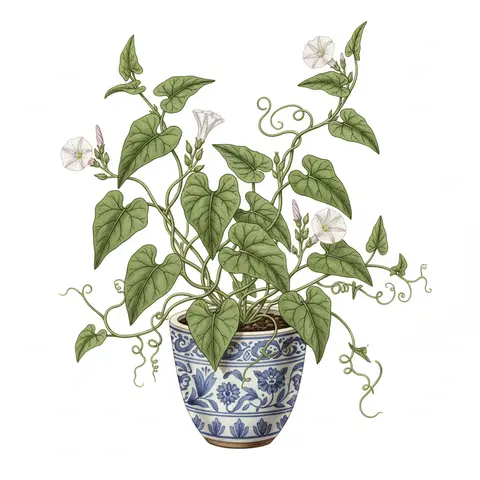
Convolvulus arvensis, commonly known as Bindweed, is a remarkably resilient perennial herbaceous plant belonging to the Convolvulaceae family, characterized by its vigorous, twining growth habit and often considered a tenacious agricultural weed.
The interesting part about Bindweed is that the plant can be discussed from several angles at once: visible form, environmental behavior, traditional context, and modern quality control.
The linked plant page remains the main internal reference point for this article, but the goal here is to turn that raw data into a readable, structured, and genuinely useful guide.
- Convolvulus arvensis is a tenacious perennial known for its invasive growth.
- Contains a unique Proteoglycan Mixture (PGM) with potent anti-angiogenic properties.
- Research suggests significant antitumor effects in various cancer types through PGM.
- Traditionally used for gastrointestinal, skin, respiratory, and joint ailments.
- Requires careful consideration and professional guidance due to potential toxicity and interactions.
- Offers promise in complementary cancer care, particularly for angiogenesis inhibition.
02Bindweed Botanical Profile
Bindweed should be anchored to the correct taxonomic identity before any discussion of care, use, or safety begins.
| Common name | Bindweed |
|---|---|
| Scientific name | Convolvulus arvensisW |
| Family | Convolvulaceae |
| Order | Solanales |
| Genus | Convolvulus |
| Species epithet | arvensis |
| Author citation | L. |
| Synonyms | Convolvulus arvensis f. cordifolius (Lasch) Fernald, Convolvulus arvensis f. pentarrhabdotus P.D.Sell, Convolvulus arvensis f. quinquevulnerus P.D.Sell, Convolvulus arvensis f. paui (Maire) Sauvage & Vindt, Convolvulus arvensis f. ciliaris H.Schmidt, Convolvulus arvensis f. pallidinotatus P.D.Sell, Convolvulus arvensis f. pentastictus P.D.Sell, Convolvulus arvensis f. notatus P.D.Sell, Convolvulus arvensis f. auriculatus (Desr.) Fernald, Convolvulus arvensis f. pallidiroseus P.D.Sell, Convolvulus arvensis f. perroseus P.D.Sell, Cissampelos pareira">Cissampelos helxinioides Friche-Joset & Montandon, 1856 |
| Common names | বাইন্ডউইড, ফিল্ড বাইন্ডউইড, ফিরাউন লতা, Bindweed, Field Bindweed, Creeping Jenny, European Bindweed, बांइडवीड, फील्ड बांइडवीड |
| Local names | Cynghafog y Maes, Acker-Winde, Ager-snerle, Akerwinde, Llwyth y Clymlys, Cwlwm y Cythraul, 'ullayq, Cynghafog Lleiaf, Liseron des champs, Vrillée, Petit liseron, Perfedd y Cythraul, Cynghafog Fechan, Liseron des champs |
| Origin | Eurasia and North Africa |
| Life cycle | Perennial |
| Growth habit | Tree |
Using the accepted scientific name Convolvulus arvensis helps readers avoid confusion caused by old synonyms, loose common names, or inconsistent plant labels.
Family and order placement also matter because they explain recurring structural traits, likely relatives, and the kinds of mistakes readers often make when they rely on appearance alone.
03What Bindweed Looks Like
Field identification becomes easier when these traits are kept in view: Less likely to be directly adulterated due to its 'weed' status and common morphology, but misidentification with other Convolvulus or Calystegia. High-resolution digital images illustrating: 1) Entire plant habit (prostrate/twining). 2) Close-up of leaf (sagittate/hastate, petiole). 3). Calystegia sepium (hedge bindweed) – Distinguished by much larger flowers (4-7 cm diameter) and two prominent, broadly ovate bracteoles immediately.
Microscopic or internal identification notes deepen the picture, especially for processed material: Trichomes are generally absent or sparse on the aerial parts of Convolvulus arvensis, contributing to its relatively smooth stem and leaf surfaces. Anomocytic stomata are commonly observed on both surfaces of the leaves (amphistomatic), though sometimes more prevalent on the abaxial side. Powdered material reveals fragments of epidermal cells with anomocytic stomata, spiral and scalariform vessels, parenchymatous cells, and occasional.
In overall habit, the plant is described as Tree with a mature height around Typically 2-10 m and spread of Typically 1-5 m or more with support.
04Bindweed: Habitat & Distribution
The native or historically recorded center of distribution for Bindweed is Eurasia and North Africa. That origin is more than background trivia; it explains how the plant responds to heat, moisture, shade, and seasonal change.
Explore Our Platforms
 InfiniCore DataWorks
 Nex-Automata
The plant is associated with the following countries or range markers: Afghanistan, Albania, Algeria, Andorra, Armenia, Austria, Azerbaijan, Belarus, Belgium, Bulgaria, China, Croatia.
Environmental notes in the live record add more context: Convolvulus arvensis thrives in a wide range of conditions and is found globally in temperate and subtropical regions. It is native to Europe and Asia and has been introduced to most other continents. It prefers well-drained soils and tolerates a variety of soil types, from sandy to clay, and is commonly found in disturbed habitats, agricultural fields.
In cultivation terms, the main ecological clues are: Full Sun; Weekly; Tolerates a wide range of soil types, including sandy, loamy, and clay soils, as long as they are well-drained. It is not particularly demanding but prefers fertile, well-drained. Species-dependent; Perennial; Tree.
Physiology data reinforce the habitat story: Highly resilient to environmental stresses including drought, nutrient-poor soils, and mechanical disturbance, which underpins its invasive success. Utilizes the C3 photosynthetic pathway, common among temperate herbaceous plants, optimizing carbon fixation under moderate light and temperature. Demonstrates efficient water use and significant drought tolerance due to its deep root system, allowing access to deep soil moisture and reducing.
05Bindweed: Traditional Importance
In folklore, bindweed is often associated with perseverance and tenacity due to its persistent nature. Historically, its medicinal uses were widespread, particularly in European folk medicine, primarily for its purgative and digestive benefits. Its common presence in fields and gardens has also led to its inclusion in folk remedies and superstitions related to fertility or warding off evil spirits in some cultures.
Ethnobotanical records also show how this plant has been framed across different places: Cancer in UK (Hartwell, J.L. 1967-71. Plants used against cancer. A survey. Lloydia 30-34.); Cholagogue in Turkey (Al-Rawi, Ali. 1964. Medicinal Plants of Iraq. Tech. Bull. No. 15. Ministry of Agriculture, Directorate General of Agricultural Research Projects.); Cholagogue in Turkey (Steinmetz, E.F. 1957. codex Vegetabilis. Published by the author, Amsterdam.); Corn in Argentina (Hartwell, J.L. 1967-71. Plants used against cancer. A survey. Lloydia 30-34.); Fever in Turkey (Steinmetz, E.F. 1957. codex Vegetabilis. Published by the author, Amsterdam.); Laxative in Iraq (Al-Rawi, Ali. 1964. Medicinal Plants of Iraq. Tech. Bull. No. 15. Ministry of Agriculture, Directorate General of Agricultural Research Projects.); Laxative in Turkey (Steinmetz, E.F. 1957. codex Vegetabilis. Published by the author, Amsterdam.); Vulnerary in Kurdistan (Al-Rawi, Ali. 1964. Medicinal Plants of Iraq. Tech. Bull. No. 15. Ministry of Agriculture, Directorate General of Agricultural Research Projects.).
Local names help show how different communities notice and classify the plant: Cynghafog y Maes, Acker-Winde, Ager-snerle, Akerwinde, Llwyth y Clymlys, Cwlwm y Cythraul, 'ullayq, Cynghafog Lleiaf, Liseron des champs, Vrillée, Petit liseron, Perfedd y Cythraul.
Traditional context matters, but it should always be separated from modern certainty. Historical use can guide questions, yet it does not automatically prove present-day clinical effectiveness.
06Medicinal Properties of Bindweed
The main benefit themes associated with the plant include:
- Anti-angiogenic Activity — The proteoglycan mixture (PGM) derived from Convolvulus arvensis has demonstrated potent capabilities in inhibiting the formation.
- Antitumor Effects — Research indicates that C. arvensis extracts can significantly reduce tumor size in various cancer models, including bone, gastric.
- Gastrointestinal Support — Traditionally, Bindweed has been employed to alleviate a range of gastrointestinal complaints, acting as a mild laxative and aiding.
- Skin Health — Topical applications derived from the plant have been used in folk medicine to address various skin problems, potentially due to its.
- Respiratory Relief — In traditional systems, preparations from Bindweed were sometimes administered to help ease respiratory issues, possibly by acting as an.
- Anti-inflammatory Action — Its traditional use for joint problems suggests potential anti-inflammatory properties, which may contribute to pain relief and.
- Antioxidant Potential — While not explicitly stated, many plant extracts contain compounds with antioxidant activity, which could contribute to cellular.
- Immunomodulatory Effects — Proteoglycans, like those found in Bindweed, often exhibit immunomodulatory properties, potentially supporting the body's immune.
The evidence matrix gives a more careful picture of those claims: Inhibition of tumor angiogenesis. Pharmacological studies, animal trials. Preclinical (In vitro, In vivo animal models). A proteoglycan mixture (PGM) from C. arvensis strongly inhibits new blood vessel formation essential for tumor growth. Reduction of tumor size in various cancers. Animal trials (e.g., bone cancer in mice). Preclinical (In vivo animal models). Treatment with C. arvensis extract diminished tumor size by at least 70% in mice with bone cancer, without noted toxicity. Alleviation of gastrointestinal problems. Empirical observation, historical use. Traditional/Ethnobotanical. Historically used as a mild laxative and for general digestive complaints, though specific mechanisms are less studied. Support for skin and joint issues. Empirical observation, historical use. Traditional/Ethnobotanical. Applied topically for skin ailments and consumed for joint pain, suggesting anti-inflammatory or soothing properties.
The stored evidence confidence for this profile is traditional. That should shape how strongly any benefit statement is interpreted.
For medicinal content, the key discipline is to distinguish traditional use, mechanism-based plausibility, and human clinical support. Those are related ideas, but they are not the same thing.
- Anti-angiogenic Activity — The proteoglycan mixture (PGM) derived from Convolvulus arvensis has demonstrated potent capabilities in inhibiting the formation.
- Antitumor Effects — Research indicates that C. arvensis extracts can significantly reduce tumor size in various cancer models, including bone, gastric.
- Gastrointestinal Support — Traditionally, Bindweed has been employed to alleviate a range of gastrointestinal complaints, acting as a mild laxative and aiding.
- Skin Health — Topical applications derived from the plant have been used in folk medicine to address various skin problems, potentially due to its.
- Respiratory Relief — In traditional systems, preparations from Bindweed were sometimes administered to help ease respiratory issues, possibly by acting as an.
- Anti-inflammatory Action — Its traditional use for joint problems suggests potential anti-inflammatory properties, which may contribute to pain relief and.
- Antioxidant Potential — While not explicitly stated, many plant extracts contain compounds with antioxidant activity, which could contribute to cellular.
- Immunomodulatory Effects — Proteoglycans, like those found in Bindweed, often exhibit immunomodulatory properties, potentially supporting the body's immune.
- Analgesic Properties — Traditional applications for joint pain hint at possible pain-relieving effects, though specific mechanisms require further.
07Bindweed Phytochemistry
- The broader constituent profile includes Proteoglycan Mixture (PGM) — A complex blend of high molecular weight proteoglycans, primarily responsible for the.
- Alkaloids — Various tropane and pyrrolizidine alkaloids may be present, influencing neurological and physiological.
- Flavonoids — Compounds like quercetin and kaempferol derivatives, known for their antioxidant, anti-inflammatory, and.
- Tannins — Astringent compounds that can help reduce inflammation, possess antimicrobial effects, and are often used in.
- Resins — Complex mixtures of terpenoids and fatty acids, contributing to the plant's traditional laxative effects and.
- Saponins — Glycosides that can have expectorant, anti-inflammatory, and cholesterol-lowering properties, though also.
- Glycosides — Various cardiac and anthraquinone glycosides may be present, affecting heart function or promoting.
- Volatile Oils — Present in small quantities, contributing to the plant's aroma and potentially offering antimicrobial.
- Organic Acids — Compounds such as malic and citric acid, contributing to the plant's overall biochemical profile and.
The detailed phytochemistry file adds these markers: Proteoglycan Mixture (PGM), Glycoproteins/Polysaccharides, Aerial parts, roots, Variable% w/w of extract; Convolvulin, Resin glycoside, Roots, Variablemg/g; Kaempferol, Flavonoid, Leaves, Traceµg/g; Quercetin, Flavonoid, Leaves, Traceµg/g; Tannins, Polyphenols, Leaves, stems, Low% w/w; Alkaloids, Nitrogen-containing compounds, Whole plant, Traceµg/g.
Compound profiles also shift with plant part, age, season, processing, and storage. The chemistry of a fresh leaf, dried root, or concentrated extract should never be treated as automatically identical.
08Bindweed Preparations & Dosage
Recorded preparation and use methods include:
- Standardized Extracts — For research-backed anti-angiogenic effects, standardized proteoglycan mixture (PGM) extracts are typically used, often in capsule or liquid form as per.
- Decoctions — Traditionally, roots and aerial parts can be boiled to create a decoction, used orally for gastrointestinal or respiratory complaints, or topically as a wash.
- Tinctures — Alcohol-based extracts of the fresh or dried plant material, taken internally in small doses for systemic effects.
- Poultices — Crushed fresh leaves or roots mixed with a carrier can be applied topically to skin irritations or joint pain for localized relief.
- Infusions — Dried aerial parts steeped in hot water, similar to a tea, for milder internal use, though less common due to potential toxicity concerns.
- External Washes — Diluted decoctions or tinctures can be used as external washes for skin conditions or minor wounds.
- Professional Formulation — Given potential toxicity and the need for precise dosing, especially for anticancer applications, professional formulation and guidance are paramount.
The plant part most closely linked to use is recorded as Leaves, roots, tubers, stems, or fruit cited in related taxa.
Edibility and processing notes matter here as well: Varies widely; verify species and plant part.
Preparation defines the outcome. Tea, decoction, tincture, powder, fresh plant material, cooked food use, and concentrated extract cannot be discussed as if they were interchangeable.
- Identify the exact species and plant part first.
- Match the preparation to the intended use.
- Check safety, interactions, and processing details before routine use or large-scale handling.
09Is Bindweed Safe? Precautions & Cautions
The first safety note is direct: The plant is considered to have low toxicity for humans and livestock when ingested in small amounts, but it can cause mild gastrointestinal upset (nausea, vomiting, diarrhea) due to its purgative properties. Large ingestions could lead.
Specific warnings recorded for this plant include:
- Professional Consultation — Always consult a qualified healthcare professional or medical herbalist before using Bindweed, especially for serious conditions.
- Pregnancy and Lactation — Contraindicated during pregnancy and lactation due to insufficient safety data and potential abortifacient or toxic effects.
- Children — Not recommended for use in children due to potential toxicity and lack of pediatric safety studies.
- Pre-existing Conditions — Individuals with gastrointestinal disorders, kidney disease, liver disease, or heart conditions should avoid use.
- Drug Interactions — Exercise extreme caution with anticoagulants, antihypertensives, or any concurrent cancer therapies; potential for additive or antagonistic effects.
- Dosage — Adhere strictly to recommended dosages of standardized extracts; crude plant material is generally not advised for internal use due to variable potency and toxicity.
- Purity of Extracts — Ensure any commercial preparation is from a reputable source, standardized, and free from contaminants.
- Gastrointestinal Upset — May cause nausea, vomiting, or diarrhea, particularly with ingestion of raw plant material or high doses of unpurified extracts due.
Quality-control notes add another warning: Moderate risk of adulteration with other Convolvulus species or unrelated plant materials; morphological and phytochemical analysis is crucial for identification.
No plant should be described as universally safe. Identity, dose, plant part, preparation style, age, pregnancy status, medication use, allergies, and contamination risk all change the answer.
10How to Grow Bindweed
The cultivation record emphasizes these practical steps:
- Soil Preference — Thrives in a wide range of soil types, from sandy to heavy clay, preferring well-drained but not overly dry conditions; tolerates poor fertility.
- Light Requirements — Prefers full sun but can tolerate partial shade, demonstrating robust growth in open, disturbed environments.
- Water Needs — Highly drought-tolerant once established due to its deep taproot system, requiring minimal supplemental irrigation.
- Propagation — Primarily propagates via extensive rhizomatous root systems and prolific seed production; seeds can remain viable in soil for decades.
- Containment — When cultivating for specific research or controlled purposes, robust physical barriers or container growing is essential to prevent invasive spread.
- Climate Adaptability — A cosmopolitan species, it adapts well to temperate climates and can withstand various environmental stresses.
The broader growth environment is described like this: Convolvulus arvensis thrives in a wide range of conditions and is found globally in temperate and subtropical regions. It is native to Europe and Asia and has been introduced to most other continents. It prefers well-drained soils and tolerates a variety of soil types, from sandy to clay, and is commonly found in disturbed habitats, agricultural fields.
Planning becomes easier when these traits are kept in view: Tree; Typically 2-10 m; Typically 1-5 m or more with support; Fast; Advanced.
In practice, healthy cultivation comes from systems thinking rather than one-off tricks. Site choice, drainage, timing, spacing, pruning, feeding, and observation all reinforce one another.
11Bindweed Growing Conditions
The most useful care snapshot is this: Light: Full Sun; Water: Weekly; Soil: Tolerates a wide range of soil types, including sandy, loamy, and clay soils, as long as they are well-drained. It is not particularly demanding but prefers fertile, well-drained. Temperature: 0-35°C; USDA zone: Species-dependent.
Outdoors, light, water, and soil must be read together. The same watering schedule can be too much in dense clay and too little in a porous sandy bed.
| Light | Full Sun |
|---|---|
| Water | Weekly |
| Soil | Tolerates a wide range of soil types, including sandy, loamy, and clay soils, as long as they are well-drained. It is not particularly demanding but prefers fertile, well-drained. |
| Temperature | 0-35°C |
| USDA zone | Species-dependent |
Light, water, and soil should never be treated as separate checkboxes. A plant in stronger light often dries faster, soil texture changes how quickly water moves, and temperature plus humidity influence how stress appears in leaves and roots.
For Bindweed, the safest care approach is to treat Full Sun, Weekly, and Tolerates a wide range of soil types, including sandy, loamy, and clay soils, as long as they are well-drained. It is not particularly demanding but prefers fertile, well-drained. as linked decisions rather than isolated tips. If one condition shifts, the other two usually need to be reconsidered as well.
12Propagating Bindweed
Documented propagation routes include Bindweed primarily propagates through seeds, which can remain viable in the soil for many years, and through its extensive root system. Seeds are dispersed by. even small pieces of root left in the soil can regenerate into new plants.
Reproductive notes also help clarify propagation timing: High seed set, capable of producing hundreds to thousands of seeds per plant per season, depending on environmental conditions. Exhibits physical dormancy (hard seed coat preventing water uptake) and sometimes physiological dormancy (embryo dormancy). Scarification. Known for extended seed viability, with seeds remaining viable in soil for up to 50-60 years or more, contributing significantly to its persistence.
Propagation works best when the parent stock is healthy, correctly identified, and handled in the right season. That sounds obvious, but it is exactly where many failures begin.
- Bindweed primarily propagates through seeds, which can remain viable in the soil for many years, and through its extensive root system. Seeds are dispersed by.
- Even small pieces of root left in the soil can regenerate into new plants.
13Managing Bindweed Problems
The recorded problem list includes The primary problem associated with bindweed is its aggressive, invasive growth, making it a difficult-to-control weed.
For medicinal species, pest pressure is not only a horticultural issue. It also affects harvest cleanliness, storage stability, and confidence in the final material.
The smartest response sequence is observation first, environmental correction second, and treatment only after the real pattern is clear.
- The primary problem associated with bindweed is its aggressive, invasive growth, making it a difficult-to-control weed.
Pest and disease management is strongest when it begins before visible damage becomes severe. Routine observation, clean handling, sensible spacing, air movement, and balanced watering reduce many problems before treatment is even needed.
When symptoms do appear on Bindweed, the most reliable response is diagnostic rather than reactive. Yellowing, spots, wilt, chewing, and stunting can all have multiple causes, so a rushed treatment can waste time or worsen the problem.
14How to Harvest Bindweed
The plant part most often associated with harvest or processing is Leaves, roots, tubers, stems, or fruit cited in related taxa.
Storage guidance from the quality-control record reads as follows: Dried plant material and standardized extracts should be stored in cool, dark, airtight containers to prevent degradation of active compounds, particularly proteoglycans and.
For medicinal plants, harvesting cannot be separated from processing. The right plant part, the right timing, and the right drying conditions all shape quality and safety.
Whatever the purpose, the rule is the same: harvest clean material, label it clearly, and store it in a way that preserves identity and condition.
Harvest and storage determine whether a plant's quality is preserved after it leaves the bed, pot, field, or wild source. Clean timing, correct plant part selection, and careful drying or handling all matter more than many readers expect.
15Bindweed in Garden Design
Useful companions or placement partners include Wild Carrot (Daucus carota); Clover (Trifolium spp.); Yarrow (Achillea millefolium); Thistles (Cirsium spp.); Wildflowers (general).
In a home herb garden or medicinal bed, Bindweed should be placed where harvesting is easy, labeling remains clear, and neighboring plants do not create confusion at collection time.
- Wild Carrot (Daucus carota)
- Clover (Trifolium spp.)
- Yarrow (Achillea millefolium)
- Thistles (Cirsium spp.)
- Wildflowers (general)
Companion planting and design are not only aesthetic decisions. They affect airflow, root competition, moisture sharing, harvest access, visibility, and the general logic of the planting scheme.
With Bindweed, good placement means thinking about mature size, maintenance rhythm, and how neighboring plants change the feel and function of the space. A plant can be healthy on its own and still be poorly placed within the broader composition.
16Bindweed: Scientific Evidence
The evidence matrix points to several recurring themes: Inhibition of tumor angiogenesis. Pharmacological studies, animal trials. Preclinical (In vitro, In vivo animal models). A proteoglycan mixture (PGM) from C. arvensis strongly inhibits new blood vessel formation essential for tumor growth. Reduction of tumor size in various cancers. Animal trials (e.g., bone cancer in mice). Preclinical (In vivo animal models). Treatment with C. arvensis extract diminished tumor size by at least 70% in mice with bone cancer, without noted toxicity. Alleviation of gastrointestinal problems. Empirical observation, historical use. Traditional/Ethnobotanical. Historically used as a mild laxative and for general digestive complaints, though specific mechanisms are less studied. Support for skin and joint issues. Empirical observation, historical use. Traditional/Ethnobotanical. Applied topically for skin ailments and consumed for joint pain, suggesting anti-inflammatory or soothing properties.
Ethnobotanical activity records add historical reference trails: Cancer — UK [Hartwell, J.L. 1967-71. Plants used against cancer. A survey. Lloydia 30-34.]; Cholagogue — Turkey [Al-Rawi, Ali. 1964. Medicinal Plants of Iraq. Tech. Bull. No. 15. Ministry of Agriculture, Directorate General of Agricultural Research Projects.]; Cholagogue — Turkey [Steinmetz, E.F. 1957. codex Vegetabilis. Published by the author, Amsterdam.]; Corn — Argentina [Hartwell, J.L. 1967-71. Plants used against cancer. A survey. Lloydia 30-34.]; Fever — Turkey [Steinmetz, E.F. 1957. codex Vegetabilis. Published by the author, Amsterdam.]; Laxative — Iraq [Al-Rawi, Ali. 1964. Medicinal Plants of Iraq. Tech. Bull. No. 15. Ministry of Agriculture, Directorate General of Agricultural Research Projects.].
The compiled source count behind the live profile is 8. That does not guarantee certainty, but it does suggest the record has been cross-checked beyond a single note.
Analytical testing notes also strengthen the evidence base: Analytical methods include High-Performance Liquid Chromatography (HPLC) for specific compound profiling, spectroscopic techniques, and protein assays for PGM quantification.
A careful evidence section should say what is known, what is plausible, and what remains uncertain. Readers are better served by clear limits than by exaggerated confidence.
Evidence note: this section blends the live plant record, local ethnobotanical activity data, chemistry records, and the linked Flora Medical Global plant profile for Bindweed.
17Choosing Quality Bindweed
Quality markers worth checking include The high molecular weight proteoglycan mixture (PGM) is considered the primary marker compound for assessing the quality and efficacy of medicinal extracts.
Adulteration and substitution risk should not be ignored: Moderate risk of adulteration with other Convolvulus species or unrelated plant materials; morphological and phytochemical analysis is crucial for identification.
When buying Bindweed, start with verified botanical identity. The label, scientific name, and the source page should agree before you judge price, size, or claimed benefits.
For living plants, inspect roots, stem firmness, foliage health, and early pest signs. For dried or processed material, look for batch clarity, clean aroma, absence of mold, and any sign that the product has been over-processed to disguise poor quality.
Buying advice should begin with identity. The label, scientific name, visible condition, and seller credibility should agree before price or convenience becomes the deciding factor.
18Bindweed: Frequently Asked Questions
What is Bindweed best known for?
Convolvulus arvensis, commonly known as Bindweed, is a remarkably resilient perennial herbaceous plant belonging to the Convolvulaceae family, characterized by its vigorous, twining growth habit and often considered a tenacious agricultural weed.
Is Bindweed beginner-friendly?
That depends on the growing environment and the intended use. Some plants are easy to grow but not simple to use medicinally, while others are the opposite.
How much light does Bindweed need?
Full Sun
How often should Bindweed be watered?
Weekly
Can Bindweed be propagated at home?
Yes, but the best method depends on whether the species responds best to seed, cuttings, division, offsets, or other propagation routes.
Does Bindweed have safety concerns?
The plant is considered to have low toxicity for humans and livestock when ingested in small amounts, but it can cause mild gastrointestinal upset (nausea, vomiting, diarrhea) due to its purgative properties. Large ingestions could lead.
What is the biggest mistake people make with Bindweed?
The most common mistake is applying generic advice instead of matching the plant to its real environment, identity, and limits.
Where can I verify more information about Bindweed?
Start with the Flora Medical Global plant profile: https://www.floramedicalglobal.com/plant/bindweed
Why do sources sometimes disagree about Bindweed?
Different references may use different synonyms, plant parts, cultivation conditions, or evidence standards. That is why taxonomy and source quality both matter.
19Bindweed: References & Further Reading
Authoritative sources and related guides:
- Wikipedia — background reference
- PubMed — peer-reviewed studies
- Kew POWO — botanical reference
- NCBI PMC — open-access research
- WHO — global health authority
Related on Flora Medical Global
Reviewed by the Flora Medical Global Botanical Review Panel
Multi-disciplinary editorial group · Botany · Ethnobotany · Herbal-medicine literature
Who reviewed this: This page was checked by the Flora Medical Global Botanical Review Panel — an in-house editorial group of botany graduates, ethnobotany researchers, and horticulture practitioners who collectively maintain our 7,000+ plant encyclopedia. Meet the team.
Our 4-step verification process
1. Taxonomic verification
Scientific names and synonyms cross-checked against Kew POWO, World Flora Online, and The Plant List.
2. Phytochemical & medicinal cross-reference
Active compounds, traditional uses, and reported activities are cross-referenced with PubMed, USDA Dr. Duke's database, and peer-reviewed ethnobotanical literature.
3. Conservation & distribution check
Distribution, ecology, and conservation status confirmed against GBIF occurrence records and the IUCN Red List.
4. Editorial & safety review
Every entry passes an editorial pass for clarity, originality, and safety notices (toxicity, contraindications, dosage caveats) before publication.
Last reviewed:
Important medical disclaimer: This content is for educational and research purposes only. It is not medical advice and is not a substitute for consultation with a licensed healthcare provider. Do not use any herb to self-treat a medical condition without professional guidance.
Explore Our Platforms
Comments (0)
No comments yet. Be the first!