Birthwort: Benefits, Uses & Safety
 Flora Medical GlobalPublished: 4/10/2026Updated: 6/16/202620 min read
Editorial Disclaimer: This article is for informational and educational purposes only. It is not a substitute for professional medical advice, diagnosis, or treatment. Always consult a qualified healthcare provider or certified herbalist before using any plant for medicinal purposes, especially if you are pregnant, nursing, taking medication, or have a medical condition.
01Introduction to Birthwort
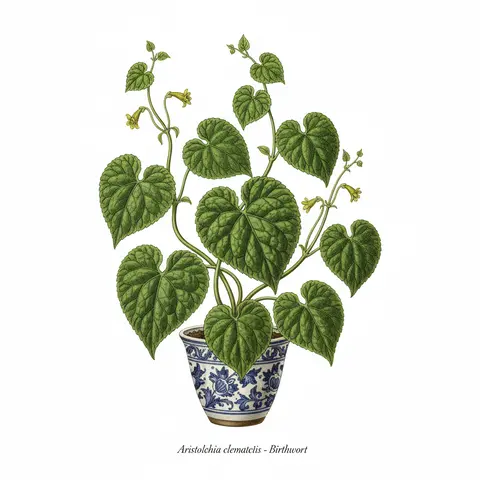
Birthwort (Aristolochia clematitis) is a distinctive perennial herbaceous plant belonging to the Aristolochiaceae family, a group renowned for its unique and often intricate floral structures.
The interesting part about Birthwort is that the plant can be discussed from several angles at once: visible form, environmental behavior, traditional context, and modern quality control.
The linked plant page remains the main internal reference point for this article, but the goal here is to turn that raw data into a readable, structured, and genuinely useful guide.
- Birthwort (Aristolochia clematitis) is a European perennial with distinctive pitcher-shaped flowers.
- Historically used in folk medicine for a range of ailments, including labor induction and wound healing.
- Contains highly toxic aristolochic acids, known for severe nephrotoxic and carcinogenic effects.
- Internal consumption is strictly contraindicated and globally banned due to irreversible organ damage and cancer risk.
- Even external application should be avoided due to potential systemic absorption and local irritation.
02Birthwort: Taxonomy & Classification
Birthwort should be anchored to the correct taxonomic identity before any discussion of care, use, or safety begins.
| Common name | Birthwort |
|---|---|
| Scientific name | Aristolochia clematitisW |
| Family | Aristolochiaceae |
| Order | Aristolochiales |
| Genus | Aristolochia |
| Species epithet | clematitis |
| Author citation | L. |
| Synonyms | Aristolochia quadriflora Gueldenst., Aristolochia longa Georgi, Aristolochia tenuis Houtt., Aristolochia clematitis f. undulata Priszter, Aristolochia infesta Salisb., Aristolochia rotunda Georgi |
| Common names | বার্থওর্ট, অ্যারিস্টলোচিয়া ক্লেমাটিটিস, Birthwort, European Birthwort, Pipevine, सर्पगन्धा, अर्जुन वृक्ष |
| Local names | Echte Osterluzei, Esgorllys Crwn, Gewöhnliche Osterluzei, Gemeine Osterluzei, Aristolochia clematite, Esgorllys Bychan, Etelännenätti, Aristoloche clématite, Poison de terre, Esgorlys, Afal Daear, European birthwort, Aristoloche commune |
| Origin | Southern and Central Europe to Western Asia |
| Life cycle | Perennial |
| Growth habit | Tree |
Using the accepted scientific name Aristolochia clematitis helps readers avoid confusion caused by old synonyms, loose common names, or inconsistent plant labels.
Family and order placement also matter because they explain recurring structural traits, likely relatives, and the kinds of mistakes readers often make when they rely on appearance alone.
03Birthwort: Physical Characteristics
A practical reading of the plant starts with visible structure:
- Leaf: Alternate, ovate to reniform, 5-10 cm long, heart-shaped at the base, with prominent parallel veins, entire margin.
- Stem: Erect, hollow, 30-60 cm tall, sparsely branched.
- Root: Creeping, woody rhizome.
- Flower: Zygomorphic, tubular, 2-3 cm long, dull yellow to greenish-yellow with a purplish-brown throat, emitting a peculiar odor.
- Fruit: Ovoid to globose, six-ribbed capsule, 2-3 cm long, ripening to dark brown and dehiscent.
- Seed: Numerous small, winged seeds.
Field identification becomes easier when these traits are kept in view: Historically, other Aristolochia species, particularly those lacking aristolochic acids or having different profiles, as well as unrelated plants. High-resolution images of whole plant, rhizome, stem, adaxial and abaxial leaf surfaces, intact flowers (longitudinal and transverse sections). Can be mistaken for other Aristolochia species, particularly those with similar leaf morphology or flower color (e.g., A. rotunda, A. longa).
Microscopic or internal identification notes deepen the picture, especially for processed material: Non-glandular, uniseriate, conical hairs are present on the stem and leaves, varying in length and density, providing a slightly scabrous texture. Stomata are predominantly anomocytic, scattered across both adaxial and abaxial leaf surfaces, though often more abundant on the abaxial side. Powdered material reveals fragments of epidermal tissue with anomocytic stomata, numerous uniseriate trichomes, spiral and pitted vessel elements.
In overall habit, the plant is described as Tree with a mature height around Typically 0.2-10 m depending on species and spread of Typically 0.2-5 m depending on species.
04Native Range of Birthwort
The native or historically recorded center of distribution for Birthwort is Southern and Central Europe to Western Asia. That origin is more than background trivia; it explains how the plant responds to heat, moisture, shade, and seasonal change.
Explore Our Platforms
 InfiniCore DataWorks
 Nex-Automata
The plant is associated with the following countries or range markers: Albania, Austria, Belarus, Bosnia and Herzegovina, Bulgaria, Croatia, Czech Republic, France, Germany, Greece, Hungary, Italy.
Environmental notes in the live record add more context: Aristolochia clematitis thrives in temperate climates. It is native to Southern Europe and Western Asia, commonly found in regions with moderate rainfall and distinct seasons. It prefers woodland margins, hedgerows, meadows, and damp areas along riverbanks. Ideal habitats are areas with moist, well-drained soil and partial shade, receiving dappled.
In cultivation terms, the main ecological clues are: Partial Shade; Weekly; Rich, moist, well-drained loam or sandy loam, slightly acidic to neutral pH. Species-dependent; Perennial; Tree.
Physiology data reinforce the habitat story: Exhibits good tolerance to moist, shaded environments; however, it is sensitive to prolonged drought conditions and intense, direct sunlight, which. C3 photosynthesis, typical of most temperate herbaceous plants. Moderate to high transpiration rates, thriving in consistently moist soil conditions to support its lush foliage and growth.
05Birthwort in Tradition & Culture
Birthwort (Aristolochia clematitis) holds significant cultural and historical importance, particularly in European ethnobotany and folk medicine. Its association with childbirth is deeply embedded in its common name and historical uses, where it was believed to ease labor, promote milk production, and treat post-partum ailments. It was also used as an emmenagogue to regulate menstrual cycles. Beyond its.
Ethnobotanical records also show how this plant has been framed across different places: Cacoethes in Germany (Hartwell, J.L. 1967-71. Plants used against cancer. A survey. Lloydia 30-34.); Cancer in Europe (Hartwell, J.L. 1967-71. Plants used against cancer. A survey. Lloydia 30-34.); Cancer(Breast) in Europe (Hartwell, J.L. 1967-71. Plants used against cancer. A survey. Lloydia 30-34.); Cancer(Nose) in UK (Hartwell, J.L. 1967-71. Plants used against cancer. A survey. Lloydia 30-34.); Depurative in Turkey (Steinmetz, E.F. 1957. codex Vegetabilis. Published by the author, Amsterdam.); Parturition in Turkey (Steinmetz, E.F. 1957. codex Vegetabilis. Published by the author, Amsterdam.); Poison in Spain (Font Query, P. 1979. Plantas Medicinales el Dioscorides Renovado. Editorial Labor, S.A. Barcelona. 5th Ed.); Poison in Turkey (Steinmetz, E.F. 1957. codex Vegetabilis. Published by the author, Amsterdam.).
Local names help show how different communities notice and classify the plant: Echte Osterluzei, Esgorllys Crwn, Gewöhnliche Osterluzei, Gemeine Osterluzei, Aristolochia clematite, Esgorllys Bychan, Etelännenätti, Aristoloche clématite, Poison de terre, Esgorlys, Afal Daear.
Traditional context matters, but it should always be separated from modern certainty. Historical use can guide questions, yet it does not automatically prove present-day clinical effectiveness.
06Birthwort Health Benefits
The main benefit themes associated with the plant include:
- Historically used as an Abortifacient — Traditionally believed to induce abortion by stimulating uterine contractions, a dangerous and contraindicated.
- Traditionally used as an Anti-inflammatory — Folk medicine employed it to reduce inflammation, though modern science notes its severe toxicity.
- Historically used as an Antispasmodic — Believed to relax muscular spasms and cramps in traditional European herbalism.
- Traditionally used as a Diaphoretic — Applied to induce perspiration, aiding in fever reduction in historical contexts.
- Historically used as an Emmenagogue — Utilized to promote or increase menstrual flow, closely linked to its abortifacient properties.
- Traditionally used as a Febrifuge — Employed in folk remedies to reduce fevers and alleviate associated symptoms.
- Historically used as an Oxytocic — Applied to hasten parturition and stimulate uterine contractions, especially during childbirth, due to its potent uterine.
- Traditionally used as a Stimulant — Believed to excite or quicken physiological processes, acting as a general tonic in some historical practices.
The evidence matrix gives a more careful picture of those claims: Traditional use as an anti-inflammatory and wound healing agent. Historical accounts, anecdotal reports. Traditional/Ethnobotanical. Modern research indicates that any perceived benefit is vastly outweighed by severe nephrotoxic and carcinogenic effects from aristolochic acids. Historical use as an abortifacient and emmenagogue. Historical texts, folk medicinal practices. Traditional/Ethnobotanical. Confirmed uterine stimulant, but its use is extremely dangerous, leading to severe uterine bleeding and systemic toxicity, and is strictly contraindicated. Early reports of anti-tumor activity (later disproven for clinical use). Preliminary pharmacological investigations. Early laboratory/In vitro (historic). Despite some initial observations, aristolochic acids are now definitively classified as potent carcinogens, making them unsuitable and dangerous for any anti-cancer therapy. Traditional use for skin conditions like eczema and infected nails. Historical topical application, anecdotal. Traditional/Ethnobotanical. Topical application is not recommended due to potential systemic absorption of toxic compounds and localized irritation.
The stored evidence confidence for this profile is traditional. That should shape how strongly any benefit statement is interpreted.
For medicinal content, the key discipline is to distinguish traditional use, mechanism-based plausibility, and human clinical support. Those are related ideas, but they are not the same thing.
- Historically used as an Abortifacient — Traditionally believed to induce abortion by stimulating uterine contractions, a dangerous and contraindicated.
- Traditionally used as an Anti-inflammatory — Folk medicine employed it to reduce inflammation, though modern science notes its severe toxicity.
- Historically used as an Antispasmodic — Believed to relax muscular spasms and cramps in traditional European herbalism.
- Traditionally used as a Diaphoretic — Applied to induce perspiration, aiding in fever reduction in historical contexts.
- Historically used as an Emmenagogue — Utilized to promote or increase menstrual flow, closely linked to its abortifacient properties.
- Traditionally used as a Febrifuge — Employed in folk remedies to reduce fevers and alleviate associated symptoms.
- Historically used as an Oxytocic — Applied to hasten parturition and stimulate uterine contractions, especially during childbirth, due to its potent uterine.
- Traditionally used as a Stimulant — Believed to excite or quicken physiological processes, acting as a general tonic in some historical practices.
- Historically used for Wound Healing — Externally applied to speed the healing of slow-healing cuts and sores, possibly by stimulating white blood cell activity.
- Traditionally used for Eczema — Applied topically to treat chronic skin conditions like eczema, aiming to reduce redness and itching.
07Birthwort Phytochemistry
- The broader constituent profile includes Aristolochic Acids (AAs) — The most prominent and dangerous group, including Aristolochic Acid I (AA-I) and.
- Aristolactams — These are nitrogen-containing secondary metabolites, often derived from aristolochic acids. Examples.
- Flavonoids — A diverse group of polyphenolic compounds common in plants, often associated with antioxidant properties.
- Lignans — Another class of plant secondary metabolites, these are dimeric phenylpropanoids. Their presence in. Alkaloids (other) — While aristolactams are a type of alkaloid, other alkaloidal compounds may be present in minor.
- Essential Oils — Small amounts of volatile organic compounds may contribute to the plant's aroma, though not a primary.
- Tannins — Astringent polyphenols that might be present, traditionally associated with wound healing and.
The detailed phytochemistry file adds these markers: Aristolochic Acid I (AA-I), Nitrophenanthrene carboxylic acid, Whole plant (roots, stems, leaves, seeds), Variablemg/g dry weight; Aristolochic Acid II (AA-II), Nitrophenanthrene carboxylic acid, Whole plant (roots, stems, leaves), Variablemg/g dry weight; Aristolactam I, Alkaloid (aristolactam), Whole plant, Variablemg/g dry weight; Aristolochic Acid IVa, Nitrophenanthrene carboxylic acid, Whole plant, Minormg/g dry weight; Flavonoids, Polyphenols, Leaves, Trace to low% dry weight; Lignans, Phenylpropanoids, Roots, stems, Trace% dry weight.
Compound profiles also shift with plant part, age, season, processing, and storage. The chemistry of a fresh leaf, dried root, or concentrated extract should never be treated as automatically identical.
08Birthwort Preparations & Dosage
Recorded preparation and use methods include Traditional Uterine Stimulant — Historically, the juice from stems was used to induce childbirth or as an abortifacient, a practice now recognized as extremely dangerous and. Traditional Anti-inflammatory Poultice — The flowering herb or root was traditionally applied externally as a poultice to reduce inflammation. External Application for Wounds — Historically used topically on slow-healing cuts and sores, aimed at promoting healing and preventing infection. Topical Treatment for Skin Conditions — Applied externally for conditions like eczema and infected nails, despite the risks of systemic absorption. Infusions for Fevers — Traditional herbalists prepared infusions from the plant to act as a diaphoretic and febrifuge, for internal consumption, which is now considered highly. Decoctions for Menstrual Issues — Historically, decoctions were consumed to regulate menstrual flow or as an emmenagogue, a practice with severe health risks due to aristolochic. Caution for All Uses — Due to the unequivocal nephrotoxic and carcinogenic properties, Aristolochia clematitis is not recommended for any medicinal use, internal or external.
The plant part most closely linked to use is recorded as Leaves, roots, bark, seeds, flowers, or whole plant cited in related taxa.
Edibility and processing notes matter here as well: Species- and plant-part-dependent; verify before use.
Preparation defines the outcome. Tea, decoction, tincture, powder, fresh plant material, cooked food use, and concentrated extract cannot be discussed as if they were interchangeable.
- Identify the exact species and plant part first.
- Match the preparation to the intended use.
- Check safety, interactions, and processing details before routine use or large-scale handling.
09Is Birthwort Safe? Precautions & Cautions
The first safety note is direct: Aristolochia clematitis is classified as highly toxic, primarily due to the presence of aristolochic acids. These compounds are well-documented nephrotoxins and carcinogens. **Internal consumption is extremely dangerous and strictly.
Specific warnings recorded for this plant include:
- Absolute Contraindication for Internal Use — Due to severe nephrotoxic and carcinogenic effects, internal consumption of Birthwort is strictly prohibited.
- Pregnancy and Lactation — Absolutely contraindicated in pregnant and lactating women due to its abortifacient properties and risk of harm to the fetus or.
- Pre-existing Kidney Disease — Individuals with any kidney impairment are at extremely high risk of exacerbated damage.
- Cancer Patients — Should never be used by individuals with a history of cancer or those undergoing cancer treatment due to its carcinogenic properties.
- Topical Use Caution — Even external application carries risks of systemic absorption and localized irritation; not recommended without explicit medical supervision.
- Regulatory Bans — Birthwort and other Aristolochia species containing aristolochic acids are globally banned from use in herbal products and dietary.
- Professional Guidance — Any consideration for use, even historical or external, requires extreme caution and should only be under the strictest, informed.
- Nephrotoxicity — Aristolochic acids are potent kidney toxins, causing irreversible kidney damage, including end-stage renal failure.
- Carcinogenicity — Strongly linked to various cancers, particularly urothelial carcinoma (cancers of the urinary tract and kidney pelvis), even with minimal.
Quality-control notes add another warning: High risk of adulteration or misidentification with other Aristolochia species or similar-looking plants, all of which may contain aristolochic acids or other harmful compounds.
No plant should be described as universally safe. Identity, dose, plant part, preparation style, age, pregnancy status, medication use, allergies, and contamination risk all change the answer.
10Birthwort Cultivation Guide
The cultivation record emphasizes these practical steps:
- Soil Preference — Thrives in well-drained loamy soil, rich in organic matter, tolerating mildly acid, neutral, and mildly alkaline pH levels.
- Light Requirements — Prefers semi-shade to full shade conditions (light woodland), though it can tolerate full sun if moisture is consistent.
- Moisture Needs — Requires consistently moist soil conditions; sensitive to drought.
- Hardiness Zone — Hardy in USDA zones 5-9 and UK zone 6, indicating tolerance to temperate climates.
- Growth Habit — Perennial herbaceous plant growing up to 0.7 meters (2ft 4in) tall, with a spreading, invasive rhizomatous root system.
- Pollination — Flowers are hermaphrodite and are primarily pollinated by flies, attracted by the unique, often malodorous, pitcher-shaped flowers.
- Historical Cultivation — Formerly cultivated across Europe as a medicinal plant, prior to the full understanding of its severe toxicity.
The broader growth environment is described like this: Aristolochia clematitis thrives in temperate climates. It is native to Southern Europe and Western Asia, commonly found in regions with moderate rainfall and distinct seasons. It prefers woodland margins, hedgerows, meadows, and damp areas along riverbanks. Ideal habitats are areas with moist, well-drained soil and partial shade, receiving dappled.
Planning becomes easier when these traits are kept in view: Tree; Typically 0.2-10 m depending on species; Typically 0.2-5 m depending on species; Moderate; Intermediate.
In practice, healthy cultivation comes from systems thinking rather than one-off tricks. Site choice, drainage, timing, spacing, pruning, feeding, and observation all reinforce one another.
11Birthwort Growing Conditions
The most useful care snapshot is this: Light: Partial Shade; Water: Weekly; Soil: Rich, moist, well-drained loam or sandy loam, slightly acidic to neutral pH. Humidity: Medium; Temperature: 10-25°C; USDA zone: Species-dependent.
Outdoors, light, water, and soil must be read together. The same watering schedule can be too much in dense clay and too little in a porous sandy bed.
| Light | Partial Shade |
|---|---|
| Water | Weekly |
| Soil | Rich, moist, well-drained loam or sandy loam, slightly acidic to neutral pH. |
| Humidity | Medium |
| Temperature | 10-25°C |
| USDA zone | Species-dependent |
Light, water, and soil should never be treated as separate checkboxes. A plant in stronger light often dries faster, soil texture changes how quickly water moves, and temperature plus humidity influence how stress appears in leaves and roots.
For Birthwort, the safest care approach is to treat Partial Shade, Weekly, and Rich, moist, well-drained loam or sandy loam, slightly acidic to neutral pH. as linked decisions rather than isolated tips. If one condition shifts, the other two usually need to be reconsidered as well.
12Birthwort Propagation Methods
Documented propagation routes include Aristolochia clematitis can be propagated by seeds, division of rhizomes, and, less commonly, by stem cuttings. Seeds: Seeds are best sown in late autumn or early spring. They require a period of cold stratification. For autumn sowing, plant seeds directly in the. Division: The most reliable method of propagation is by dividing the rootstock. In late autumn or early spring, before new growth begins, carefully dig up. Cuttings: While less common and typically more challenging, stem cuttings can be taken from young, semi-hardwood shoots in early summer. Remove lower.
Reproductive notes also help clarify propagation timing: High seed set is generally observed in well-pollinated populations. Factors like pollinator availability and environmental conditions can influence. Often exhibits physiological dormancy, requiring a period of chilling (cold stratification) to break dormancy and promote germination. Seeds typically exhibit moderate to good viability, ranging from 60-80% under optimal storage conditions.
Propagation works best when the parent stock is healthy, correctly identified, and handled in the right season. That sounds obvious, but it is exactly where many failures begin.
- Aristolochia clematitis can be propagated by seeds, division of rhizomes, and, less commonly, by stem cuttings.
- Seeds: Seeds are best sown in late autumn or early spring. They require a period of cold stratification. For autumn sowing, plant seeds directly in the.
- Division: The most reliable method of propagation is by dividing the rootstock. In late autumn or early spring, before new growth begins, carefully dig up.
- Cuttings: While less common and typically more challenging, stem cuttings can be taken from young, semi-hardwood shoots in early summer. Remove lower.
13Managing Birthwort Problems
The recorded problem list includes Common problems for Aristolochia clematitis are relatively few, as it is generally a robust plant. However, it can be. Aphids: These small, sap-sucking insects can infest new growth, causing distortion. They can often be washed off. Slugs and Snails: These mollusks can chew holes in the leaves, especially in young plants. Barriers, traps, or. Powdery Mildew: In humid conditions or with poor air circulation, a white, powdery substance may appear on the. Root Rot: This is usually caused by overwatering and poorly draining soil. Ensuring good drainage is the primary.
For medicinal species, pest pressure is not only a horticultural issue. It also affects harvest cleanliness, storage stability, and confidence in the final material.
The smartest response sequence is observation first, environmental correction second, and treatment only after the real pattern is clear.
14Birthwort: Harvest, Storage & Processing
The plant part most often associated with harvest or processing is Leaves, roots, bark, seeds, flowers, or whole plant cited in related taxa.
Storage guidance from the quality-control record reads as follows: Dried plant material should be stored in cool, dry conditions away from direct light to minimize degradation, though the inherent toxicity persists regardless of storage.
For medicinal plants, harvesting cannot be separated from processing. The right plant part, the right timing, and the right drying conditions all shape quality and safety.
Whatever the purpose, the rule is the same: harvest clean material, label it clearly, and store it in a way that preserves identity and condition.
15Designing a Garden with Birthwort
Useful companions or placement partners include Hostas; Ferns; Astilbes.
In a home herb garden or medicinal bed, Birthwort should be placed where harvesting is easy, labeling remains clear, and neighboring plants do not create confusion at collection time.
Companion planting and design are not only aesthetic decisions. They affect airflow, root competition, moisture sharing, harvest access, visibility, and the general logic of the planting scheme.
With Birthwort, good placement means thinking about mature size, maintenance rhythm, and how neighboring plants change the feel and function of the space. A plant can be healthy on its own and still be poorly placed within the broader composition.
That is why the best design advice combines biology with usability. The planting should look coherent, but it should also make watering, pruning, harvest, and pest observation easier rather than harder.
16What Science Says About Birthwort
The evidence matrix points to several recurring themes: Traditional use as an anti-inflammatory and wound healing agent. Historical accounts, anecdotal reports. Traditional/Ethnobotanical. Modern research indicates that any perceived benefit is vastly outweighed by severe nephrotoxic and carcinogenic effects from aristolochic acids. Historical use as an abortifacient and emmenagogue. Historical texts, folk medicinal practices. Traditional/Ethnobotanical. Confirmed uterine stimulant, but its use is extremely dangerous, leading to severe uterine bleeding and systemic toxicity, and is strictly contraindicated. Early reports of anti-tumor activity (later disproven for clinical use). Preliminary pharmacological investigations. Early laboratory/In vitro (historic). Despite some initial observations, aristolochic acids are now definitively classified as potent carcinogens, making them unsuitable and dangerous for any anti-cancer therapy. Traditional use for skin conditions like eczema and infected nails. Historical topical application, anecdotal. Traditional/Ethnobotanical. Topical application is not recommended due to potential systemic absorption of toxic compounds and localized irritation.
Ethnobotanical activity records add historical reference trails: Cacoethes — Germany [Hartwell, J.L. 1967-71. Plants used against cancer. A survey. Lloydia 30-34.]; Cancer — Europe [Hartwell, J.L. 1967-71. Plants used against cancer. A survey. Lloydia 30-34.]; Cancer(Breast) — Europe [Hartwell, J.L. 1967-71. Plants used against cancer. A survey. Lloydia 30-34.]; Cancer(Nose) — UK [Hartwell, J.L. 1967-71. Plants used against cancer. A survey. Lloydia 30-34.]; Depurative — Turkey [Steinmetz, E.F. 1957. codex Vegetabilis. Published by the author, Amsterdam.]; Parturition — Turkey [Steinmetz, E.F. 1957. codex Vegetabilis. Published by the author, Amsterdam.].
The compiled source count behind the live profile is 8. That does not guarantee certainty, but it does suggest the record has been cross-checked beyond a single note.
Analytical testing notes also strengthen the evidence base: Sophisticated analytical techniques such as High-Performance Liquid Chromatography-Diode Array Detection (HPLC-DAD) and Liquid Chromatography-Mass Spectrometry (LC-MS/MS) are.
A careful evidence section should say what is known, what is plausible, and what remains uncertain. Readers are better served by clear limits than by exaggerated confidence.
17Choosing Quality Birthwort
Quality markers worth checking include Aristolochic Acid I (AA-I) and Aristolochic Acid II (AA-II) are the primary toxic marker compounds for identification and quantification.
Adulteration and substitution risk should not be ignored: High risk of adulteration or misidentification with other Aristolochia species or similar-looking plants, all of which may contain aristolochic acids or other harmful compounds.
When buying Birthwort, start with verified botanical identity. The label, scientific name, and the source page should agree before you judge price, size, or claimed benefits.
For living plants, inspect roots, stem firmness, foliage health, and early pest signs. For dried or processed material, look for batch clarity, clean aroma, absence of mold, and any sign that the product has been over-processed to disguise poor quality.
18Birthwort: Frequently Asked Questions
What is Birthwort best known for?
Birthwort (Aristolochia clematitis) is a distinctive perennial herbaceous plant belonging to the Aristolochiaceae family, a group renowned for its unique and often intricate floral structures.
Is Birthwort beginner-friendly?
That depends on the growing environment and the intended use. Some plants are easy to grow but not simple to use medicinally, while others are the opposite.
How much light does Birthwort need?
Partial Shade
How often should Birthwort be watered?
Weekly
Can Birthwort be propagated at home?
Yes, but the best method depends on whether the species responds best to seed, cuttings, division, offsets, or other propagation routes.
Does Birthwort have safety concerns?
Aristolochia clematitis is classified as highly toxic, primarily due to the presence of aristolochic acids. These compounds are well-documented nephrotoxins and carcinogens. **Internal consumption is extremely dangerous and strictly.
What is the biggest mistake people make with Birthwort?
The most common mistake is applying generic advice instead of matching the plant to its real environment, identity, and limits.
Where can I verify more information about Birthwort?
Start with the Flora Medical Global plant profile: https://www.floramedicalglobal.com/plant/birthwort-herb-med
19Birthwort: Scientific References
Authoritative sources and related guides:
- Wikipedia — background reference
- PubMed — peer-reviewed studies
- Kew POWO — botanical reference
- NCBI PMC — open-access research
- WHO — global health authority
Related on Flora Medical Global
Reviewed by the Flora Medical Global Botanical Review Panel
Multi-disciplinary editorial group · Botany · Ethnobotany · Herbal-medicine literature
Who reviewed this: This page was checked by the Flora Medical Global Botanical Review Panel — an in-house editorial group of botany graduates, ethnobotany researchers, and horticulture practitioners who collectively maintain our 7,000+ plant encyclopedia. Meet the team.
Our 4-step verification process
1. Taxonomic verification
Scientific names and synonyms cross-checked against Kew POWO, World Flora Online, and The Plant List.
2. Phytochemical & medicinal cross-reference
Active compounds, traditional uses, and reported activities are cross-referenced with PubMed, USDA Dr. Duke's database, and peer-reviewed ethnobotanical literature.
3. Conservation & distribution check
Distribution, ecology, and conservation status confirmed against GBIF occurrence records and the IUCN Red List.
4. Editorial & safety review
Every entry passes an editorial pass for clarity, originality, and safety notices (toxicity, contraindications, dosage caveats) before publication.
Last reviewed:
Important medical disclaimer: This content is for educational and research purposes only. It is not medical advice and is not a substitute for consultation with a licensed healthcare provider. Do not use any herb to self-treat a medical condition without professional guidance.
Explore Our Platforms
Comments (0)
No comments yet. Be the first!