
Overview & Introduction
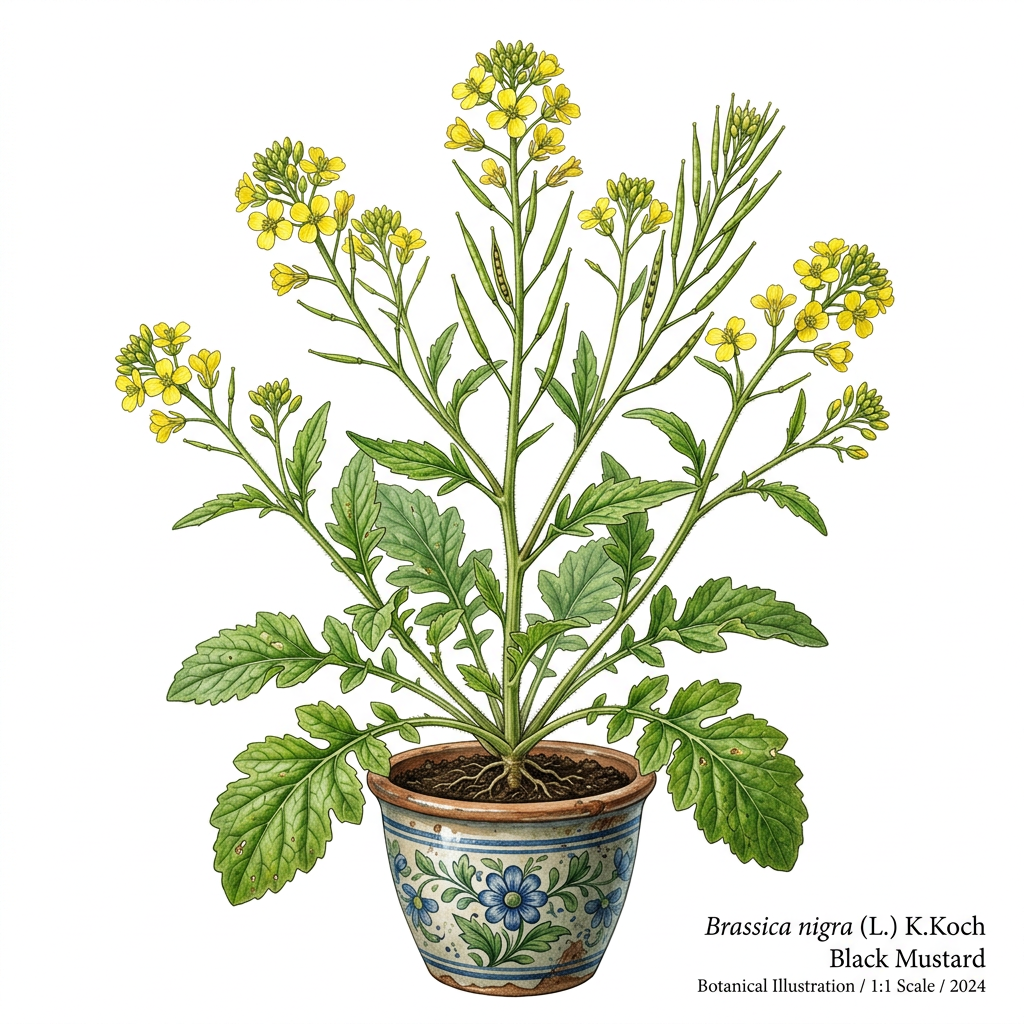
Black Mustard, scientifically known as Brassica nigra, is a resilient annual herbaceous plant thriving within the diverse Brassicaceae family, a lineage celebrated for its many economically significant crops.
Most thin plant articles flatten everything into a summary. This guide does the opposite by following Black Mustard through identification, care, handling, and the questions that real readers actually ask.
Use this guide as a practical reference, then compare it with the detailed plant profile at https://www.floramedicalglobal.com/plant/black-mustard-medicinal whenever you want to confirm the source page itself.
- Brassica nigra, or Black Mustard, is an annual herbaceous plant known for its pungent seeds.
- It boasts a rich history in traditional medicine for digestive, respiratory, and anti-inflammatory uses.
- Key active compounds include sinigrin and allyl isothiocyanate, responsible for its therapeutic effects.
- Modern research highlights its antioxidant, antimicrobial, antidiabetic, and anticancer potential.
- Used culinarily as a spice and condiment, and medicinally in poultices and infusions.
- Caution is advised for topical use due to skin irritation and for internal use in specific conditions.
Botanical Profile & Taxonomy
Black Mustard should be anchored to the correct taxonomic identity before any discussion of care, use, or safety begins.
| Common name | Black Mustard |
|---|---|
| Scientific name | Brassica nigra |
| Family | Brassicaceae |
| Order | Brassicales |
| Genus | Brassica |
| Species epithet | nigra |
| Author citation | L. |
| Basionym | Sinapis nigra L. |
| Synonyms | Brassica nigra f. breviflora Zapał., Brassica nigra f. hispida O.E.Schulz, Brassica nigra var. abyssinica A.Braun, Brassica elongata var. longipedicellata Halácsy ex Formánek, Brassica nigra var. bracteolata (Fisch. & C.A.Mey.) Spach ex Coss., Brassica nigra f. condensata Hausskn., Brassica sinapioides Roth, Brassica nigra f. glabrata Zapał., Brassica persoonii Rouy & Foucaud, Brassica brachycarpa P.Candargy, Brassica nigra f. dentifera Zapał., Brassica nigra subsp. hispida (O.E.Schulz) Gladis |
| Common names | কালো সরষে, ব্রাসিকা নিগ্রা, হলুদ সরষে, Black Mustard, Leaf Mustard, Brown Mustard, काली सरसों, ब्रासिका नाइग्रा |
| Local names | Chou noir, Cavolo senape nera, Mållamarant, Kapusta czarna, Chou noir, Moutarde noire, Schwarzer Senf, Krypamarant, Plet-amarant, Juodasis bastutis, Hvid amarant, Moutarde noire, Schwarzkohl |
| Origin | Mediterranean region and Western Asia |
| Life cycle | Perennial |
| Growth habit | Tree |
Using the accepted scientific name Brassica nigra helps readers avoid confusion caused by old synonyms, loose common names, or inconsistent plant labels.
Family and order placement also matter because they explain recurring structural traits, likely relatives, and the kinds of mistakes readers often make when they rely on appearance alone.
Physical Description & Morphology
A practical reading of the plant starts with visible structure: Leaf: Lower leaves lyrate-pinnatifid, 1-3 pairs of ovate lobes and a large terminal lobe; upper leaves lanceolate, entire. Sparsely hairy to glabrous. Stem: Erect, branched, terete, up to 2 m tall, sparsely to densely hairy, especially when young. Root: Taproot system, typically shallow but can extend deeply to anchor the plant. Flower: Bright yellow, cruciform (4 petals), approximately 1 cm in diameter, borne in terminal racemes. Fruit: Silique, erect or spreading, 1.5-2.5 cm long, nearly terete or slightly angled, with a short style; valves convex. Seed: Globular, 1-1.5 mm in diameter, dark brown to black, finely reticulate surface.
Field identification becomes easier when these traits are kept in view: Seeds of other Brassica species (e.g., B. juncea, B. rapa), Sinapis alba. Adulteration with wild radish (Raphanus raphanistrum) or wild mustard. High-resolution images of whole plant, basal leaves, upper leaves, flowering raceme, individual flower, immature silique, mature silique, and. Brassica juncea (Indian/Brown Mustard), Brassica rapa (Turnip/Field Mustard), Sinapis alba (White Mustard). B. juncea has broader, often less deeply.
Microscopic or internal identification notes deepen the picture, especially for processed material: Trichomes are generally sparse or absent on the leaves and stem, though simple, uniseriate, non-glandular hairs may occasionally be observed. Stomata are predominantly anisocytic, characterized by three subsidiary cells, one of which is distinctly smaller than the other two, a common. Powdered Black Mustard seeds reveal fragments of dark brown to black testa, aleurone grains, abundant oil globules, lignified spiral and annular.
In overall habit, the plant is described as Tree with a mature height around Typically 0.2-1.5 m and spread of Typically 0.2-1 m.
Natural Habitat & Distribution
The native or historically recorded center of distribution for Black Mustard is Mediterranean region and Western Asia. That origin is more than background trivia; it explains how the plant responds to heat, moisture, shade, and seasonal change.
The plant is associated with the following countries or range markers: Afghanistan, Albania, Algeria, Armenia, Azerbaijan, Bhutan, Bulgaria, China, Croatia, Cyprus, Egypt, France.
Environmental notes in the live record add more context: Brassica nigra is native to the Mediterranean region, North Africa, and Western Asia. It thrives in temperate climates with full sun and tolerates a range of soil types, preferring well-drained loams and sandy soils. It is often found naturalized in disturbed habitats, agricultural fields, and along roadsides.
In cultivation terms, the main ecological clues are: Full Sun; Weekly; Well-drained loam, sandy loam, or clay loam; Species-dependent; often grown in warm seasons; Perennial; Tree.
Physiology data reinforce the habitat story: Black Mustard shows moderate tolerance to environmental stresses such as drought and cold, adapting through osmotic adjustment and changes in fatty. Brassica nigra utilizes C3 photosynthesis, the most common photosynthetic pathway in temperate plants. As a mesophytic plant, Brassica nigra exhibits moderate transpiration rates and requires consistent soil moisture, though it can tolerate short.
Traditional & Cultural Significance
Black mustard seeds have been used for thousands of years, mentioned in ancient Egyptian, Greek, and Roman texts for both culinary and medicinal purposes. It holds religious significance in some traditions, such as in Christianity, where it is compared to faith for its small size and powerful growth. Its pungent flavor has made it a staple in various global cuisines.
Ethnobotanical records also show how this plant has been framed across different places: Ache(Foot) in China (Leung, Albert Y. 1980. Encyclopedia of common natural ingredients. John Wiley and Sons, N.Y.); Anodyne in Chinese (ANON. 1978. List of Plants. Kyoto Herbal Garden, Parmacognostic Research Lab., Central Research Division, Takeda Chem. Industries, Ltd., Ichijoji, Sakyoku, Kyoto, Japan.); Apertif in China (Leung, Albert Y. 1980. Encyclopedia of common natural ingredients. John Wiley and Sons, N.Y.); Arthritis in China (Leung, Albert Y. 1980. Encyclopedia of common natural ingredients. John Wiley and Sons, N.Y.); Carminative in China (Shih-chen, Li. 1973. Chinese medinal herbs. Georgetown Press, San Francisco.); Counterirritant in Turkey (Al-Rawi, Ali. 1964. Medicinal Plants of Iraq. Tech. Bull. No. 15. Ministry of Agriculture, Directorate General of Agricultural Research Projects.); Diuretic in Turkey (Steinmetz, E.F. 1957. codex Vegetabilis. Published by the author, Amsterdam.); Emetic in Iraq (Al-Rawi, Ali. 1964. Medicinal Plants of Iraq. Tech. Bull. No. 15. Ministry of Agriculture, Directorate General of Agricultural Research Projects.).
Local names help show how different communities notice and classify the plant: Chou noir, Cavolo senape nera, Mållamarant, Kapusta czarna, Chou noir, Moutarde noire, Schwarzer Senf, Krypamarant, Plet-amarant, Juodasis bastutis, Hvid amarant.
Traditional context matters, but it should always be separated from modern certainty. Historical use can guide questions, yet it does not automatically prove present-day clinical effectiveness.
Medicinal Properties & Health Benefits
The main benefit themes associated with the plant include: Anti-inflammatory Properties — Black Mustard contains compounds like isothiocyanates that modulate inflammatory pathways, offering relief for conditions like. Antioxidant Activity — Rich in phenolic compounds and flavonoids, Brassica nigra seeds scavenge free radicals, protecting cells from oxidative stress and. Antimicrobial Effects — The plant exhibits significant antibacterial and antifungal properties, attributed to its volatile oils, which can inhibit the growth. Digestive Aid — Traditionally used to stimulate digestion and appetite, Black Mustard seeds promote the secretion of digestive enzymes and can help alleviate. Respiratory Support — As an expectorant and decongestant, Black Mustard is traditionally employed in poultices or inhalations to relieve coughs, bronchitis. Neuroprotective Potential — Emerging research suggests neuroprotective effects, possibly related to its antioxidant capacity and ability to mitigate oxidative. Antidiabetic Activity — Studies indicate that certain components of Black Mustard may help regulate blood glucose levels, making it a subject of interest for. Anticancer Properties — Glucosinolates and their hydrolysis products, isothiocyanates, have demonstrated chemopreventive effects by influencing carcinogen.
The evidence matrix gives a more careful picture of those claims: Black Mustard exhibits significant anticancer properties. Review of pharmacological studies. Moderate (In vitro & Animal Studies). Isothiocyanates derived from glucosinolates are implicated in inducing apoptosis and modulating carcinogen metabolism. Brassica nigra possesses potent antioxidant activity. Review of chemical constituent analysis. Moderate (In vitro). Flavonoids and phenolic acids contribute to its ability to scavenge free radicals and mitigate oxidative stress. The plant demonstrates antibacterial and antifungal effects. Review of antimicrobial assays. Moderate (In vitro). Allyl isothiocyanate and other volatile compounds are responsible for inhibiting various microbial pathogens. Black Mustard has antidiabetic and neuroprotective potential. Review of pharmacological screenings. Preliminary (Animal Studies). Further research is needed to elucidate specific mechanisms and confirm efficacy in human clinical trials for these claims.
The stored evidence confidence for this profile is traditional. That should shape how strongly any benefit statement is interpreted.
For medicinal content, the key discipline is to distinguish traditional use, mechanism-based plausibility, and human clinical support. Those are related ideas, but they are not the same thing.
- Anti-inflammatory Properties — Black Mustard contains compounds like isothiocyanates that modulate inflammatory pathways, offering relief for conditions like.
- Antioxidant Activity — Rich in phenolic compounds and flavonoids, Brassica nigra seeds scavenge free radicals, protecting cells from oxidative stress and.
- Antimicrobial Effects — The plant exhibits significant antibacterial and antifungal properties, attributed to its volatile oils, which can inhibit the growth.
- Digestive Aid — Traditionally used to stimulate digestion and appetite, Black Mustard seeds promote the secretion of digestive enzymes and can help alleviate.
- Respiratory Support — As an expectorant and decongestant, Black Mustard is traditionally employed in poultices or inhalations to relieve coughs, bronchitis.
- Neuroprotective Potential — Emerging research suggests neuroprotective effects, possibly related to its antioxidant capacity and ability to mitigate oxidative.
- Antidiabetic Activity — Studies indicate that certain components of Black Mustard may help regulate blood glucose levels, making it a subject of interest for.
- Anticancer Properties — Glucosinolates and their hydrolysis products, isothiocyanates, have demonstrated chemopreventive effects by influencing carcinogen.
- Anti-obesity Effects — Preliminary evidence suggests that Brassica nigra may play a role in metabolic regulation, potentially aiding in weight management and.
- Analgesic Action — Topical application of Black Mustard preparations can provide localized pain relief, acting as a rubefacient to increase blood flow and.
Chemical Constituents & Phytochemistry
The broader constituent profile includes Glucosinolates — Predominantly sinigrin (allyl glucosinolate), which is a precursor to allyl isothiocyanate. Isothiocyanates — Primarily allyl isothiocyanate (AITC), formed enzymatically from sinigrin; it possesses potent antimicrobial, anti-inflammatory, and anticarcinogenic properties. Flavonoids — Compounds like quercetin, kaempferol, and their glycosides, which contribute to the plant's antioxidant. Phenolic Acids — Including caffeic acid, ferulic acid, and sinapic acid, these compounds act as antioxidants and. Fatty Acids — The seeds are rich in essential fatty acids, including erucic acid, oleic acid, linoleic acid, and. Volatile Oils — Besides AITC, other volatile sulfur-containing compounds contribute to the distinctive aroma and some. Sterols — Phytosterols such as beta-sitosterol are present, known for their potential cholesterol-lowering effects. Tocopherols (Vitamin E) — Natural antioxidants found in the seeds, which help protect lipids from oxidation and. Minerals — Significant levels of essential minerals like calcium, magnesium, potassium, selenium, and zinc are.
The detailed phytochemistry file adds these markers: Sinigrin, Glucosinolate, Seeds, Variable% dry weight; Allyl Isothiocyanate (AITC), Isothiocyanate, Seeds (formed upon crushing), Variable% volatile oil; Quercetin, Flavonoid, Leaves, Seeds, Not specifiedmg/g; Kaempferol, Flavonoid, Leaves, Seeds, Not specifiedmg/g; Caffeic Acid, Phenolic Acid, Seeds, Not specifiedmg/g; Erucic Acid, Fatty Acid, Seeds (oil), 20-50%% of total fatty acids.
Local chemistry records also support the profile: ASCORBIC-ACID in Leaf (234.0-4013.0 ppm); CAFFEIC-ACID in Seed (not available-not available ppm); CHLOROGENIC-ACID in Seed (not available-not available ppm); ZINC in Leaf (2.0-40.0 ppm); MAGNESIUM in Leaf (132.0-2471.0 ppm); FERULIC-ACID in Seed (not available-not available ppm); BETA-CAROTENE in Leaf (29.0-475.0 ppm); PROTOCATECHUIC-ACID in Seed (not available-not available ppm).
Compound profiles also shift with plant part, age, season, processing, and storage. The chemistry of a fresh leaf, dried root, or concentrated extract should never be treated as automatically identical.
How to Use — Preparations & Dosage
Recorded preparation and use methods include Culinary Spice — Whole or ground Black Mustard seeds are widely used in cooking to impart a pungent, spicy flavor to curries, pickles, sauces, and spice blends. Mustard Paste/Condiment — Ground seeds mixed with water, vinegar, and salt create a potent mustard paste, often used as a condiment or cooking ingredient. Topical Poultice — Crushed seeds mixed with warm water form a poultice, traditionally applied to the chest for respiratory congestion or to sore muscles and joints for pain relief. Mustard Oil — Seeds are pressed to extract oil, which is used in some cuisines and for external massage, though high erucic acid content limits internal use in some regions. Herbal Infusions — Though less common for seeds, young leaves can be used in some herbal preparations or consumed as a pungent green. Bath Additive — A small amount of ground mustard can be added to bathwater to create a warming, stimulating soak, beneficial for muscle aches and colds. Medicinal Tinctures — Extracts can be prepared using alcohol to concentrate the active compounds for internal use, usually under professional guidance. Seed Sprouts — Young sprouts of Black Mustard seeds can be added to salads and sandwiches for a peppery flavor and nutritional boost.
The plant part most closely linked to use is recorded as Leaves, flowers, roots, seeds, or whole herb cited in related taxa.
Edibility and processing notes matter here as well: Varies by species and plant part; verify before use.
Preparation defines the outcome. Tea, decoction, tincture, powder, fresh plant material, cooked food use, and concentrated extract cannot be discussed as if they were interchangeable.
- Identify the exact species and plant part first.
- Match the preparation to the intended use.
- Check safety, interactions, and processing details before routine use or large-scale handling.
Safety Profile, Side Effects & Contraindications
The first safety note is direct: Low toxicity when used appropriately in culinary and medicinal contexts. Internal consumption of high doses can be irritating. External application requires caution to prevent skin burns. Generally considered safe in moderation.
Specific warnings recorded for this plant include Pregnancy and Breastfeeding — Avoid internal medicinal use and large culinary quantities during pregnancy and breastfeeding due to potential uterine. Children — Not recommended for internal medicinal use in young children; topical application should be highly diluted and used with extreme caution due to sensitive skin. Gastrointestinal Conditions — Individuals with stomach ulcers, gastritis, or inflammatory bowel disease should avoid Black Mustard due to its irritant. Thyroid Disorders — Those with pre-existing thyroid conditions should use Black Mustard cautiously, especially in large amounts, given its potential. Skin Sensitivity — Always perform a patch test before extensive topical application; avoid applying to broken or highly sensitive skin. Drug Interactions — May interact with blood-thinning medications (anticoagulants) due to potential effects on platelet aggregation; consult a healthcare professional. Dosage — Adhere to recommended dosages for medicinal preparations.
Quality-control notes add another warning: Adulteration can occur with seeds of other Brassica species (e.g., Brassica juncea, Sinapis alba) or non-mustard seeds, requiring careful macroscopic and microscopic examination.
No plant should be described as universally safe. Identity, dose, plant part, preparation style, age, pregnancy status, medication use, allergies, and contamination risk all change the answer.
Growing & Cultivation Guide
The cultivation record emphasizes these practical steps: Climate and Soil — Black Mustard thrives in temperate climates and prefers well-drained, fertile soil with a pH between 6.0 and 7.5. Planting — Seeds are typically sown directly into the ground in spring or early autumn, about 1-2 cm deep and 15-30 cm apart, in rows 30-60 cm apart. Watering — Requires consistent moisture, especially during germination and flowering, but avoids waterlogging. Sunlight — Prefers full sun exposure for optimal growth and seed production, needing at least 6 hours of direct sunlight daily. Pests and Diseases — Generally robust, but can be susceptible to common Brassica pests like aphids and flea beetles; crop rotation helps prevent disease. Fertilization — Benefits from a balanced fertilizer application, particularly nitrogen, before flowering to support lush growth. Harvesting — Seeds are harvested when the pods turn yellow and dry, typically in late summer. Plants are cut and allowed to dry further before threshing.
The broader growth environment is described like this: Brassica nigra is native to the Mediterranean region, North Africa, and Western Asia. It thrives in temperate climates with full sun and tolerates a range of soil types, preferring well-drained loams and sandy soils. It is often found naturalized in disturbed habitats, agricultural fields, and along roadsides.
Planning becomes easier when these traits are kept in view: Tree; Typically 0.2-1.5 m; Typically 0.2-1 m; Fast; Beginner.
In practice, healthy cultivation comes from systems thinking rather than one-off tricks. Site choice, drainage, timing, spacing, pruning, feeding, and observation all reinforce one another.
Light, Water & Soil Requirements
The most useful care snapshot is this: Light: Full Sun; Water: Weekly; Soil: Well-drained loam, sandy loam, or clay loam; Humidity: Medium; Temperature: 10-30°C; USDA zone: Species-dependent; often grown in warm seasons.
Outdoors, light, water, and soil must be read together. The same watering schedule can be too much in dense clay and too little in a porous sandy bed.
| Light | Full Sun |
|---|---|
| Water | Weekly |
| Soil | Well-drained loam, sandy loam, or clay loam |
| Humidity | Medium |
| Temperature | 10-30°C |
| USDA zone | Species-dependent; often grown in warm seasons |
Light, water, and soil should never be treated as separate checkboxes. A plant in stronger light often dries faster, soil texture changes how quickly water moves, and temperature plus humidity influence how stress appears in leaves and roots.
For Black Mustard, the safest care approach is to treat Full Sun, Weekly, and Well-drained loam, sandy loam, or clay loam as linked decisions rather than isolated tips. If one condition shifts, the other two usually need to be reconsidered as well.
Propagation Methods
Documented propagation routes include Primarily propagated by seeds. Sow seeds directly into the ground in spring after the last frost. Can also be propagated by cuttings or root division, though.
Reproductive notes also help clarify propagation timing: High seed set under favorable conditions, typically yielding numerous seeds per silique (8-12 seeds). Seeds often exhibit a period of primary dormancy, requiring after-ripening or specific environmental cues (e.g., cold stratification) for optimal. Seeds can remain viable for several years (3-5 years) under cool, dry storage conditions. Viability tested through germination assays.
Propagation works best when the parent stock is healthy, correctly identified, and handled in the right season. That sounds obvious, but it is exactly where many failures begin.
- Primarily propagated by seeds. Sow seeds directly into the ground in spring after the last frost. Can also be propagated by cuttings or root division, though.
Pest & Disease Management
The recorded problem list includes Common pests include cabbage worms, flea beetles, aphids, and whiteflies. Diseases can include clubroot, alternaria.
For medicinal species, pest pressure is not only a horticultural issue. It also affects harvest cleanliness, storage stability, and confidence in the final material.
The smartest response sequence is observation first, environmental correction second, and treatment only after the real pattern is clear.
- Common pests include cabbage worms, flea beetles, aphids, and whiteflies. Diseases can include clubroot, alternaria.
Pest and disease management is strongest when it begins before visible damage becomes severe. Routine observation, clean handling, sensible spacing, air movement, and balanced watering reduce many problems before treatment is even needed.
When symptoms do appear on Black Mustard, the most reliable response is diagnostic rather than reactive. Yellowing, spots, wilt, chewing, and stunting can all have multiple causes, so a rushed treatment can waste time or worsen the problem.
Harvesting, Storage & Processing
The plant part most often associated with harvest or processing is Leaves, flowers, roots, seeds, or whole herb cited in related taxa.
Storage guidance from the quality-control record reads as follows: Seeds should be stored in airtight containers, protected from light, moisture, and heat to prevent degradation of volatile compounds and maintain potency.
For medicinal plants, harvesting cannot be separated from processing. The right plant part, the right timing, and the right drying conditions all shape quality and safety.
Whatever the purpose, the rule is the same: harvest clean material, label it clearly, and store it in a way that preserves identity and condition.
Companion Planting & Garden Design
Useful companions or placement partners include Rosemary; Thyme; Sage; Mint; Oregano.
In a home herb garden or medicinal bed, Black Mustard should be placed where harvesting is easy, labeling remains clear, and neighboring plants do not create confusion at collection time.
Companion planting and design are not only aesthetic decisions. They affect airflow, root competition, moisture sharing, harvest access, visibility, and the general logic of the planting scheme.
With Black Mustard, good placement means thinking about mature size, maintenance rhythm, and how neighboring plants change the feel and function of the space. A plant can be healthy on its own and still be poorly placed within the broader composition.
That is why the best design advice combines biology with usability. The planting should look coherent, but it should also make watering, pruning, harvest, and pest observation easier rather than harder.
Scientific Research & Evidence Base
The evidence matrix points to several recurring themes: Black Mustard exhibits significant anticancer properties. Review of pharmacological studies. Moderate (In vitro & Animal Studies). Isothiocyanates derived from glucosinolates are implicated in inducing apoptosis and modulating carcinogen metabolism. Brassica nigra possesses potent antioxidant activity. Review of chemical constituent analysis. Moderate (In vitro). Flavonoids and phenolic acids contribute to its ability to scavenge free radicals and mitigate oxidative stress. The plant demonstrates antibacterial and antifungal effects. Review of antimicrobial assays. Moderate (In vitro). Allyl isothiocyanate and other volatile compounds are responsible for inhibiting various microbial pathogens. Black Mustard has antidiabetic and neuroprotective potential. Review of pharmacological screenings. Preliminary (Animal Studies). Further research is needed to elucidate specific mechanisms and confirm efficacy in human clinical trials for these claims.
Ethnobotanical activity records add historical reference trails: Ache(Foot) — China [Leung, Albert Y. 1980. Encyclopedia of common natural ingredients. John Wiley and Sons, N.Y.]; Anodyne — Chinese [ANON. 1978. List of Plants. Kyoto Herbal Garden, Parmacognostic Research Lab., Central Research Division, Takeda Chem. Industries, Ltd., Ichijoji, Sakyoku, Kyoto, Japan.]; Apertif — China [Leung, Albert Y. 1980. Encyclopedia of common natural ingredients. John Wiley and Sons, N.Y.]; Arthritis — China [Leung, Albert Y. 1980. Encyclopedia of common natural ingredients. John Wiley and Sons, N.Y.]; Carminative — China [Shih-chen, Li. 1973. Chinese medinal herbs. Georgetown Press, San Francisco.]; Counterirritant — Turkey [Al-Rawi, Ali. 1964. Medicinal Plants of Iraq. Tech. Bull. No. 15. Ministry of Agriculture, Directorate General of Agricultural Research Projects.].
The compiled source count behind the live profile is 8. That does not guarantee certainty, but it does suggest the record has been cross-checked beyond a single note.
Analytical testing notes also strengthen the evidence base: Analytical methods include High-Performance Liquid Chromatography (HPLC) for glucosinolates, Gas Chromatography-Mass Spectrometry (GC-MS) for isothiocyanates, and traditional.
A careful evidence section should say what is known, what is plausible, and what remains uncertain. Readers are better served by clear limits than by exaggerated confidence.
Buying Guide & Expert Tips
Quality markers worth checking include Sinigrin (a glucosinolate) and its hydrolysis product, allyl isothiocyanate (AITC), are key marker compounds for identification and quantification.
Adulteration and substitution risk should not be ignored: Adulteration can occur with seeds of other Brassica species (e.g., Brassica juncea, Sinapis alba) or non-mustard seeds, requiring careful macroscopic and microscopic examination.
When buying Black Mustard, start with verified botanical identity. The label, scientific name, and the source page should agree before you judge price, size, or claimed benefits.
For living plants, inspect roots, stem firmness, foliage health, and early pest signs. For dried or processed material, look for batch clarity, clean aroma, absence of mold, and any sign that the product has been over-processed to disguise poor quality.
Frequently Asked Questions
What is Black Mustard best known for?
Black Mustard, scientifically known as Brassica nigra, is a resilient annual herbaceous plant thriving within the diverse Brassicaceae family, a lineage celebrated for its many economically significant crops.
Is Black Mustard beginner-friendly?
That depends on the growing environment and the intended use. Some plants are easy to grow but not simple to use medicinally, while others are the opposite.
How much light does Black Mustard need?
Full Sun
How often should Black Mustard be watered?
Weekly
Can Black Mustard be propagated at home?
Yes, but the best method depends on whether the species responds best to seed, cuttings, division, offsets, or other propagation routes.
Does Black Mustard have safety concerns?
Low toxicity when used appropriately in culinary and medicinal contexts. Internal consumption of high doses can be irritating. External application requires caution to prevent skin burns. Generally considered safe in moderation.
What is the biggest mistake people make with Black Mustard?
The most common mistake is applying generic advice instead of matching the plant to its real environment, identity, and limits.
Where can I verify more information about Black Mustard?
Start with the Flora Medical Global plant profile: https://www.floramedicalglobal.com/plant/black-mustard-medicinal