Black Raspberry Complete Guide: Botany, Care, Uses & Safety
 Flora Medical GlobalPublished: 4/10/2026Updated: 6/20/202619 min read
Editorial Disclaimer: This article is for informational and educational purposes only. It is not a substitute for professional medical advice, diagnosis, or treatment. Always consult a qualified healthcare provider or certified herbalist before using any plant for medicinal purposes, especially if you are pregnant, nursing, taking medication, or have a medical condition.
01Introduction to Black Raspberry
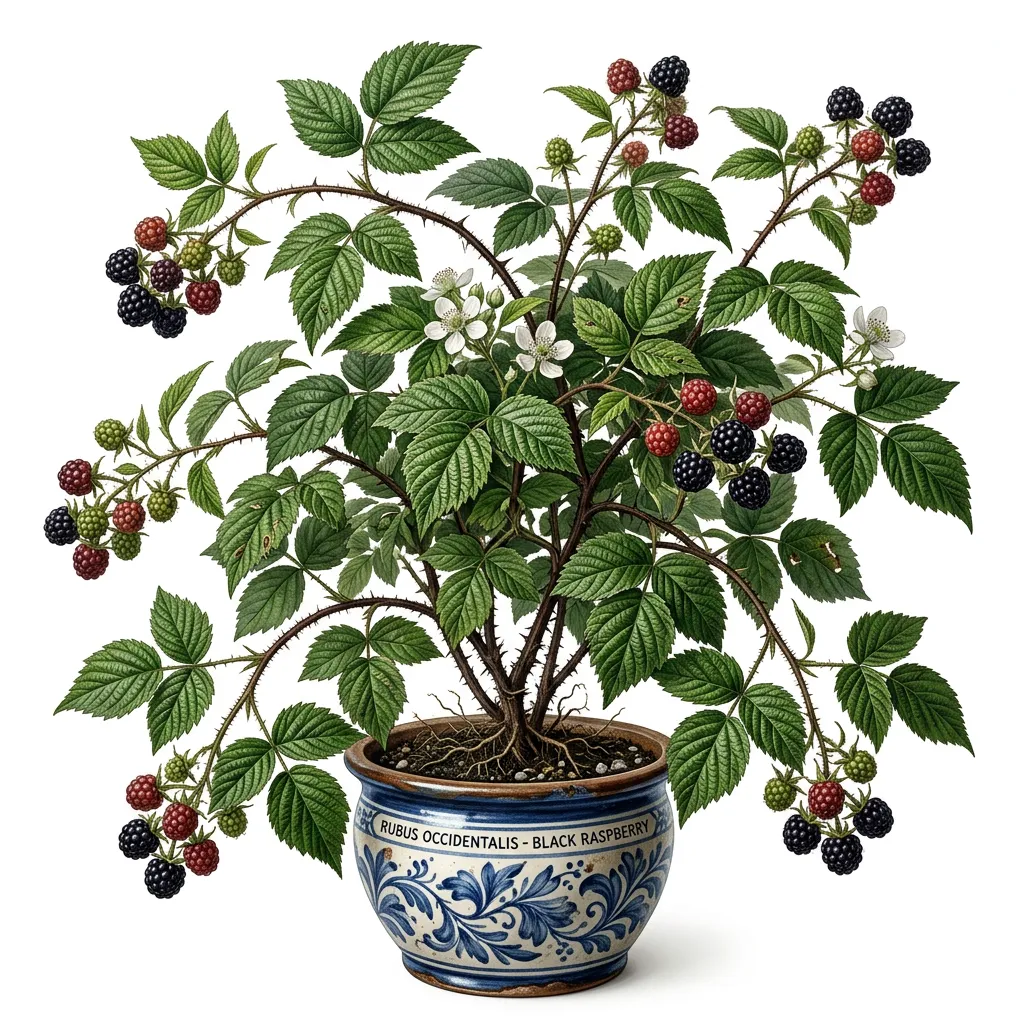
Black Raspberry, scientifically known as Rubus occidentalis, is a captivating deciduous shrub indigenous to eastern and central North America, where it thrives in woodlands, clearings, and along forest edges.
The interesting part about Black Raspberry is that the plant can be discussed from several angles at once: visible form, environmental behavior, traditional context, and modern quality control.
The linked plant page remains the main internal reference point for this article, but the goal here is to turn that raw data into a readable, structured, and genuinely useful guide.
- Black Raspberry (Rubus occidentalis) is a North American deciduous shrub known for its dark, hollow-cored fruits.
- Rich in antioxidants like anthocyanins and ellagic acid, offering significant health benefits.
- Research indicates potential in managing prediabetes, high blood pressure, and oral precancerous lesions.
- Generally safe when consumed as food
- Medicinal extracts are possibly safe short-term.
- Valued for its anti-inflammatory, antioxidant, and potential anti-carcinogenic properties.
- Versatile in culinary uses and gaining recognition in modern herbal medicine.
02Botanical Identity of Black Raspberry
Black Raspberry should be anchored to the correct taxonomic identity before any discussion of care, use, or safety begins.
| Common name | Black Raspberry |
|---|---|
| Scientific name | Rubus occidentalisW |
| Family | Rosaceae |
| Order | Rosales |
| Genus | Rubus |
| Species epithet | occidentalis |
| Author citation | L. |
| Common names | কালো রাস্পবেরি, কালো ক্যাপ, থিম্বেলবেরি, স্কচ ক্যাপ, ভাইল্ড ব্ল্যাক রাস্পবেরি, Black Raspberry, Black Cap, Thimbleberry, Scotch Cap, Wild Black Raspberry |
| Origin | Eastern North America, primarily the eastern half of the United States and southeastern Canada (United States, Canada) |
| Growth habit | Tree |
Using the accepted scientific name Rubus occidentalis helps readers avoid confusion caused by old synonyms, loose common names, or inconsistent plant labels.
Family and order placement also matter because they explain recurring structural traits, likely relatives, and the kinds of mistakes readers often make when they rely on appearance alone.
Correct naming is not a small detail. A plant can collect multiple common names, outdated synonyms, and marketing labels over time, so using Rubus occidentalis consistently reduces the risk of confusion, bad care advice, and even safety mistakes.
03Identifying Black Raspberry
Microscopic or internal identification notes deepen the picture, especially for processed material: Both glandular and non-glandular trichomes are commonly observed, particularly on the abaxial leaf surface and young stems, contributing to the. Stomata are predominantly anomocytic or anomocytic-diacytic, found primarily on the abaxial (lower) surface of the leaves, facilitating gas exchange. Powdered material typically reveals fragments of epidermal cells, abundant uniseriate and multicellular trichomes, fragments of vascular tissues.
In overall habit, the plant is described as Tree with a mature height around local conditions and spread of variable width depending on site.
In real-world identification, the most helpful approach is to read the plant as a whole. Habit, size, stem texture, leaf arrangement, flower form, and any distinctive surface detail all matter. For Black Raspberry, morphology is not only a descriptive topic; it is the foundation of correct recognition.
04Native Range of Black Raspberry
The native or historically recorded center of distribution for Black Raspberry is Eastern North America, primarily the eastern half of the United States and southeastern Canada (United States, Canada). That origin is more than background trivia; it explains how the plant responds to heat, moisture, shade, and seasonal change.
Explore Our Platforms
 InfiniCore DataWorks
 Nex-Automata
The plant is associated with the following countries or range markers: eastern [North America](https://en).
Environmental notes in the live record add more context: Black raspberry (Rubus occidentalis) thrives in temperate climates, preferring areas with distinct seasonal changes and adequate annual rainfall. This species flourishes under full sun but can tolerate partial shade, making it adaptable to various garden settings. Ideal soil for growing black raspberry is rich, well-draining, and loaded with organic.
In cultivation terms, the main ecological clues are: Tree.
Physiology data reinforce the habitat story: Displays good cold hardiness and adaptability to a range of soil types, but is sensitive to drought stress and poorly drained, waterlogged conditions. Rubus occidentalis utilizes the C3 photosynthetic pathway, common among temperate woody plants, optimizing carbon fixation under moderate light and. Exhibits moderate transpiration rates and requires consistent soil moisture, particularly during active growth and fruit development, to prevent.
05Black Raspberry in Tradition & Culture
The black raspberry, Rubus occidentalis, while not as extensively documented in ancient pharmacopoeias as some of its more globally distributed relatives, holds a significant place in the traditional medicinal practices and cultural landscape of its native Eastern North America. Indigenous peoples of this region, including various Algonquian and Iroquoian tribes, recognized the therapeutic properties of the black.
Traditional context matters, but it should always be separated from modern certainty. Historical use can guide questions, yet it does not automatically prove present-day clinical effectiveness.
Cultural context gives the article depth that pure care instructions cannot provide. Plants like Black Raspberry are often remembered through naming traditions, household practice, healing systems, foodways, ornamental use, ritual value, or local ecological knowledge.
At the same time, cultural value should be handled responsibly. Traditional respect for a plant does not automatically prove every modern claim, and a modern study does not erase the meaning the plant has held in communities over time. Both sides belong in a careful guide.
06Black Raspberry Health Benefits
The main benefit themes associated with the plant include:
- Antioxidant Support — Black raspberry is exceptionally rich in anthocyanins and other polyphenolic compounds, which act as potent antioxidants, neutralizing.
- Anti-Inflammatory Properties — The diverse phytochemical profile of Rubus occidentalis, particularly its ellagic acid content, contributes to significant.
- Cardiovascular Health — Research suggests that black raspberry extract may help improve arterial stiffness and modulate blood pressure in individuals with.
- Prediabetes Management — Clinical studies indicate that Rubus occidentalis extract can positively influence metabolic parameters in individuals with.
- Oral Cancer Prevention — Topical application of black raspberry extracts has shown promise in inducing regression and reducing genetic alterations in.
- Anti-Tumor Potential — Compounds found in black raspberries are being investigated for their ability to inhibit angiogenesis (blood supply to tumors) and.
- Metabolic Syndrome Improvement — Studies have demonstrated that black raspberry extract can enhance circulating endothelial progenitor cells and improve.
- Cholesterol Regulation — Preliminary animal studies suggest that Rubus occidentalis extract may offer protective effects against hypercholesterolemia and.
The evidence matrix gives a more careful picture of those claims: Management of Prediabetes Symptoms. Randomized, Double-blind, Placebo-controlled Clinical Trial. Emerging Clinical Evidence. Rubus occidentalis extract showed positive effects on metabolic parameters in subjects with prediabetes (An et al., 2016). Regulation of Blood Pressure in Prehypertension. Randomized, Double-blind, Placebo-controlled Clinical Trial. Emerging Clinical Evidence. Extracts from Rubus occidentalis were found to reduce blood pressure in patients with prehypertension (Jeong et al., 2016). Regression of Premalignant Oral Lesions. Multicentered, Placebo-controlled Clinical Trial. Preliminary Clinical Evidence. Topical application of black raspberry gel induced clinical and histologic regression in premalignant oral intraepithelial lesions (Mallery et al., 2014). Improvement in Metabolic Syndrome Markers. Randomized Controlled Trial. Emerging Clinical Evidence. Black Raspberry extract increased circulating endothelial progenitor cells and improved arterial stiffness in patients with metabolic syndrome (Jeong et al., 2016). Protective Effects against Hypercholesterolemia. Animal Model Study. Preclinical Evidence (Animal Study). Rubus occidentalis extract showed protective effects against hypercholesterolemia and hepatic inflammation in rats (Lim et al., 2020).
The stored evidence confidence for this profile is traditional. That should shape how strongly any benefit statement is interpreted.
For medicinal content, the key discipline is to distinguish traditional use, mechanism-based plausibility, and human clinical support. Those are related ideas, but they are not the same thing.
- Antioxidant Support — Black raspberry is exceptionally rich in anthocyanins and other polyphenolic compounds, which act as potent antioxidants, neutralizing.
- Anti-Inflammatory Properties — The diverse phytochemical profile of Rubus occidentalis, particularly its ellagic acid content, contributes to significant.
- Cardiovascular Health — Research suggests that black raspberry extract may help improve arterial stiffness and modulate blood pressure in individuals with.
- Prediabetes Management — Clinical studies indicate that Rubus occidentalis extract can positively influence metabolic parameters in individuals with.
- Oral Cancer Prevention — Topical application of black raspberry extracts has shown promise in inducing regression and reducing genetic alterations in.
- Anti-Tumor Potential — Compounds found in black raspberries are being investigated for their ability to inhibit angiogenesis (blood supply to tumors) and.
- Metabolic Syndrome Improvement — Studies have demonstrated that black raspberry extract can enhance circulating endothelial progenitor cells and improve.
- Cholesterol Regulation — Preliminary animal studies suggest that Rubus occidentalis extract may offer protective effects against hypercholesterolemia and.
- Digestive Health — As a good source of dietary fiber, black raspberries support healthy digestion, promote bowel regularity, and contribute to a balanced gut.
07Active Compounds in Black Raspberry
The broader constituent profile includes:
- Anthocyanins — These vibrant pigments, such as cyanidin-3-glucoside and cyanidin-3-rutinoside, are responsible for the.
- Ellagic Acid — A potent phenolic compound abundant in black raspberries, ellagic acid is recognized for its.
- Flavonoids — Including quercetin, kaempferol, and catechins, these compounds contribute to the plant's antioxidant.
- Phenolic Acids — Gallic acid, caffeic acid, and ferulic acid are present, further enhancing the antioxidant and.
- Tannins — Condensed tannins contribute to the astringent properties and may offer additional antioxidant and.
- Vitamins — Rich in Vitamin C (ascorbic acid), an essential antioxidant for immune function and collagen synthesis, and.
- Minerals — Contains essential minerals such as manganese, potassium, magnesium, and iron, vital for various.
- Dietary Fiber — Both soluble and insoluble fibers are present, promoting digestive health, aiding in blood sugar.
- Triterpenoids — Compounds like ursolic acid have been identified, which are being studied for their anti-inflammatory.
The detailed phytochemistry file adds these markers: Cyanidin-3-glucoside, Anthocyanin, Fruit, Variable, typically 100-300mg/100g fresh fruit; Ellagic Acid, Phenolic Acid, Fruit, Leaves, Variable, typically 10-50mg/100g fresh fruit; Quercetin, Flavonoid, Fruit, Variable, typically 1-5mg/100g fresh fruit; Vitamin C (Ascorbic Acid), Vitamin, Fruit, Variable, typically 20-30mg/100g fresh fruit; Gallic Acid, Phenolic Acid, Fruit, Leaves, Variable, typically 0.5-2mg/100g fresh fruit; Kaempferol, Flavonoid, Fruit, Trace amountsmg/100g fresh fruit.
Compound profiles also shift with plant part, age, season, processing, and storage. The chemistry of a fresh leaf, dried root, or concentrated extract should never be treated as automatically identical.
08How to Use Black Raspberry
Recorded preparation and use methods include Fresh Consumption — Enjoy ripe black raspberries directly from the plant or purchased fresh for their intense flavor and nutritional benefits. Culinary Applications — Incorporate into desserts like pies, tarts, crumbles, muffins, and sauces; their distinct taste complements both sweet and savory dishes. Juices and Smoothies — Blend fresh or frozen black raspberries into juices or smoothies for a nutrient-dense beverage, often combined with other fruits and vegetables. Preserves and Jams — Process into homemade jams, jellies, and preserves, allowing for long-term storage and enjoyment of their flavor throughout the year. Dried Berries — Dehydrate black raspberries to create dried snacks, which can be added to trail mixes, cereals, or baked goods. Herbal Tea — Infuse dried black raspberry leaves in hot water to prepare a mild, healthful herbal tea, traditionally used for various ailments. Extracts and Supplements — Utilize standardized black raspberry fruit extracts available in capsule or powder form for concentrated medicinal benefits, following recommended.
Preparation defines the outcome. Tea, decoction, tincture, powder, fresh plant material, cooked food use, and concentrated extract cannot be discussed as if they were interchangeable.
- Identify the exact species and plant part first.
- Match the preparation to the intended use.
- Check safety, interactions, and processing details before routine use or large-scale handling.
09Is Black Raspberry Safe? Precautions & Cautions
- Specific warnings recorded for this plant include Generally Recognized as Safe (GRAS) — Black raspberries are considered safe for most people when consumed as a food in typical dietary amounts.
- Possibly Safe in Medicinal Amounts — When taken as an extract in larger, medicinal quantities for short durations (e.g., up to 8 weeks), it is considered.
- Pregnancy and Breast-feeding — Consumption in food amounts is likely safe during pregnancy and breast-feeding; however, medicinal amounts should be approached with caution due to insufficient reliable information.
- Consult Healthcare Professional — Always advise consulting a physician or qualified healthcare provider before using black raspberry in medicinal doses.
- Topical Application — Black raspberry extract applied to the skin or oral mucosa is considered possibly safe for short-term use.
- Dosage — The appropriate medicinal dose varies based on age, health status, and other factors; always adhere to product label directions or professional guidance.
- Quality Control — Source high-quality products from reputable suppliers to ensure purity and potency, especially for supplements.
- Mild Digestive Upset — Consumption of large quantities may occasionally lead to mild stomach discomfort or loose stools due to high fiber content.
Quality-control notes add another warning: Risk of adulteration with other Rubus species (e.g., blackberries, red raspberries) or artificial colorants; misidentification of plant material is also a concern.
No plant should be described as universally safe. Identity, dose, plant part, preparation style, age, pregnancy status, medication use, allergies, and contamination risk all change the answer.
10How to Grow Black Raspberry
The cultivation record emphasizes these practical steps:
- Site Selection — Choose a location with full sun exposure (at least 6-8 hours daily) and well-draining soil to prevent root rot.
- Soil Preparation — Black raspberries prefer slightly acidic to neutral soil (pH 6.0-7.0); amend with organic matter like compost to improve fertility and drainage.
- Planting — Plant dormant bare-root canes in early spring, spacing them 2-3 feet apart in rows, ensuring the crown is at soil level.
- Watering — Provide consistent moisture, especially during fruit development; aim for 1-2 inches of water per week, either from rainfall or irrigation.
- Pruning — Prune annually after harvest by removing old, fruited canes at ground level, and thin new canes to 4-6 strong ones per plant to encourage vigorous growth.
- Fertilization — Apply a balanced fertilizer in early spring, or use compost, avoiding excessive nitrogen which can lead to lush foliage but fewer berries.
The broader growth environment is described like this: Black raspberry (Rubus occidentalis) thrives in temperate climates, preferring areas with distinct seasonal changes and adequate annual rainfall. This species flourishes under full sun but can tolerate partial shade, making it adaptable to various garden settings. Ideal soil for growing black raspberry is rich, well-draining, and loaded with organic.
Planning becomes easier when these traits are kept in view: Tree.
In practice, healthy cultivation comes from systems thinking rather than one-off tricks. Site choice, drainage, timing, spacing, pruning, feeding, and observation all reinforce one another.
11Caring for Black Raspberry: Light, Water & Soil
Outdoors, light, water, and soil must be read together. The same watering schedule can be too much in dense clay and too little in a porous sandy bed.
Light, water, and soil should never be treated as separate checkboxes. A plant in stronger light often dries faster, soil texture changes how quickly water moves, and temperature plus humidity influence how stress appears in leaves and roots.
For Black Raspberry, the safest care approach is to treat the light pattern described in the plant profile, watering that responds to season and drainage, and well-matched soil structure and drainage as linked decisions rather than isolated tips. If one condition shifts, the other two usually need to be reconsidered as well.
Microclimate matters too. Indoors, room placement and airflow can matter as much as window exposure. Outdoors, reflected heat, slope, mulch, and nearby plants can change how the temperature rhythm described for the species and humidity that matches the plant type are actually experienced at plant level.
12Black Raspberry Propagation Methods
Documented propagation routes include Black Raspberry can be propagated via both seeds and vegetative methods. Seed propagation involves collecting seeds from fully ripe berries, followed by.
Propagation works best when the parent stock is healthy, correctly identified, and handled in the right season. That sounds obvious, but it is exactly where many failures begin.
- Black Raspberry can be propagated via both seeds and vegetative methods. Seed propagation involves collecting seeds from fully ripe berries, followed by.
Propagation works best when the reader matches method to biology. Some plants respond readily to cuttings, some to division, some to seed, and others require more patience or more exact seasonal timing.
A successful propagation guide therefore starts with healthy parent material and realistic expectations. Weak stock, rushed handling, and poor aftercare can make even a technically correct method fail.
For Black Raspberry, the real goal is not simply to produce another plant, but to produce a correctly identified, vigorous, well-established plant that continues growing without hidden stress from the first stage.
13Managing Black Raspberry Problems
For medicinal species, pest pressure is not only a horticultural issue. It also affects harvest cleanliness, storage stability, and confidence in the final material.
The smartest response sequence is observation first, environmental correction second, and treatment only after the real pattern is clear.
Pest and disease management is strongest when it begins before visible damage becomes severe. Routine observation, clean handling, sensible spacing, air movement, and balanced watering reduce many problems before treatment is even needed.
When symptoms do appear on Black Raspberry, the most reliable response is diagnostic rather than reactive. Yellowing, spots, wilt, chewing, and stunting can all have multiple causes, so a rushed treatment can waste time or worsen the problem.
Good troubleshooting also includes environmental correction. Pests and disease often reveal a deeper issue such as root stress, poor airflow, inconsistent watering, weak light, or exhausted soil structure.
14Harvesting & Storing Black Raspberry
Storage guidance from the quality-control record reads as follows: Dried fruits and extracts should be stored in airtight containers, protected from light, moisture, and heat to preserve active compounds; refrigeration or freezing extends shelf.
For medicinal plants, harvesting cannot be separated from processing. The right plant part, the right timing, and the right drying conditions all shape quality and safety.
Whatever the purpose, the rule is the same: harvest clean material, label it clearly, and store it in a way that preserves identity and condition.
Harvest and storage determine whether a plant's quality is preserved after it leaves the bed, pot, field, or wild source. Clean timing, correct plant part selection, and careful drying or handling all matter more than many readers expect.
For Black Raspberry, this means the reader should think beyond collection. Material that is poorly labeled, overheated, damp in storage, or mixed with the wrong part of the plant can quickly lose value or create confusion later.
15Black Raspberry in Garden Design
In a home herb garden or medicinal bed, Black Raspberry should be placed where harvesting is easy, labeling remains clear, and neighboring plants do not create confusion at collection time.
Companion planting and design are not only aesthetic decisions. They affect airflow, root competition, moisture sharing, harvest access, visibility, and the general logic of the planting scheme.
With Black Raspberry, good placement means thinking about mature size, maintenance rhythm, and how neighboring plants change the feel and function of the space. A plant can be healthy on its own and still be poorly placed within the broader composition.
That is why the best design advice combines biology with usability. The planting should look coherent, but it should also make watering, pruning, harvest, and pest observation easier rather than harder.
16Black Raspberry: Scientific Evidence
The evidence matrix points to several recurring themes: Management of Prediabetes Symptoms. Randomized, Double-blind, Placebo-controlled Clinical Trial. Emerging Clinical Evidence. Rubus occidentalis extract showed positive effects on metabolic parameters in subjects with prediabetes (An et al., 2016). Regulation of Blood Pressure in Prehypertension. Randomized, Double-blind, Placebo-controlled Clinical Trial. Emerging Clinical Evidence. Extracts from Rubus occidentalis were found to reduce blood pressure in patients with prehypertension (Jeong et al., 2016). Regression of Premalignant Oral Lesions. Multicentered, Placebo-controlled Clinical Trial. Preliminary Clinical Evidence. Topical application of black raspberry gel induced clinical and histologic regression in premalignant oral intraepithelial lesions (Mallery et al., 2014). Improvement in Metabolic Syndrome Markers. Randomized Controlled Trial. Emerging Clinical Evidence. Black Raspberry extract increased circulating endothelial progenitor cells and improved arterial stiffness in patients with metabolic syndrome (Jeong et al., 2016). Protective Effects against Hypercholesterolemia. Animal Model Study. Preclinical Evidence (Animal Study). Rubus occidentalis extract showed protective effects against hypercholesterolemia and hepatic inflammation in rats (Lim et al., 2020).
The compiled source count behind the live profile is 8. That does not guarantee certainty, but it does suggest the record has been cross-checked beyond a single note.
Analytical testing notes also strengthen the evidence base: HPLC-DAD for phenolic profiling, UV-Vis spectrophotometry for total anthocyanins, and LC-MS/MS for specific compound quantification and purity checks.
A careful evidence section should say what is known, what is plausible, and what remains uncertain. Readers are better served by clear limits than by exaggerated confidence.
Evidence note: this section blends the live plant record, local ethnobotanical activity data, chemistry records, and the linked Flora Medical Global plant profile for Black Raspberry.
17Choosing Quality Black Raspberry
Quality markers worth checking include Key marker compounds include total anthocyanins (e.g., cyanidin-3-glucoside) and ellagic acid, used for standardization and potency assessment.
Adulteration and substitution risk should not be ignored: Risk of adulteration with other Rubus species (e.g., blackberries, red raspberries) or artificial colorants; misidentification of plant material is also a concern.
When buying Black Raspberry, start with verified botanical identity. The label, scientific name, and the source page should agree before you judge price, size, or claimed benefits.
For living plants, inspect roots, stem firmness, foliage health, and early pest signs. For dried or processed material, look for batch clarity, clean aroma, absence of mold, and any sign that the product has been over-processed to disguise poor quality.
Buying advice should begin with identity. The label, scientific name, visible condition, and seller credibility should agree before price or convenience becomes the deciding factor.
18Frequently Asked Questions
What is Black Raspberry best known for?
Black Raspberry, scientifically known as Rubus occidentalis, is a captivating deciduous shrub indigenous to eastern and central North America, where it thrives in woodlands, clearings, and along forest edges.
Is Black Raspberry beginner-friendly?
That depends on the growing environment and the intended use. Some plants are easy to grow but not simple to use medicinally, while others are the opposite.
How much light does Black Raspberry need?
Match the species to the exposure described in the guide rather than using a generic light rule.
How often should Black Raspberry be watered?
Water according to soil, drainage, season, and plant response rather than a fixed schedule.
Can Black Raspberry be propagated at home?
Yes, but the best method depends on whether the species responds best to seed, cuttings, division, offsets, or other propagation routes.
Does Black Raspberry have safety concerns?
Yes. Safety always depends on identity, plant part, handling, and user context.
What is the biggest mistake people make with Black Raspberry?
The most common mistake is applying generic advice instead of matching the plant to its real environment, identity, and limits.
Where can I verify more information about Black Raspberry?
Start with the Flora Medical Global plant profile: https://www.floramedicalglobal.com/medicinal-plants/black-raspberry
Why do sources sometimes disagree about Black Raspberry?
Different references may use different synonyms, plant parts, cultivation conditions, or evidence standards. That is why taxonomy and source quality both matter.
19Black Raspberry: Scientific References
Authoritative sources and related guides:
- Wikipedia — background reference
- PubMed — peer-reviewed studies
- Kew POWO — botanical reference
- NCBI PMC — open-access research
- WHO — global health authority
Related on Flora Medical Global
Reviewed by the Flora Medical Global Botanical Review Panel
Multi-disciplinary editorial group · Botany · Ethnobotany · Herbal-medicine literature
Who reviewed this: This page was checked by the Flora Medical Global Botanical Review Panel — an in-house editorial group of botany graduates, ethnobotany researchers, and horticulture practitioners who collectively maintain our 7,000+ plant encyclopedia. Meet the team.
Our 4-step verification process
1. Taxonomic verification
Scientific names and synonyms cross-checked against Kew POWO, World Flora Online, and The Plant List.
2. Phytochemical & medicinal cross-reference
Active compounds, traditional uses, and reported activities are cross-referenced with PubMed, USDA Dr. Duke's database, and peer-reviewed ethnobotanical literature.
3. Conservation & distribution check
Distribution, ecology, and conservation status confirmed against GBIF occurrence records and the IUCN Red List.
4. Editorial & safety review
Every entry passes an editorial pass for clarity, originality, and safety notices (toxicity, contraindications, dosage caveats) before publication.
Last reviewed:
Important medical disclaimer: This content is for educational and research purposes only. It is not medical advice and is not a substitute for consultation with a licensed healthcare provider. Do not use any herb to self-treat a medical condition without professional guidance.
Explore Our Platforms
Comments (0)
No comments yet. Be the first!