Bouteloua: Planting, Care & Garden Tips
 Flora Medical GlobalPublished: 4/10/2026Updated: 6/16/202619 min read
Editorial Disclaimer: This article is for informational and educational purposes only. It is not a substitute for professional medical advice, diagnosis, or treatment. Always consult a qualified healthcare provider or certified herbalist before using any plant for medicinal purposes, especially if you are pregnant, nursing, taking medication, or have a medical condition.
01Bouteloua: An Overview
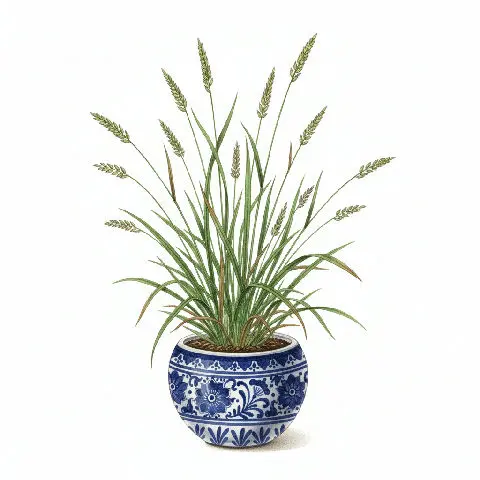
Bouteloua gracilis, commonly known as Blue Grama, is a quintessential perennial, warm-season grass belonging to the Poaceae family, native to the vast grasslands and prairies of North America.
Most thin plant articles flatten everything into a summary. This guide does the opposite by following Bouteloua through identification, care, handling, and the questions that real readers actually ask.
The linked plant page remains the main internal reference point for this article, but the goal here is to turn that raw data into a readable, structured, and genuinely useful guide.
- North American native, warm-season prairie grass.
- Distinctive 'eyelash' seed heads and blue-green foliage.
- Highly drought-tolerant and plays a critical role in soil stabilization.
- Excellent nutritional forage for livestock historically and presently.
- Valued for xeriscaping and ecological restoration projects.
- Limited traditional human medicinal use, but potential for future research.
This guide is designed to help the reader move from scattered facts to practical understanding. Instead of relying on a thin summary, it pulls together the identity, uses, care profile, safety notes, and evidence context around Bouteloua so the article works as a real reference rather than a keyword page.
02Bouteloua Botanical Profile
Bouteloua should be anchored to the correct taxonomic identity before any discussion of care, use, or safety begins.
| Common name | Bouteloua |
|---|---|
| Scientific name | Bouteloua gracilisW |
| Family | Poaceae |
| Order | Poales |
| Genus | Bouteloua |
| Species epithet | gracilis |
| Author citation | (Willd.) H.B.K. |
| Basionym | Chondrosum gracile Kunth |
| Synonyms | Buchloe dactyloides (Nutt.) Engelm. |
| Common names | নীল গ্রামা, Blue Grama |
| Local names | blue grama, boutelou gracieux, navajita azul, Boutéloua grêle, grama-azul, boutelou grêle, navajita |
| Origin | North America (United States, Mexico, Canada) |
| Life cycle | Perennial |
| Growth habit | Grass |
Using the accepted scientific name Bouteloua gracilis helps readers avoid confusion caused by old synonyms, loose common names, or inconsistent plant labels.
Family and order placement also matter because they explain recurring structural traits, likely relatives, and the kinds of mistakes readers often make when they rely on appearance alone.
Correct naming is not a small detail. A plant can collect multiple common names, outdated synonyms, and marketing labels over time, so using Bouteloua gracilis consistently reduces the risk of confusion, bad care advice, and even safety mistakes.
03Bouteloua: Physical Characteristics
A practical reading of the plant starts with visible structure:
- Leaf: Fine-textured, blue-green, narrow blades, 2-10 cm long and 1-3 mm wide, typically flat or slightly rolled, emerging from nodes on the stem.
- Stem: Erect or slightly decumbent, slender, round, smooth culms, 20-50 cm tall, often tinged with purple at the nodes.
- Root: Dense, fibrous root system, often extending 1-2 meters deep and laterally, forming extensive mats.
- Flower: Small, inconspicuous florets arranged in 2-4 (typically 3) comb-like spikes (rachis) at the top of the culm. Each spike is 1.5-3 cm long and.
- Fruit: A caryopsis (grain), enclosed within the lemma and palea, approximately 2-3 mm long, tan to light brown when mature.
- Seed: Small, oblong to ovate caryopsis, usually tan, roughly 2 mm long and 1 mm wide. Dispersal primarily by wind or hitchhiking on animal fur/feathers.
Microscopic or internal identification notes deepen the picture, especially for processed material: Sparse to absent, or occasionally displaying short, unicellular microhairs on the adaxial (upper) surface, contributing minimally to its drought. Characterized by the graminaceous or poaceous stomata, which feature dumbbell-shaped guard cells flanked by two distinct subsidiary cells, arranged. Microscopic analysis of the powdered plant material reveals fragments of elongated epidermal cells, characteristic dumbbell-shaped stomata, spiral.
In overall habit, the plant is described as Grass with a mature height around 30-80 cm and spread of Clumping or spreading; typically 0.3-1.5 m.
04Bouteloua: Habitat & Distribution
The native or historically recorded center of distribution for Bouteloua is North America (United States, Mexico, Canada). That origin is more than background trivia; it explains how the plant responds to heat, moisture, shade, and seasonal change.
Explore Our Platforms
 InfiniCore DataWorks
 Nex-Automata
The plant is associated with the following countries or range markers: Mexico, USA.
Environmental notes in the live record add more context: Bouteloua gracilis naturally inhabits the shortgrass prairies, high plains, and foothills of North America, extending from Canada down to Mexico. It thrives in climate zones USDA 4 to 9. It is typically found at altitudes ranging from 500 to over 2500 meters (1600 to 8200 feet). Annual rainfall needs are low, generally preferring areas receiving 250-500 mm.
In cultivation terms, the main ecological clues are: Full Sun; Bi-weekly; Sandy loam, Loam, or Clay loam with a pH of 6.0-8.0; 5-9; Perennial; Grass.
Physiology data reinforce the habitat story: Highly resilient to abiotic stresses, demonstrating exceptional tolerance to drought, extreme heat, and moderate cold, facilitating its survival and. Bouteloua gracilis is a C4 photosynthetic plant, enabling high photosynthetic efficiency and rapid growth rates under hot, dry conditions with. Exhibits excellent water use efficiency through adaptations like C4 photosynthesis and a deep, fibrous root system, minimizing transpiration rates.
05Bouteloua in Tradition & Culture
Bouteloua gracilis holds significant cultural importance primarily within Indigenous North American perspectives and as a symbol of the American West. It was not referenced in ancient Ayurvedic, TCM, or Unani texts due to its geographic isolation from these regions. For various Plains tribes, Blue Grama was a foundational element of their environment, supporting the bison herds that were central to their way of.
Ethnobotanical records also show how this plant has been framed across different places: Cyanogenetic in US (Duke, 1992 *).
Local names help show how different communities notice and classify the plant: blue grama, boutelou gracieux, navajita azul, Boutéloua grêle, grama-azul, boutelou grêle, navajita.
Traditional context matters, but it should always be separated from modern certainty. Historical use can guide questions, yet it does not automatically prove present-day clinical effectiveness.
Cultural context gives the article depth that pure care instructions cannot provide. Plants like Bouteloua are often remembered through naming traditions, household practice, healing systems, foodways, ornamental use, ritual value, or local ecological knowledge.
06Bouteloua Health Benefits
The main benefit themes associated with the plant include:
- Nutritional Fortification — Blue Grama's historical role as a primary forage grass for livestock indicates a rich nutritional profile, potentially offering.
- Digestive Health Support — The high fiber content inherent in Bouteloua gracilis could contribute to healthy digestive function, aiding in gut motility and.
- Antioxidant Potential — Like many plant species, Bouteloua gracilis may contain various phenolic compounds and flavonoids that exhibit antioxidant activity.
- Anti-inflammatory Properties — Preliminary investigations into similar grasses suggest the presence of compounds with potential anti-inflammatory effects.
- Ecological Wellness Contributions — By supporting healthy soil and ecosystems through its erosion control and biodiversity enhancement, Bouteloua gracilis.
- Stress Adaptability — The plant's remarkable resilience to environmental stressors like drought and heat might indicate the presence of adaptogenic-like.
- Bio-remediation Support — Its robust root system and hardiness suggest potential applications in phytoremediation, contributing to healthier environments.
- Sustainable Landscaping — Encouraging the use of native, drought-tolerant plants like Blue Grama reduces water consumption and chemical inputs, fostering a.
The evidence matrix gives a more careful picture of those claims: Excellent Forage Quality. Observational/Historical Agricultural. Ethnobotanical/Empirical. Historically and presently utilized as a primary feed for grazing animals due to its high palatability and nutrient content, supporting animal health and agricultural economies. Effective Soil Stabilization. Field Observation/Restoration Projects. Ecological/Agronomic. Its dense, fibrous root system is well-documented and widely applied in preventing soil erosion and promoting soil health in arid and semi-arid regions. Drought and Heat Resilience. Botanical Research/Field Studies. Physiological/Ecological. Exhibits robust physiological adaptations, including C4 photosynthesis and specialized root architecture, allowing it to thrive in severe drought and high temperatures.
The stored evidence confidence for this profile is traditional. That should shape how strongly any benefit statement is interpreted.
For non-medicinal or mostly ornamental contexts, the safest approach is to keep the claims modest. A plant may still be valuable ecologically, visually, or culturally without being promoted as a treatment.
- Nutritional Fortification — Blue Grama's historical role as a primary forage grass for livestock indicates a rich nutritional profile, potentially offering.
- Digestive Health Support — The high fiber content inherent in Bouteloua gracilis could contribute to healthy digestive function, aiding in gut motility and.
- Antioxidant Potential — Like many plant species, Bouteloua gracilis may contain various phenolic compounds and flavonoids that exhibit antioxidant activity.
- Anti-inflammatory Properties — Preliminary investigations into similar grasses suggest the presence of compounds with potential anti-inflammatory effects.
- Ecological Wellness Contributions — By supporting healthy soil and ecosystems through its erosion control and biodiversity enhancement, Bouteloua gracilis.
- Stress Adaptability — The plant's remarkable resilience to environmental stressors like drought and heat might indicate the presence of adaptogenic-like.
- Bio-remediation Support — Its robust root system and hardiness suggest potential applications in phytoremediation, contributing to healthier environments.
- Sustainable Landscaping — Encouraging the use of native, drought-tolerant plants like Blue Grama reduces water consumption and chemical inputs, fostering a.
07Bouteloua: Chemical Constituents
The broader constituent profile includes:
- Carbohydrates — Primarily composed of structural polysaccharides such as cellulose and hemicellulose, which provide.
- Proteins and Amino Acids — Contains a range of proteins and amino acids, vital for cellular structure and metabolic.
- Lipids — Includes various fatty acids and lipids in its cellular membranes, essential for energy storage and nutrient.
- Dietary Fiber — Crucial for digestive health, its high fiber content contributes to bulk and aids in the efficient.
- Flavonoids — May contain polyphenolic compounds like luteolin or apigenin derivatives, which are often associated with.
- Phenolic Acids — Such as ferulic acid or caffeic acid, known for their roles in plant defense mechanisms and potential.
- Vitamins — Trace amounts of essential vitamins, including fat-soluble vitamins (e.g., Vitamin E) and water-soluble B.
- Minerals — Rich in essential micronutrients like calcium, magnesium, potassium, iron, and zinc, which are vital for.
- Chlorophyll — The primary photosynthetic pigment, abundant in its blue-green foliage, and recognized for its potential.
The detailed phytochemistry file adds these markers: Luteolin, Flavonoid, Whole plant, Tracemg/g DW; Ferulic Acid, Phenolic Acid, Whole plant, Tracemg/g DW; Cellulose, Polysaccharide, Whole plant, High% DW; Chlorophyll a/b, Pigment, Leaves, Moderatemg/g FW; Crude Protein, Macronutrient, Whole plant, Variable% DW; Silica, Mineral, Epidermis, Moderate% DW.
Compound profiles also shift with plant part, age, season, processing, and storage. The chemistry of a fresh leaf, dried root, or concentrated extract should never be treated as automatically identical.
08Using Bouteloua: Methods & Dosage
Recorded preparation and use methods include:
- Forage Crop — Historically and currently utilized as a highly nutritious and palatable feed for livestock, supporting animal health in grazing systems.
- Ecological Restoration — Extensively planted in native grassland restoration projects, re-vegetation efforts, and land reclamation for its robust root system and ecological.
- Xeriscaping and Ornamental Use — Valued in sustainable landscaping for its exceptional drought tolerance, low maintenance, and distinctive aesthetic appeal, especially its unique.
- Soil Stabilization and Erosion Control — Its dense, fibrous root system is effectively employed to prevent soil erosion on slopes, disturbed sites, and along waterways.
- Potential Nutritional Supplementation — Future research may explore the extraction and concentration of its nutritional compounds for human dietary supplements.
- Bio-indicator Species — Its presence can serve as an indicator of healthy, undisturbed grassland ecosystems and specific soil conditions.
- Traditional Indigenous Applications — Certain Native American tribes have historically used parts of the plant for practical purposes such as fiber or as a minor food source.
The plant part most closely linked to use is recorded as Seeds, roots, rhizomes, or aerial parts cited in related taxa.
Edibility and processing notes matter here as well: Not edible.
For garden-focused readers, this section often overlaps with practical garden use: cut flowers, pollinator support, habitat value, decorative placement, culinary handling, or any carefully documented traditional application.
- Identify the exact species and plant part first.
- Match the preparation to the intended use.
- Check safety, interactions, and processing details before routine use or large-scale handling.
09Bouteloua Side Effects & Safety
The first safety note is direct: Bouteloua gracilis is generally considered non-toxic to humans and animals. There are no known toxic parts. Overdose is not applicable in a medicinal context as it's not consumed for therapeutic purposes by humans. As a forage grass.
- Specific warnings recorded for this plant include Generally Recognized as Safe (GRAS) — Primarily acknowledged as a safe forage crop for animals, with no documented reports of toxicity for humans in.
- Pregnancy and Lactation — Due to the absence of specific research on human internal consumption, use during pregnancy or lactation should be approached with.
- Children — No specific safety data is available for internal use in children; consultation with a healthcare professional is recommended before administration.
- Allergy Sufferers — Individuals with known allergies to grass pollens should exercise caution regarding close contact with Bouteloua gracilis, especially.
- Drug Interactions — Currently, there are no specific drug interactions known or documented for Bouteloua gracilis, given its limited application in human.
- External Use — Generally considered safe for external handling and landscaping purposes, though direct contact with eyes or open wounds should be avoided.
- Allergic Reactions — Individuals sensitive to grass pollens may experience seasonal allergic rhinitis or other allergic symptoms upon exposure to Blue Grama.
- Digestive Discomfort — Ingesting large quantities of raw, unprocessed Bouteloua gracilis plant material might lead to mild gastrointestinal upset due to its.
- Contamination Risk — As with any wild-harvested plant, there is a potential for exposure to environmental contaminants like pesticides or heavy metals if not.
Quality-control notes add another warning: The risk of adulteration is low for its primary ecological and forage applications; however, if harvested for specific niche uses, other similar grass species could potentially.
No plant should be described as universally safe. Identity, dose, plant part, preparation style, age, pregnancy status, medication use, allergies, and contamination risk all change the answer.
10Bouteloua Cultivation Guide
The cultivation record emphasizes these practical steps:
- Sunlight — Thrives in full sun exposure, requiring at least six hours of direct sunlight daily for optimal growth and seed production.
- Soil Requirements — Prefers well-drained soils; adaptable to a wide range of soil types, including sandy, loamy, and clay soils, tolerating poor fertility.
- Water Needs — Highly drought-tolerant once established, requiring minimal supplemental irrigation; overwatering can be detrimental.
- Propagation — Primarily propagated by seed, which should be planted in late spring or early summer after the last frost; can also be divided.
- Planting Depth — Seeds should be sown shallowly, typically no more than 1/4 inch deep, as they require light for germination.
The broader growth environment is described like this: Bouteloua gracilis naturally inhabits the shortgrass prairies, high plains, and foothills of North America, extending from Canada down to Mexico. It thrives in climate zones USDA 4 to 9. It is typically found at altitudes ranging from 500 to over 2500 meters (1600 to 8200 feet). Annual rainfall needs are low, generally preferring areas receiving 250-500 mm.
Planning becomes easier when these traits are kept in view: Grass; 30-80 cm; Clumping or spreading; typically 0.3-1.5 m; Moderate; Beginner.
In practice, healthy cultivation comes from systems thinking rather than one-off tricks. Site choice, drainage, timing, spacing, pruning, feeding, and observation all reinforce one another.
11Bouteloua Growing Conditions
The most useful care snapshot is this: Light: Full Sun; Water: Bi-weekly; Soil: Sandy loam, Loam, or Clay loam with a pH of 6.0-8.0; Temperature: -30°C to 40°C; USDA zone: 5-9.
Outdoors, light, water, and soil must be read together. The same watering schedule can be too much in dense clay and too little in a porous sandy bed.
| Light | Full Sun |
|---|---|
| Water | Bi-weekly |
| Soil | Sandy loam, Loam, or Clay loam with a pH of 6.0-8.0 |
| Temperature | -30°C to 40°C |
| USDA zone | 5-9 |
Light, water, and soil should never be treated as separate checkboxes. A plant in stronger light often dries faster, soil texture changes how quickly water moves, and temperature plus humidity influence how stress appears in leaves and roots.
For Bouteloua, the safest care approach is to treat Full Sun, Bi-weekly, and Sandy loam, Loam, or Clay loam with a pH of 6.0-8.0 as linked decisions rather than isolated tips. If one condition shifts, the other two usually need to be reconsidered as well.
Microclimate matters too. Indoors, room placement and airflow can matter as much as window exposure. Outdoors, reflected heat, slope, mulch, and nearby plants can change how -30°C to 40°C and humidity that matches the plant type are actually experienced at plant level.
12Propagating Bouteloua
Documented propagation routes include Seeds: Collect mature seeds in late summer to early fall. Store dry seeds in a cool, dark place. Stratification (cold, moist treatment) is not strictly. a 30-day cold stratification at 1-5°C (34-41°F) can be beneficial. Sow seeds directly in prepared soil in late spring after the last frost, or in late fall.
Propagation works best when the parent stock is healthy, correctly identified, and handled in the right season. That sounds obvious, but it is exactly where many failures begin.
- Seeds: Collect mature seeds in late summer to early fall. Store dry seeds in a cool, dark place. Stratification (cold, moist treatment) is not strictly.
- A 30-day cold stratification at 1-5°C (34-41°F) can be beneficial. Sow seeds directly in prepared soil in late spring after the last frost, or in late fall.
Propagation works best when the reader matches method to biology. Some plants respond readily to cuttings, some to division, some to seed, and others require more patience or more exact seasonal timing.
13Bouteloua Pests & Diseases
The recorded problem list includes Common pests for Bouteloua gracilis are rare and usually not problematic enough to warrant intervention. Rarely, some. over-fertilization is more likely to cause issues than deficiency. Organic solutions for pests or diseases primarily.
Garden problems are often ecological rather than mysterious. Crowding, poor airflow, overwatering, wrong siting, and delayed observation create the conditions that pests and disease exploit.
The smartest response sequence is observation first, environmental correction second, and treatment only after the real pattern is clear.
- Common pests for Bouteloua gracilis are rare and usually not problematic enough to warrant intervention. Rarely, some.
- Over-fertilization is more likely to cause issues than deficiency. Organic solutions for pests or diseases primarily.
Pest and disease management is strongest when it begins before visible damage becomes severe. Routine observation, clean handling, sensible spacing, air movement, and balanced watering reduce many problems before treatment is even needed.
14How to Harvest Bouteloua
The plant part most often associated with harvest or processing is Seeds, roots, rhizomes, or aerial parts cited in related taxa.
Storage guidance from the quality-control record reads as follows: Dried plant material, if intended for any future applications, should be stored in airtight containers in a cool, dark, and dry environment to preserve its nutritional integrity.
For a garden-focused plant, harvesting may mean seed collection, cut stems, flowers, foliage, or propagation material rather than edible or medicinal processing.
Whatever the purpose, the rule is the same: harvest clean material, label it clearly, and store it in a way that preserves identity and condition.
Harvest and storage determine whether a plant's quality is preserved after it leaves the bed, pot, field, or wild source. Clean timing, correct plant part selection, and careful drying or handling all matter more than many readers expect.
15Companion Plants for Bouteloua
Useful companions or placement partners include Penstemon; Echinacea; Liatris; Schizachyrium scoparium; Sporobolus heterolepis.
In a garden border or planting plan, Bouteloua is easiest to use well when exposure, soil rhythm, and seasonal sequence are matched rather than improvised.
- Penstemon
- Echinacea
- Liatris
- Schizachyrium scoparium
- Sporobolus heterolepis
Companion planting and design are not only aesthetic decisions. They affect airflow, root competition, moisture sharing, harvest access, visibility, and the general logic of the planting scheme.
With Bouteloua, good placement means thinking about mature size, maintenance rhythm, and how neighboring plants change the feel and function of the space. A plant can be healthy on its own and still be poorly placed within the broader composition.
That is why the best design advice combines biology with usability. The planting should look coherent, but it should also make watering, pruning, harvest, and pest observation easier rather than harder.
16Bouteloua: Scientific Evidence
The evidence matrix points to several recurring themes: Excellent Forage Quality. Observational/Historical Agricultural. Ethnobotanical/Empirical. Historically and presently utilized as a primary feed for grazing animals due to its high palatability and nutrient content, supporting animal health and agricultural economies. Effective Soil Stabilization. Field Observation/Restoration Projects. Ecological/Agronomic. Its dense, fibrous root system is well-documented and widely applied in preventing soil erosion and promoting soil health in arid and semi-arid regions. Drought and Heat Resilience. Botanical Research/Field Studies. Physiological/Ecological. Exhibits robust physiological adaptations, including C4 photosynthesis and specialized root architecture, allowing it to thrive in severe drought and high temperatures.
Ethnobotanical activity records add historical reference trails: Cyanogenetic — US [Duke, 1992 *].
The compiled source count behind the live profile is 8. That does not guarantee certainty, but it does suggest the record has been cross-checked beyond a single note.
Analytical testing notes also strengthen the evidence base: Quality assessment typically involves proximate analysis for nutritional content, microscopic examination for botanical identity verification, and potentially chromatographic.
A careful evidence section should say what is known, what is plausible, and what remains uncertain. Readers are better served by clear limits than by exaggerated confidence.
Evidence note: this section blends the live plant record, local ethnobotanical activity data, chemistry records, and the linked Flora Medical Global plant profile for Bouteloua.
17Buying Bouteloua: Expert Tips
Quality markers worth checking include Specific marker compounds for medicinal quality control are not yet established due to limited human medicinal use; however, key nutritional components like crude protein, fiber.
Adulteration and substitution risk should not be ignored: The risk of adulteration is low for its primary ecological and forage applications; however, if harvested for specific niche uses, other similar grass species could potentially.
When buying Bouteloua, start with verified botanical identity. The label, scientific name, and the source page should agree before you judge price, size, or claimed benefits.
For living plants, inspect roots, stem firmness, foliage health, and early pest signs. For dried or processed material, look for batch clarity, clean aroma, absence of mold, and any sign that the product has been over-processed to disguise poor quality.
18Bouteloua: Frequently Asked Questions
What is Bouteloua best known for?
Bouteloua gracilis, commonly known as Blue Grama, is a quintessential perennial, warm-season grass belonging to the Poaceae family, native to the vast grasslands and prairies of North America.
Is Bouteloua beginner-friendly?
That depends on the growing environment and the intended use. Some plants are easy to grow but not simple to use medicinally, while others are the opposite.
How much light does Bouteloua need?
Full Sun
How often should Bouteloua be watered?
Bi-weekly
Can Bouteloua be propagated at home?
Yes, but the best method depends on whether the species responds best to seed, cuttings, division, offsets, or other propagation routes.
Does Bouteloua have safety concerns?
Bouteloua gracilis is generally considered non-toxic to humans and animals. There are no known toxic parts. Overdose is not applicable in a medicinal context as it's not consumed for therapeutic purposes by humans. As a forage grass.
What is the biggest mistake people make with Bouteloua?
The most common mistake is applying generic advice instead of matching the plant to its real environment, identity, and limits.
Where can I verify more information about Bouteloua?
Start with the Flora Medical Global plant profile: https://www.floramedicalglobal.com/garden-plants/bouteloua-blue-grama
Why do sources sometimes disagree about Bouteloua?
Different references may use different synonyms, plant parts, cultivation conditions, or evidence standards. That is why taxonomy and source quality both matter.
19Bouteloua: Scientific References
Authoritative sources and related guides:
- Wikipedia — background reference
- PubMed — peer-reviewed studies
- Kew POWO — botanical reference
- NCBI PMC — open-access research
- WHO — global health authority
Related on Flora Medical Global
Reviewed by the Flora Medical Global Botanical Review Panel
Multi-disciplinary editorial group · Botany · Ethnobotany · Herbal-medicine literature
Who reviewed this: This page was checked by the Flora Medical Global Botanical Review Panel — an in-house editorial group of botany graduates, ethnobotany researchers, and horticulture practitioners who collectively maintain our 7,000+ plant encyclopedia. Meet the team.
Our 4-step verification process
1. Taxonomic verification
Scientific names and synonyms cross-checked against Kew POWO, World Flora Online, and The Plant List.
2. Phytochemical & medicinal cross-reference
Active compounds, traditional uses, and reported activities are cross-referenced with PubMed, USDA Dr. Duke's database, and peer-reviewed ethnobotanical literature.
3. Conservation & distribution check
Distribution, ecology, and conservation status confirmed against GBIF occurrence records and the IUCN Red List.
4. Editorial & safety review
Every entry passes an editorial pass for clarity, originality, and safety notices (toxicity, contraindications, dosage caveats) before publication.
Last reviewed:
Explore Our Platforms
Comments (0)
No comments yet. Be the first!