
Overview & Introduction
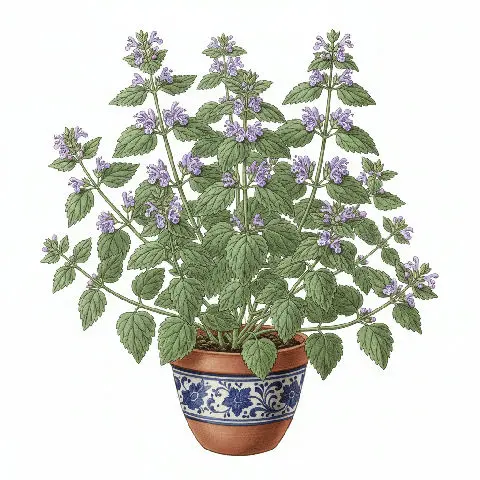
Catnip, scientifically identified as Nepeta cataria, is a fragrant perennial herb belonging to the expansive Lamiaceae family, widely recognized as the mint family.
A good article on Catnip should not stop at one-line claims. Readers need taxonomy, habitat, safety, cultivation, and evidence in the same place so they can make sound decisions.
Use this guide as a practical reference, then compare it with the detailed plant profile at https://www.floramedicalglobal.com/plant/catnip whenever you want to confirm the source page itself.
- Nepeta cataria is a member of the mint family, known for its distinct aroma.
- Contains nepetalactone, responsible for its sedative and insect-repellent qualities.
- Traditionally used for anxiety, insomnia, digestive issues, and cold symptoms.
- Caution advised for pregnant women, children, and those on sedative medications or lithium.
- Easily cultivated, thriving in well-drained soil and various light conditions.
- Valued in herbal medicine for its calming and carminative properties.
This guide is designed to help the reader move from scattered facts to practical understanding. Instead of relying on a thin summary, it pulls together the identity, uses, care profile, safety notes, and evidence context around Catnip so the article works as a real reference rather than a keyword page.
Botanical Profile & Taxonomy
Catnip should be anchored to the correct taxonomic identity before any discussion of care, use, or safety begins.
| Common name | Catnip |
|---|---|
| Scientific name | Nepeta cataria |
| Family | Lamiaceae |
| Order | Lamiales |
| Genus | Nepeta |
| Species epithet | cataria |
| Author citation | Japan (C. Honshu) |
| Synonyms | Nepeta ceretana Sennen, Nepeta bodinieri Vaniot, Nepeta mollis Salisb., Nepeta citriodora (Dumoulin ex Lej.) Dumort., Cataria tomentosa Bubani, 1897, Nepeta cataria var. citriodora Dumoulin, Nepeta cataria var. citriodora Dumoulin ex Lej., Nepeta cataria f. laurentii (Sennen) Font Quer, Nepeta laurentii Sennen, Nepeta macrura Ledeb. ex Spreng., Calamintha albiflora Vaniot, Nepeta minor Mill. |
| Common names | ক্যাটনিপ, ক্যাটমিন্ট, নেপেটা ক্যাটারিয়া, Catnip, Catmint, Catswort, Field Balm, कैटनीप, कैटमिंट |
| Local names | Erba dei gatti, Almindelig katteurt, Echte Katzenminze, Herbe aux chats, Kattemynte, Katzenminze, Echter Andorn, Katteurt, Nepeta chataire, Gattaia comune, Mintys y Gath, Gewöhnliche Katzenminze |
| Origin | Europe, Asia (Mediterranean, Himalayas) |
| Life cycle | Perennial |
| Growth habit | Tree |
Using the accepted scientific name Nepeta cataria helps readers avoid confusion caused by old synonyms, loose common names, or inconsistent plant labels.
Family and order placement also matter because they explain recurring structural traits, likely relatives, and the kinds of mistakes readers often make when they rely on appearance alone.
Physical Description & Morphology
A practical reading of the plant starts with visible structure: Leaf: Leaves are ovate to lanceolate, measuring 4-8 cm long and 2-4 cm wide, with a serrated margin and a dark green color on top and lighter beneath. Stem: Stems are square in cross-section, green to light purple in color, with a slightly hairy texture and reaching heights of 0.6 to 1 meter. Root: The root system consists of fibrous roots that spread horizontally, enabling it to anchor securely in the soil; depth varies but typically does not. Flower: Flowers are small, tubular, and borne in whorls, typically pale lavender to white; each flower measures about 2-3 cm in length and blooms from late. Fruit: Fruits are small, dry, and contain 4 nutlets, measuring about 1.5 mm each, not typically consumed by humans due to their small size. Seed: Seeds are tiny, flattened, oval-shaped, dark brown to black in color, dispersed primarily by wind or water.
Microscopic or internal identification notes deepen the picture, especially for processed material: Both glandular and non-glandular trichomes are abundant; glandular trichomes include peltate and capitate types responsible for essential oil. Stomata are predominantly diacytic (rubiaceous type), characterized by two subsidiary cells oriented perpendicularly to the guard cells, which is. Powdered Catnip exhibits characteristic fragments of epidermis with diacytic stomata, numerous glandular and non-glandular trichomes, parenchymatous.
In overall habit, the plant is described as Tree with a mature height around 30–100 cm and spread of Typically 0.5-3 m.
Natural Habitat & Distribution
The native or historically recorded center of distribution for Catnip is Europe, Asia (Mediterranean, Himalayas). That origin is more than background trivia; it explains how the plant responds to heat, moisture, shade, and seasonal change.
The plant is associated with the following countries or range markers: Germany, in the east, the Netherlands, the south around the Mediterranean, United Kingdom.
Environmental notes in the live record add more context: Catnip prefers a temperate climate with full sun exposure but can tolerate partial shade. This herb thrives best in USDA zones 3 to 9 and can withstand a range of temperatures, ideally between 20°C to 25°C (68°F to 77°F). It grows well in a variety of soil types, provided they are well-drained, and can tolerate poor soil conditions. Optimal growth occurs.
In cultivation terms, the main ecological clues are: Full sun to partial shade; Moderate; Well-drained; Often 6-10; species-dependent; Perennial; Tree.
Physiology data reinforce the habitat story: Demonstrates resilience to environmental stressors, including moderate drought and fluctuating temperatures, often increasing secondary metabolite. Nepeta cataria utilizes C3 photosynthesis, typical of most temperate zone plants, optimizing carbon fixation under moderate light and temperature. Exhibits moderate transpiration rates, adapting well to varying moisture levels and showing some drought tolerance once established due to its hairy.
Traditional & Cultural Significance
Catnip, *Nepeta cataria*, a member of the Lamiaceae family, boasts a rich tapestry of cultural significance woven through centuries of human interaction. While its most famous attribute is its effect on felines, its history among human populations is equally compelling, particularly within traditional medicine. In European folk medicine, catnip was a common remedy, often brewed into a tea to soothe digestive.
Ethnobotanical records also show how this plant has been framed across different places: Ache(Head) in Elsewhere (Duke, 1992 *); Ache(Stomach) in Elsewhere (Duke, 1992 *); Carminative in Elsewhere (ANON. 1978. List of Plants. Kyoto Herbal Garden, Parmacognostic Research Lab., Central Research Division, Takeda Chem. Industries, Ltd., Ichijoji, Sakyoku, Kyoto, Japan.); Catarrh in Spain (Font Query, P. 1979. Plantas Medicinales el Dioscorides Renovado. Editorial Labor, S.A. Barcelona. 5th Ed.); Catarrh in Turkey (Steinmetz, E.F. 1957. codex Vegetabilis. Published by the author, Amsterdam.); Cold in US(Appalachia) (Krochmal, Arnold and Connie. 1973. A guide to the medicinal plants of the United States. Quadrangle/The N.Y. Times Book Co.); Colic in US (Uphof, J.C. Th. 1968. Dictionary of economic plants. 2nd ed. Verlag von J. Cramer.); Emmenagogue in US (Krochmal, Arnold and Connie. 1973. A guide to the medicinal plants of the United States. Quadrangle/The N.Y. Times Book Co.).
Local names help show how different communities notice and classify the plant: Erba dei gatti, Almindelig katteurt, Echte Katzenminze, Herbe aux chats, Kattemynte, Katzenminze, Echter Andorn, Katteurt, Nepeta chataire, Gattaia comune.
Traditional context matters, but it should always be separated from modern certainty. Historical use can guide questions, yet it does not automatically prove present-day clinical effectiveness.
Medicinal Properties & Health Benefits
The main benefit themes associated with the plant include: Calming and Sedative Effects — Nepetalactone interacts with opioid receptors or GABA receptors, promoting relaxation and aiding in the reduction of mild. Sleep Aid — Its mild sedative properties make Catnip a traditional remedy for insomnia, helping to induce a restful state and improve sleep quality without. Digestive Comfort — Catnip acts as a carminative and antispasmodic, alleviating symptoms of indigestion, bloating, gas, and mild stomach cramps by relaxing. Cold and Flu Symptom Relief — Traditionally used to promote sweating (diaphoretic), Catnip tea can help break fevers and soothe symptoms associated with the. Headache Alleviation — The relaxing properties of Nepeta cataria may help to ease tension headaches and migraines, providing natural relief from discomfort. Menstrual Discomfort Reduction — As an antispasmodic, Catnip can help relax uterine muscles, potentially easing menstrual cramps and discomfort during. Insect Repellent — The essential oil, particularly nepetalactone, has demonstrated significant efficacy as a natural insect repellent against mosquitoes and. Anti-inflammatory Properties — Certain compounds within Catnip may possess mild anti-inflammatory effects, contributing to its traditional use for various.
The evidence matrix gives a more careful picture of those claims: Sedative and Anxiolytic Effects. Pre-clinical (animal) / Observational (traditional). Limited Human Studies / Traditional Use. Animal studies suggest nepetalactone's interaction with neurotransmitter systems, while human evidence is largely anecdotal or from small, non-clinical observations. Insect Repellent Activity. In vitro / Animal Studies. Strong Pre-clinical Evidence. Numerous studies confirm the efficacy of nepetalactone against various insects, including mosquitoes, often outperforming DEET in laboratory settings. Digestive Aid (Carminative/Antispasmodic). Observational (traditional) / In vitro. Traditional Use / Plausible Mechanism. Traditional use is widespread for gas, bloating, and cramps, supported by the presence of volatile oils known for smooth muscle relaxation.
The stored evidence confidence for this profile is traditional. That should shape how strongly any benefit statement is interpreted.
For medicinal content, the key discipline is to distinguish traditional use, mechanism-based plausibility, and human clinical support. Those are related ideas, but they are not the same thing.
- Calming and Sedative Effects — Nepetalactone interacts with opioid receptors or GABA receptors, promoting relaxation and aiding in the reduction of mild.
- Sleep Aid — Its mild sedative properties make Catnip a traditional remedy for insomnia, helping to induce a restful state and improve sleep quality without.
- Digestive Comfort — Catnip acts as a carminative and antispasmodic, alleviating symptoms of indigestion, bloating, gas, and mild stomach cramps by relaxing.
- Cold and Flu Symptom Relief — Traditionally used to promote sweating (diaphoretic), Catnip tea can help break fevers and soothe symptoms associated with the.
- Headache Alleviation — The relaxing properties of Nepeta cataria may help to ease tension headaches and migraines, providing natural relief from discomfort.
- Menstrual Discomfort Reduction — As an antispasmodic, Catnip can help relax uterine muscles, potentially easing menstrual cramps and discomfort during.
- Insect Repellent — The essential oil, particularly nepetalactone, has demonstrated significant efficacy as a natural insect repellent against mosquitoes and.
- Anti-inflammatory Properties — Certain compounds within Catnip may possess mild anti-inflammatory effects, contributing to its traditional use for various.
- Colic Relief in Infants — Historically, diluted Catnip tea has been given to infants to soothe colic symptoms, though this practice requires extreme caution.
- Mood Enhancement — By promoting relaxation and reducing stress, Catnip can indirectly contribute to a more balanced and positive mood, offering a gentle uplift.
Chemical Constituents & Phytochemistry
The broader constituent profile includes Iridoid Monoterpenoids — Primarily nepetalactone (cis-trans and trans-cis isomers), which is responsible for Catnip's. Essential Oils — Comprising a complex mixture of compounds including alpha- and beta-nepetalactone, nepetalic acid. Flavonoids — Such as apigenin, luteolin, and their glycosides, which contribute antioxidant and anti-inflammatory. Tannins — Astringent compounds that can contribute to the plant's traditional use for digestive complaints by. Triterpenes — Including ursolic acid and oleanolic acid, which are known for their anti-inflammatory, antimicrobial. Phenolic Acids — Such as rosmarinic acid and caffeic acid, which are potent antioxidants and contribute to the plant's. Choline — A vital nutrient that supports various bodily functions, including nerve signaling and liver health. Vitamins and Minerals — Contains trace amounts of vitamins C and E, and minerals such as manganese and potassium.
The detailed phytochemistry file adds these markers: Nepetalactone (cis-trans and trans-cis), Iridoid Monoterpenoid, Leaves, Flowering Tops, 0.1-1.0% in dried herb; Caryophyllene, Sesquiterpene, Essential Oil, Trace-5% of essential oil; Limonene, Monoterpene, Essential Oil, Trace-3% of essential oil; Rosmarinic Acid, Phenolic Acid, Leaves, 0.05-0.5% in dried herb; Apigenin, Flavonoid, Leaves, Flowers, Trace% in dried herb; Ursolic Acid, Triterpene, Leaves, Trace% in dried herb.
Local chemistry records also support the profile: ASCORBIC-ACID in Plant (not available-not available ppm); URSOLIC-ACID in Plant (not available-not available ppm); URSOLIC-ACID in Shoot (not available-10300.0 ppm); ZINC in Plant (not available-not available ppm); THYMOL in Plant (not available-not available ppm); MAGNESIUM in Plant (248.0-2070.0 ppm); LIMONENE in Leaf (not available-not available ppm); LIMONENE in Plant (not available-not available ppm).
Compound profiles also shift with plant part, age, season, processing, and storage. The chemistry of a fresh leaf, dried root, or concentrated extract should never be treated as automatically identical.
How to Use — Preparations & Dosage
Recorded preparation and use methods include Herbal Tea — Infuse 1-2 teaspoons of dried Catnip leaves and flowers in a cup of hot water for 5-10 minutes. Strain and drink to aid relaxation, sleep, or digestion. Tincture — Prepare by soaking fresh or dried Catnip in a high-proof alcohol for several weeks, then straining. Use a few drops as directed for concentrated effects. Essential Oil — Diluted Catnip essential oil can be applied topically as an insect repellent or diffused for its calming aroma. Always dilute with a carrier oil before skin. Poultice — Crush fresh Catnip leaves and apply directly to minor skin irritations, insect bites, or sprains to soothe inflammation and discomfort. Dried Herb for Smoking — While historically used, smoking Catnip is generally discouraged due to potential respiratory irritation and inconsistent effects on humans. Culinary Use — Young Catnip leaves can be added sparingly to salads or used to flavor dishes, offering a minty, lemony note, though this is less common than its medicinal use. Herbal Compress — Steep Catnip in hot water, then soak a cloth in the infusion and apply warm to the skin to alleviate headaches or muscle tension. Bath Infusion — Add a strong Catnip tea infusion to bathwater for a relaxing and skin-soothing soak, particularly beneficial before bedtime.
The plant part most closely linked to use is recorded as Leaves, bark, roots, seeds, or berries cited in related taxa.
Edibility and processing notes matter here as well: Varies by species and plant part; verify before use.
Preparation defines the outcome. Tea, decoction, tincture, powder, fresh plant material, cooked food use, and concentrated extract cannot be discussed as if they were interchangeable.
- Identify the exact species and plant part first.
- Match the preparation to the intended use.
- Check safety, interactions, and processing details before routine use or large-scale handling.
Safety Profile, Side Effects & Contraindications
The first safety note is direct: Varies by species and plant part; verify before use
Specific warnings recorded for this plant include Pregnancy — Catnip is considered likely unsafe during pregnancy due to its potential uterotonic effects, which could stimulate uterine contractions and. Breast-feeding — There is insufficient reliable information regarding the safety of Catnip use during breast-feeding; therefore, it is advisable to avoid use to err on the side of caution. Children — Catnip is possibly unsafe for oral consumption in children, with reported side effects including stomach pain, irritability, and sluggishness. Pelvic Inflammatory Disease (PID) — Individuals with PID should avoid Catnip as it may exacerbate the condition or increase menstrual flow. Heavy Menstrual Periods — Catnip might increase menstrual bleeding, making it unsuitable for those who experience excessively heavy periods. Drug Interactions — Caution is advised when combining Catnip with sedative medications (CNS depressants) due to potential additive effects leading to. Lithium Interaction — Catnip may have diuretic properties, potentially decreasing the body's excretion of lithium and leading to increased lithium levels and. Headaches — High doses of Catnip, particularly in concentrated forms, may induce headaches in some individuals, indicating an overstimulation or sensitivity. Vomiting and Nausea — Excessive consumption of Catnip tea or other preparations can lead to gastrointestinal upset, including nausea and vomiting.
Quality-control notes add another warning: Risk of adulteration with other Nepeta species or other members of the Lamiaceae family. Misidentification or substitution with less potent or non-medicinal species is a concern.
No plant should be described as universally safe. Identity, dose, plant part, preparation style, age, pregnancy status, medication use, allergies, and contamination risk all change the answer.
Growing & Cultivation Guide
The cultivation record emphasizes these practical steps: Seed Propagation — Sow Catnip seeds directly outdoors in spring after the last frost or start indoors 6-8 weeks prior. Lightly cover seeds as they require light for. Cuttings and Division — Easily propagated from stem cuttings in late spring or early summer, or by dividing established clumps in spring or fall for robust growth. Soil Requirements — Prefers well-drained, sandy loam soil with a pH between 6.0 and 7.5. It tolerates poor soil conditions but thrives with moderate fertility. Sunlight Exposure — Requires full sun to partial shade. Optimal growth and essential oil production occur in locations receiving at least 6 hours of direct sunlight. Watering — Once established, Catnip is quite drought-tolerant. Water regularly during dry spells, allowing the soil to dry out slightly between waterings to prevent. Pest and Disease Resistance — Generally resistant to most pests and diseases, though occasional issues with aphids or powdery mildew may arise in humid conditions. Harvesting — Harvest leaves and flowering tops just as flowers begin to open for the highest concentration of volatile oils. Dry in a cool, dark, well-ventilated area. Maintenance — Prune back after flowering to encourage a second flush of blooms and prevent self-seeding, which can lead to aggressive spread.
The broader growth environment is described like this: Catnip prefers a temperate climate with full sun exposure but can tolerate partial shade. This herb thrives best in USDA zones 3 to 9 and can withstand a range of temperatures, ideally between 20°C to 25°C (68°F to 77°F). It grows well in a variety of soil types, provided they are well-drained, and can tolerate poor soil conditions. Optimal growth occurs.
Planning becomes easier when these traits are kept in view: Tree; 30–100 cm; Typically 0.5-3 m.
In practice, healthy cultivation comes from systems thinking rather than one-off tricks. Site choice, drainage, timing, spacing, pruning, feeding, and observation all reinforce one another.
Light, Water & Soil Requirements
The most useful care snapshot is this: Light: Full sun to partial shade; Water: Moderate; Soil: Well-drained; USDA zone: Often 6-10; species-dependent.
Outdoors, light, water, and soil must be read together. The same watering schedule can be too much in dense clay and too little in a porous sandy bed.
| Light | Full sun to partial shade |
|---|---|
| Water | Moderate |
| Soil | Well-drained |
| USDA zone | Often 6-10; species-dependent |
Light, water, and soil should never be treated as separate checkboxes. A plant in stronger light often dries faster, soil texture changes how quickly water moves, and temperature plus humidity influence how stress appears in leaves and roots.
For Catnip, the safest care approach is to treat Full sun to partial shade, Moderate, and Well-drained as linked decisions rather than isolated tips. If one condition shifts, the other two usually need to be reconsidered as well.
Microclimate matters too. Indoors, room placement and airflow can matter as much as window exposure. Outdoors, reflected heat, slope, mulch, and nearby plants can change how the temperature rhythm described for the species and humidity that matches the plant type are actually experienced at plant level.
Propagation Methods
Documented propagation routes include Catnip can be propagated by seeds or cuttings. For seeds: 1) Sow seeds indoors 6-8 weeks before the last frost; lightly cover seeds with soil, keeping moist until germination which takes about 7-14 days. 2) Transplant outdoors after the last frost when seedlings reach.
Propagation works best when the parent stock is healthy, correctly identified, and handled in the right season. That sounds obvious, but it is exactly where many failures begin.
- Catnip can be propagated by seeds or cuttings. For seeds: 1) Sow seeds indoors 6-8 weeks before the last frost
- Lightly cover seeds with soil, keeping moist until germination which takes about 7-14 days. 2) Transplant outdoors after the last frost when seedlings reach.
Propagation works best when the reader matches method to biology. Some plants respond readily to cuttings, some to division, some to seed, and others require more patience or more exact seasonal timing.
Pest & Disease Management
For medicinal species, pest pressure is not only a horticultural issue. It also affects harvest cleanliness, storage stability, and confidence in the final material.
The smartest response sequence is observation first, environmental correction second, and treatment only after the real pattern is clear.
Pest and disease management is strongest when it begins before visible damage becomes severe. Routine observation, clean handling, sensible spacing, air movement, and balanced watering reduce many problems before treatment is even needed.
When symptoms do appear on Catnip, the most reliable response is diagnostic rather than reactive. Yellowing, spots, wilt, chewing, and stunting can all have multiple causes, so a rushed treatment can waste time or worsen the problem.
Good troubleshooting also includes environmental correction. Pests and disease often reveal a deeper issue such as root stress, poor airflow, inconsistent watering, weak light, or exhausted soil structure.
Harvesting, Storage & Processing
The plant part most often associated with harvest or processing is Leaves, bark, roots, seeds, or berries cited in related taxa.
Storage guidance from the quality-control record reads as follows: Dried Catnip should be stored in airtight containers, away from light, heat, and moisture, to preserve the volatile essential oils and prevent degradation, maintaining efficacy.
For medicinal plants, harvesting cannot be separated from processing. The right plant part, the right timing, and the right drying conditions all shape quality and safety.
Whatever the purpose, the rule is the same: harvest clean material, label it clearly, and store it in a way that preserves identity and condition.
Harvest and storage determine whether a plant's quality is preserved after it leaves the bed, pot, field, or wild source. Clean timing, correct plant part selection, and careful drying or handling all matter more than many readers expect.
Companion Planting & Garden Design
In a home herb garden or medicinal bed, Catnip should be placed where harvesting is easy, labeling remains clear, and neighboring plants do not create confusion at collection time.
Companion planting and design are not only aesthetic decisions. They affect airflow, root competition, moisture sharing, harvest access, visibility, and the general logic of the planting scheme.
With Catnip, good placement means thinking about mature size, maintenance rhythm, and how neighboring plants change the feel and function of the space. A plant can be healthy on its own and still be poorly placed within the broader composition.
That is why the best design advice combines biology with usability. The planting should look coherent, but it should also make watering, pruning, harvest, and pest observation easier rather than harder.
Scientific Research & Evidence Base
The evidence matrix points to several recurring themes: Sedative and Anxiolytic Effects. Pre-clinical (animal) / Observational (traditional). Limited Human Studies / Traditional Use. Animal studies suggest nepetalactone's interaction with neurotransmitter systems, while human evidence is largely anecdotal or from small, non-clinical observations. Insect Repellent Activity. In vitro / Animal Studies. Strong Pre-clinical Evidence. Numerous studies confirm the efficacy of nepetalactone against various insects, including mosquitoes, often outperforming DEET in laboratory settings. Digestive Aid (Carminative/Antispasmodic). Observational (traditional) / In vitro. Traditional Use / Plausible Mechanism. Traditional use is widespread for gas, bloating, and cramps, supported by the presence of volatile oils known for smooth muscle relaxation.
Ethnobotanical activity records add historical reference trails: Ache(Head) — Elsewhere [Duke, 1992 *]; Ache(Stomach) — Elsewhere [Duke, 1992 *]; Carminative — Elsewhere [ANON. 1978. List of Plants. Kyoto Herbal Garden, Parmacognostic Research Lab., Central Research Division, Takeda Chem. Industries, Ltd., Ichijoji, Sakyoku, Kyoto, Japan.]; Catarrh — Spain [Font Query, P. 1979. Plantas Medicinales el Dioscorides Renovado. Editorial Labor, S.A. Barcelona. 5th Ed.]; Catarrh — Turkey [Steinmetz, E.F. 1957. codex Vegetabilis. Published by the author, Amsterdam.]; Cold — US(Appalachia) [Krochmal, Arnold and Connie. 1973. A guide to the medicinal plants of the United States. Quadrangle/The N.Y. Times Book Co.].
The compiled source count behind the live profile is 7. That does not guarantee certainty, but it does suggest the record has been cross-checked beyond a single note.
Analytical testing notes also strengthen the evidence base: Identification relies on macroscopic and microscopic examination, thin-layer chromatography (TLC), and gas chromatography-mass spectrometry (GC-MS) for essential oil profiling.
A careful evidence section should say what is known, what is plausible, and what remains uncertain. Readers are better served by clear limits than by exaggerated confidence.
Evidence note: this section blends the live plant record, local ethnobotanical activity data, chemistry records, and the linked Flora Medical Global plant profile for Catnip.
Buying Guide & Expert Tips
Quality markers worth checking include Nepetalactone isomers (cis-trans and trans-cis) are the primary marker compounds for identification and quantification, reflecting the plant's characteristic biological activity.
Adulteration and substitution risk should not be ignored: Risk of adulteration with other Nepeta species or other members of the Lamiaceae family. Misidentification or substitution with less potent or non-medicinal species is a concern.
When buying Catnip, start with verified botanical identity. The label, scientific name, and the source page should agree before you judge price, size, or claimed benefits.
For living plants, inspect roots, stem firmness, foliage health, and early pest signs. For dried or processed material, look for batch clarity, clean aroma, absence of mold, and any sign that the product has been over-processed to disguise poor quality.
Frequently Asked Questions
What is Catnip best known for?
Catnip, scientifically identified as Nepeta cataria, is a fragrant perennial herb belonging to the expansive Lamiaceae family, widely recognized as the mint family.
Is Catnip beginner-friendly?
That depends on the growing environment and the intended use. Some plants are easy to grow but not simple to use medicinally, while others are the opposite.
How much light does Catnip need?
Full sun to partial shade
How often should Catnip be watered?
Moderate
Can Catnip be propagated at home?
Yes, but the best method depends on whether the species responds best to seed, cuttings, division, offsets, or other propagation routes.
Does Catnip have safety concerns?
Varies by species and plant part; verify before use
What is the biggest mistake people make with Catnip?
The most common mistake is applying generic advice instead of matching the plant to its real environment, identity, and limits.
Where can I verify more information about Catnip?
Start with the Flora Medical Global plant profile: https://www.floramedicalglobal.com/plant/catnip
Why do sources sometimes disagree about Catnip?
Different references may use different synonyms, plant parts, cultivation conditions, or evidence standards. That is why taxonomy and source quality both matter.