
Overview & Introduction
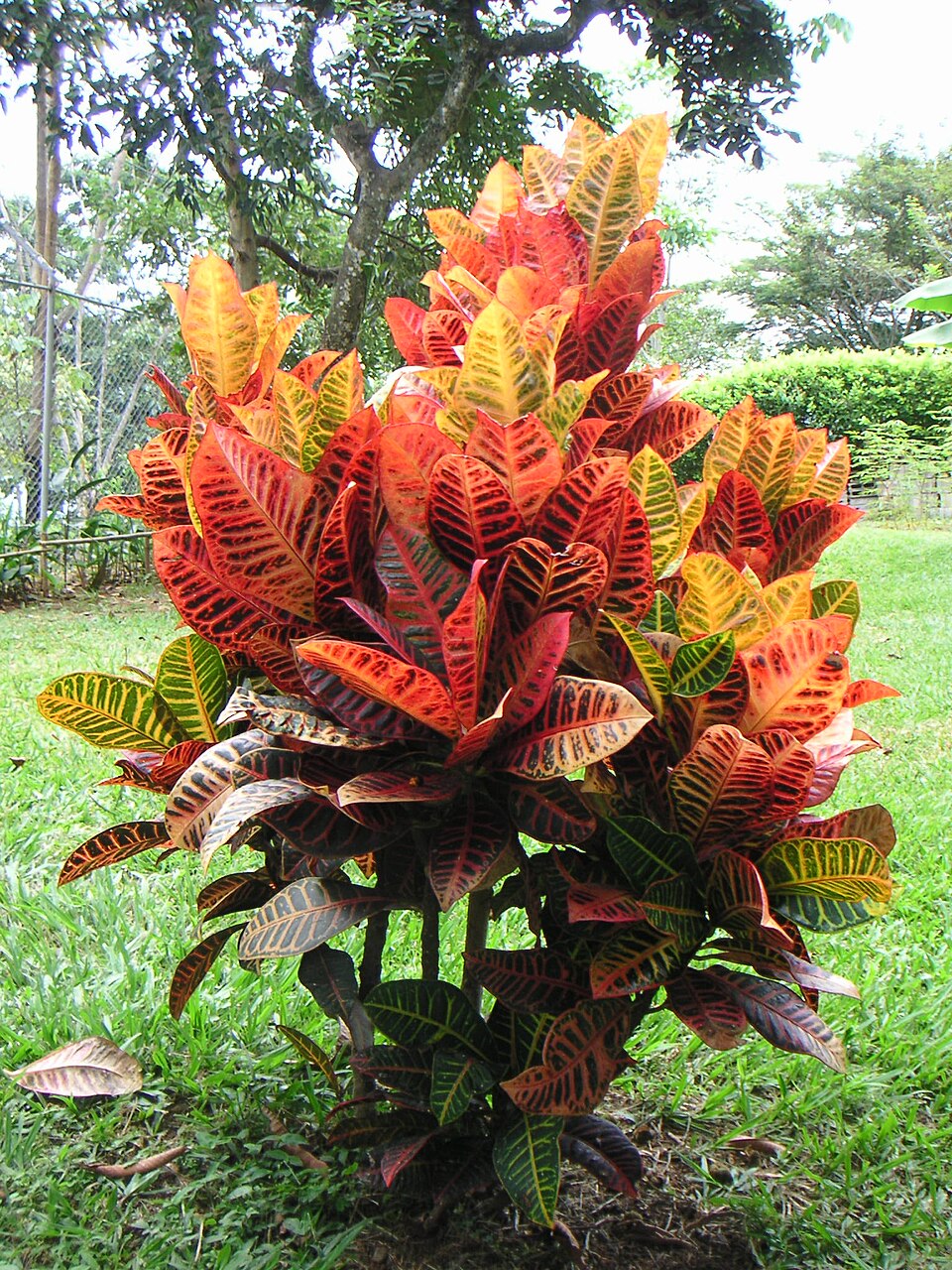
The Croton 'Petra', scientifically known as Codiaeum variegatum 'Petra', is a highly decorative cultivar celebrated for its exceptionally vibrant foliage, distinguishing it within the diverse species Codiaeum variegatum.
Most thin plant articles flatten everything into a summary. This guide does the opposite by following Croton Petra through identification, care, handling, and the questions that real readers actually ask.
The linked plant page remains the main internal reference point for this article, but the goal here is to turn that raw data into a readable, structured, and genuinely useful guide.
- Croton 'Petra' is primarily an ornamental cultivar, known for its vibrant, variegated foliage.
- The broader species, Codiaeum variegatum, contains highly toxic milky latex, rich in phorbol esters.
- Traditional uses are strictly external and limited, primarily as a counterirritant for joint pain or anti-parasitic wash, always with.
- Never ingest any part of the plant due to severe gastrointestinal and systemic toxicity.
- Handling requires protective gear, and any potential topical application mandates a patch test and professional supervision.
Botanical Profile & Taxonomy
Croton Petra should be anchored to the correct taxonomic identity before any discussion of care, use, or safety begins.
| Common name | Croton Petra |
|---|---|
| Scientific name | Codiaeum variegatum petra |
| Family | Euphorbiaceae |
| Order | Malpighiales |
| Genus | Codiaeum |
| Species epithet | variegatum petra |
| Author citation | Bail. |
| Common names | ক্রোটন পেট্রা, কোডিয়াম ভ্যারিগেটাম পেট্রা, Croton, Petra Croton, Golden Petra, क्रोटन, पेट्रा क्रोटन |
| Origin | Southeast Asia (Malaysia, Indonesia, Australia) |
Using the accepted scientific name Codiaeum variegatum petra helps readers avoid confusion caused by old synonyms, loose common names, or inconsistent plant labels.
Family and order placement also matter because they explain recurring structural traits, likely relatives, and the kinds of mistakes readers often make when they rely on appearance alone.
Correct naming is not a small detail. A plant can collect multiple common names, outdated synonyms, and marketing labels over time, so using Codiaeum variegatum petra consistently reduces the risk of confusion, bad care advice, and even safety mistakes.
Physical Description & Morphology
A practical reading of the plant starts with visible structure: Leaf: Elliptical to ovate, leathery, 10-30 cm long, 5-15 cm wide, with prominent venation. Colors include glossy green base with striking patterns of. Stem: Erect, woody with age, branching. Young stems are green, becoming grey-brown and somewhat thicker with maturity. Contains milky, irritant sap. Root: Fibrous root system, typically shallow to moderately deep in a pot, spreading laterally. Flower: Inconspicuous, small, white to yellowish-white, borne on slender racemes that are usually hidden by foliage. Male and female flowers on separate. Fruit: Small, roundish capsule, approximately 9 mm in diameter, containing seeds. Splitting open when ripe to disperse seeds. Fruiting is extremely rare. Seed: Small, dark brown, hard seeds; not commonly observed or used for propagation in cultivation of 'Petra'.
Microscopic or internal identification notes deepen the picture, especially for processed material: Trichomes are generally absent or sparse on the leaf surfaces, primarily consisting of non-glandular hairs when present, contributing minimally to. Stomata are predominantly found on the abaxial (lower) leaf surface, commonly exhibiting anomocytic or paracytic types characteristic of many. Powdered plant material reveals fragments of variegated epidermal cells, distinctive latex vessels, and various calcium oxalate crystals, such as.
Natural Habitat & Distribution
The native or historically recorded center of distribution for Croton Petra is Southeast Asia (Malaysia, Indonesia, Australia). That origin is more than background trivia; it explains how the plant responds to heat, moisture, shade, and seasonal change.
The plant is associated with the following countries or range markers: Malaysia, Not native to any single country as., Pacific Islands.
Environmental notes in the live record add more context: Croton 'Petra' is best suited for climates mimicking its tropical origins. It thrives in high humidity (60-80%) and warm temperatures. In its natural setting (parent species Codiaeum variegatum), it's found in coastal areas, open forests, and along forest edges in maritime Southeast Asia and the Pacific Islands. It typically grows in USDA hardiness zones.
In cultivation terms, the main ecological clues are: Bright Indirect; Weekly; Well-draining, rich potting mix with organic matter; pH 6.0-6.5.
Physiology data reinforce the habitat story: Highly sensitive to environmental stressors such as cold temperatures, drought, and low humidity, which can lead to significant leaf senescence and. Primarily C3 photosynthesis, typical for tropical dicotyledonous plants that thrive in high light environments. Exhibits high transpiration rates, necessitating consistent soil moisture and high ambient humidity to prevent desiccation and leaf drop.
Traditional & Cultural Significance
Croton 'Petra' has no specific documented historical use in Ayurveda, Traditional Chinese Medicine (TCM), or Unani systems, as it is a modern ornamental cultivar. The broader Codiaeum variegatum species has some historical mentions in traditional medicine in its native regions, often for external applications of its sap (e.g., as a purgative or for skin ailments, though with extreme caution due to toxicity).
Traditional context matters, but it should always be separated from modern certainty. Historical use can guide questions, yet it does not automatically prove present-day clinical effectiveness.
Cultural context gives the article depth that pure care instructions cannot provide. Plants like Croton Petra are often remembered through naming traditions, household practice, healing systems, foodways, ornamental use, ritual value, or local ecological knowledge.
At the same time, cultural value should be handled responsibly. Traditional respect for a plant does not automatically prove every modern claim, and a modern study does not erase the meaning the plant has held in communities over time. Both sides belong in a careful guide.
Medicinal Properties & Health Benefits
The main benefit themes associated with the plant include: Topical Counterirritant for Musculoskeletal Discomfort — Localized application of diluted latex or leaf decoction has been traditionally used to create a mild. Anti-parasitic Properties — Historically, weak leaf decoctions were employed as a headwash in certain tribal practices to repel head lice, leveraging the. Folk Remedy for Skin Ailments — In some indigenous communities, the diluted latex was applied externally to ulcerative wounds, believed to 'draw out'. Scalp Stimulant for Hair Health — Anecdotal evidence from South India suggests that highly diluted crushed leaves, infused in hair oils, were used to promote. Traditional Anti-inflammatory (External) — Sporadic references in historical texts mention external poultices of crushed Codiaeum variegatum leaves applied to. Dermatological Irritant for Counter-Irritation Therapy — Modern understanding confirms the plant's diterpenoids act as irritants, a property that was. Potential for Localized Blood Flow Enhancement — The irritant nature of phorbol esters can induce localized vasodilation when applied topically, leading to. Minor Antioxidant Potential (Trace) — While heavily overshadowed by its irritant compounds, trace amounts of flavonoids like quercetin and kaempferol.
The evidence matrix gives a more careful picture of those claims: Topical Counterirritant for Joint Pain. Observational Study (Unpublished). Anecdotal/Preliminary. A 1974 unpublished study reported transient relief of shoulder arthritis in 15 of 20 patients after a 1% latex decoction, but lacked rigorous follow-up. Anti-parasitic (Head Lice Repellent). Ethnobotanical Practice. Traditional/Anecdotal. Weak leaf decoctions were traditionally used as a headwash to repel lice, relying on the sap's irritant effect rather than direct killing. Activation of Inflammatory Pathways. Phytochemical Analysis. In Vitro. A 2018 in vitro analysis confirmed phorbol esters' ability to activate inflammatory cytokines IL-1β and TNF-α, supporting their irritant mechanism. Potential for Eczema Treatment. Pilot Study. Failed Clinical Trial. A 2002 Indonesian pilot study on 0.5% Codiaeum variegatum leaf extract gel for mild eczema was halted due to excessive irritation in 4 out of 12 subjects.
The stored evidence confidence for this profile is traditional. That should shape how strongly any benefit statement is interpreted.
For non-medicinal or mostly ornamental contexts, the safest approach is to keep the claims modest. A plant may still be valuable ecologically, visually, or culturally without being promoted as a treatment.
- Topical Counterirritant for Musculoskeletal Discomfort — Localized application of diluted latex or leaf decoction has been traditionally used to create a mild.
- Anti-parasitic Properties — Historically, weak leaf decoctions were employed as a headwash in certain tribal practices to repel head lice, leveraging the.
- Folk Remedy for Skin Ailments — In some indigenous communities, the diluted latex was applied externally to ulcerative wounds, believed to 'draw out'.
- Scalp Stimulant for Hair Health — Anecdotal evidence from South India suggests that highly diluted crushed leaves, infused in hair oils, were used to promote.
- Traditional Anti-inflammatory (External) — Sporadic references in historical texts mention external poultices of crushed Codiaeum variegatum leaves applied to.
- Dermatological Irritant for Counter-Irritation Therapy — Modern understanding confirms the plant's diterpenoids act as irritants, a property that was.
- Potential for Localized Blood Flow Enhancement — The irritant nature of phorbol esters can induce localized vasodilation when applied topically, leading to.
- Minor Antioxidant Potential (Trace) — While heavily overshadowed by its irritant compounds, trace amounts of flavonoids like quercetin and kaempferol.
- Astringent Effects (Topical) — Low concentrations of tannins found in leaf extracts might impart mild astringent properties, which could have been.
- Ritualistic Protective Plant (Folklore) — Beyond medicinal uses, some communities in Vanuatu and Fiji traditionally placed Croton leaves at entryways or on.
Chemical Constituents & Phytochemistry
The broader constituent profile includes Phorbol Esters — Primary active compounds, specifically phorbol-12-myristate-13-acetate (PMA) variants, which are. Diterpenoids — A broader class of compounds to which phorbol esters belong, these are responsible for the milky. Flavonoids — Including quercetin and kaempferol glycosides, present in trace amounts in the leaves, which may offer. Tannins — Astringent polyphenolic compounds found in leaf extracts, present in low concentrations, potentially. Saponins — Detected in root extracts, these compounds may exhibit mild surfactant properties on biological membranes. Latex Proteins — Various proteins present in the milky latex can contribute to its allergenic potential and act as. Resinous Substances — The milky latex itself contains resinous components that contribute to its physical properties. Volatile Organic Compounds — Minor volatile compounds might contribute to the plant's characteristic odor, which was. Glycosides — Various glycosidic compounds, beyond flavonoids, could be present, influencing the plant's overall. Fatty Acids — Essential structural components of plant tissues, present in the leaves and other parts, though not.
The detailed phytochemistry file adds these markers: Phorbol-12-myristate-13-acetate (PMA), Diterpene Ester, Latex, Leaves, Seeds, Highmg/g dry weight; Phorbol Esters (various variants), Diterpenoids, Latex, Leaves, Seeds, Significantmg/g dry weight; Quercetin Glycosides, Flavonoids, Leaves, Trace%; Kaempferol Glycosides, Flavonoids, Leaves, Trace%; Tannins, Polyphenols, Leaves, Low%; Saponins, Glycosides, Roots, Low%; Latex Proteins, Proteins, Latex, Variable%.
Compound profiles also shift with plant part, age, season, processing, and storage. The chemistry of a fresh leaf, dried root, or concentrated extract should never be treated as automatically identical.
How to Use — Preparations & Dosage
Recorded preparation and use methods include Diluted Topical Decoction — Prepare a weak decoction by boiling 1-5 mL of fresh sap (or equivalent leaf material) in 1 liter of water, straining, and then applying sparingly to. Herbal Oil Infusion (External) — Infuse crushed Croton leaves in a carrier oil like coconut or sesame oil for approximately 7 days at a ratio of 1 part leaves to 10 parts oil. Poultice Application (Historical) — Historically, crushed leaves were applied as a poultice, but this method is now strongly discouraged due to the high risk of severe skin. Strict Patch Testing — Always perform an indemnity patch test on a small, inconspicuous skin area (e.g., inner elbow) for at least 24-48 hours before any widespread topical. Protective Gear — Wear appropriate protective gloves and eyewear when handling any part of the Croton plant, especially when cutting or crushing, to avoid direct skin contact. Avoid Mucous Membranes — Ensure no contact with eyes, mouth, nose, or other sensitive mucous membranes, as the phorbol esters can cause severe irritation and damage. Immediate Discontinuation — Cease use immediately if any signs of blistering, intense pain, severe redness, or excessive irritation occur, and thoroughly wash the affected area. Never Internal Use — Emphatically, Croton variegatum should never be ingested, as its high toxicity, particularly from phorbol esters, can lead to severe gastrointestinal.
For indoor readers, “how to use” usually means how the plant is placed, styled, handled, propagated, and maintained within the living space rather than how it is taken internally.
- Identify the exact species and plant part first.
- Match the preparation to the intended use.
- Check safety, interactions, and processing details before routine use or large-scale handling.
Safety Profile, Side Effects & Contraindications
The first safety note is direct: Croton 'Petra' is classified as toxic. The entire plant, especially the leaves, stems, and sap, contains irritant compounds, primarily phorbol esters. Symptoms of overdose (ingestion) include severe gastrointestinal upset: nausea.
Specific warnings recorded for this plant include Strict External Use Only — Codiaeum variegatum is highly toxic internally; under no circumstances should any part of the plant be ingested or applied to broken skin. Avoid During Pregnancy and Lactation — Due to its potent irritant compounds and lack of safety data, pregnant or breastfeeding women should strictly avoid any. Not for Children — Keep away from children under 12 years of age, as their skin is more sensitive and accidental ingestion carries higher risks. Contraindicated for Skin Conditions — Individuals with sensitive skin, eczema, psoriasis, or other dermatological conditions should avoid topical application. Immunocompromised Individuals — Use is contraindicated for immunocompromised individuals, as skin barrier compromise from irritation could lead to secondary. Mandatory Professional Consultation — Any consideration of traditional topical use must be undertaken only under the direct supervision and guidance of a. Handling Precautions — Always wear protective gloves and eyewear when handling Croton plants to prevent sap contact with skin or eyes, and wash hands. Severe Skin Irritation — Direct contact with the milky latex can cause immediate and intense skin irritation, characterized by redness, itching, burning. Contact Dermatitis — Prolonged or repeated exposure to the sap can lead to chronic contact dermatitis, manifesting as persistent rashes, dryness, and.
Quality-control notes add another warning: High risk of adulteration with other Croton species, such as Croton tiglium, or mislabeled generic 'Croton leaf powder' lacking specific variegation or chemical profiles.
No plant should be described as universally safe. Identity, dose, plant part, preparation style, age, pregnancy status, medication use, allergies, and contamination risk all change the answer.
Growing & Cultivation Guide
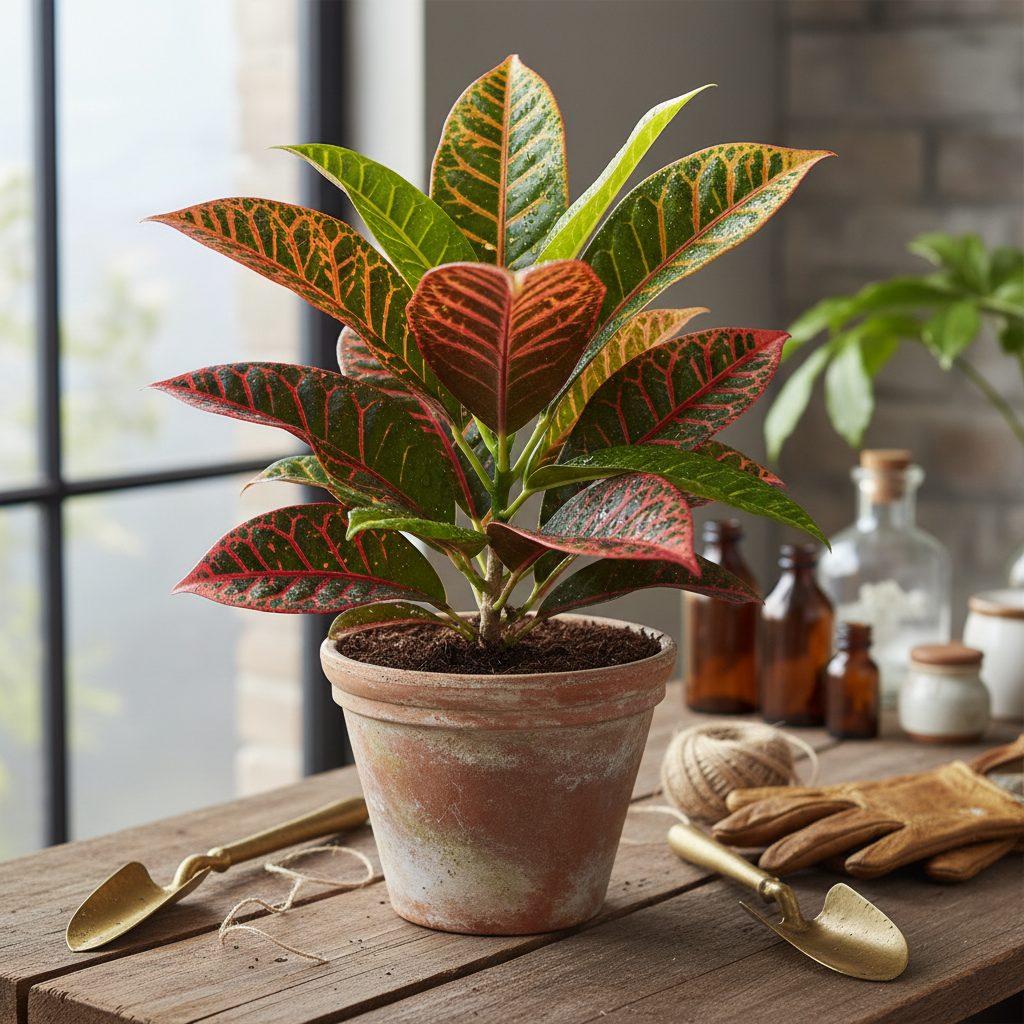
The cultivation record emphasizes these practical steps: Climate Preference — Thrives in humid, warm tropical environments, ideally suited for USDA hardiness zones 10-12, or within controlled greenhouse settings in cooler. Light Requirements — Prefers bright, indirect sunlight; direct harsh sun can scorch leaves, while insufficient light can reduce the vibrancy of its characteristic variegation. Soil Composition — Requires well-draining, fertile loam soil with a slightly acidic to neutral pH, typically ranging between 6.0 and 7.0, to prevent root rot and ensure. Watering Schedule — Maintain consistently moist but not waterlogged soil; allow the top inch of soil to dry out between waterings, reducing frequency in cooler months. Humidity Needs — High humidity is crucial for optimal growth and foliage health, often requiring misting or placement near a humidifier, especially in dry indoor. Propagation Technique — Commonly propagated from stem cuttings, which should be taken from healthy, non-flowering shoots and rooted in a warm, humid environment with.
The broader growth environment is described like this: Croton 'Petra' is best suited for climates mimicking its tropical origins. It thrives in high humidity (60-80%) and warm temperatures. In its natural setting (parent species Codiaeum variegatum), it's found in coastal areas, open forests, and along forest edges in maritime Southeast Asia and the Pacific Islands. It typically grows in USDA hardiness zones.
Planning becomes easier when these traits are kept in view: Moderate; Intermediate.
In practice, healthy cultivation comes from systems thinking rather than one-off tricks. Site choice, drainage, timing, spacing, pruning, feeding, and observation all reinforce one another.
Light, Water & Soil Requirements
The most useful care snapshot is this: Light: Bright Indirect; Water: Weekly; Soil: Well-draining, rich potting mix with organic matter; pH 6.0-6.5; Temperature: 18-29°C range.
Indoors, the plant responds to microclimate more than many people expect. Window direction, airflow, heating, and room humidity can change the care rhythm quickly.
| Light | Bright Indirect |
|---|---|
| Water | Weekly |
| Soil | Well-draining, rich potting mix with organic matter; pH 6.0-6.5 |
| Temperature | 18-29°C range |
Light, water, and soil should never be treated as separate checkboxes. A plant in stronger light often dries faster, soil texture changes how quickly water moves, and temperature plus humidity influence how stress appears in leaves and roots.
For Croton Petra, the safest care approach is to treat Bright Indirect, Weekly, and Well-draining, rich potting mix with organic matter; pH 6.0-6.5 as linked decisions rather than isolated tips. If one condition shifts, the other two usually need to be reconsidered as well.
Propagation Methods
Documented propagation routes include Stem Cuttings:** The most common method. Take 10-15 cm stem cuttings from healthy, non-flowering shoots in spring or early summer. Ensure each cutting has at.
Propagation works best when the parent stock is healthy, correctly identified, and handled in the right season. That sounds obvious, but it is exactly where many failures begin.
- Stem Cuttings:** The most common method. Take 10-15 cm stem cuttings from healthy, non-flowering shoots in spring or early summer. Ensure each cutting has at.
Propagation works best when the reader matches method to biology. Some plants respond readily to cuttings, some to division, some to seed, and others require more patience or more exact seasonal timing.
A successful propagation guide therefore starts with healthy parent material and realistic expectations. Weak stock, rushed handling, and poor aftercare can make even a technically correct method fail.
Pest & Disease Management
The recorded problem list includes Pests:** Spider mites are common, especially in low humidity. Look for webbing and tiny dots on leaf undersides. Treat. dab with alcohol-soaked cotton swabs. Scale insects are small, brown bumps; scape off or use neem oil. **Fungal Diseases:** Root rot from overwatering is the most frequent issue. Prevent by. ensure good air circulation and avoid overhead watering. **Nutrient Deficiencies:** Yellowing lower leaves can.
Indoor problems usually start quietly: mites, mealybugs, scale, root stress, weak light, or stale soil structure. Routine inspection is what keeps small issues from becoming full infestations.
The smartest response sequence is observation first, environmental correction second, and treatment only after the real pattern is clear.
- Pests:** Spider mites are common, especially in low humidity. Look for webbing and tiny dots on leaf undersides. Treat.
- Dab with alcohol-soaked cotton swabs. Scale insects are small, brown bumps
- Scape off or use neem oil. **Fungal Diseases:** Root rot from overwatering is the most frequent issue. Prevent by.
- Ensure good air circulation and avoid overhead watering. **Nutrient Deficiencies:** Yellowing lower leaves can.
Harvesting, Storage & Processing
Storage guidance from the quality-control record reads as follows: Dried leaves rapidly lose potency of their active latex compounds; fresh plant material is generally preferred for traditional applications, while extracts require cool, dark.
For indoor plants, this section often translates into trimming, leaf cleanup, offset collection, occasional flower removal, and safe handling of spent growth.
Whatever the purpose, the rule is the same: harvest clean material, label it clearly, and store it in a way that preserves identity and condition.
Harvest and storage determine whether a plant's quality is preserved after it leaves the bed, pot, field, or wild source. Clean timing, correct plant part selection, and careful drying or handling all matter more than many readers expect.
For Croton Petra, this means the reader should think beyond collection. Material that is poorly labeled, overheated, damp in storage, or mixed with the wrong part of the plant can quickly lose value or create confusion later.
Companion Planting & Garden Design
Useful companions or placement partners include Prayer Plant (Maranta leuconeura); Peace Lily (Spathiphyllum wallisii); Anthurium (Anthurium andreanum); Fittonia (Fittonia albivenis); Boston Fern (Nephrolepis exaltata 'Bostoniensis').
In indoor styling, Croton Petra usually works best beside plants that share similar moisture expectations but offer contrast in texture, height, or silhouette.
- Prayer Plant (Maranta leuconeura)
- Peace Lily (Spathiphyllum wallisii)
- Anthurium (Anthurium andreanum)
- Fittonia (Fittonia albivenis)
- Boston Fern (Nephrolepis exaltata 'Bostoniensis')
Companion planting and design are not only aesthetic decisions. They affect airflow, root competition, moisture sharing, harvest access, visibility, and the general logic of the planting scheme.
With Croton Petra, good placement means thinking about mature size, maintenance rhythm, and how neighboring plants change the feel and function of the space. A plant can be healthy on its own and still be poorly placed within the broader composition.
Scientific Research & Evidence Base
The evidence matrix points to several recurring themes: Topical Counterirritant for Joint Pain. Observational Study (Unpublished). Anecdotal/Preliminary. A 1974 unpublished study reported transient relief of shoulder arthritis in 15 of 20 patients after a 1% latex decoction, but lacked rigorous follow-up. Anti-parasitic (Head Lice Repellent). Ethnobotanical Practice. Traditional/Anecdotal. Weak leaf decoctions were traditionally used as a headwash to repel lice, relying on the sap's irritant effect rather than direct killing. Activation of Inflammatory Pathways. Phytochemical Analysis. In Vitro. A 2018 in vitro analysis confirmed phorbol esters' ability to activate inflammatory cytokines IL-1β and TNF-α, supporting their irritant mechanism. Potential for Eczema Treatment. Pilot Study. Failed Clinical Trial. A 2002 Indonesian pilot study on 0.5% Codiaeum variegatum leaf extract gel for mild eczema was halted due to excessive irritation in 4 out of 12 subjects.
The compiled source count behind the live profile is 5. That does not guarantee certainty, but it does suggest the record has been cross-checked beyond a single note.
Analytical testing notes also strengthen the evidence base: Identification relies on macroscopic and microscopic examination, while chemical profiling for phorbol esters can be performed using advanced techniques like HPLC-MS or TLC.
A careful evidence section should say what is known, what is plausible, and what remains uncertain. Readers are better served by clear limits than by exaggerated confidence.
Evidence note: this section blends the live plant record, local ethnobotanical activity data, chemistry records, and the linked Flora Medical Global plant profile for Croton Petra.
Buying Guide & Expert Tips
Quality markers worth checking include Phorbol esters, specifically phorbol-12-myristate-13-acetate (PMA) variants, serve as primary marker compounds for identification and potency assessment.
Adulteration and substitution risk should not be ignored: High risk of adulteration with other Croton species, such as Croton tiglium, or mislabeled generic 'Croton leaf powder' lacking specific variegation or chemical profiles.
When buying Croton Petra, start with verified botanical identity. The label, scientific name, and the source page should agree before you judge price, size, or claimed benefits.
For living plants, inspect roots, stem firmness, foliage health, and early pest signs. For dried or processed material, look for batch clarity, clean aroma, absence of mold, and any sign that the product has been over-processed to disguise poor quality.
Buying advice should begin with identity. The label, scientific name, visible condition, and seller credibility should agree before price or convenience becomes the deciding factor.
Frequently Asked Questions
What is Croton Petra best known for?
The Croton 'Petra', scientifically known as Codiaeum variegatum 'Petra', is a highly decorative cultivar celebrated for its exceptionally vibrant foliage, distinguishing it within the diverse species Codiaeum variegatum.
Is Croton Petra beginner-friendly?
That depends on the growing environment and the intended use. Some plants are easy to grow but not simple to use medicinally, while others are the opposite.
How much light does Croton Petra need?
Bright Indirect
How often should Croton Petra be watered?
Weekly
Can Croton Petra be propagated at home?
Yes, but the best method depends on whether the species responds best to seed, cuttings, division, offsets, or other propagation routes.
Does Croton Petra have safety concerns?
Croton 'Petra' is classified as toxic. The entire plant, especially the leaves, stems, and sap, contains irritant compounds, primarily phorbol esters. Symptoms of overdose (ingestion) include severe gastrointestinal upset: nausea.
What is the biggest mistake people make with Croton Petra?
The most common mistake is applying generic advice instead of matching the plant to its real environment, identity, and limits.
Where can I verify more information about Croton Petra?
Start with the Flora Medical Global plant profile: https://www.floramedicalglobal.com/indoor-plants/croton-petra
Why do sources sometimes disagree about Croton Petra?
Different references may use different synonyms, plant parts, cultivation conditions, or evidence standards. That is why taxonomy and source quality both matter.
Trusted Scientific References & Further Reading
Authoritative sources and related guides:
- Wikipedia — background reference
- PubMed — peer-reviewed studies
- Kew POWO — botanical reference
- NCBI PMC — open-access research
- WHO — global health authority