
Overview & Introduction
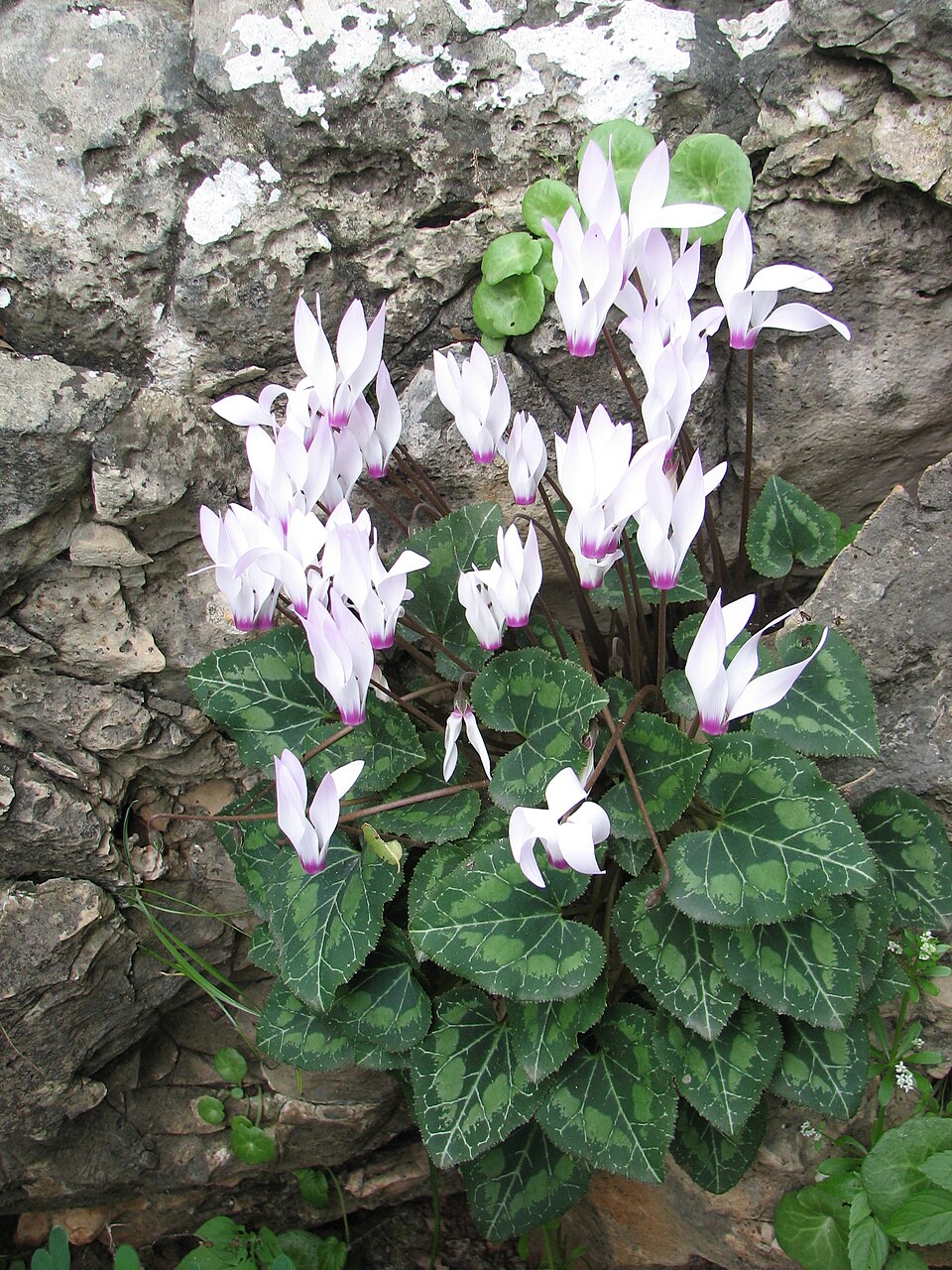
Cyclamen persicum, widely recognized as Florist's Cyclamen, is a captivating species within the genus Cyclamen, belonging to the Primulaceae family.
A good article on Cyclamen should not stop at one-line claims. Readers need taxonomy, habitat, safety, cultivation, and evidence in the same place so they can make sound decisions.
The aim is simple: make the article detailed enough for serious readers while keeping the structure clear enough for fast scanning and confident decision-making.
- Cyclamen persicum is a popular ornamental plant, known for its vibrant flowers and attractive foliage.
- The plant contains highly toxic triterpenoid saponins, particularly cyclamin, making it unsafe for internal consumption.
- Traditional medicinal uses for *related* Cyclamen species primarily involve external applications, such as for rhinosinusitis, with strict.
- Modern research is exploring the anti-inflammatory and cytotoxic potential of its compounds in controlled laboratory settings.
- Ingestion can lead to severe gastrointestinal distress, respiratory issues, and neurological symptoms, making it a plant to handle with.
- Any potential medicinal use requires professional guidance and is generally restricted to highly diluted external formulations or.
Botanical Profile & Taxonomy
Cyclamen should be anchored to the correct taxonomic identity before any discussion of care, use, or safety begins.
| Common name | Cyclamen |
|---|---|
| Scientific name | Cyclamen persicum |
| Family | Primulaceae |
| Order | Ericales |
| Genus | Cyclamen |
| Species epithet | persicum |
| Author citation | Mill. |
| Synonyms | Cyclamen aleppicum Fisch. ex Hoffmanns., Cyclamen persicum f. albidum (Jord.) Grey-Wilson, Cyclamen persicum var. grandiflorum J.Dix, Cyclamen persicum var. papilio Guiheneuf, Cyclamen persicum var. giganteum W.Bull, Cyclamen aleppicum subsp. puniceum Glasau, Cyclamen antiochium Decne., Cyclamen pyrolifolium Salisb., Cyclamen albidum Jord., Cyclamen tunetanum Jord., Cyclamen hederifolium Sibth. & Sm., Cyclamen persicum f. puniceum (Gleason) Grey-Wilson |
| Common names | সাইক্ল্যামেন, ফ্লোরিস্ট'স সাইক্ল্যামেন, Persian Cyclamen, Florist's Cyclamen, Sowbread, साइक्लेमेन, फ्लोरिस्ट का साइक्लेमेन |
| Local names | cyklamen, ciclamen-da-pérsia, بخور مريم, قرن الغزال, Zimmer-Alpenveilchen, ciclame-da-pérsia, زعمطوط, Cyclamen de Perse, xian ke lai |
| Origin | Eastern Mediterranean and Western Asia (Greece, Turkey, Syria, Lebanon, Israel, Jordan, Cyprus, Iran, Iraq) |
| Life cycle | Perennial |
| Growth habit | Tree |
Using the accepted scientific name Cyclamen persicum helps readers avoid confusion caused by old synonyms, loose common names, or inconsistent plant labels.
Family and order placement also matter because they explain recurring structural traits, likely relatives, and the kinds of mistakes readers often make when they rely on appearance alone.
Physical Description & Morphology
A practical reading of the plant starts with visible structure: Leaf: Heart-shaped to kidney-shaped, basal leaves, 3-10 cm long, typically dark green with distinct silver, grey, or cream mottling or marbling patterns. Stem: Underground, flattened, tuberous corm (not a true stem). Flowering stems are leafless peduncles, slender, erect, 10-30 cm tall, arising directly. Root: Fibrous roots emerge from the sides and bottom of the corm. The corm itself acts as a storage organ rather than a root. Flower: Solitary, highly distinctive, 2-4 cm long. Petals (5) are reflexed upwards and backwards from the pedicel, appearing inverted. Colors vary widely:. Fruit: A round capsule, 1-2 cm in diameter, containing multiple seeds. Initially green, becoming woody and turning brownish upon ripening. The fruiting. Seed: Small, sticky, ovoid to somewhat kidney-shaped, light brown to dark brown, approximately 1-2 mm in diameter. Dispersal is often by ants attracted to.
Microscopic or internal identification notes deepen the picture, especially for processed material: Both non-glandular, uniseriate, or branched trichomes and occasional glandular trichomes may be present on epidermal surfaces, providing protective. Stomata are commonly anomocytic or anisocytic, observed predominantly on the abaxial (lower) surface of the leaves, facilitating gas exchange. Powdered corm material reveals fragments of parenchymatous cells, calcium oxalate crystals (often druses), starch grains (simple or compound).
In overall habit, the plant is described as Tree with a mature height around Typically 0.2-10 m depending on species and spread of Typically 0.2-5 m depending on species.
Natural Habitat & Distribution
The native or historically recorded center of distribution for Cyclamen is Eastern Mediterranean and Western Asia (Greece, Turkey, Syria, Lebanon, Israel, Jordan, Cyprus, Iran, Iraq). That origin is more than background trivia; it explains how the plant responds to heat, moisture, shade, and seasonal change.
The plant is associated with the following countries or range markers: Cyprus, Greece, Israel, Jordan, Lebanon, Syria, Turkey.
Environmental notes in the live record add more context: Natural habitat consists of rocky hillsides, woodlands, and scrubland, often under trees or shrubs providing partial shade. Climate zones: Mediterranean climates, USDA Zones 9-11, where it can be grown outdoors. Altitude range: Sea level up to 1200-1400 meters. Annual rainfall needs: Typically adapts to areas with 400-800 mm of annual rainfall, primarily.
In cultivation terms, the main ecological clues are: Bright Indirect; Weekly; Well-draining, peat-based potting mix, pH 6.0-7.0; Species-dependent; Perennial; Tree.
Physiology data reinforce the habitat story: Displays a distinct stress physiology characterized by summer dormancy, where it sheds leaves and reduces metabolic activity to conserve water and. Cyclamen persicum utilizes C3 photosynthesis, the most common photosynthetic pathway in temperate plants. Exhibits moderate transpiration rates and requires consistent soil moisture; it is susceptible to drought stress during its active growth phase but.
Traditional & Cultural Significance
Cyclamen persicum itself lacks widespread historical medical usage in formal systems like Ayurveda or TCM due to its toxicity. However, related Cyclamen species (e.g., Cyclamen europaeum) have a cautious history in European folk medicine and, to some extent, Unani medicine. In Unani, powdered corms combined with other ingredients were sometimes applied topically as a strong irritant for conditions like chronic.
Ethnobotanical records also show how this plant has been framed across different places: Sclerosis(Uterus) in Europe (Hartwell, J.L. 1967-71. Plants used against cancer. A survey. Lloydia 30-34.); Piscicide in India (Duke, 1992 *); Piscicide in Elsewhere (Duke, 1992 *).
Local names help show how different communities notice and classify the plant: cyklamen, ciclamen-da-pérsia, بخور مريم, قرن الغزال, Zimmer-Alpenveilchen, ciclame-da-pérsia, زعمطوط, Cyclamen de Perse, xian ke lai.
Traditional context matters, but it should always be separated from modern certainty. Historical use can guide questions, yet it does not automatically prove present-day clinical effectiveness.
Medicinal Properties & Health Benefits
The main benefit themes associated with the plant include: Sinusitis Relief (External Application) — Early research on related species (Cyclamen europaeum) suggests that topical nasal sprays can help alleviate facial. Mucolytic Action — The saponins present in Cyclamen, when applied externally in specific formulations, appear to aid in loosening and thinning thick nasal. Expectorant Properties (Traditional, Caution Advised) — In some traditional systems, certain Cyclamen species were cautiously employed to encourage the. Anti-inflammatory Potential (Research Focus) — Preclinical studies indicate that triterpenoid saponins, the main active compounds in Cyclamen, possess. Cytotoxic Activity (Research Focus) — Cyclamin and other saponins found in Cyclamen have demonstrated cytotoxic effects in in vitro studies, suggesting. Traditional Topical Applications — Historically, related Cyclamen species have been used externally in Unani and traditional Arab medicine as poultices or. Purgative Action (Traditional, Highly Toxic) — Some historical texts mention the use of related Cyclamen species as a powerful purgative, but this internal. Anthelmintic Effects (Traditional, Highly Toxic) — Certain traditional practices, with grave risks, have explored related Cyclamen species for expelling.
The evidence matrix gives a more careful picture of those claims: Rhinosinusitis relief via nasal spray. Randomized, double-blind, placebo-controlled trials (for Cyclamen europaeum extract). Early Clinical Research / Insufficient Evidence for C. persicum specifically. A nasal spray containing Cyclamen europaeum extract has shown promise in reducing facial pain and promoting mucus drainage in acute rhinosinusitis. Mucolytic and secretolytic action. Clinical observation and traditional experience. Observed Effect / Traditional Use (for related species). Compounds in Cyclamen appear to stimulate glandular secretion and thin mucus, aiding in its clearance from nasal passages. Anti-inflammatory potential. Pharmacological studies on isolated compounds and cell cultures. Preclinical / In Vitro Research. Triterpenoid saponins, including cyclamin, have demonstrated anti-inflammatory activity in various in vitro models, warranting further investigation. Cytotoxic activity against cancer cells. Cell culture studies, molecular mechanism investigations. In Vitro Research. Cyclamin has shown dose-dependent cytotoxic effects on certain cancer cell lines in laboratory settings, indicating potential for highly controlled drug development.
The stored evidence confidence for this profile is traditional. That should shape how strongly any benefit statement is interpreted.
For non-medicinal or mostly ornamental contexts, the safest approach is to keep the claims modest. A plant may still be valuable ecologically, visually, or culturally without being promoted as a treatment.
- Sinusitis Relief (External Application) — Early research on related species (Cyclamen europaeum) suggests that topical nasal sprays can help alleviate facial.
- Mucolytic Action — The saponins present in Cyclamen, when applied externally in specific formulations, appear to aid in loosening and thinning thick nasal.
- Expectorant Properties (Traditional, Caution Advised) — In some traditional systems, certain Cyclamen species were cautiously employed to encourage the.
- Anti-inflammatory Potential (Research Focus) — Preclinical studies indicate that triterpenoid saponins, the main active compounds in Cyclamen, possess.
- Cytotoxic Activity (Research Focus) — Cyclamin and other saponins found in Cyclamen have demonstrated cytotoxic effects in in vitro studies, suggesting.
- Traditional Topical Applications — Historically, related Cyclamen species have been used externally in Unani and traditional Arab medicine as poultices or.
- Purgative Action (Traditional, Highly Toxic) — Some historical texts mention the use of related Cyclamen species as a powerful purgative, but this internal.
- Anthelmintic Effects (Traditional, Highly Toxic) — Certain traditional practices, with grave risks, have explored related Cyclamen species for expelling.
- Diuretic Properties (Traditional, Highly Toxic) — In some traditional contexts, specific Cyclamen species were thought to possess diuretic effects, but.
- Potential for Dermatological Research — Given the irritant and cytotoxic properties of its saponins, Cyclamen extracts could be explored in controlled.
Chemical Constituents & Phytochemistry
The broader constituent profile includes Triterpenoid Saponins — These are the primary active compounds, notably cyclamin (cyclamenoside), cyclamiretin A, B. Flavonoids — Compounds like quercetin and kaempferol are present, offering antioxidant and potentially. Phenolic Acids — Various phenolic acids, such as caffeic acid and gallic acid derivatives, contribute to the plant's. Phytosterols — Plant sterols like beta-sitosterol are structural components of cell membranes and may have minor. Glycosides — Beyond the triterpenoid saponin glycosides, other types of glycosidic compounds might be present. Fatty Acids — Essential fatty acids are crucial for plant growth and cellular function, found within the corm and. Amino Acids — The building blocks of proteins, vital for metabolic processes and structural integrity throughout the. Carbohydrates — Sugars and starches, primarily found in the corm, serve as energy reserves for the plant, particularly. Mineral Elements — Various macro and micronutrients such as potassium, calcium, magnesium, and iron are present. Volatile Organic Compounds — Trace amounts of volatile compounds contribute to the plant's characteristic scent and.
The detailed phytochemistry file adds these markers: Cyclamin, Triterpenoid Saponin, Corm, Tuber, Variable% dry weight; Cyclamiretin A, Triterpenoid Saponin, Corm, Trace% dry weight; Cyclamiretin B, Triterpenoid Saponin, Corm, Trace% dry weight; Quercetin, Flavonoid, Leaves, Flowers, Lowmg/g; Kaempferol, Flavonoid, Leaves, Flowers, Lowmg/g; Caffeic Acid, Phenolic Acid, Whole plant, Lowmg/g.
Compound profiles also shift with plant part, age, season, processing, and storage. The chemistry of a fresh leaf, dried root, or concentrated extract should never be treated as automatically identical.
How to Use — Preparations & Dosage
Recorded preparation and use methods include Nasal Spray Formulations — Specific, highly diluted extracts of related Cyclamen species (e.g., Cyclamen europaeum) are formulated into nasal sprays for rhinosinusitis relief. External Poultices (Traditional, Extreme Caution) — In historical folk medicine, extracts or crushed plant material from related Cyclamen species were applied topically as. Homeopathic Preparations — Highly diluted homeopathic remedies derived from Cyclamen are used in specific contexts, adhering to homeopathic principles and never containing. Research Extracts — For scientific study, carefully prepared extracts (e.g., ethanolic or aqueous) of Cyclamen corms are used in laboratory settings to investigate the. Topical Liniments (Traditional, Very Limited) — Some historical applications for external pain or inflammation involved liniments made from related Cyclamen species, always with. Avoid Internal Consumption — It is critical to emphasize that Cyclamen persicum is highly toxic when ingested; no part of the plant should ever be consumed orally due to severe gastrointestinal and systemic poisoning risks. Professional Guidance Only — Any medicinal use of Cyclamen, even external, should only be undertaken under the strict supervision and guidance of a qualified medical herbalist or.
The plant part most closely linked to use is recorded as Leaves, roots, bark, seeds, flowers, or whole plant cited in related taxa.
Edibility and processing notes matter here as well: Species- and plant-part-dependent; verify before use.
For indoor readers, “how to use” usually means how the plant is placed, styled, handled, propagated, and maintained within the living space rather than how it is taken internally.
- Identify the exact species and plant part first.
- Match the preparation to the intended use.
- Check safety, interactions, and processing details before routine use or large-scale handling.
Safety Profile, Side Effects & Contraindications
The first safety note is direct: Cyclamen persicum is classified as toxic (Severity Level 2-3 out of 4 by some authorities), primarily due to its concentration of triterpenoid saponins. The entire plant, especially the corm, is toxic. Symptoms of overdose (ingestion).
Specific warnings recorded for this plant include Unsafe for Internal Use — Cyclamen persicum is highly toxic when ingested and is classified as unsafe for oral consumption due to its potent saponins. Contraindicated in Pregnancy and Breastfeeding — Due to its toxicity, Cyclamen is strictly contraindicated for pregnant and breastfeeding women, as it can. Not for Children — All parts of Cyclamen are poisonous and should be kept away from children and pets, as ingestion can be fatal. External Use with Caution — While some related species are used in specific external nasal spray formulations, such use requires medical supervision due to. Risk of Skin Irritation — Direct contact with the plant's sap can cause contact dermatitis; gloves should be worn when handling the raw plant. No Self-Medication — Due to its significant toxicity, Cyclamen should never be used for self-medication; consult a healthcare professional for any concerns. Potential for Drug Interactions — Although not extensively studied, the potent compounds may interact with medications, especially those affecting cardiac or. Severe Gastrointestinal Distress — Ingestion causes intense stomach pain, nausea, vomiting, and profuse diarrhea, even at low doses.
Quality-control notes add another warning: Low risk for medicinal adulteration given its toxicity; however, horticultural varieties could be misidentified.
No plant should be described as universally safe. Identity, dose, plant part, preparation style, age, pregnancy status, medication use, allergies, and contamination risk all change the answer.
Growing & Cultivation Guide
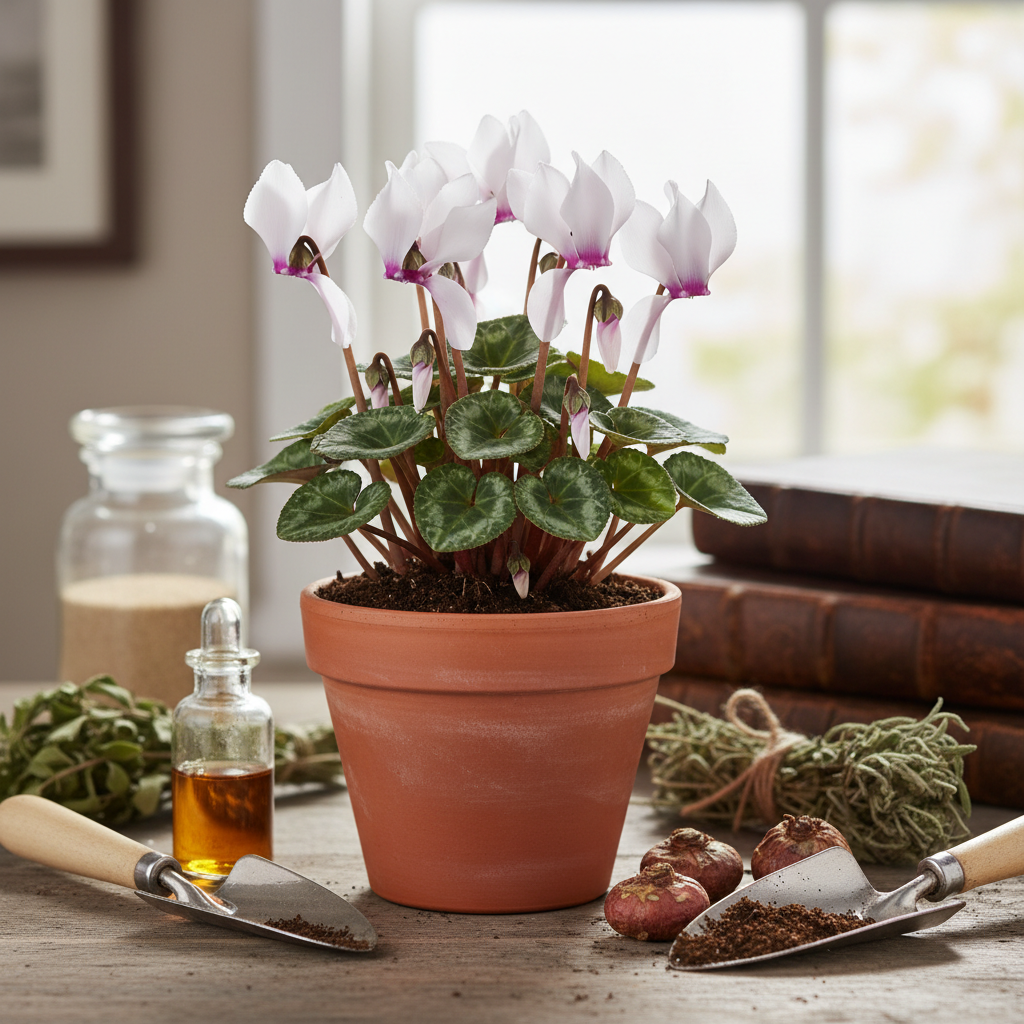
The cultivation record emphasizes these practical steps: Soil Requirements — Cyclamen persicum thrives in well-draining, humus-rich soil, typically a mix of loam, peat, and sand, with a slightly acidic to neutral pH (6.0-7.0). Light Conditions — Prefers bright, indirect light; direct sunlight, especially during warmer months, can scorch leaves and inhibit flowering. Temperature Management — Ideal temperatures range from 50-65°F (10-18°C) during its active growth and flowering period; it enters dormancy in warmer conditions. Watering Schedule — Water thoroughly when the top inch of soil feels dry, allowing excess water to drain completely; avoid overhead watering to prevent corm rot. Fertilization Regimen — Feed with a balanced liquid fertilizer diluted to half strength every 2-4 weeks during active growth and flowering, withholding during dormancy.
The broader growth environment is described like this: Natural habitat consists of rocky hillsides, woodlands, and scrubland, often under trees or shrubs providing partial shade. Climate zones: Mediterranean climates, USDA Zones 9-11, where it can be grown outdoors. Altitude range: Sea level up to 1200-1400 meters. Annual rainfall needs: Typically adapts to areas with 400-800 mm of annual rainfall, primarily.
Planning becomes easier when these traits are kept in view: Tree; Typically 0.2-10 m depending on species; Typically 0.2-5 m depending on species; Intermediate.
In practice, healthy cultivation comes from systems thinking rather than one-off tricks. Site choice, drainage, timing, spacing, pruning, feeding, and observation all reinforce one another.
Light, Water & Soil Requirements
The most useful care snapshot is this: Light: Bright Indirect; Water: Weekly; Soil: Well-draining, peat-based potting mix, pH 6.0-7.0; Humidity: Medium; Temperature: 13-18°C; USDA zone: Species-dependent.
Indoors, the plant responds to microclimate more than many people expect. Window direction, airflow, heating, and room humidity can change the care rhythm quickly.
| Light | Bright Indirect |
|---|---|
| Water | Weekly |
| Soil | Well-draining, peat-based potting mix, pH 6.0-7.0 |
| Humidity | Medium |
| Temperature | 13-18°C |
| USDA zone | Species-dependent |
Light, water, and soil should never be treated as separate checkboxes. A plant in stronger light often dries faster, soil texture changes how quickly water moves, and temperature plus humidity influence how stress appears in leaves and roots.
For Cyclamen, the safest care approach is to treat Bright Indirect, Weekly, and Well-draining, peat-based potting mix, pH 6.0-7.0 as linked decisions rather than isolated tips. If one condition shifts, the other two usually need to be reconsidered as well.
Propagation Methods
Documented propagation routes include Cyclamen persicum is primarily propagated by seed. Seeds: Sow fresh seeds thinly on a well-draining seed-starting mix, barely covering them with vermiculite.
Propagation works best when the parent stock is healthy, correctly identified, and handled in the right season. That sounds obvious, but it is exactly where many failures begin.
- Cyclamen persicum is primarily propagated by seed. Seeds: Sow fresh seeds thinly on a well-draining seed-starting mix, barely covering them with vermiculite.
Propagation works best when the reader matches method to biology. Some plants respond readily to cuttings, some to division, some to seed, and others require more patience or more exact seasonal timing.
A successful propagation guide therefore starts with healthy parent material and realistic expectations. Weak stock, rushed handling, and poor aftercare can make even a technically correct method fail.
Pest & Disease Management
The recorded problem list includes Common pests: Cyclamen mites (Steneotarsonemus pallidus) causing distorted growth and stunted flowers; treat with insecticidal soap or specific miticides. Aphids (Aphis gossypii) on new growth and flower buds; treat with neem oil or insecticidal soap. Fungus gnats (Sciaridae) in overly moist soil; improve drainage, reduce watering. Fungal diseases: Botrytis blight (grey mold) caused by high humidity and poor air. remove affected parts, improve ventilation, reduce overhead watering. Fusarium wilt (Fusarium oxysporum f. sp. use sterilized soil, consider resistant varieties, no effective chemical cure once infected. Nutrient deficiencies:. use an acidifying fertilizer or chelated iron. Stunted growth (general nutrient deficiency); ensure regular, dilute fertilization during active growth. Organic solutions: For mites/aphids, use homemade soap.
Indoor problems usually start quietly: mites, mealybugs, scale, root stress, weak light, or stale soil structure. Routine inspection is what keeps small issues from becoming full infestations.
The smartest response sequence is observation first, environmental correction second, and treatment only after the real pattern is clear.
- Common pests: Cyclamen mites (Steneotarsonemus pallidus) causing distorted growth and stunted flowers
- Treat with insecticidal soap or specific miticides. Aphids (Aphis gossypii) on new growth and flower buds
- Treat with neem oil or insecticidal soap. Fungus gnats (Sciaridae) in overly moist soil
- Improve drainage, reduce watering. Fungal diseases: Botrytis blight (grey mold) caused by high humidity and poor air.
- Remove affected parts, improve ventilation, reduce overhead watering. Fusarium wilt (Fusarium oxysporum f. sp.).
- Use sterilized soil, consider resistant varieties, no effective chemical cure once infected. Nutrient deficiencies:.
- Use an acidifying fertilizer or chelated iron. Stunted growth (general nutrient deficiency)
- Ensure regular, dilute fertilization during active growth. Organic solutions: For mites/aphids, use homemade soap.
Harvesting, Storage & Processing
The plant part most often associated with harvest or processing is Leaves, roots, bark, seeds, flowers, or whole plant cited in related taxa.
Storage guidance from the quality-control record reads as follows: Corms and extracts should be stored in cool, dry, and dark conditions to prevent degradation of heat- and light-sensitive saponins, ensuring efficacy and safety.
For indoor plants, this section often translates into trimming, leaf cleanup, offset collection, occasional flower removal, and safe handling of spent growth.
Whatever the purpose, the rule is the same: harvest clean material, label it clearly, and store it in a way that preserves identity and condition.
Harvest and storage determine whether a plant's quality is preserved after it leaves the bed, pot, field, or wild source. Clean timing, correct plant part selection, and careful drying or handling all matter more than many readers expect.
Companion Planting & Garden Design
Useful companions or placement partners include Spathiphyllum; Ferns; African Violets; Prayer Plant; Orchid.
In indoor styling, Cyclamen usually works best beside plants that share similar moisture expectations but offer contrast in texture, height, or silhouette.
- Spathiphyllum
- Ferns
- African Violets
- Prayer Plant
- Orchid
Companion planting and design are not only aesthetic decisions. They affect airflow, root competition, moisture sharing, harvest access, visibility, and the general logic of the planting scheme.
With Cyclamen, good placement means thinking about mature size, maintenance rhythm, and how neighboring plants change the feel and function of the space. A plant can be healthy on its own and still be poorly placed within the broader composition.
That is why the best design advice combines biology with usability. The planting should look coherent, but it should also make watering, pruning, harvest, and pest observation easier rather than harder.
Scientific Research & Evidence Base
The evidence matrix points to several recurring themes: Rhinosinusitis relief via nasal spray. Randomized, double-blind, placebo-controlled trials (for Cyclamen europaeum extract). Early Clinical Research / Insufficient Evidence for C. persicum specifically. A nasal spray containing Cyclamen europaeum extract has shown promise in reducing facial pain and promoting mucus drainage in acute rhinosinusitis. Mucolytic and secretolytic action. Clinical observation and traditional experience. Observed Effect / Traditional Use (for related species). Compounds in Cyclamen appear to stimulate glandular secretion and thin mucus, aiding in its clearance from nasal passages. Anti-inflammatory potential. Pharmacological studies on isolated compounds and cell cultures. Preclinical / In Vitro Research. Triterpenoid saponins, including cyclamin, have demonstrated anti-inflammatory activity in various in vitro models, warranting further investigation. Cytotoxic activity against cancer cells. Cell culture studies, molecular mechanism investigations. In Vitro Research. Cyclamin has shown dose-dependent cytotoxic effects on certain cancer cell lines in laboratory settings, indicating potential for highly controlled drug development.
Ethnobotanical activity records add historical reference trails: Sclerosis(Uterus) — Europe [Hartwell, J.L. 1967-71. Plants used against cancer. A survey. Lloydia 30-34.]; Piscicide — India [Duke, 1992 *]; Piscicide — Elsewhere [Duke, 1992 *].
The compiled source count behind the live profile is 6. That does not guarantee certainty, but it does suggest the record has been cross-checked beyond a single note.
Analytical testing notes also strengthen the evidence base: High-Performance Liquid Chromatography (HPLC) for quantification of saponins, Thin-Layer Chromatography (TLC) for qualitative identification, and macroscopic/microscopic.
A careful evidence section should say what is known, what is plausible, and what remains uncertain. Readers are better served by clear limits than by exaggerated confidence.
Evidence note: this section blends the live plant record, local ethnobotanical activity data, chemistry records, and the linked Flora Medical Global plant profile for Cyclamen.
Buying Guide & Expert Tips
Quality markers worth checking include Cyclamin (a triterpenoid saponin) is the primary marker compound for identification and quantification.
Adulteration and substitution risk should not be ignored: Low risk for medicinal adulteration given its toxicity; however, horticultural varieties could be misidentified.
When buying Cyclamen, start with verified botanical identity. The label, scientific name, and the source page should agree before you judge price, size, or claimed benefits.
For living plants, inspect roots, stem firmness, foliage health, and early pest signs. For dried or processed material, look for batch clarity, clean aroma, absence of mold, and any sign that the product has been over-processed to disguise poor quality.
Buying advice should begin with identity. The label, scientific name, visible condition, and seller credibility should agree before price or convenience becomes the deciding factor.
Frequently Asked Questions
What is Cyclamen best known for?
Cyclamen persicum, widely recognized as Florist's Cyclamen, is a captivating species within the genus Cyclamen, belonging to the Primulaceae family.
Is Cyclamen beginner-friendly?
That depends on the growing environment and the intended use. Some plants are easy to grow but not simple to use medicinally, while others are the opposite.
How much light does Cyclamen need?
Bright Indirect
How often should Cyclamen be watered?
Weekly
Can Cyclamen be propagated at home?
Yes, but the best method depends on whether the species responds best to seed, cuttings, division, offsets, or other propagation routes.
Does Cyclamen have safety concerns?
Cyclamen persicum is classified as toxic (Severity Level 2-3 out of 4 by some authorities), primarily due to its concentration of triterpenoid saponins. The entire plant, especially the corm, is toxic. Symptoms of overdose (ingestion).
What is the biggest mistake people make with Cyclamen?
The most common mistake is applying generic advice instead of matching the plant to its real environment, identity, and limits.
Where can I verify more information about Cyclamen?
Start with the Flora Medical Global plant profile: https://www.floramedicalglobal.com/indoor-plants/cyclamen
Why do sources sometimes disagree about Cyclamen?
Different references may use different synonyms, plant parts, cultivation conditions, or evidence standards. That is why taxonomy and source quality both matter.
Trusted Scientific References & Further Reading
Authoritative sources and related guides:
- Wikipedia — background reference
- PubMed — peer-reviewed studies
- Kew POWO — botanical reference
- NCBI PMC — open-access research
- WHO — global health authority