Haworthia Complete Guide: Botany, Care, Uses & Safety
 Flora Medical GlobalPublished: 4/10/2026Updated: 6/20/202620 min read
Editorial Disclaimer: This article is for informational and educational purposes only. It is not a substitute for professional medical advice, diagnosis, or treatment. Always consult a qualified healthcare provider or certified herbalist before using any plant for medicinal purposes, especially if you are pregnant, nursing, taking medication, or have a medical condition.
01Introduction to Haworthia
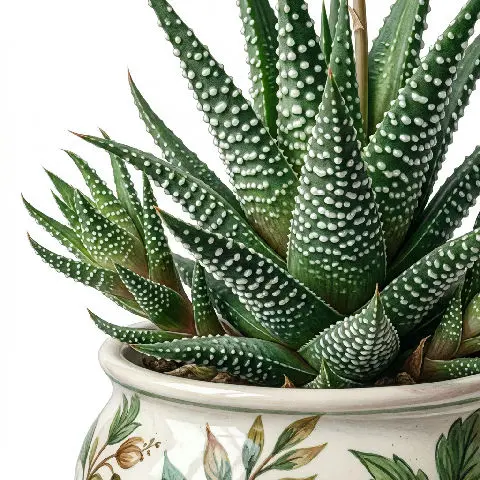
Haworthia fasciata, commonly known as Zebra Haworthia or Zebra Plant, is a captivating perennial succulent native to the arid regions of South Africa, specifically the Eastern Cape.
A good article on Haworthia should not stop at one-line claims. Readers need taxonomy, habitat, safety, cultivation, and evidence in the same place so they can make sound decisions.
The aim is simple: make the article detailed enough for serious readers while keeping the structure clear enough for fast scanning and confident decision-making.
- Zebra Haworthia: A distinctive, low-maintenance succulent from South Africa.
- Ornamental Value: Prized for its unique white-banded, deep green leaves forming a rosette.
- Easy Care: Thrives indoors with bright, indirect light and infrequent watering, ideal for beginners.
- Non-Toxic: Considered safe for humans and pets, making it a worry-free houseplant.
- Limited Medicinal Use: Primarily valued for aesthetics
- No significant documented traditional medicinal benefits.
- Propagation: Easily multiplies via offsets, perfect for sharing and expanding your collection.
02Botanical Identity of Haworthia
Haworthia should be anchored to the correct taxonomic identity before any discussion of care, use, or safety begins.
| Common name | Haworthia |
|---|---|
| Scientific name | Haworthiopsis fasciata">Haworthia fasciataW |
| Family | Asphodelaceae |
| Order | Asparagales |
| Genus | Haworthia |
| Species epithet | fasciata |
| Author citation | (Willd.) Haw. |
| Common names | জেব্রা ক্যাকটাস, হাওয়ারথিয়া, জেব্রা হাওরথিয়া, Zebra Cactus, Zebra Haworthia, Cushion Aloe, जेब्रा कैक्टस, जेब्रा हॉवर्थिया, कुशन एलो |
| Origin | Southern Africa (South Africa) |
Using the accepted scientific name Haworthia fasciata helps readers avoid confusion caused by old synonyms, loose common names, or inconsistent plant labels.
Family and order placement also matter because they explain recurring structural traits, likely relatives, and the kinds of mistakes readers often make when they rely on appearance alone.
Correct naming is not a small detail. A plant can collect multiple common names, outdated synonyms, and marketing labels over time, so using Haworthia fasciata consistently reduces the risk of confusion, bad care advice, and even safety mistakes.
03What Haworthia Looks Like
A practical reading of the plant starts with visible structure:
- Leaf: Thick, fleshy, dark green, triangular leaves tapering to a point, arranged in a tight rosette. The outer surface of the leaves is covered with.
- Stem: Virtually stemless, forming a basal rosette. Over time, a short, woody stem may be present just above the soil surface.
- Root: Fibrous, shallow root system, typical of succulents that store water in their leaves and stem rather than extensively in roots.
- Flower: Small, tubular, white to pale pink or greenish flowers borne on a long, slender, upright inflorescence (frequently 12-18 inches tall) that emerges.
- Fruit: Small, dry capsule containing seeds, rarely seen indoors.
- Seed: Minute, dark seeds, typically propagated by offsets or division for indoor cultivation.
Microscopic or internal identification notes deepen the picture, especially for processed material: Trichomes are generally absent, contributing to the smooth or warty, non-hairy texture of the leaves, which minimizes water loss through. Stomata are typically anomocytic, sparsely distributed on the leaf surface, and likely exhibit crassulacean acid metabolism (CAM) behavior, opening. Powdered material would reveal fragments of epidermal cells with thick walls, anomocytic stomata, abundant large parenchyma cells for water storage.
04Native Range of Haworthia
The native or historically recorded center of distribution for Haworthia is Southern Africa (South Africa). That origin is more than background trivia; it explains how the plant responds to heat, moisture, shade, and seasonal change.
Explore Our Platforms
 InfiniCore DataWorks
 Nex-Automata
The plant is associated with the following countries or range markers: South Africa.
Environmental notes in the live record add more context: Requires bright, indirect light for at least 4-6 hours daily. Maintain low to moderate humidity (30-50%). Temperatures between 18-27°C (65-80°F) are ideal. Ensure good air circulation to deter fungal issues, especially after watering.
In cultivation terms, the main ecological clues are: Bright Indirect Light; Allow soil to dry out completely between waterings, typically every 2-4 weeks. Well-draining succulent or cactus potting mix (pH 6.0-7.0), enriched with perlite or coarse sand to enhance drainage.
Physiology data reinforce the habitat story: Highly adapted to drought stress through succulence; exhibits moderate heat tolerance but is sensitive to prolonged frost and excessive humidity. Crassulacean Acid Metabolism (CAM), enabling the plant to open stomata at night for CO2 uptake, significantly reducing water loss during hot, dry. Exhibits extremely low transpiration rates due to CAM photosynthesis, thick cuticles, and efficient water storage in succulent leaves, optimizing.
05Haworthia: Traditional Importance
Haworthia, like many succulents, is valued for its resilience and unique aesthetic qualities. In some cultures, succulents are associated with perseverance and endurance due to their ability to thrive in harsh conditions. Their easy care makes them popular in Japanese 'kokedama' (moss ball) and 'bonsai' arrangements. They are often seen as symbols of enduring life and natural beauty in modern decor.
Traditional context matters, but it should always be separated from modern certainty. Historical use can guide questions, yet it does not automatically prove present-day clinical effectiveness.
Cultural context gives the article depth that pure care instructions cannot provide. Plants like Haworthia are often remembered through naming traditions, household practice, healing systems, foodways, ornamental use, ritual value, or local ecological knowledge.
At the same time, cultural value should be handled responsibly. Traditional respect for a plant does not automatically prove every modern claim, and a modern study does not erase the meaning the plant has held in communities over time. Both sides belong in a careful guide.
06Haworthia: Benefits & Healing Properties
The main benefit themes associated with the plant include: While Haworthia fasciata is primarily valued for its ornamental appeal and is not widely documented in traditional or modern medicine for specific therapeutic. Ornamental Value — The striking appearance of Haworthia fasciata contributes significantly to aesthetic appeal in homes and offices, enhancing visual. Biophilic Design — Incorporating this plant into indoor spaces aligns with biophilic principles, fostering a connection with nature that can improve mood and. Air Quality Improvement (General Plant) — Like many houseplants, Haworthia fasciata can contribute to minor improvements in indoor air quality through. Low Maintenance Stress Reduction — Its ease of care and drought tolerance make it an ideal plant for beginners, reducing the stress associated with plant. Non-Toxic Nature — Haworthia fasciata is recognized as non-toxic to humans and pets, making it a safe and worry-free addition to any household, reducing. Educational Value — Cultivating this unique succulent can serve as an engaging educational tool, sparking interest in botany, succulent adaptations, and. Skin Hydration (Analogous to Aloe) — While not scientifically proven for H. fasciata, some succulents in the Asphodelaceae family, like Aloe vera, contain.
The evidence matrix gives a more careful picture of those claims: Ornamental value promotes psychological well-being. Qualitative studies on biophilic design and human-plant interaction. Anecdotal/Observational. The presence of indoor plants is widely observed to enhance mood, reduce stress, and improve focus in human environments. Potential for minor indoor air purification. General plant science literature on photosynthesis and gas exchange. Extrapolated from general plant physiology. While specific studies on H. fasciata are lacking, many plants contribute to minor air quality improvements by absorbing CO2 and some VOCs. Topical application for skin soothing (analogous to Aloe vera). Comparison to related succulent species; traditional folk uses of succulents. Hypothetical/Anecdotal for H. fasciata. No direct scientific evidence supports this claim for H. fasciata; it is based on traditional uses of other succulent plants with similar compositions. Non-toxic nature ensures safety for pets and humans. Toxicology databases and horticultural reports. Generally accepted botanical classification/observation. Extensive horticultural experience and toxicology databases consistently classify Haworthia fasciata as non-toxic, making it safe for households.
The stored evidence confidence for this profile is traditional. That should shape how strongly any benefit statement is interpreted.
For non-medicinal or mostly ornamental contexts, the safest approach is to keep the claims modest. A plant may still be valuable ecologically, visually, or culturally without being promoted as a treatment.
- While Haworthia fasciata is primarily valued for its ornamental appeal and is not widely documented in traditional or modern medicine for specific therapeutic.
- Ornamental Value — The striking appearance of Haworthia fasciata contributes significantly to aesthetic appeal in homes and offices, enhancing visual.
- Biophilic Design — Incorporating this plant into indoor spaces aligns with biophilic principles, fostering a connection with nature that can improve mood and.
- Air Quality Improvement (General Plant) — Like many houseplants, Haworthia fasciata can contribute to minor improvements in indoor air quality through.
- Low Maintenance Stress Reduction — Its ease of care and drought tolerance make it an ideal plant for beginners, reducing the stress associated with plant.
- Non-Toxic Nature — Haworthia fasciata is recognized as non-toxic to humans and pets, making it a safe and worry-free addition to any household, reducing.
- Educational Value — Cultivating this unique succulent can serve as an engaging educational tool, sparking interest in botany, succulent adaptations, and.
- Skin Hydration (Analogous to Aloe) — While not scientifically proven for H. fasciata, some succulents in the Asphodelaceae family, like Aloe vera, contain.
- Any such application for H. fasciata remains anecdotal and unverified.
- Minor Wound Soothing (Traditional Anecdote) — Historically, some succulent saps have been anecdotally used to soothe minor skin irritations, but this is not a.
07Haworthia Phytochemistry
The broader constituent profile includes Specific phytochemical analyses for medicinal compounds in Haworthia fasciata are not extensively documented.:
- Water — Constitutes the vast majority of the plant's fresh weight, stored efficiently within its succulent leaves to. Polysaccharides (Mucilage) — Likely present in the plant's sap, these complex carbohydrates contribute to water.
- Flavonoids — Common plant secondary metabolites, likely present in trace amounts, acting as natural antioxidants and.
- Anthraquinones — While characteristic of other Asphodelaceae members like Aloe, their presence and medicinal.
- Chlorophylls — Essential photosynthetic pigments (chlorophyll a and b) responsible for the plant's vibrant green.
- Carotenoids — Accessory pigments present in the leaves, which contribute to subtle color variations and act as.
- Organic Acids — Various organic acids, such as malic acid, are involved in the plant's Crassulacean Acid Metabolism.
- Minerals — Essential macronutrients (e.g., potassium, calcium, magnesium) and micronutrients absorbed from the soil.
- Phytosterols — Plant sterols that are structural components of cell membranes and may have various physiological roles.
The detailed phytochemistry file adds these markers: Water, Inorganic, Whole plant, especially leaves, High% fresh weight; Mucilage Polysaccharides, Carbohydrate, Leaves, UndeterminedN/A (presumed low); Chlorophyll a/b, Pigment, Leaves, Typicalµg/g fresh weight; Flavonoids, Phenolic, Leaves, Tracemg/g dry weight; Minerals (e.g., Calcium, Potassium), Inorganic, Whole plant, Variablemg/g dry weight; Organic Acids (e.g., Malic Acid), Carboxylic Acid, Whole plant, UndeterminedN/A; Anthraquinones, Quinone, Leaves, Not detected/TraceN/A (if present, very low).
Compound profiles also shift with plant part, age, season, processing, and storage. The chemistry of a fresh leaf, dried root, or concentrated extract should never be treated as automatically identical.
08Haworthia Preparations & Dosage
Recorded preparation and use methods include:
- Ornamental Display — Primarily cultivated as an indoor ornamental plant, enhancing the aesthetic appeal of desks, shelves, windowsills, and terrariums with its unique appearance.
- Biophilic Integration — Used in interior design to introduce natural elements into living and working spaces, contributing to a sense of calm and connection with nature.
- Gifting — Its attractive appearance, compact size, and low maintenance make it a popular and thoughtful gift for plant enthusiasts, beginners, or colleagues.
- Drought-Tolerant Landscaping — In USDA hardiness zones 10-11, it can be incorporated into xeriscaping or arid garden designs where water conservation is a priority.
- Educational Specimen — Utilized in botanical education to illustrate succulent adaptations, rosette growth forms, and efficient water storage mechanisms. Stress Reduction (Visual) — The simple act of observing and tending to this visually appealing plant can offer a meditative break, subtly contributing to mental relaxation.
- Propagation for Sharing — The ease with which it produces offsets makes it simple to propagate and share with friends and family, fostering community and plant exchange. Air Purification (General Houseplant) — As a living plant, it contributes minimally to indoor air purification, helping to filter common airborne toxins and improve ambient air.
For indoor readers, “how to use” usually means how the plant is placed, styled, handled, propagated, and maintained within the living space rather than how it is taken internally.
- Identify the exact species and plant part first.
- Match the preparation to the intended use.
- Check safety, interactions, and processing details before routine use or large-scale handling.
09Haworthia Side Effects & Safety
The first safety note is direct: Non-toxic to humans, cats, and dogs. All parts of the plant are considered safe if ingested, though large quantities may cause mild stomach upset.
Specific warnings recorded for this plant include:
- Non-Toxic — Haworthia fasciata is widely regarded as non-toxic to humans, cats, dogs, and other household pets, making it a safe choice for homes.
- Minimal Allergic Potential — Allergic reactions are extremely rare. Direct skin contact with the sap is unlikely to cause irritation, even in sensitive.
- Ingestion Safety — While ingestion is not recommended, accidental consumption by children or pets is generally not expected to cause severe harm, though mild.
- Handling Safety — The plant lacks sharp spines or irritating hairs, allowing for safe handling without the need for protective gloves.
- Environmental Impact — Poses no significant environmental risk as an invasive species when cultivated responsibly, especially as an indoor plant.
- Indoor Air Quality — Does not emit harmful volatile organic compounds (VOCs) and may contribute positively to indoor air quality, making it a healthy addition.
- Chemical Sensitivity — No known adverse reactions to common household chemicals or pesticides when used according to product instructions.
- Root Rot — Overwatering is the most common issue, leading to saturated soil, fungal growth, root decay, and eventual plant death. Sunburn/Scorching — Direct, intense sunlight, especially during hot summer afternoons, can cause leaves to redden, whiten, or develop unsightly burn marks.
- Etiolation — Insufficient light causes the plant to stretch, with elongated stems and sparse, pale leaves, resulting in a leggy and unhealthy appearance.
Quality-control notes add another warning: Low risk of adulteration as a live ornamental plant; however, if misrepresented as a medicinal herb, it could be confused with other succulents.
No plant should be described as universally safe. Identity, dose, plant part, preparation style, age, pregnancy status, medication use, allergies, and contamination risk all change the answer.
10How to Grow Haworthia
The cultivation record emphasizes these practical steps:
- Light — Provide bright, indirect sunlight; direct harsh afternoon sun can scorch leaves, causing them to redden or whiten. An east or north-facing window is ideal.
- Soil — Use a well-draining, gritty succulent potting mix, such as a blend of perlite, coarse sand, and good natural potting soil, to prevent root rot.
- Watering — Water thoroughly during the active growing season (spring to early fall), allowing the soil to dry completely between waterings. Reduce watering.
- Temperature — Prefers average room temperatures between 18-24°C (65-75°F). Can tolerate brief drops to 10°C (50°F) if the soil is dry, but protect from frost.
- Fertilization — Feed sparingly with a diluted, balanced liquid fertilizer (e.g., 5-10-5) once or twice during the spring growing season; avoid fertilizing in winter.
- Propagation — Easily propagated from offsets (pups) that emerge around the base of the parent plant. Allow offsets to callus for a few days before planting in.
The broader growth environment is described like this: Requires bright, indirect light for at least 4-6 hours daily. Maintain low to moderate humidity (30-50%). Temperatures between 18-27°C (65-80°F) are ideal. Ensure good air circulation to deter fungal issues, especially after watering.
Planning becomes easier when these traits are kept in view: Slow; Beginner.
In practice, healthy cultivation comes from systems thinking rather than one-off tricks. Site choice, drainage, timing, spacing, pruning, feeding, and observation all reinforce one another.
11Haworthia Growing Conditions
The most useful care snapshot is this: Light: Bright Indirect Light; Water: Allow soil to dry out completely between waterings, typically every 2-4 weeks. Soil: Well-draining succulent or cactus potting mix (pH 6.0-7.0), enriched with perlite or coarse sand to enhance drainage. Humidity: Low / Medium — 30-50%; Temperature: 18-27°C (65-80°F).
Container details matter too: Terracotta pot with drainage holes is highly recommended to promote air circulation and prevent waterlogging. A 4-6 inch pot is suitable for most mature. Every 2-3 years, or when the plant outgrows its pot (roots emerging from drainage holes) or the soil becomes compacted. Repotting is best done in spring or.
Indoors, the plant responds to microclimate more than many people expect. Window direction, airflow, heating, and room humidity can change the care rhythm quickly.
| Light | Bright Indirect Light |
|---|---|
| Water | Allow soil to dry out completely between waterings, typically every 2-4 weeks. |
| Soil | Well-draining succulent or cactus potting mix (pH 6.0-7.0), enriched with perlite or coarse sand to enhance drainage. |
| Humidity | Low / Medium — 30-50% |
| Temperature | 18-27°C (65-80°F) |
12How to Propagate Haworthia
Documented propagation routes include Offsets (Pups): Gently remove small offshoots that form around the base of the mother plant. Allow the offset to callus for a few days before planting in a. Leaf Cuttings: Carefully detach a healthy leaf, allow it to callus for several days, then place the callused end on damp succulent soil. Roots and new plants. Division: For mature plants with multiple rosettes, carefully separate the rosettes, ensuring each division has some root system, then repot individually.
Propagation works best when the parent stock is healthy, correctly identified, and handled in the right season. That sounds obvious, but it is exactly where many failures begin.
- Offsets (Pups): Gently remove small offshoots that form around the base of the mother plant. Allow the offset to callus for a few days before planting in a.
- Leaf Cuttings: Carefully detach a healthy leaf, allow it to callus for several days, then place the callused end on damp succulent soil. Roots and new plants.
- Division: For mature plants with multiple rosettes, carefully separate the rosettes, ensuring each division has some root system, then repot individually.
13Pests, Diseases & Disorders
The recorded problem list includes Mushy, yellowing leaves: Overwatering, leading to root rot. Solution: Reduce watering frequency, ensure proper. Brown or crispy leaf tips: Underwatering or too much direct sunlight. Solution: Check soil moisture, increase watering. Stretched or leggy growth (etiolation): Insufficient light. Solution: Move to a brighter location with more indirect. Soft, discolored spots on leaves: Fungal disease, often due to high humidity or poor air circulation. Solution:. Pests (mealybugs, scale): Usually due to stress or poor plant hygiene. Solution: Isolate the plant, treat with. Lack of growth/Dormancy: Normal during winter or if conditions are not ideal. Solution: Ensure proper light.
Indoor problems usually start quietly: mites, mealybugs, scale, root stress, weak light, or stale soil structure. Routine inspection is what keeps small issues from becoming full infestations.
The smartest response sequence is observation first, environmental correction second, and treatment only after the real pattern is clear.
- Mushy, yellowing leaves: Overwatering, leading to root rot. Solution: Reduce watering frequency, ensure proper.
- Brown or crispy leaf tips: Underwatering or too much direct sunlight. Solution: Check soil moisture, increase watering.
- Stretched or leggy growth (etiolation): Insufficient light. Solution: Move to a brighter location with more indirect.
- Soft, discolored spots on leaves: Fungal disease, often due to high humidity or poor air circulation. Solution:.
- Pests (mealybugs, scale): Usually due to stress or poor plant hygiene. Solution: Isolate the plant, treat with.
- Lack of growth/Dormancy: Normal during winter or if conditions are not ideal. Solution: Ensure proper light.
14How to Harvest Haworthia
Storage guidance from the quality-control record reads as follows: As a live plant, stability is maintained through proper cultivation conditions (light, water, temperature). Any processed plant material would require cool, dry, and dark storage.
For indoor plants, this section often translates into trimming, leaf cleanup, offset collection, occasional flower removal, and safe handling of spent growth.
Whatever the purpose, the rule is the same: harvest clean material, label it clearly, and store it in a way that preserves identity and condition.
Harvest and storage determine whether a plant's quality is preserved after it leaves the bed, pot, field, or wild source. Clean timing, correct plant part selection, and careful drying or handling all matter more than many readers expect.
For Haworthia, this means the reader should think beyond collection. Material that is poorly labeled, overheated, damp in storage, or mixed with the wrong part of the plant can quickly lose value or create confusion later.
15Designing a Garden with Haworthia
Useful companions or placement partners include Snake Plant (Sansevieria); Zz Plant (Zamioculcas zamiifolia); Pothos (Epipremnum aureum); Aloe Vera; Jade Plant (Crassula ovata).
In indoor styling, Haworthia usually works best beside plants that share similar moisture expectations but offer contrast in texture, height, or silhouette.
- Snake Plant (Sansevieria)
- Zz Plant (Zamioculcas zamiifolia)
- Pothos (Epipremnum aureum)
- Aloe Vera
- Jade Plant (Crassula ovata)
Companion planting and design are not only aesthetic decisions. They affect airflow, root competition, moisture sharing, harvest access, visibility, and the general logic of the planting scheme.
With Haworthia, good placement means thinking about mature size, maintenance rhythm, and how neighboring plants change the feel and function of the space. A plant can be healthy on its own and still be poorly placed within the broader composition.
That is why the best design advice combines biology with usability. The planting should look coherent, but it should also make watering, pruning, harvest, and pest observation easier rather than harder.
16Haworthia: Scientific Evidence
The evidence matrix points to several recurring themes: Ornamental value promotes psychological well-being. Qualitative studies on biophilic design and human-plant interaction. Anecdotal/Observational. The presence of indoor plants is widely observed to enhance mood, reduce stress, and improve focus in human environments. Potential for minor indoor air purification. General plant science literature on photosynthesis and gas exchange. Extrapolated from general plant physiology. While specific studies on H. fasciata are lacking, many plants contribute to minor air quality improvements by absorbing CO2 and some VOCs. Topical application for skin soothing (analogous to Aloe vera). Comparison to related succulent species; traditional folk uses of succulents. Hypothetical/Anecdotal for H. fasciata. No direct scientific evidence supports this claim for H. fasciata; it is based on traditional uses of other succulent plants with similar compositions. Non-toxic nature ensures safety for pets and humans. Toxicology databases and horticultural reports. Generally accepted botanical classification/observation. Extensive horticultural experience and toxicology databases consistently classify Haworthia fasciata as non-toxic, making it safe for households.
Analytical testing notes also strengthen the evidence base: Primary quality control involves macroscopic and microscopic identification of its unique leaf morphology and growth habit. Basic phytochemical screening can confirm general.
A careful evidence section should say what is known, what is plausible, and what remains uncertain. Readers are better served by clear limits than by exaggerated confidence.
Evidence note: this section blends the live plant record, local ethnobotanical activity data, chemistry records, and the linked Flora Medical Global plant profile for Haworthia.
17Buying Haworthia: Expert Tips
Quality markers worth checking include No specific medicinal marker compounds are established for Haworthia fasciata; identification relies primarily on its distinct morphological characteristics.
Adulteration and substitution risk should not be ignored: Low risk of adulteration as a live ornamental plant; however, if misrepresented as a medicinal herb, it could be confused with other succulents.
When buying Haworthia, start with verified botanical identity. The label, scientific name, and the source page should agree before you judge price, size, or claimed benefits.
For living plants, inspect roots, stem firmness, foliage health, and early pest signs. For dried or processed material, look for batch clarity, clean aroma, absence of mold, and any sign that the product has been over-processed to disguise poor quality.
Buying advice should begin with identity. The label, scientific name, visible condition, and seller credibility should agree before price or convenience becomes the deciding factor.
18Frequently Asked Questions
What is Haworthia best known for?
Haworthia fasciata, commonly known as Zebra Haworthia or Zebra Plant, is a captivating perennial succulent native to the arid regions of South Africa, specifically the Eastern Cape.
Is Haworthia beginner-friendly?
That depends on the growing environment and the intended use. Some plants are easy to grow but not simple to use medicinally, while others are the opposite.
How much light does Haworthia need?
Bright Indirect Light
How often should Haworthia be watered?
Allow soil to dry out completely between waterings, typically every 2-4 weeks.
Can Haworthia be propagated at home?
Yes, but the best method depends on whether the species responds best to seed, cuttings, division, offsets, or other propagation routes.
Does Haworthia have safety concerns?
Non-toxic to humans, cats, and dogs. All parts of the plant are considered safe if ingested, though large quantities may cause mild stomach upset.
What is the biggest mistake people make with Haworthia?
The most common mistake is applying generic advice instead of matching the plant to its real environment, identity, and limits.
Where can I verify more information about Haworthia?
Start with the Flora Medical Global plant profile: https://www.floramedicalglobal.com/indoor-plants/haworthia
Why do sources sometimes disagree about Haworthia?
Different references may use different synonyms, plant parts, cultivation conditions, or evidence standards. That is why taxonomy and source quality both matter.
19Sources & Further Reading on Haworthia
Authoritative sources and related guides:
- Wikipedia — background reference
- PubMed — peer-reviewed studies
- Kew POWO — botanical reference
- NCBI PMC — open-access research
- WHO — global health authority
Related on Flora Medical Global
Reviewed by the Flora Medical Global Botanical Review Panel
Multi-disciplinary editorial group · Botany · Ethnobotany · Herbal-medicine literature
Who reviewed this: This page was checked by the Flora Medical Global Botanical Review Panel — an in-house editorial group of botany graduates, ethnobotany researchers, and horticulture practitioners who collectively maintain our 7,000+ plant encyclopedia. Meet the team.
Our 4-step verification process
1. Taxonomic verification
Scientific names and synonyms cross-checked against Kew POWO, World Flora Online, and The Plant List.
2. Phytochemical & medicinal cross-reference
Active compounds, traditional uses, and reported activities are cross-referenced with PubMed, USDA Dr. Duke's database, and peer-reviewed ethnobotanical literature.
3. Conservation & distribution check
Distribution, ecology, and conservation status confirmed against GBIF occurrence records and the IUCN Red List.
4. Editorial & safety review
Every entry passes an editorial pass for clarity, originality, and safety notices (toxicity, contraindications, dosage caveats) before publication.
Last reviewed:
Explore Our Platforms
Comments (0)
No comments yet. Be the first!