
Overview & Introduction
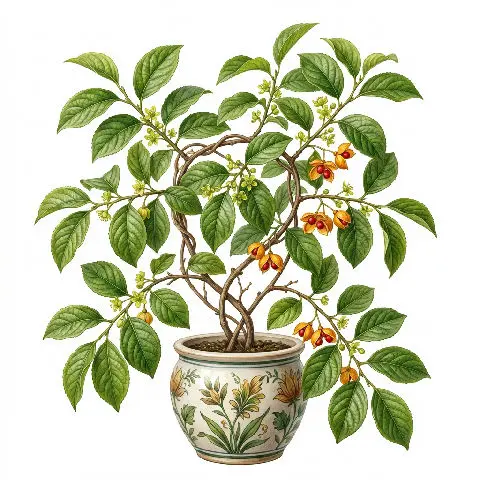
Jyotishmati, known scientifically as Celastrus paniculatus, is an esteemed woody climbing shrub belonging to the Celastraceae family, a group recognized for its diverse medicinal members.
A good article on Jyotishmati (Staff Tree) should not stop at one-line claims. Readers need taxonomy, habitat, safety, cultivation, and evidence in the same place so they can make sound decisions.
The aim is simple: make the article detailed enough for serious readers while keeping the structure clear enough for fast scanning and confident decision-making.
- Jyotishmati (Celastrus paniculatus) is an Ayurvedic nootropic herb.
- Renowned for enhancing memory, cognitive function, and reducing anxiety.
- Rich in alkaloids, triterpenes, and beneficial fatty acids.
- Traditionally used for neurological, inflammatory, and skin conditions.
- Possesses anti-inflammatory, antioxidant, and analgesic properties.
- Cultivated from seeds or cuttings, preferring warm, humid climates.
- Dosage and usage vary by form (oil, powder, paste), requiring careful adherence.
- Contraindicated in pregnancy and requires caution for Pitta types and GI sensitivity.
Botanical Profile & Taxonomy
Jyotishmati (Staff Tree) should be anchored to the correct taxonomic identity before any discussion of care, use, or safety begins.
| Common name | Jyotishmati (Staff Tree) |
|---|---|
| Scientific name | Celastrus paniculatus |
| Family | Celastraceae |
| Order | Celastrales |
| Genus | Celastrus |
| Species epithet | paniculatus |
| Author citation | Willd. |
| Synonyms | Celastrus serrata Blanco, Celastrus rothbiana Roem. & Schult., Ceanothus paniculatus (Willd.) B.Heyne ex Roth, Celastrus paniculatus subsp. andamanica Kurz ex Prain, Celastrus paniculatus subsp. pubscens Kurz, Celastrus pubescens Turcz., Scutia paniculata (Willd.) G.Don, Celastrus paniculatus subsp. pubscens Kurz ex Prain, Ceanothus paniculatus (Willd.) B.Heyne, Celastrus paniculatus subsp. andamanica Kurz |
| Common names | জ্যোতিষ্মতী, স্টাফ ট্রি, মালকানগানি গাছ, Staff Tree, Jyotishmati, Malkangani Tree, ज्योतिष्मती, मालकांगनी, स्टाफ ट्री |
| Origin | India, Southeast Asia |
| Life cycle | Annual or perennial |
| Growth habit | Tree |
Using the accepted scientific name Celastrus paniculatus helps readers avoid confusion caused by old synonyms, loose common names, or inconsistent plant labels.
Family and order placement also matter because they explain recurring structural traits, likely relatives, and the kinds of mistakes readers often make when they rely on appearance alone.
Physical Description & Morphology

A practical reading of the plant starts with visible structure: Leaf: The leaves of Jyotishmati are alternate, simple, and ovate to elliptical in shape, measuring 8-15 cm in length and 4-8 cm in width. They have entire. Stem: The stem is erect, slender, and woody, with a green to brown coloration that can lend a slightly rough texture, especially in older plants. It has a. Root: The root system is fibrous and relatively shallow, with lateral roots extending widely to acquire nutrients in the topsoil; it can reach depths of. Flower: The flowers are small, pale yellow to greenish, and arranged in axillary racemes, blooming from late spring to early summer, typically between May. Fruit: Fruits are capsule-like, measuring about 2-3 cm in length, turning bright orange to red upon ripening, and can be regarded as mildly toxic if. Seed: Seeds are small, flat, and brown to black, about 5-6 mm in length with a hard coat; dispersal typically occurs through animals or water transport.
Microscopic or internal identification notes deepen the picture, especially for processed material: Occasional unicellular or multicellular, non-glandular trichomes observed on the leaf margins and veins, particularly on younger leaves. Mainly anomocytic stomata, scattered irregularly on both epidermal surfaces (amphistomatic), but more abundant on the abaxial side. Presence of calcium oxalate crystals, primarily druses and prismatic forms, found in parenchyma cells of the cortex and pith. Lignified fibers are.
In overall habit, the plant is described as Tree with a mature height around Typically 2-10 m and spread of Typically 1-5 m or more with support.
Natural Habitat & Distribution
The native or historically recorded center of distribution for Jyotishmati (Staff Tree) is India, Southeast Asia. That origin is more than background trivia; it explains how the plant responds to heat, moisture, shade, and seasonal change.
The plant is associated with the following countries or range markers: Australia, China, India, Malaysia, Nepal, Sri Lanka.
Environmental notes in the live record add more context: Celastrus paniculatus prefers a tropical climate, thriving in temperatures between 20°C to 35°C. It grows well in a wide range of soil types but flourishes best in fertile, well-drained, loamy soils with rich organic content. This species typically requires moderate humidity levels to support its growth and ideally should be planted in areas with adequate.
In cultivation terms, the main ecological clues are: Full sun to partial shade; Moderate; Well-drained; Species-dependent; Annual or perennial; Tree.
Physiology data reinforce the habitat story: Basal respiration rates vary with temperature and metabolic activity, contributing to overall energy balance for growth and maintenance. Efficient CO2 uptake and O2 release during daylight hours, with stomatal regulation playing a key role in balancing photosynthesis and water loss. Auxins play a role in stem elongation and twining growth, while gibberellins influence flowering and seed development. Ethylene may be involved in.
Traditional & Cultural Significance
Jyotishmati (Celastrus paniculatus), often referred to as the Staff Tree, holds a significant place in the rich tapestry of Indian traditional medicine, particularly within Ayurveda. Its Sanskrit name, "Jyotishmati," translates to "illuminating" or "light-giving," a testament to its profound effects on cognitive functions. Ancient Ayurvedic texts, including the Charaka Samhita and Sushruta Samhita, classify it.
Ethnobotanical records also show how this plant has been framed across different places: Anemia in India(Santal) (Duke, 1992 *); Anodyne in India(Gujarat) (Duke, 1992 *); Carbuncle in India(Santal) (Duke, 1992 *); CNS stimulant in Elsewhere (Duke, 1992 *); Fever in Elsewhere (Duke, 1992 *); Rheumatism in Elsewhere (Duke, 1992 *); Syphilis in India(Santal) (Duke, 1992 *); Colic in India(Santal) (Duke, 1992 *).
Traditional context matters, but it should always be separated from modern certainty. Historical use can guide questions, yet it does not automatically prove present-day clinical effectiveness.
Medicinal Properties & Health Benefits
The main benefit themes associated with the plant include: Cognitive Enhancement — Jyotishmati is widely recognized for its nootropic properties, improving overall cognitive function by potentially increasing. Memory Improvement — Traditional Ayurvedic texts and modern research highlight its ability to enhance recall and retention, making it beneficial for. Anxiolytic Effects — The plant exhibits anxiolytic properties, helping to reduce anxiety and calm the nervous system, which may be attributed to its. Anti-inflammatory Action — Its active compounds possess significant anti-inflammatory capabilities, useful in managing conditions characterized by chronic. Analgesic Properties — Jyotishmati provides pain relief, acting as an analgesic by potentially interfering with pain signaling pathways and reducing. Antioxidant Activity — Rich in antioxidants, it helps combat oxidative stress by neutralizing free radicals, thereby protecting cellular integrity and. Neurological Support — It is traditionally used to address various neurological disorders, offering neuroprotective benefits that support nerve health and. Digestive Aid — With its pungent and bitter taste, Jyotishmati acts as a carminative and stimulates digestive fire (Agni), promoting healthy digestion and.
The evidence matrix gives a more careful picture of those claims: Memory Enhancement. Pre-clinical (animal models), Traditional use. Moderate. Numerous animal studies support nootropic activity, showing improvements in learning and memory. Ayurvedic texts extensively document its use for 'Medhya Rasayana' (intellectual tonic). Anxiolytic Activity. Pre-clinical (animal models), Traditional use. Moderate. Animal models indicate a significant reduction in anxiety-like behaviors. Traditional use in Ayurveda for calming the mind and nervous system. Anti-inflammatory Effects. In vitro, Pre-clinical (animal models). Moderate. Studies show inhibition of inflammatory mediators. Used traditionally for rheumatoid arthritis and other inflammatory conditions. Antioxidant Properties. In vitro, Pre-clinical (animal models). Strong. High levels of phenolic compounds and flavonoids demonstrate significant free radical scavenging activity in various assays. Supports its 'Rasayana' (rejuvenating) status. Neuroprotective Benefits. In vitro, Pre-clinical (animal models). Moderate. Research suggests protection against neurotoxicity and oxidative stress in neuronal cells. Aligns with its traditional use for neurological disorders.
The stored evidence confidence for this profile is traditional. That should shape how strongly any benefit statement is interpreted.
For medicinal content, the key discipline is to distinguish traditional use, mechanism-based plausibility, and human clinical support. Those are related ideas, but they are not the same thing.
- Cognitive Enhancement — Jyotishmati is widely recognized for its nootropic properties, improving overall cognitive function by potentially increasing.
- Memory Improvement — Traditional Ayurvedic texts and modern research highlight its ability to enhance recall and retention, making it beneficial for.
- Anxiolytic Effects — The plant exhibits anxiolytic properties, helping to reduce anxiety and calm the nervous system, which may be attributed to its.
- Anti-inflammatory Action — Its active compounds possess significant anti-inflammatory capabilities, useful in managing conditions characterized by chronic.
- Analgesic Properties — Jyotishmati provides pain relief, acting as an analgesic by potentially interfering with pain signaling pathways and reducing.
- Antioxidant Activity — Rich in antioxidants, it helps combat oxidative stress by neutralizing free radicals, thereby protecting cellular integrity and.
- Neurological Support — It is traditionally used to address various neurological disorders, offering neuroprotective benefits that support nerve health and.
- Digestive Aid — With its pungent and bitter taste, Jyotishmati acts as a carminative and stimulates digestive fire (Agni), promoting healthy digestion and.
- Wound Healing — Applied externally or internally, it aids in the rapid healing of wounds and ulcers due to its antiseptic and regenerative properties.
- Skin Health — The seed oil, known as Jyotishmati Taila, is particularly effective in treating various skin conditions, including leucoderma and other.
Chemical Constituents & Phytochemistry
The broader constituent profile includes Alkaloids — Key compounds include Celastrine and Paniculatin, which are believed to contribute to its nootropic and. Triterpenes — Compounds such as Malkanguniol and Celastrol are present, known for their anti-inflammatory. Flavonoids — A diverse group of polyphenolic compounds, contributing to the plant's significant antioxidant and. Fatty Acids — The seeds are remarkably rich in unsaturated fatty acids, primarily Linoleic Acid (Omega-6) and Oleic. Sesquiterpenes — These compounds, though less studied in Celastrus paniculatus, often contribute to the plant's. Sterols — Beta-sitosterol is a prominent plant sterol found, known for its cholesterol-lowering and immune-modulating. Tannins — Present in various parts of the plant, tannins contribute astringent properties, useful in wound healing and. Saponins — These glycosides may contribute to the plant's adaptogenic and immune-modulating activities, though their. Carbohydrates — Including various sugars and starches, serving as energy sources and structural components within the. Proteins — Essential for plant growth and metabolic processes, contributing to the overall nutritional profile of the.
The detailed phytochemistry file adds these markers: Celastrine, Alkaloid, Seeds, Roots, Variablemg/g; Paniculatin, Alkaloid, Seeds, Variablemg/g; Malkanguniol, Triterpene, Seeds, Variablemg/g; Celastrol, Triterpene, Seeds, Roots, Trace to moderateµg/g; Linoleic Acid, Fatty Acid (Omega-6), Seeds (oil), High (up to 40-50%)% of total oil; Oleic Acid, Fatty Acid (Omega-9), Seeds (oil), High (up to 20-30%)% of total oil; Palmitic Acid, Fatty Acid (Saturated), Seeds (oil), Moderate (up to 15-20%)% of total oil; Beta-sitosterol, Phytosterol, Seeds, Moderatemg/g.
Compound profiles also shift with plant part, age, season, processing, and storage. The chemistry of a fresh leaf, dried root, or concentrated extract should never be treated as automatically identical.
How to Use — Preparations & Dosage
Recorded preparation and use methods include Seed Oil Ingestion — 3-5 drops of Jyotishmati oil mixed with a cup of warm milk, typically taken at night, is a traditional remedy for enhancing memory and intellect. Seed Powder — 1-2 grams of dried seed powder can be consumed, often mixed with honey or ghee, for cognitive and neurological benefits. Seed Decoction — A decoction prepared by boiling 1 tablespoon of seeds in 2 cups of water, reduced to 1 cup, can be taken (20-30 ml after food) for conditions like rheumatoid. External Oil Application — Jyotishmati oil is massaged externally onto affected areas for muscular pain, joint inflammation, and various skin conditions including leucoderma and. Leaf Paste for Topical Use — A fine paste made from mature Jyotishmati leaves is applied externally to reduce muscular pain, swelling, and localized inflammation. Seed Paste for Ulcers — Seeds soaked in water or turmeric water, then ground into a fine paste, can be applied to the edges of non-healing chronic ulcers to promote healing. Nasya (Nasal Administration) — In some Ayurvedic practices, medicated Jyotishmati oil is used for Nasya treatment (nasal drops) for specific neurological and respiratory. Formulated Medicines — Jyotishmati is a key ingredient in various Ayurvedic formulations like Smriti Sagar Ras (for memory), Hartone capsules (cardiac tonic), and Lohadi Rasayan.
The plant part most closely linked to use is recorded as Leaves, roots, tubers, stems, or fruit cited in related taxa.
Edibility and processing notes matter here as well: Varies widely; verify species and plant part.
Preparation defines the outcome. Tea, decoction, tincture, powder, fresh plant material, cooked food use, and concentrated extract cannot be discussed as if they were interchangeable.
- Identify the exact species and plant part first.
- Match the preparation to the intended use.
- Check safety, interactions, and processing details before routine use or large-scale handling.
Safety Profile, Side Effects & Contraindications
The first safety note is direct: Varies by species and plant part; verify before use
Specific warnings recorded for this plant include Pregnancy and Lactation — Absolutely contraindicated during pregnancy due to its uterine stimulant properties; consult a healthcare professional before use during lactation. Children — Use in children should be under strict medical supervision and with appropriate dosage adjustments, typically in very small amounts. Pitta Dominance — Individuals with a strong Pitta constitution or conditions exacerbated by heat should use Jyotishmati with extreme caution, often requiring. Gastrointestinal Sensitivity — Patients with a history of gastritis, peptic ulcers, or irritable bowel syndrome should use it cautiously or avoid it. Drug Interactions — Consult a physician if taking other medications, especially those for neurological conditions, blood thinners, or medications affecting. Dosage Adherence — Adhere strictly to recommended dosages; excessive intake can lead to adverse effects like gastric irritation and Pitta aggravation. Quality Sourcing — Ensure the plant material or derived products are sourced from reputable suppliers to avoid adulteration and ensure purity and potency. External Use Caution — While generally safe for external application, perform a patch test on a small skin area to check for any allergic reactions before.
Quality-control notes add another warning: Seeds of Cardiospermum helicacabum and fruits of Duranta species are common adulterants; careful macroscopic and microscopic examination, along with chromatographic profiling, is.
No plant should be described as universally safe. Identity, dose, plant part, preparation style, age, pregnancy status, medication use, allergies, and contamination risk all change the answer.
Growing & Cultivation Guide
The cultivation record emphasizes these practical steps: Propagation — Primarily propagated through seeds, which require proper scarification or soaking to enhance germination, or via semi-hardwood stem cuttings. Climate Requirements — Thrives best in warm, humid, tropical to subtropical climates, typical of its native range in India and Southeast Asia. Soil Preference — Prefers well-drained, fertile loamy soil rich in organic matter, with a slightly acidic to neutral pH (6.0-7.0). Sunlight Exposure — Requires partial to full sunlight exposure for optimal growth and fruit production, ideally receiving 4-6 hours of direct sun daily. Watering — Needs consistent moisture, especially during the growing season, but good drainage is crucial to prevent root rot. Drought tolerant once established. Support Structure — Being a climbing shrub, it benefits significantly from a sturdy trellis, arbor, or other support structures to facilitate its twining growth habit. Elevation — Naturally found in varied elevations, often thriving in hilly regions and areas above 3000 feet, indicating adaptability to different topographical. Pest and Disease Management — Generally robust, but can be susceptible to common garden pests like aphids or spider mites in dry conditions.
The broader growth environment is described like this: Celastrus paniculatus prefers a tropical climate, thriving in temperatures between 20°C to 35°C. It grows well in a wide range of soil types but flourishes best in fertile, well-drained, loamy soils with rich organic content. This species typically requires moderate humidity levels to support its growth and ideally should be planted in areas with adequate.
Planning becomes easier when these traits are kept in view: Tree; Typically 2-10 m; Typically 1-5 m or more with support.
In practice, healthy cultivation comes from systems thinking rather than one-off tricks. Site choice, drainage, timing, spacing, pruning, feeding, and observation all reinforce one another.
Light, Water & Soil Requirements
The most useful care snapshot is this: Light: Full sun to partial shade; Water: Moderate; Soil: Well-drained; USDA zone: Species-dependent.
Outdoors, light, water, and soil must be read together. The same watering schedule can be too much in dense clay and too little in a porous sandy bed.
| Light | Full sun to partial shade |
|---|---|
| Water | Moderate |
| Soil | Well-drained |
| USDA zone | Species-dependent |
Light, water, and soil should never be treated as separate checkboxes. A plant in stronger light often dries faster, soil texture changes how quickly water moves, and temperature plus humidity influence how stress appears in leaves and roots.
For Jyotishmati (Staff Tree), the safest care approach is to treat Full sun to partial shade, Moderate, and Well-drained as linked decisions rather than isolated tips. If one condition shifts, the other two usually need to be reconsidered as well.
Microclimate matters too. Indoors, room placement and airflow can matter as much as window exposure. Outdoors, reflected heat, slope, mulch, and nearby plants can change how the temperature rhythm described for the species and humidity that matches the plant type are actually experienced at plant level.
Propagation Methods
Documented propagation routes include Propagation is typically done via seeds or cuttings. For seed propagation, collect mature seeds and soak them in water for 24 hours to aid germination. Sow. maintain a temperature of 20-25°C for optimal growth, with a 70-80% success rate after 4-6 weeks for germination. For cuttings, select semi-woody stems 15-20. keep moist and covered to maintain humidity. Success rates for cuttings are around 60-70% if properly cared for.
Propagation works best when the parent stock is healthy, correctly identified, and handled in the right season. That sounds obvious, but it is exactly where many failures begin.
- Propagation is typically done via seeds or cuttings. For seed propagation, collect mature seeds and soak them in water for 24 hours to aid germination. Sow.
- Maintain a temperature of 20-25°C for optimal growth, with a 70-80% success rate after 4-6 weeks for germination. For cuttings, select semi-woody stems 15-20.
- Keep moist and covered to maintain humidity. Success rates for cuttings are around 60-70% if properly cared for.
Pest & Disease Management
For medicinal species, pest pressure is not only a horticultural issue. It also affects harvest cleanliness, storage stability, and confidence in the final material.
The smartest response sequence is observation first, environmental correction second, and treatment only after the real pattern is clear.
Pest and disease management is strongest when it begins before visible damage becomes severe. Routine observation, clean handling, sensible spacing, air movement, and balanced watering reduce many problems before treatment is even needed.
When symptoms do appear on Jyotishmati (Staff Tree), the most reliable response is diagnostic rather than reactive. Yellowing, spots, wilt, chewing, and stunting can all have multiple causes, so a rushed treatment can waste time or worsen the problem.
Good troubleshooting also includes environmental correction. Pests and disease often reveal a deeper issue such as root stress, poor airflow, inconsistent watering, weak light, or exhausted soil structure.
Harvesting, Storage & Processing
The plant part most often associated with harvest or processing is Leaves, roots, tubers, stems, or fruit cited in related taxa.
Storage guidance from the quality-control record reads as follows: Dried seeds and oil should be stored in airtight containers, away from direct sunlight and moisture, in a cool, dry place to maintain potency and prevent rancidity (for oil).
For medicinal plants, harvesting cannot be separated from processing. The right plant part, the right timing, and the right drying conditions all shape quality and safety.
Whatever the purpose, the rule is the same: harvest clean material, label it clearly, and store it in a way that preserves identity and condition.
Harvest and storage determine whether a plant's quality is preserved after it leaves the bed, pot, field, or wild source. Clean timing, correct plant part selection, and careful drying or handling all matter more than many readers expect.
Companion Planting & Garden Design
In a home herb garden or medicinal bed, Jyotishmati (Staff Tree) should be placed where harvesting is easy, labeling remains clear, and neighboring plants do not create confusion at collection time.
Companion planting and design are not only aesthetic decisions. They affect airflow, root competition, moisture sharing, harvest access, visibility, and the general logic of the planting scheme.
With Jyotishmati (Staff Tree), good placement means thinking about mature size, maintenance rhythm, and how neighboring plants change the feel and function of the space. A plant can be healthy on its own and still be poorly placed within the broader composition.
That is why the best design advice combines biology with usability. The planting should look coherent, but it should also make watering, pruning, harvest, and pest observation easier rather than harder.
Scientific Research & Evidence Base
The evidence matrix points to several recurring themes: Memory Enhancement. Pre-clinical (animal models), Traditional use. Moderate. Numerous animal studies support nootropic activity, showing improvements in learning and memory. Ayurvedic texts extensively document its use for 'Medhya Rasayana' (intellectual tonic). Anxiolytic Activity. Pre-clinical (animal models), Traditional use. Moderate. Animal models indicate a significant reduction in anxiety-like behaviors. Traditional use in Ayurveda for calming the mind and nervous system. Anti-inflammatory Effects. In vitro, Pre-clinical (animal models). Moderate. Studies show inhibition of inflammatory mediators. Used traditionally for rheumatoid arthritis and other inflammatory conditions. Antioxidant Properties. In vitro, Pre-clinical (animal models). Strong. High levels of phenolic compounds and flavonoids demonstrate significant free radical scavenging activity in various assays. Supports its 'Rasayana' (rejuvenating) status. Neuroprotective Benefits. In vitro, Pre-clinical (animal models). Moderate. Research suggests protection against neurotoxicity and oxidative stress in neuronal cells. Aligns with its traditional use for neurological disorders.
Ethnobotanical activity records add historical reference trails: Anemia — India(Santal) [Duke, 1992 *]; Anodyne — India(Gujarat) [Duke, 1992 *]; Carbuncle — India(Santal) [Duke, 1992 *]; CNS stimulant — Elsewhere [Duke, 1992 *]; Fever — Elsewhere [Duke, 1992 *]; Rheumatism — Elsewhere [Duke, 1992 *].
The compiled source count behind the live profile is 4. That does not guarantee certainty, but it does suggest the record has been cross-checked beyond a single note.
Analytical testing notes also strengthen the evidence base: Includes macroscopic and microscopic evaluation, physicochemical analysis (ash value, extractive values, moisture content), thin-layer chromatography (TLC), high-performance.
A careful evidence section should say what is known, what is plausible, and what remains uncertain. Readers are better served by clear limits than by exaggerated confidence.
Evidence note: this section blends the live plant record, local ethnobotanical activity data, chemistry records, and the linked Flora Medical Global plant profile for Jyotishmati (Staff Tree).
Buying Guide & Expert Tips
Quality markers worth checking include Standardization often relies on quantifying key alkaloids like Celastrine and Paniculatin, or triterpenes such as Malkanguniol, using techniques like HPLC or HPTLC.
Adulteration and substitution risk should not be ignored: Seeds of Cardiospermum helicacabum and fruits of Duranta species are common adulterants; careful macroscopic and microscopic examination, along with chromatographic profiling, is.
When buying Jyotishmati (Staff Tree), start with verified botanical identity. The label, scientific name, and the source page should agree before you judge price, size, or claimed benefits.
For living plants, inspect roots, stem firmness, foliage health, and early pest signs. For dried or processed material, look for batch clarity, clean aroma, absence of mold, and any sign that the product has been over-processed to disguise poor quality.
Frequently Asked Questions
What is Jyotishmati (Staff Tree) best known for?
Jyotishmati, known scientifically as Celastrus paniculatus, is an esteemed woody climbing shrub belonging to the Celastraceae family, a group recognized for its diverse medicinal members.
Is Jyotishmati (Staff Tree) beginner-friendly?
That depends on the growing environment and the intended use. Some plants are easy to grow but not simple to use medicinally, while others are the opposite.
How much light does Jyotishmati (Staff Tree) need?
Full sun to partial shade
How often should Jyotishmati (Staff Tree) be watered?
Moderate
Can Jyotishmati (Staff Tree) be propagated at home?
Yes, but the best method depends on whether the species responds best to seed, cuttings, division, offsets, or other propagation routes.
Does Jyotishmati (Staff Tree) have safety concerns?
Varies by species and plant part; verify before use
What is the biggest mistake people make with Jyotishmati (Staff Tree)?
The most common mistake is applying generic advice instead of matching the plant to its real environment, identity, and limits.
Where can I verify more information about Jyotishmati (Staff Tree)?
Start with the Flora Medical Global plant profile: https://www.floramedicalglobal.com/plant/jyotishmati-staff-tree
Why do sources sometimes disagree about Jyotishmati (Staff Tree)?
Different references may use different synonyms, plant parts, cultivation conditions, or evidence standards. That is why taxonomy and source quality both matter.
Trusted Scientific References & Further Reading
Authoritative sources and related guides:
- Wikipedia — background reference
- PubMed — peer-reviewed studies
- Kew POWO — botanical reference
- NCBI PMC — open-access research
- WHO — global health authority