
Overview & Introduction
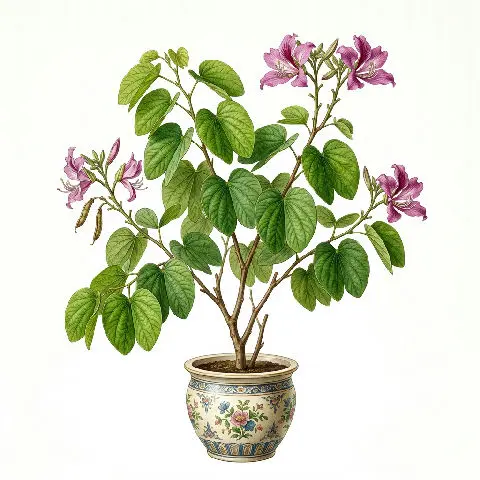
Bauhinia variegata, widely recognized as Kachnar, the Orchid Tree, or Mountain Ebony, is a captivating medium-sized deciduous tree belonging to the extensive Fabaceae family.
Most thin plant articles flatten everything into a summary. This guide does the opposite by following Kachnar (Orchid Tree) through identification, care, handling, and the questions that real readers actually ask.
The linked plant page remains the main internal reference point for this article, but the goal here is to turn that raw data into a readable, structured, and genuinely useful guide.
- Kachnar (Bauhinia variegata) is a deciduous tree native to Southeast Asia, cherished for its ornamental and medicinal value.
- It is a cornerstone in traditional medicine systems like Ayurveda and Unani, addressing various ailments.
- Key medicinal properties include anti-inflammatory, antioxidant, antidiabetic, hepatoprotective, and antitumorous effects.
- Rich in flavonoids, tannins, steroids, and phenolic compounds, which are responsible for its therapeutic actions.
- Traditionally used for glandular swellings, skin diseases, digestive issues, and to support liver and kidney health.
- Propagation is primarily by seeds or stem cuttings, thriving in full sun and well-drained soil.
- Caution is advised for pregnant individuals, diabetics, and those on blood-thinning or blood pressure medications.
- Always consult a healthcare professional before using Kachnar for medicinal purposes.
Botanical Profile & Taxonomy
Kachnar (Orchid Tree) should be anchored to the correct taxonomic identity before any discussion of care, use, or safety begins.
| Common name | Kachnar (Orchid Tree) |
|---|---|
| Scientific name | Bauhinia variegata |
| Family | Fabaceae |
| Order | Fabales |
| Genus | Bauhinia |
| Species epithet | variegata |
| Author citation | L. |
| Synonyms | Bauhinia variegata subsp. chinensis DC., Perlebia variegata (L.) A.Schmitz, Bauhinia variegata var. purpurascens Voigt, Bauhinia variegata var. alboflava DeWit, Phanera variegata (L.) Benth. |
| Common names | কাঞ্চন, অর্কিড গাছ, পুর্পল বাউহিনিয়া, Orchid Tree, Mountain Ebony, Purple Bauhinia, कचनार, कांचन, गुलाबी कचनार |
| Local names | orchid tree, pata-de-vaca, arbre de Saint-Thomas, mountain ebony, butterfly tree, pata-de-vaca-rosa, purple orchid tree, orgideëboom, unha-de-vaca, orkidébauhinia, kachnar, buntfarbene Bauhinie |
| Origin | South Asia (India, Nepal, Bhutan, Pakistan, Bangladesh, Myanmar) |
| Life cycle | Perennial |
| Growth habit | Tree |
Using the accepted scientific name Bauhinia variegata helps readers avoid confusion caused by old synonyms, loose common names, or inconsistent plant labels.
Family and order placement also matter because they explain recurring structural traits, likely relatives, and the kinds of mistakes readers often make when they rely on appearance alone.
Physical Description & Morphology

A practical reading of the plant starts with visible structure: Leaf: Leaves are bilobed, typically measuring 8-15 cm long and 7-14 cm wide, with a dark green color and smooth margins. Stem: The stems are typically green when juvenile and brown as they mature, exhibiting a smooth texture with occasional lenticels. Root: The root system is fibrous and moderately deep, typically extending about 30-50 cm, allowing good nutrient uptake. Flower: Flowers are strikingly large, measuring about 5-8 cm in diameter, with a purplish hue and five petals arranged symmetrically, blooming mostly during. Fruit: The fruit is a pod, approximately 10-15 cm long, dark brown when mature, containing flat seeds that are edible but require cooking. Seed: Seeds are flat, oval-shaped, about 1-2 cm long, dark brown to black, and dispersed by wind once the pod splits open.
Microscopic or internal identification notes deepen the picture, especially for processed material: Non-glandular, unicellular or multicellular, uniseriate trichomes may be present on both leaf surfaces, particularly along the veins, providing a. Stomata are predominantly paracytic (rubiaceous type), characterized by two subsidiary cells arranged parallel to the guard cells, found primarily. Calcium oxalate crystals are abundant, appearing as prismatic crystals and occasional druses in the parenchyma cells of the cortex and pith.
In overall habit, the plant is described as Tree with a mature height around Typically 0.1-1 m and spread of Typically 0.1-0.6 m.
Natural Habitat & Distribution
The native or historically recorded center of distribution for Kachnar (Orchid Tree) is South Asia (India, Nepal, Bhutan, Pakistan, Bangladesh, Myanmar). That origin is more than background trivia; it explains how the plant responds to heat, moisture, shade, and seasonal change.
The plant is associated with the following countries or range markers: China, Myanmar, Southeast Asia (India, Thailand, Vietnam).
Environmental notes in the live record add more context: Bauhinia variegata (Kachnar) prefers a tropical to subtropical climate, thriving best in areas with average temperatures between 20°C to 30°C (68°F to 86°F). It requires well-drained soil rich in organic matter, tolerating a range of pH levels from acidic to neutral. Kachnar loves full sun to partial shade; optimal light conditions contribute to abundant.
In cultivation terms, the main ecological clues are: Bright filtered light to partial shade; Moderate with good air movement; Very well-drained or airy substrate; Species-dependent; many tropical taxa 9-12; Perennial; Tree.
Physiology data reinforce the habitat story: Cellular respiration rates are standard for woody plants, varying with temperature and metabolic activity, supporting growth, maintenance, and. Typical C3 gas exchange patterns are observed, with stomatal opening during the day for CO2 uptake and water vapor release, regulated by light. Growth and development are regulated by endogenous plant hormones such as auxins (for apical dominance and root development), gibberellins (for stem).
Traditional & Cultural Significance
The Kachnar tree, scientifically known as *Bauhinia variegata*, holds a deep and multifaceted significance across South Asia, woven into the fabric of its medicinal practices, cultural traditions, and even its aesthetic appreciation. Historically, its role in traditional medicine, particularly within the Ayurvedic system of India, is well-documented. The stem bark, flowers, buds, roots, and seeds have been utilized.
Ethnobotanical records also show how this plant has been framed across different places: Alterative in Iraq (Al-Rawi, Ali. 1964. Medicinal Plants of Iraq. Tech. Bull. No. 15. Ministry of Agriculture, Directorate General of Agricultural Research Projects.); Alterative in Elsewhere (Uphof, J.C. Th. 1968. Dictionary of economic plants. 2nd ed. Verlag von J. Cramer.); Alterative in Elsewhere (Duke, 1992 *); Astringent in Elsewhere (Uphof, J.C. Th. 1968. Dictionary of economic plants. 2nd ed. Verlag von J. Cramer.); Astringent in Elsewhere (Duke, 1992 *); Dermatosis in Nepal (Duke, 1992 *); Parturition in Java (Duke, 1992 *); Scrofula in Iraq (Al-Rawi, Ali. 1964. Medicinal Plants of Iraq. Tech. Bull. No. 15. Ministry of Agriculture, Directorate General of Agricultural Research Projects.).
Local names help show how different communities notice and classify the plant: orchid tree, pata-de-vaca, arbre de Saint-Thomas, mountain ebony, butterfly tree, pata-de-vaca-rosa, purple orchid tree, orgideëboom, unha-de-vaca, orkidébauhinia.
Traditional context matters, but it should always be separated from modern certainty. Historical use can guide questions, yet it does not automatically prove present-day clinical effectiveness.
Medicinal Properties & Health Benefits
The main benefit themes associated with the plant include: Anti-inflammatory — Kachnar exhibits potent anti-inflammatory properties, attributed to its rich content of flavonoids and phenolic compounds. These compounds. Antioxidant Activity — The plant is a robust source of antioxidants, including various polyphenols, quercetin, and kaempferol, which effectively scavenge free. Antidiabetic Effects — Studies suggest *Bauhinia variegata* can help manage blood glucose levels. Its compounds may improve insulin sensitivity, inhibit. Hepatoprotective — Kachnar has shown protective effects on the liver, aiding in detoxification and regeneration. This action is likely due to its antioxidant. Antitumorous/Cytotoxic Properties — Research indicates that extracts from Kachnar possess cytotoxic activities against various cancer cell lines. Specific. Antibacterial Activity — The plant's extracts demonstrate broad-spectrum antibacterial properties against several pathogenic bacteria. This is attributed to. Wound Healing — Topical applications of Kachnar, particularly bark extracts, have been traditionally used to accelerate wound healing. Its astringent and. Antiulcer Effects — Kachnar may offer protection against gastric ulcers. Its compounds can strengthen the gastric mucosal barrier, reduce acid secretion, and.
The evidence matrix gives a more careful picture of those claims: Anti-inflammatory Activity. Pharmacological. Animal Study, In-vitro. Bark and flower extracts demonstrated significant reduction in edema and inflammatory markers in animal models and inhibited pro-inflammatory enzymes in vitro. Antioxidant Properties. Phytochemical, Biochemical. In-vitro, Biochemical Assay. High levels of phenolic compounds and flavonoids in various plant parts exhibit strong free radical scavenging activity, confirmed by DPPH and FRAP assays. Antidiabetic Effects. Pharmacological. Animal Study, In-vitro. Extracts reduced blood glucose levels in diabetic animal models and inhibited alpha-amylase and alpha-glucosidase enzymes in vitro. Hepatoprotective Activity. Pharmacological. Animal Study. Demonstrated protection against chemically induced liver damage in animal models by preserving liver enzyme levels and reducing oxidative stress. Antitumorous/Cytotoxic Activity. Pharmacological, Cell Culture. In-vitro. Flower and bark extracts showed dose-dependent cytotoxicity against various human cancer cell lines, suggesting potential anti-cancer properties.
The stored evidence confidence for this profile is traditional. That should shape how strongly any benefit statement is interpreted.
For medicinal content, the key discipline is to distinguish traditional use, mechanism-based plausibility, and human clinical support. Those are related ideas, but they are not the same thing.
- Anti-inflammatory — Kachnar exhibits potent anti-inflammatory properties, attributed to its rich content of flavonoids and phenolic compounds. These compounds.
- Antioxidant Activity — The plant is a robust source of antioxidants, including various polyphenols, quercetin, and kaempferol, which effectively scavenge free.
- Antidiabetic Effects — Studies suggest *Bauhinia variegata* can help manage blood glucose levels. Its compounds may improve insulin sensitivity, inhibit.
- Hepatoprotective — Kachnar has shown protective effects on the liver, aiding in detoxification and regeneration. This action is likely due to its antioxidant.
- Antitumorous/Cytotoxic Properties — Research indicates that extracts from Kachnar possess cytotoxic activities against various cancer cell lines. Specific.
- Antibacterial Activity — The plant's extracts demonstrate broad-spectrum antibacterial properties against several pathogenic bacteria. This is attributed to.
- Wound Healing — Topical applications of Kachnar, particularly bark extracts, have been traditionally used to accelerate wound healing. Its astringent and.
- Antiulcer Effects — Kachnar may offer protection against gastric ulcers. Its compounds can strengthen the gastric mucosal barrier, reduce acid secretion, and.
- Nephroprotective — The plant has been observed to protect kidney function, potentially by reducing oxidative stress and inflammation in renal tissues. This.
- Hypolipidemic — Extracts from *Bauhinia variegata* can help lower elevated lipid levels in the blood. This effect is likely due to the modulation of.
Chemical Constituents & Phytochemistry
The broader constituent profile includes Flavonoids — Key compounds include quercetin, kaempferol, rutin, quercitrin, apigenin, and their glycosides (e.g. Triterpenes — Various triterpenoid compounds are present, contributing to anti-inflammatory and hepatoprotective. Steroids — Important steroidal compounds like β-sitosterol and its derivatives are found, alongside unique compounds. Glycosides — A diverse group of glycosides is isolated from different parts of the plant, influencing various. Tannins — High concentrations of tannins, particularly in the bark, impart strong astringent, antimicrobial, and. Phenolic Compounds — Beyond flavonoids, a wide array of simple and complex phenolic acids and compounds are present. Saponins — These compounds contribute to the plant's hypolipidemic and immune-modulating effects. Saponins can also. Amino Acids — Essential amino acids like lysine are present, supporting general nutrition and protein synthesis within. Fatty Acids — Important fatty acids such as oleic acid and linoleic acid are found, contributing to the plant's. Carbohydrates — The plant contains various carbohydrates, including reducing sugars and crude fibers, which contribute.
The detailed phytochemistry file adds these markers: Quercetin, Flavonoid, Flowers, Bark, Leaves, 0.15% w/w; Kaempferol, Flavonoid, Flowers, Leaves, 0.10% w/w; β-Sitosterol, Phytosterol, Bark, Seeds, 0.08% w/w; Rutin, Flavonoid Glycoside, Flowers, Leaves, 0.05% w/w; Bauhinone, Alkaloid, Bark, Trace% w/w; Tannins (total), Polyphenol, Bark, 8.5% w/w; Apigenin-7-O-glucoside, Flavonoid Glycoside, Flowers, 0.03% w/w; Oleic Acid, Monounsaturated Fatty Acid, Seeds, 25.0% of total fatty acids.
Compound profiles also shift with plant part, age, season, processing, and storage. The chemistry of a fresh leaf, dried root, or concentrated extract should never be treated as automatically identical.
How to Use — Preparations & Dosage
Recorded preparation and use methods include Bark Decoction for Glandular Swellings — Prepare a decoction by boiling 10-20g of dried Kachnar bark in 400ml of water until reduced to 100ml; consume twice daily for conditions like goiter or lymphadenitis. Flower Powder for Digestive Health — Dry Kachnar flowers, grind them into a fine powder, and consume 1-3g with honey or warm water to aid digestion and alleviate dysentery. Leaf Paste for Skin Ailments — Crush fresh Kachnar leaves to make a poultice or paste, applying it topically to skin diseases, ulcers, or minor wounds for its antiseptic and. Root Decoction for Anthelmintic Action — A decoction made from the roots can be consumed to help expel intestinal worms; consult a practitioner for appropriate dosage. Flower Buds as Vegetable — The fresh flower buds of Kachnar are commonly used as a vegetable in South Asian cuisine, offering nutritional benefits and mild medicinal properties. Bark Powder for Astringent Use — Finely powdered bark can be mixed with water or buttermilk and consumed to manage diarrhea, hemorrhoids, or other conditions requiring astringent.
The plant part most closely linked to use is recorded as Tubers, pseudobulbs, flowers, or whole plant cited in related taxa.
Edibility and processing notes matter here as well: Only some orchid taxa are edible or flavoring sources; verify species.
Preparation defines the outcome. Tea, decoction, tincture, powder, fresh plant material, cooked food use, and concentrated extract cannot be discussed as if they were interchangeable.
- Identify the exact species and plant part first.
- Match the preparation to the intended use.
- Check safety, interactions, and processing details before routine use or large-scale handling.
Safety Profile, Side Effects & Contraindications
The first safety note is direct: Usually low, but species-specific verification is needed
Specific warnings recorded for this plant include Pregnancy and Lactation — Avoid use during pregnancy and lactation due to insufficient safety data and the potential for uterine stimulation or unknown. Diabetes Management — Use with extreme caution in diabetic patients, as it may lower blood sugar; regular glucose monitoring and dosage adjustments of antidiabetic drugs are essential. Blood Pressure Conditions — Individuals with low blood pressure or those taking antihypertensive medications should use Kachnar cautiously, as it might. Bleeding Disorders — Due to potential interactions with blood clotting, individuals with bleeding disorders or those on anticoagulant medications should. Surgical Procedures — Discontinue Kachnar at least two weeks prior to any scheduled surgery due to its potential effects on blood clotting and blood sugar. Pediatric Use — Not recommended for infants and young children due to lack of established safety and appropriate dosing guidelines. Allergic History — Individuals with known allergies to plants in the Fabaceae family should avoid Kachnar to prevent hypersensitivity reactions. Professional Consultation — Always consult a qualified medical herbalist or healthcare provider before incorporating Kachnar into a therapeutic regimen. Dosage Adherence — Strictly adhere to recommended dosages, as excessive intake can increase the risk of adverse effects.
Quality-control notes add another warning: Risk of adulteration with other *Bauhinia* species (e.g., *B. purpurea*) or inferior plant parts is present. Visual inspection, macroscopic identification, and chromatographic.
No plant should be described as universally safe. Identity, dose, plant part, preparation style, age, pregnancy status, medication use, allergies, and contamination risk all change the answer.
Growing & Cultivation Guide
The cultivation record emphasizes these practical steps: Site Selection — Choose a location with full sun exposure and well-drained soil; *Bauhinia variegata* thrives in tropical to subtropical climates. Soil Preparation — Prepare a rich, loamy soil with a pH between 6.0 and 7.5, ensuring good organic matter content for optimal growth. Propagation by Seeds — Seeds should be soaked in warm water for 24 hours to scarify the hard coat and improve germination rates. Seed Sowing — Sow pre-soaked seeds about 1-2 cm deep in seed trays or directly into pots filled with a well-draining potting mix. Propagation by Cuttings — Take semi-hardwood stem cuttings in the spring or summer, treating the base with rooting hormone for better success. Watering — Water regularly, especially during dry periods and for young plants, but avoid waterlogging as it can lead to root rot. Fertilization — Apply a balanced, slow-release fertilizer annually in early spring to support vigorous growth and abundant flowering.
The broader growth environment is described like this: Bauhinia variegata (Kachnar) prefers a tropical to subtropical climate, thriving best in areas with average temperatures between 20°C to 30°C (68°F to 86°F). It requires well-drained soil rich in organic matter, tolerating a range of pH levels from acidic to neutral. Kachnar loves full sun to partial shade; optimal light conditions contribute to abundant.
Planning becomes easier when these traits are kept in view: Tree; Typically 0.1-1 m; Typically 0.1-0.6 m.
In practice, healthy cultivation comes from systems thinking rather than one-off tricks. Site choice, drainage, timing, spacing, pruning, feeding, and observation all reinforce one another.
Light, Water & Soil Requirements
The most useful care snapshot is this: Light: Bright filtered light to partial shade; Water: Moderate with good air movement; Soil: Very well-drained or airy substrate; USDA zone: Species-dependent; many tropical taxa 9-12.
Outdoors, light, water, and soil must be read together. The same watering schedule can be too much in dense clay and too little in a porous sandy bed.
| Light | Bright filtered light to partial shade |
|---|---|
| Water | Moderate with good air movement |
| Soil | Very well-drained or airy substrate |
| USDA zone | Species-dependent; many tropical taxa 9-12 |
Light, water, and soil should never be treated as separate checkboxes. A plant in stronger light often dries faster, soil texture changes how quickly water moves, and temperature plus humidity influence how stress appears in leaves and roots.
For Kachnar (Orchid Tree), the safest care approach is to treat Bright filtered light to partial shade, Moderate with good air movement, and Very well-drained or airy substrate as linked decisions rather than isolated tips. If one condition shifts, the other two usually need to be reconsidered as well.
Propagation Methods
Documented propagation routes include Bauhinia variegata can be propagated through seeds and cuttings. For seeds, soak them in water for 24 hours to soften the hard coat, then sow them in seed. they should root in approximately 6-8 weeks with a high success rate having about 80% viability.
Propagation works best when the parent stock is healthy, correctly identified, and handled in the right season. That sounds obvious, but it is exactly where many failures begin.
- Bauhinia variegata can be propagated through seeds and cuttings. For seeds, soak them in water for 24 hours to soften the hard coat, then sow them in seed.
- They should root in approximately 6-8 weeks with a high success rate having about 80% viability.
Propagation works best when the reader matches method to biology. Some plants respond readily to cuttings, some to division, some to seed, and others require more patience or more exact seasonal timing.
A successful propagation guide therefore starts with healthy parent material and realistic expectations. Weak stock, rushed handling, and poor aftercare can make even a technically correct method fail.
Pest & Disease Management
For medicinal species, pest pressure is not only a horticultural issue. It also affects harvest cleanliness, storage stability, and confidence in the final material.
The smartest response sequence is observation first, environmental correction second, and treatment only after the real pattern is clear.
Pest and disease management is strongest when it begins before visible damage becomes severe. Routine observation, clean handling, sensible spacing, air movement, and balanced watering reduce many problems before treatment is even needed.
When symptoms do appear on Kachnar (Orchid Tree), the most reliable response is diagnostic rather than reactive. Yellowing, spots, wilt, chewing, and stunting can all have multiple causes, so a rushed treatment can waste time or worsen the problem.
Good troubleshooting also includes environmental correction. Pests and disease often reveal a deeper issue such as root stress, poor airflow, inconsistent watering, weak light, or exhausted soil structure.
Harvesting, Storage & Processing
The plant part most often associated with harvest or processing is Tubers, pseudobulbs, flowers, or whole plant cited in related taxa.
Storage guidance from the quality-control record reads as follows: Dried plant material and extracts should be stored in airtight containers, protected from light, moisture, and extreme temperatures to maintain stability of active compounds and.
For medicinal plants, harvesting cannot be separated from processing. The right plant part, the right timing, and the right drying conditions all shape quality and safety.
Whatever the purpose, the rule is the same: harvest clean material, label it clearly, and store it in a way that preserves identity and condition.
Harvest and storage determine whether a plant's quality is preserved after it leaves the bed, pot, field, or wild source. Clean timing, correct plant part selection, and careful drying or handling all matter more than many readers expect.
Companion Planting & Garden Design
In a home herb garden or medicinal bed, Kachnar (Orchid Tree) should be placed where harvesting is easy, labeling remains clear, and neighboring plants do not create confusion at collection time.
Companion planting and design are not only aesthetic decisions. They affect airflow, root competition, moisture sharing, harvest access, visibility, and the general logic of the planting scheme.
With Kachnar (Orchid Tree), good placement means thinking about mature size, maintenance rhythm, and how neighboring plants change the feel and function of the space. A plant can be healthy on its own and still be poorly placed within the broader composition.
That is why the best design advice combines biology with usability. The planting should look coherent, but it should also make watering, pruning, harvest, and pest observation easier rather than harder.
Scientific Research & Evidence Base
The evidence matrix points to several recurring themes: Anti-inflammatory Activity. Pharmacological. Animal Study, In-vitro. Bark and flower extracts demonstrated significant reduction in edema and inflammatory markers in animal models and inhibited pro-inflammatory enzymes in vitro. Antioxidant Properties. Phytochemical, Biochemical. In-vitro, Biochemical Assay. High levels of phenolic compounds and flavonoids in various plant parts exhibit strong free radical scavenging activity, confirmed by DPPH and FRAP assays. Antidiabetic Effects. Pharmacological. Animal Study, In-vitro. Extracts reduced blood glucose levels in diabetic animal models and inhibited alpha-amylase and alpha-glucosidase enzymes in vitro. Hepatoprotective Activity. Pharmacological. Animal Study. Demonstrated protection against chemically induced liver damage in animal models by preserving liver enzyme levels and reducing oxidative stress. Antitumorous/Cytotoxic Activity. Pharmacological, Cell Culture. In-vitro. Flower and bark extracts showed dose-dependent cytotoxicity against various human cancer cell lines, suggesting potential anti-cancer properties.
Ethnobotanical activity records add historical reference trails: Alterative — Iraq [Al-Rawi, Ali. 1964. Medicinal Plants of Iraq. Tech. Bull. No. 15. Ministry of Agriculture, Directorate General of Agricultural Research Projects.]; Alterative — Elsewhere [Uphof, J.C. Th. 1968. Dictionary of economic plants. 2nd ed. Verlag von J. Cramer.]; Alterative — Elsewhere [Duke, 1992 *]; Astringent — Elsewhere [Uphof, J.C. Th. 1968. Dictionary of economic plants. 2nd ed. Verlag von J. Cramer.]; Astringent — Elsewhere [Duke, 1992 *]; Dermatosis — Nepal [Duke, 1992 *].
The compiled source count behind the live profile is 7. That does not guarantee certainty, but it does suggest the record has been cross-checked beyond a single note.
Analytical testing notes also strengthen the evidence base: Analytical testing methods include High-Performance Liquid Chromatography (HPLC) for quantification of marker compounds, Gas Chromatography-Mass Spectrometry (GC-MS) for volatile.
A careful evidence section should say what is known, what is plausible, and what remains uncertain. Readers are better served by clear limits than by exaggerated confidence.
Evidence note: this section blends the live plant record, local ethnobotanical activity data, chemistry records, and the linked Flora Medical Global plant profile for Kachnar (Orchid Tree).
Buying Guide & Expert Tips
Quality markers worth checking include Key marker compounds for quality control include quercetin, kaempferol, and beta-sitosterol, which are quantified to ensure consistency and potency of extracts.
Adulteration and substitution risk should not be ignored: Risk of adulteration with other *Bauhinia* species (e.g., *B. purpurea*) or inferior plant parts is present. Visual inspection, macroscopic identification, and chromatographic.
When buying Kachnar (Orchid Tree), start with verified botanical identity. The label, scientific name, and the source page should agree before you judge price, size, or claimed benefits.
For living plants, inspect roots, stem firmness, foliage health, and early pest signs. For dried or processed material, look for batch clarity, clean aroma, absence of mold, and any sign that the product has been over-processed to disguise poor quality.
Frequently Asked Questions
What is Kachnar (Orchid Tree) best known for?
Bauhinia variegata, widely recognized as Kachnar, the Orchid Tree, or Mountain Ebony, is a captivating medium-sized deciduous tree belonging to the extensive Fabaceae family.
Is Kachnar (Orchid Tree) beginner-friendly?
That depends on the growing environment and the intended use. Some plants are easy to grow but not simple to use medicinally, while others are the opposite.
How much light does Kachnar (Orchid Tree) need?
Bright filtered light to partial shade
How often should Kachnar (Orchid Tree) be watered?
Moderate with good air movement
Can Kachnar (Orchid Tree) be propagated at home?
Yes, but the best method depends on whether the species responds best to seed, cuttings, division, offsets, or other propagation routes.
Does Kachnar (Orchid Tree) have safety concerns?
Usually low, but species-specific verification is needed
What is the biggest mistake people make with Kachnar (Orchid Tree)?
The most common mistake is applying generic advice instead of matching the plant to its real environment, identity, and limits.
Where can I verify more information about Kachnar (Orchid Tree)?
Start with the Flora Medical Global plant profile: https://www.floramedicalglobal.com/plant/kachnar-orchid-tree
Why do sources sometimes disagree about Kachnar (Orchid Tree)?
Different references may use different synonyms, plant parts, cultivation conditions, or evidence standards. That is why taxonomy and source quality both matter.