Epipremnum Complete Guide: Care, Benefits & Practical Tips
 Flora Medical GlobalPublished: 4/10/2026Updated: 6/20/202619 min read
Editorial Disclaimer: This article is for informational and educational purposes only. It is not a substitute for professional medical advice, diagnosis, or treatment. Always consult a qualified healthcare provider or certified herbalist before using any plant for medicinal purposes, especially if you are pregnant, nursing, taking medication, or have a medical condition.
01Epipremnum: An Overview
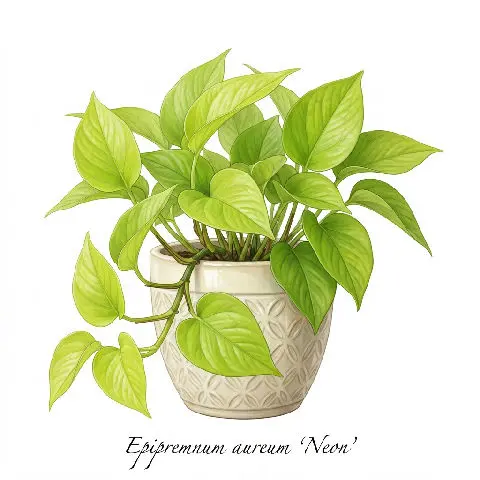
Epipremnum aureum 'Neon', commonly recognized as Neon Pothos, is a captivating cultivar within the Araceae family, distinguished by its exceptionally bright, chartreuse-green foliage.
Most thin plant articles flatten everything into a summary. This guide does the opposite by following Epipremnum (Neon Pothos) through identification, care, handling, and the questions that real readers actually ask.
The linked plant page remains the main internal reference point for this article, but the goal here is to turn that raw data into a readable, structured, and genuinely useful guide.
- Vibrant 'Neon' green foliage, highly popular houseplant.
- Excellent natural air purifier, removing common indoor toxins.
- Easy to care for, tolerant of various indoor conditions.
- Contains calcium oxalate, making it toxic if ingested
- Keep away from children and pets.
- Primarily valued for ornamental beauty and enhancing psychological well-being.
- Native to the tropical forests of Southeast Asia.
This guide is designed to help the reader move from scattered facts to practical understanding. Instead of relying on a thin summary, it pulls together the identity, uses, care profile, safety notes, and evidence context around Epipremnum (Neon Pothos) so the article works as a real reference rather than a keyword page.
02Epipremnum: Taxonomy & Classification
Epipremnum (Neon Pothos) should be anchored to the correct taxonomic identity before any discussion of care, use, or safety begins.
| Common name | Epipremnum (Neon Pothos) |
|---|---|
| Scientific name | Epipremnum aureum NeonW |
| Family | Araceae |
| Order | Alismatales |
| Genus | Epipremnum |
| Species epithet | aureum Neon |
| Author citation | N/A (Cultivar) |
| Common names | নিয়ন পাথোস, গোল্ডেন পাথোস, ডেভিল'স আইভি, Neon Pothos, Golden Pothos, Devil's Ivy, नीयन पॉथोस, गोल्डन पॉथोस, डेविल्स आयवी |
| Origin | French Polynesia |
Using the accepted scientific name Epipremnum aureum Neon helps readers avoid confusion caused by old synonyms, loose common names, or inconsistent plant labels.
Family and order placement also matter because they explain recurring structural traits, likely relatives, and the kinds of mistakes readers often make when they rely on appearance alone.
Correct naming is not a small detail. A plant can collect multiple common names, outdated synonyms, and marketing labels over time, so using Epipremnum aureum Neon consistently reduces the risk of confusion, bad care advice, and even safety mistakes.
03Epipremnum: Physical Characteristics
Microscopic or internal identification notes deepen the picture, especially for processed material: Epipremnum aureum 'Neon' is generally glabrous, meaning trichomes (hairs) are absent or very sparse on its leaf and stem surfaces. Stomata are commonly paracytic, characterized by two subsidiary cells arranged parallel to the guard cells, found predominantly on the abaxial. Powdered plant material reveals abundant needle-shaped calcium oxalate raphides, fragments of epidermal cells, parenchyma cells, and spiral vessels.
In real-world identification, the most helpful approach is to read the plant as a whole. Habit, size, stem texture, leaf arrangement, flower form, and any distinctive surface detail all matter. For Epipremnum (Neon Pothos), morphology is not only a descriptive topic; it is the foundation of correct recognition.
That is especially important when the plant is sold, dried, trimmed, or processed. Once a specimen is no longer growing naturally in front of the reader, small structural clues become more valuable. Leaf shape, venation, root form, bark character, and reproductive features all help confirm identity.
04Where Epipremnum Grows
The native or historically recorded center of distribution for Epipremnum (Neon Pothos) is French Polynesia. That origin is more than background trivia; it explains how the plant responds to heat, moisture, shade, and seasonal change.
Explore Our Platforms
 InfiniCore DataWorks
 Nex-Automata
The plant is associated with the following countries or range markers: French Polynesia, Southeast Asia.
Environmental notes in the live record add more context: Neon Pothos is adaptable to various indoor climates, yet thrives in warm conditions ranging from 60°F to 85°F (15°C to 29°C). This plant prefers well-draining potting soil, ideally rich in organic matter, which helps retain moisture without becoming too saturated. Providing bright, indirect light is crucial for optimal growth, as direct sunlight can scorch.
Physiology data reinforce the habitat story: Displays tolerance to short periods of drought, low light conditions, and a broad range of temperatures typical of indoor environments, enhancing. Performs C3 photosynthesis, the most common photosynthetic pathway among plants, utilizing the Calvin cycle for carbon fixation. Exhibits a moderate transpiration rate, releasing water vapor into the atmosphere through stomata, which contributes to local humidity.
05Cultural Significance of Epipremnum
While Epipremnum aureum 'Neon' itself, with its distinct chartreuse hue, is a relatively recent horticultural development, its parent species, Epipremnum aureum, boasts a rich cultural tapestry woven through its native Southeast Asian and Pacific Island origins. Historically, within the folk medicine traditions of regions like the Philippines and parts of Indonesia, various Epipremnum species have been employed for.
Traditional context matters, but it should always be separated from modern certainty. Historical use can guide questions, yet it does not automatically prove present-day clinical effectiveness.
Cultural context gives the article depth that pure care instructions cannot provide. Plants like Epipremnum (Neon Pothos) are often remembered through naming traditions, household practice, healing systems, foodways, ornamental use, ritual value, or local ecological knowledge.
At the same time, cultural value should be handled responsibly. Traditional respect for a plant does not automatically prove every modern claim, and a modern study does not erase the meaning the plant has held in communities over time. Both sides belong in a careful guide.
06Medicinal Properties of Epipremnum
The main benefit themes associated with the plant include:
- Air Purification — Epipremnum aureum 'Neon' is highly effective at absorbing common indoor airborne toxins such as formaldehyde (CH₂O), benzene (C₆H₆), and.
- Psychological Well-being — The vibrant, cheerful green foliage contributes significantly to a positive indoor ambiance, which has been linked to reductions in.
- Mood Enhancement — Its striking 'Neon' coloration and lush growth are known to uplift spirits and create a more inviting, less anxious environment, fostering.
- Humidity Regulation — Through the process of transpiration, this tropical plant releases moisture into the surrounding air, which can help mitigate dry indoor.
- Stress Reduction — Interactions with indoor plants like Neon Pothos have been scientifically observed to lower physiological and psychological indicators of.
- Cognitive Improvement — The presence of plants in living and working environments has been associated with improved concentration, enhanced memory, and.
- Aesthetic Therapy — The visual appeal and the act of caring for the plant provide a sense of accomplishment and serve as a calming focal point, contributing.
- Connection to Nature — For individuals in urban settings, cultivating Neon Pothos fosters a vital connection to the natural world, which is increasingly.
The evidence matrix gives a more careful picture of those claims: Indoor Air Quality Improvement. Experimental (e.g., NASA Clean Air Study and subsequent research). High. Demonstrated efficacy in removing airborne Volatile Organic Compounds (VOCs) like formaldehyde and benzene in controlled laboratory settings. Psychological Well-being Enhancement. Observational, Quasi-experimental, Biophilic Design Studies. Moderate. Studies suggest that the presence of indoor plants can reduce stress, improve mood, and enhance cognitive function in human subjects. Humidification of Indoor Air. Experimental. High. Plants actively release water vapor into the air through transpiration, contributing to ambient humidity levels in enclosed spaces. Oral and Dermal Irritation. Clinical observation, toxicological analysis. High. Caused by the mechanical and chemical irritation from insoluble calcium oxalate crystals (raphides) upon contact or ingestion by humans and pets.
The stored evidence confidence for this profile is traditional. That should shape how strongly any benefit statement is interpreted.
For non-medicinal or mostly ornamental contexts, the safest approach is to keep the claims modest. A plant may still be valuable ecologically, visually, or culturally without being promoted as a treatment.
- Air Purification — Epipremnum aureum 'Neon' is highly effective at absorbing common indoor airborne toxins such as formaldehyde (CH₂O), benzene (C₆H₆), and.
- Psychological Well-being — The vibrant, cheerful green foliage contributes significantly to a positive indoor ambiance, which has been linked to reductions in.
- Mood Enhancement — Its striking 'Neon' coloration and lush growth are known to uplift spirits and create a more inviting, less anxious environment, fostering.
- Humidity Regulation — Through the process of transpiration, this tropical plant releases moisture into the surrounding air, which can help mitigate dry indoor.
- Stress Reduction — Interactions with indoor plants like Neon Pothos have been scientifically observed to lower physiological and psychological indicators of.
- Cognitive Improvement — The presence of plants in living and working environments has been associated with improved concentration, enhanced memory, and.
- Aesthetic Therapy — The visual appeal and the act of caring for the plant provide a sense of accomplishment and serve as a calming focal point, contributing.
- Connection to Nature — For individuals in urban settings, cultivating Neon Pothos fosters a vital connection to the natural world, which is increasingly.
- Respiratory Support (Indirect) — By actively reducing the concentration of harmful pollutants in indoor air, it indirectly supports lung function and may.
- Biophilic Design Integration — Incorporating this plant into interior design aligns with biophilic principles, which advocate for integrating natural elements.
07Epipremnum: Chemical Constituents
The broader constituent profile includes:
- Calcium Oxalate Crystals — All parts of Epipremnum aureum 'Neon' contain insoluble needle-shaped calcium oxalate.
- Flavonoids — While not extensively studied for this specific cultivar's medicinal application, flavonoids are common.
- Terpenoids — Various terpenoid compounds, which contribute to plant defense mechanisms and sometimes aroma, are.
- Saponins — These glycosidic compounds with surfactant properties can be found in many plant species; their specific role or concentration for medicinal purposes in this variant is not a primary focus.
- Phenolic Compounds — Widespread in plant tissues, phenolic compounds are known for their antioxidant capacity and. they are expected to be present in the leaves and stems.
- Photosynthetic Pigments — Chlorophyll a and b, along with various carotenoids, are abundant in the vibrant 'Neon'. Volatile Organic Compounds (VOCs) (Absorbed) — While not produced by the plant, Epipremnum aureum 'Neon' is notable.
- Sugars and Starches — Essential carbohydrates are present for energy storage, metabolic processes, and providing.
The detailed phytochemistry file adds these markers: Calcium Oxalate (Raphides), Organic Salt, All parts (leaves, stems, roots), High% dry weight (variable); Formaldehyde (absorbed), Aldehyde, Leaves (absorbed from air), Variable (environmental)ppb; Benzene (absorbed), Aromatic Hydrocarbon, Leaves (absorbed from air), Variable (environmental)ppb; Xylene (absorbed), Aromatic Hydrocarbon, Leaves (absorbed from air), Variable (environmental)ppb; Chlorophylls, Porphyrin Pigment, Leaves, Highmg/g fresh weight; Carotenoids, Terpenoid Pigment, Leaves, Moderatemg/g fresh weight; Flavonoids, Polyphenol, Leaves, Trace to lowmg/g fresh weight.
Compound profiles also shift with plant part, age, season, processing, and storage. The chemistry of a fresh leaf, dried root, or concentrated extract should never be treated as automatically identical.
08Using Epipremnum: Methods & Dosage
Recorded preparation and use methods include:
- Indoor Cultivation — Primarily grown as an ornamental houseplant in hanging baskets, on shelves, or trained to climb moss poles or trellises to enhance indoor aesthetics.
- Air Purification Placement — Position strategically in living rooms, offices, or bedrooms, especially areas prone to air pollutants, to maximize its toxin-absorbing capabilities.
- Biophilic Design Integration — Incorporate into interior spaces to introduce natural elements, promoting a sense of calm, reducing stress, and fostering a connection with nature.
- Gifting — An ideal and low-maintenance gift for both novice and experienced plant enthusiasts due to its striking appearance and ease of care.
- Propagation for Expansion — Utilize stem cuttings to easily propagate new plants, allowing for expansion of your collection or sharing with friends and family.
- Aesthetic Enhancement — Use its long, vining stems to create visual interest by cascading from elevated positions or to add a vibrant splash of color to dull corners.
- Educational Tool — Its resilience and visible growth make it an excellent plant for demonstrating basic botanical principles and plant care to children or beginners.
For indoor readers, “how to use” usually means how the plant is placed, styled, handled, propagated, and maintained within the living space rather than how it is taken internally.
- Identify the exact species and plant part first.
- Match the preparation to the intended use.
- Check safety, interactions, and processing details before routine use or large-scale handling.
09Epipremnum Side Effects & Safety
Specific warnings recorded for this plant include:
- Keep Out of Reach — Crucially, place Epipremnum aureum 'Neon' in locations inaccessible to curious children and pets to prevent accidental ingestion or contact.
- Handle with Care — Wear protective gloves when handling, pruning, or repotting the plant, especially if you have sensitive skin, to avoid direct contact with.
- Wash Hands Thoroughly — Always wash hands with soap and water immediately after handling the plant to remove any residual sap or irritants.
- Emergency Protocol — In the event of ingestion or severe contact, seek immediate medical attention or contact a local poison control center for guidance. Pet Owners' Vigilance — Pet owners must be particularly cautious and consider non-toxic alternatives if their animals are prone to chewing on houseplants.
- Not for Internal Use — Emphatically stress that this plant is strictly for ornamental purposes and must never be consumed or used in any internal medicinal.
- Eye Protection — Exercise diligence to prevent the plant's sap from coming into contact with eyes during any handling or maintenance activities.
- Oral Irritation — Ingestion of any part of Epipremnum aureum 'Neon' causes immediate and intense pain, burning, and swelling of the mouth, tongue, and throat.
- Digestive Upset — May lead to symptoms such as nausea, vomiting, abdominal pain, and diarrhea if consumed, particularly in sensitive individuals or pets.
- Skin Irritation — Direct contact with the plant's sap can result in localized skin irritation, redness, itching, or contact dermatitis in susceptible.
Quality-control notes add another warning: Low risk of adulteration in the horticultural trade, though misidentification with other Epipremnum cultivars is possible.
No plant should be described as universally safe. Identity, dose, plant part, preparation style, age, pregnancy status, medication use, allergies, and contamination risk all change the answer.
10How to Grow Epipremnum
The cultivation record emphasizes these practical steps:
- Light — Provide bright, indirect light for optimal leaf vibrancy; direct sun can scorch leaves, while too little light may cause variegation to fade.
- Soil — Use a well-draining, loamy potting mix; a blend of standard houseplant soil with perlite and orchid bark (1:1:1 ratio) enhances aeration and drainage.
- Watering — Allow the top 2-3 inches of soil to dry out between waterings, then water thoroughly until it drains from the bottom. Avoid overwatering to prevent root rot. Temperature & Humidity — Thrives in warm temperatures between 15-35°C (55-90°F) and benefits from average to high humidity; use a humidifier or pebble tray if air is too dry.
- Fertilizer — Fertilize monthly during the active growing season (spring and summer) with a balanced liquid houseplant fertilizer, but it is not strictly necessary if.
The broader growth environment is described like this: Neon Pothos is adaptable to various indoor climates, yet thrives in warm conditions ranging from 60°F to 85°F (15°C to 29°C). This plant prefers well-draining potting soil, ideally rich in organic matter, which helps retain moisture without becoming too saturated. Providing bright, indirect light is crucial for optimal growth, as direct sunlight can scorch.
In practice, healthy cultivation comes from systems thinking rather than one-off tricks. Site choice, drainage, timing, spacing, pruning, feeding, and observation all reinforce one another.
11Epipremnum: Light, Water & Soil Needs
Indoors, the plant responds to microclimate more than many people expect. Window direction, airflow, heating, and room humidity can change the care rhythm quickly.
Light, water, and soil should never be treated as separate checkboxes. A plant in stronger light often dries faster, soil texture changes how quickly water moves, and temperature plus humidity influence how stress appears in leaves and roots.
For Epipremnum (Neon Pothos), the safest care approach is to treat the light pattern described in the plant profile, watering that responds to season and drainage, and well-matched soil structure and drainage as linked decisions rather than isolated tips. If one condition shifts, the other two usually need to be reconsidered as well.
Microclimate matters too. Indoors, room placement and airflow can matter as much as window exposure. Outdoors, reflected heat, slope, mulch, and nearby plants can change how the temperature rhythm described for the species and humidity that matches the plant type are actually experienced at plant level.
12Epipremnum Propagation Methods
Documented propagation routes include Propagation of Epipremnum aureum (Neon Pothos) can be successfully achieved through stem cuttings. Follow these steps: 1) Timing: Early spring is the best. roots should develop within 1-2 weeks. 6) For soil propagation, keep the soil moist but not soaking wet until roots establish (around 2-4 weeks). 7).
Propagation works best when the parent stock is healthy, correctly identified, and handled in the right season. That sounds obvious, but it is exactly where many failures begin.
- Propagation of Epipremnum aureum (Neon Pothos) can be successfully achieved through stem cuttings. Follow these steps: 1) Timing: Early spring is the best.
- Roots should develop within 1-2 weeks. 6) For soil propagation, keep the soil moist but not soaking wet until roots establish (around 2-4 weeks). 7).
Propagation works best when the reader matches method to biology. Some plants respond readily to cuttings, some to division, some to seed, and others require more patience or more exact seasonal timing.
13Managing Epipremnum Problems
Indoor problems usually start quietly: mites, mealybugs, scale, root stress, weak light, or stale soil structure. Routine inspection is what keeps small issues from becoming full infestations.
The smartest response sequence is observation first, environmental correction second, and treatment only after the real pattern is clear.
Pest and disease management is strongest when it begins before visible damage becomes severe. Routine observation, clean handling, sensible spacing, air movement, and balanced watering reduce many problems before treatment is even needed.
When symptoms do appear on Epipremnum (Neon Pothos), the most reliable response is diagnostic rather than reactive. Yellowing, spots, wilt, chewing, and stunting can all have multiple causes, so a rushed treatment can waste time or worsen the problem.
Good troubleshooting also includes environmental correction. Pests and disease often reveal a deeper issue such as root stress, poor airflow, inconsistent watering, weak light, or exhausted soil structure.
14How to Harvest Epipremnum
Storage guidance from the quality-control record reads as follows: As a living plant, stability depends on consistent environmental conditions; cuttings can be stored short-term in water or moist propagation medium.
For indoor plants, this section often translates into trimming, leaf cleanup, offset collection, occasional flower removal, and safe handling of spent growth.
Whatever the purpose, the rule is the same: harvest clean material, label it clearly, and store it in a way that preserves identity and condition.
Harvest and storage determine whether a plant's quality is preserved after it leaves the bed, pot, field, or wild source. Clean timing, correct plant part selection, and careful drying or handling all matter more than many readers expect.
For Epipremnum (Neon Pothos), this means the reader should think beyond collection. Material that is poorly labeled, overheated, damp in storage, or mixed with the wrong part of the plant can quickly lose value or create confusion later.
15Epipremnum in Garden Design
In indoor styling, Epipremnum (Neon Pothos) usually works best beside plants that share similar moisture expectations but offer contrast in texture, height, or silhouette.
Companion planting and design are not only aesthetic decisions. They affect airflow, root competition, moisture sharing, harvest access, visibility, and the general logic of the planting scheme.
With Epipremnum (Neon Pothos), good placement means thinking about mature size, maintenance rhythm, and how neighboring plants change the feel and function of the space. A plant can be healthy on its own and still be poorly placed within the broader composition.
That is why the best design advice combines biology with usability. The planting should look coherent, but it should also make watering, pruning, harvest, and pest observation easier rather than harder.
16Epipremnum: Scientific Evidence
The evidence matrix points to several recurring themes: Indoor Air Quality Improvement. Experimental (e.g., NASA Clean Air Study and subsequent research). High. Demonstrated efficacy in removing airborne Volatile Organic Compounds (VOCs) like formaldehyde and benzene in controlled laboratory settings. Psychological Well-being Enhancement. Observational, Quasi-experimental, Biophilic Design Studies. Moderate. Studies suggest that the presence of indoor plants can reduce stress, improve mood, and enhance cognitive function in human subjects. Humidification of Indoor Air. Experimental. High. Plants actively release water vapor into the air through transpiration, contributing to ambient humidity levels in enclosed spaces. Oral and Dermal Irritation. Clinical observation, toxicological analysis. High. Caused by the mechanical and chemical irritation from insoluble calcium oxalate crystals (raphides) upon contact or ingestion by humans and pets.
Analytical testing notes also strengthen the evidence base: Visual identification of distinct foliage, microscopic examination for characteristic calcium oxalate crystals, and general horticultural health assessments.
A careful evidence section should say what is known, what is plausible, and what remains uncertain. Readers are better served by clear limits than by exaggerated confidence.
Evidence note: this section blends the live plant record, local ethnobotanical activity data, chemistry records, and the linked Flora Medical Global plant profile for Epipremnum (Neon Pothos).
17Buying Epipremnum: Expert Tips
Quality markers worth checking include Calcium oxalate raphides serve as a key marker for identification and assessment of its characteristic irritant properties.
Adulteration and substitution risk should not be ignored: Low risk of adulteration in the horticultural trade, though misidentification with other Epipremnum cultivars is possible.
When buying Epipremnum (Neon Pothos), start with verified botanical identity. The label, scientific name, and the source page should agree before you judge price, size, or claimed benefits.
For living plants, inspect roots, stem firmness, foliage health, and early pest signs. For dried or processed material, look for batch clarity, clean aroma, absence of mold, and any sign that the product has been over-processed to disguise poor quality.
Buying advice should begin with identity. The label, scientific name, visible condition, and seller credibility should agree before price or convenience becomes the deciding factor.
18Common Questions About Epipremnum
What is Epipremnum (Neon Pothos) best known for?
Epipremnum aureum 'Neon', commonly recognized as Neon Pothos, is a captivating cultivar within the Araceae family, distinguished by its exceptionally bright, chartreuse-green foliage.
Is Epipremnum (Neon Pothos) beginner-friendly?
That depends on the growing environment and the intended use. Some plants are easy to grow but not simple to use medicinally, while others are the opposite.
How much light does Epipremnum (Neon Pothos) need?
Match the species to the exposure described in the guide rather than using a generic light rule.
How often should Epipremnum (Neon Pothos) be watered?
Water according to soil, drainage, season, and plant response rather than a fixed schedule.
Can Epipremnum (Neon Pothos) be propagated at home?
Yes, but the best method depends on whether the species responds best to seed, cuttings, division, offsets, or other propagation routes.
Does Epipremnum (Neon Pothos) have safety concerns?
Yes. Safety always depends on identity, plant part, handling, and user context.
What is the biggest mistake people make with Epipremnum (Neon Pothos)?
The most common mistake is applying generic advice instead of matching the plant to its real environment, identity, and limits.
Where can I verify more information about Epipremnum (Neon Pothos)?
Start with the Flora Medical Global plant profile: https://www.floramedicalglobal.com/indoor-plants/neon-pothos
Why do sources sometimes disagree about Epipremnum (Neon Pothos)?
Different references may use different synonyms, plant parts, cultivation conditions, or evidence standards. That is why taxonomy and source quality both matter.
19Epipremnum: Scientific References
Authoritative sources and related guides:
- Wikipedia — background reference
- PubMed — peer-reviewed studies
- Kew POWO — botanical reference
- NCBI PMC — open-access research
- WHO — global health authority
Related on Flora Medical Global
Reviewed by the Flora Medical Global Botanical Review Panel
Multi-disciplinary editorial group · Botany · Ethnobotany · Herbal-medicine literature
Who reviewed this: This page was checked by the Flora Medical Global Botanical Review Panel — an in-house editorial group of botany graduates, ethnobotany researchers, and horticulture practitioners who collectively maintain our 7,000+ plant encyclopedia. Meet the team.
Our 4-step verification process
1. Taxonomic verification
Scientific names and synonyms cross-checked against Kew POWO, World Flora Online, and The Plant List.
2. Phytochemical & medicinal cross-reference
Active compounds, traditional uses, and reported activities are cross-referenced with PubMed, USDA Dr. Duke's database, and peer-reviewed ethnobotanical literature.
3. Conservation & distribution check
Distribution, ecology, and conservation status confirmed against GBIF occurrence records and the IUCN Red List.
4. Editorial & safety review
Every entry passes an editorial pass for clarity, originality, and safety notices (toxicity, contraindications, dosage caveats) before publication.
Last reviewed:
Explore Our Platforms
Comments (0)
No comments yet. Be the first!