
Overview & Introduction
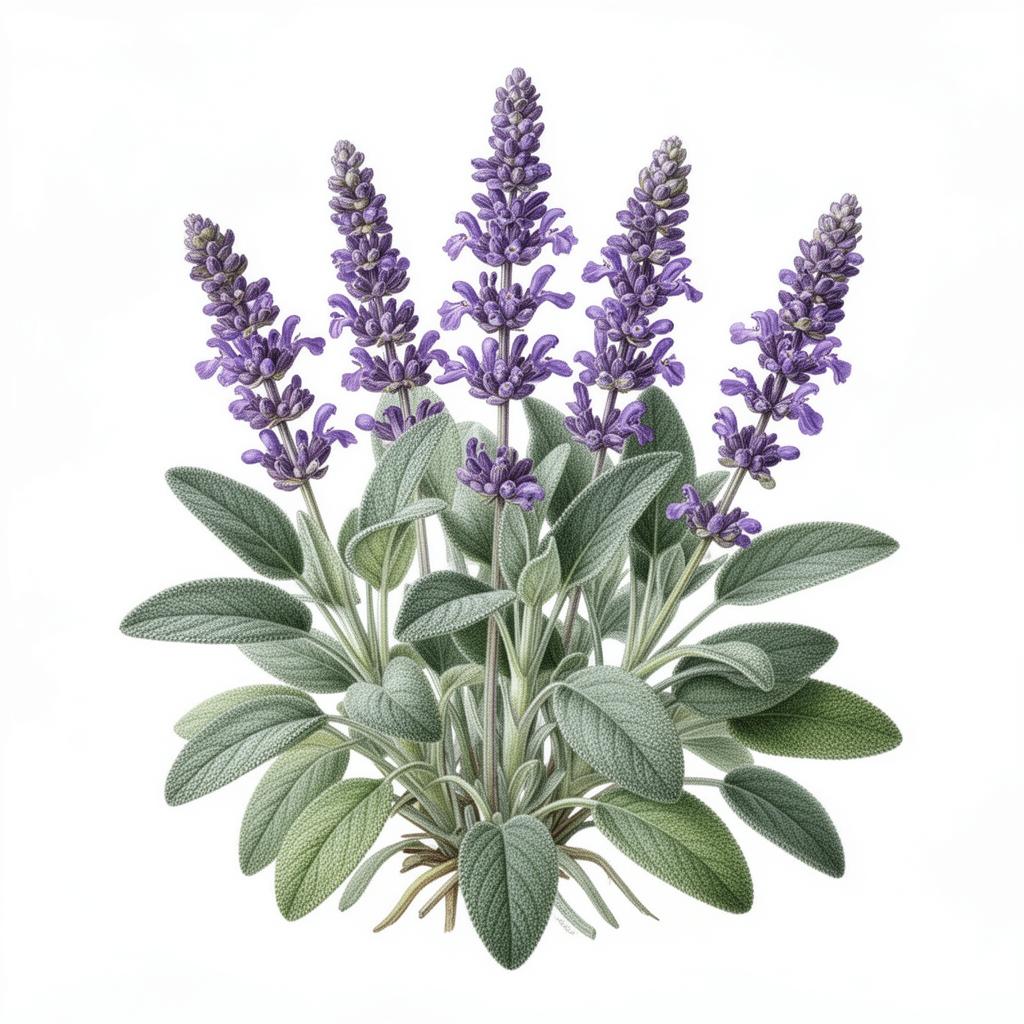
Common sage, scientifically known as Salvia officinalis L., is a revered perennial subshrub belonging to the Lamiaceae family, native to the sun-drenched Mediterranean region.
Most thin plant articles flatten everything into a summary. This guide does the opposite by following Sage through identification, care, handling, and the questions that real readers actually ask.
The linked plant page remains the main internal reference point for this article, but the goal here is to turn that raw data into a readable, structured, and genuinely useful guide.
- Salvia officinalis is a Mediterranean perennial herb known for its culinary and medicinal uses.
- Renowned for cognitive enhancement, anti-inflammatory, and antimicrobial properties.
- Rich in essential oils (thujone, camphor), phenolic acids (rosmarinic acid), and flavonoids.
- Traditionally used for memory, menopausal symptoms, and digestive issues.
- Requires caution, especially in high doses due to thujone content, particularly for pregnant individuals or those with seizure disorders.
- A versatile herb widely researched for its diverse therapeutic potential.
Botanical Profile & Taxonomy
Sage should be anchored to the correct taxonomic identity before any discussion of care, use, or safety begins.
| Common name | Sage |
|---|---|
| Scientific name | Salvia officinalis L. |
| Family | Lamiaceae |
| Order | Lamiales |
| Genus | Salvia |
| Species epithet | officinalis L. |
| Author citation | L. |
| Synonyms | R. (2003). World Checklist of Selected Plant Families Database in ACCESS:., M. & Muer, T. (2022). Flora Germanica: alle Farn- und Blütenpflanzen Deutschlands in Text., Uberstadt-Weiher., M. (2011). Zwei Funde der Kleine Seerose (Nymphaea candida) sowie weiter |
| Common names | সেইজ, সাধারণ সেইজ, বাগানের সেইজ, Sage, Common Sage, Garden Sage, Culinary Sage, साधू, कॉमन सेज, बगीचे की सेज |
| Local names | Salvia, Echte Salbei, Salfej Aptečny, Salvia domestica, Echter Salbei, Ceidwad, Garten-Salbei, Chá-da-Grécia, Salvia fina, Mermasangre, Saets, Echte salie |
| Origin | Mediterranean Basin |
| Life cycle | Perennial |
| Growth habit | s | Forb/herb<br>Shrub<br>Subshrub | |
Using the accepted scientific name Salvia officinalis L. helps readers avoid confusion caused by old synonyms, loose common names, or inconsistent plant labels.
Family and order placement also matter because they explain recurring structural traits, likely relatives, and the kinds of mistakes readers often make when they rely on appearance alone.
Physical Description & Morphology
Microscopic or internal identification notes deepen the picture, especially for processed material: Both non-glandular (multicellular, uniseriate, often warty) and glandular trichomes are present, including capitate (short-stalked with uni- or. Stomata are predominantly diacytic (rubiaceous type), characterized by two subsidiary cells arranged perpendicularly to the guard cells. Key features include fragments of epidermal tissue with characteristic glandular and non-glandular trichomes, diacytic stomata, fragments of spiral.
In overall habit, the plant is described as s | Forb/herb<br>Shrub<br>Subshrub | with a mature height around Typically 0.5-4 m and spread of Typically 0.5-3 m.
In real-world identification, the most helpful approach is to read the plant as a whole. Habit, size, stem texture, leaf arrangement, flower form, and any distinctive surface detail all matter. For Sage, morphology is not only a descriptive topic; it is the foundation of correct recognition.
Natural Habitat & Distribution
The native or historically recorded center of distribution for Sage is Mediterranean Basin. That origin is more than background trivia; it explains how the plant responds to heat, moisture, shade, and seasonal change.
The plant is associated with the following countries or range markers: Albania, Croatia, Greece, Italy, Spain, Turkey.
Environmental notes in the live record add more context: Naturally grows in garrigue (low evergreen scrubland) and maquis (dense evergreen shrubland) formations, and stony hillsides. Prefers typical Mediterranean climate zones (USDA Hardiness Zones 4-10). Altitude range typically from sea level up to 800 meters. Requires annual rainfall of 400-800 mm, but tolerates dry periods once established.
In cultivation terms, the main ecological clues are: Full Sun; Weekly; Sandy loam with good drainage, pH 6.0-7.0 (slightly acidic to neutral/slightly alkaline); Often 6-10; species-dependent; Perennial; s | Forb/herb<br>Shrub<br>Subshrub |.
Physiology data reinforce the habitat story: Demonstrates resilience to environmental stressors such as drought, high light intensity, and nutrient-poor soils, typical of its Mediterranean. Salvia officinalis utilizes C3 photosynthesis, a common pathway for temperate plants, optimizing carbon fixation in moderate light and temperature. Exhibits moderate transpiration rates and is well-adapted to drought stress, employing mechanisms like dense trichomes and a robust root system to.
Traditional & Cultural Significance
In ancient Rome, sage was considered a sacred herb for spiritual purification and medicinal use, with detailed rituals for its harvesting. The Greeks used it extensively for various ailments, associating it with wisdom. In European folk medicine, sage was revered as a 'cure-all' and a symbol of longevity and good health; it was often planted near homes to ward off evil. Medieval texts frequently mention its use in.
Ethnobotanical records also show how this plant has been framed across different places: Secondary-metabolite activity often reported in related shrub taxa in Albania; France; Germany; Greece; Italy; NW. Balkan Pen. Spain; Switzerland (https://api.gbif.org/v1/species/2927004; https://api.gbif.org/v1/species/2927004/vernacularNames?limit=100; https://api.gbif.org/v1/species/2927004/synonyms?limit=100; https://api.gbif.org/v1/species/2927004/distributions?limit=200; AI heuristic estimate from taxonomy/common-name patterns; verify manually.).
Local names help show how different communities notice and classify the plant: Salvia, Echte Salbei, Salfej Aptečny, Salvia domestica, Echter Salbei, Ceidwad, Garten-Salbei, Chá-da-Grécia, Salvia fina, Mermasangre.
Traditional context matters, but it should always be separated from modern certainty. Historical use can guide questions, yet it does not automatically prove present-day clinical effectiveness.
Medicinal Properties & Health Benefits
The main benefit themes associated with the plant include: Cognitive Enhancement — Sage has been traditionally used to improve memory and focus, with modern research suggesting its compounds, particularly rosmarinic. Anti-inflammatory Action — The presence of diterpenes like carnosol and carnosic acid, along with flavonoids, contributes to sage's significant. Antimicrobial Properties — Sage essential oil, rich in compounds such as thujone, camphor, and cineole, exhibits broad-spectrum antimicrobial activity against. Antioxidant Protection — Phenolic acids, especially rosmarinic acid, and flavonoids provide potent antioxidant effects, neutralizing free radicals and. Menopausal Symptom Relief — Sage is well-regarded for its ability to reduce hot flashes and excessive sweating associated with menopause, believed to be due. Digestive Aid — Traditionally used to alleviate dyspepsia, bloating, and gas, sage promotes healthy digestion by stimulating bile flow and possessing. Oral Health Support — Due to its antimicrobial and anti-inflammatory actions, sage gargles are effective in treating sore throats, gingivitis, mouth ulcers. Blood Glucose Regulation — Emerging research indicates that sage may help lower blood glucose levels by improving insulin sensitivity and inhibiting glucose.
The evidence matrix gives a more careful picture of those claims: Improves cognitive function and memory. Human clinical trials, in vitro, animal studies. Moderate. Studies show acute and chronic benefits on memory, attention, and mood, likely via cholinesterase inhibition and antioxidant effects. Reduces hot flashes and night sweats in menopausal women. Human clinical trials. Strong. Several randomized controlled trials demonstrate significant reduction in frequency and intensity of menopausal symptoms with sage preparations. Exhibits significant anti-inflammatory and antimicrobial activity. In vitro, animal studies, some human topical/oral studies. High. Widely supported by studies showing inhibition of inflammatory mediators and broad-spectrum activity against various pathogens. Possesses antioxidant properties protecting against oxidative stress. In vitro, animal studies. High. Phenolic compounds like rosmarinic acid are well-documented for their potent free radical scavenging capabilities.
The stored evidence confidence for this profile is traditional. That should shape how strongly any benefit statement is interpreted.
For medicinal content, the key discipline is to distinguish traditional use, mechanism-based plausibility, and human clinical support. Those are related ideas, but they are not the same thing.
- Cognitive Enhancement — Sage has been traditionally used to improve memory and focus, with modern research suggesting its compounds, particularly rosmarinic.
- Anti-inflammatory Action — The presence of diterpenes like carnosol and carnosic acid, along with flavonoids, contributes to sage's significant.
- Antimicrobial Properties — Sage essential oil, rich in compounds such as thujone, camphor, and cineole, exhibits broad-spectrum antimicrobial activity against.
- Antioxidant Protection — Phenolic acids, especially rosmarinic acid, and flavonoids provide potent antioxidant effects, neutralizing free radicals and.
- Menopausal Symptom Relief — Sage is well-regarded for its ability to reduce hot flashes and excessive sweating associated with menopause, believed to be due.
- Digestive Aid — Traditionally used to alleviate dyspepsia, bloating, and gas, sage promotes healthy digestion by stimulating bile flow and possessing.
- Oral Health Support — Due to its antimicrobial and anti-inflammatory actions, sage gargles are effective in treating sore throats, gingivitis, mouth ulcers.
- Blood Glucose Regulation — Emerging research indicates that sage may help lower blood glucose levels by improving insulin sensitivity and inhibiting glucose.
- Wound Healing — Applied topically, sage preparations can aid in wound healing by preventing infection through its antimicrobial effects and reducing.
- Mood and Stress Reduction — The aromatic compounds in sage essential oil are often used in aromatherapy to alleviate stress, anxiety, and improve mood.
Chemical Constituents & Phytochemistry
The broader constituent profile includes Essential Oils — Dominated by monoterpenes like alpha- and beta-thujone, camphor, 1,8-cineole, and borneol. Phenolic Acids — Notably rosmarinic acid, caffeic acid, and chlorogenic acid, which are potent antioxidants and. Flavonoids — Including luteolin, apigenin, and their glycosides, known for their antioxidant, anti-inflammatory, and. Diterpenes — Such as carnosol and carnosic acid, powerful antioxidants and anti-inflammatory compounds, also showing. Triterpenes — Ursolic acid and oleanolic acid, which possess anti-inflammatory, hepatoprotective, and potential. Tannins — Provide astringent properties, contributing to sage's use in oral rinses and for reducing excessive. Polysaccharides — Contribute to immunomodulatory effects, supporting the body's natural defense mechanisms. Saponins — Present in smaller amounts, contributing to some of the plant's traditional cleansing and expectorant uses.
The detailed phytochemistry file adds these markers: Rosmarinic Acid, Phenolic Acid, Leaves, 0.5-3.0%w/w; alpha-Thujone, Monoterpene (Essential Oil), Leaves, 20-60%of essential oil; Camphor, Monoterpene (Essential Oil), Leaves, 10-30%of essential oil; Carnosol, Diterpene, Leaves, 0.1-0.5%w/w; Luteolin, Flavonoid, Leaves, Trace-0.1%w/w; 1,8-Cineole, Monoterpene (Essential Oil), Leaves, 5-15%of essential oil.
Compound profiles also shift with plant part, age, season, processing, and storage. The chemistry of a fresh leaf, dried root, or concentrated extract should never be treated as automatically identical.
How to Use — Preparations & Dosage
Recorded preparation and use methods include Herbal Tea (Infusion) — Steep 1-2 teaspoons of dried sage leaves in hot water for 5-10 minutes; traditionally used for digestive issues, sore throats, and menopausal symptoms. Tincture — A concentrated alcoholic extract of sage leaves, typically taken in drops under the tongue or diluted in water for systemic benefits like cognitive support. Essential Oil — Dilute sage essential oil in a carrier oil (e.g., jojoba, almond) for topical application to soothe muscles or for aromatherapy to calm the mind; never ingest undiluted. Culinary Herb — Fresh or dried leaves are widely used in cooking to flavor meats, stuffings, and vegetables, adding distinct aromatic and digestive properties. Gargle/Mouthwash — Prepare a strong sage tea and use it as a gargle for sore throats, gingivitis, and mouth ulcers due to its antiseptic qualities. Poultice/Compress — Crush fresh sage leaves or soak dried leaves in hot water to create a paste or compress, applied topically to minor wounds, insect bites, or inflammatory skin.
The plant part most closely linked to use is recorded as Leaves, bark, roots, seeds, or berries cited in related taxa.
Edibility and processing notes matter here as well: Varies by species and plant part; verify before use.
Preparation defines the outcome. Tea, decoction, tincture, powder, fresh plant material, cooked food use, and concentrated extract cannot be discussed as if they were interchangeable.
- Identify the exact species and plant part first.
- Match the preparation to the intended use.
- Check safety, interactions, and processing details before routine use or large-scale handling.
Safety Profile, Side Effects & Contraindications
The first safety note is direct: Thujone, a component of sage essential oil, can be toxic in high doses or prolonged exposure. Symptoms of overdose include nausea, vomiting, dizziness, abdominal pain, seizures, tremors, and kidney damage. The essential oil itself should.
Specific warnings recorded for this plant include Pregnancy & Lactation — Avoid medicinal doses of sage during pregnancy due to potential emmenagogue effects and during lactation as it may reduce milk supply; culinary use is generally considered safe. Epilepsy & Seizure Disorders — Individuals with epilepsy or a history of seizures should avoid sage essential oil and high doses of sage preparations due to. Hormone-Sensitive Conditions — Use with caution in individuals with hormone-sensitive conditions (e.g., breast cancer, uterine fibroids) due to potential mild. Drug Interactions — May interact with anticoagulant medications (due to vitamin K content), antidiabetic drugs (potentiating blood sugar lowering), and. Children — Medicinal use of sage in children should be approached with caution and under professional guidance due to sensitivity to active compounds. Dosage — Adhere to recommended dosages; prolonged use of high-thujone varieties or essential oil should be avoided. Thujone Toxicity — High doses or prolonged use of common sage, particularly essential oil, can lead to thujone accumulation, potentially causing seizures. Allergic Reactions — Some individuals may experience skin irritation, rashes, or respiratory symptoms upon contact or ingestion, especially if sensitive to.
Quality-control notes add another warning: Adulteration can occur with other Salvia species (e.g., S. triloba, S. lavandulifolia), which may have different chemical profiles or higher thujone content, or with non-Salvia.
No plant should be described as universally safe. Identity, dose, plant part, preparation style, age, pregnancy status, medication use, allergies, and contamination risk all change the answer.
Growing & Cultivation Guide
The cultivation record emphasizes these practical steps: Sunlight — Requires full sun exposure (at least 6-8 hours daily) for optimal growth and essential oil production. Soil — Thrives in well-draining, sandy-loam soil with a neutral to slightly alkaline pH (6.0-7.0). Watering — Drought-tolerant once established; water sparingly, allowing the soil to dry out between waterings to prevent root rot. Propagation — Easily propagated from seeds, stem cuttings (semi-hardwood in late summer), or by division of mature plants in spring or fall. Pruning — Prune lightly after flowering to maintain shape and encourage bushier growth; a harder prune in early spring can rejuvenate older plants. Fertilization — Generally requires minimal fertilization.
The broader growth environment is described like this: Naturally grows in garrigue (low evergreen scrubland) and maquis (dense evergreen shrubland) formations, and stony hillsides. Prefers typical Mediterranean climate zones (USDA Hardiness Zones 4-10). Altitude range typically from sea level up to 800 meters. Requires annual rainfall of 400-800 mm, but tolerates dry periods once established.
Planning becomes easier when these traits are kept in view: s | Forb/herb<br>Shrub<br>Subshrub |; Typically 0.5-4 m; Typically 0.5-3 m; Moderate; Beginner.
In practice, healthy cultivation comes from systems thinking rather than one-off tricks. Site choice, drainage, timing, spacing, pruning, feeding, and observation all reinforce one another.
Light, Water & Soil Requirements
The most useful care snapshot is this: Light: Full Sun; Water: Weekly; Soil: Sandy loam with good drainage, pH 6.0-7.0 (slightly acidic to neutral/slightly alkaline); Temperature: -15-30°C; USDA zone: Often 6-10; species-dependent.
Outdoors, light, water, and soil must be read together. The same watering schedule can be too much in dense clay and too little in a porous sandy bed.
| Light | Full Sun |
|---|---|
| Water | Weekly |
| Soil | Sandy loam with good drainage, pH 6.0-7.0 (slightly acidic to neutral/slightly alkaline) |
| Temperature | -15-30°C |
| USDA zone | Often 6-10; species-dependent |
Light, water, and soil should never be treated as separate checkboxes. A plant in stronger light often dries faster, soil texture changes how quickly water moves, and temperature plus humidity influence how stress appears in leaves and roots.
For Sage, the safest care approach is to treat Full Sun, Weekly, and Sandy loam with good drainage, pH 6.0-7.0 (slightly acidic to neutral/slightly alkaline) as linked decisions rather than isolated tips. If one condition shifts, the other two usually need to be reconsidered as well.
Propagation Methods
Documented propagation routes include Seeds: Sow seeds indoors 6-8 weeks before the last frost or directly outdoors after danger of frost has passed, 0.5 cm deep. Germination takes 7-21 days.
Propagation works best when the parent stock is healthy, correctly identified, and handled in the right season. That sounds obvious, but it is exactly where many failures begin.
- Seeds: Sow seeds indoors 6-8 weeks before the last frost or directly outdoors after danger of frost has passed, 0.5 cm deep. Germination takes 7-21 days.
Propagation works best when the reader matches method to biology. Some plants respond readily to cuttings, some to division, some to seed, and others require more patience or more exact seasonal timing.
A successful propagation guide therefore starts with healthy parent material and realistic expectations. Weak stock, rushed handling, and poor aftercare can make even a technically correct method fail.
Pest & Disease Management
The recorded problem list includes Pests: Aphids (spray with insecticidal soap or neem oil), spider mites (increase humidity, spray with water or neem.).
For medicinal species, pest pressure is not only a horticultural issue. It also affects harvest cleanliness, storage stability, and confidence in the final material.
The smartest response sequence is observation first, environmental correction second, and treatment only after the real pattern is clear.
- Pests: Aphids (spray with insecticidal soap or neem oil), spider mites (increase humidity, spray with water or neem).
Pest and disease management is strongest when it begins before visible damage becomes severe. Routine observation, clean handling, sensible spacing, air movement, and balanced watering reduce many problems before treatment is even needed.
When symptoms do appear on Sage, the most reliable response is diagnostic rather than reactive. Yellowing, spots, wilt, chewing, and stunting can all have multiple causes, so a rushed treatment can waste time or worsen the problem.
Harvesting, Storage & Processing
The plant part most often associated with harvest or processing is Leaves, bark, roots, seeds, or berries cited in related taxa.
Storage guidance from the quality-control record reads as follows: Dried sage leaves should be stored in airtight containers, away from light and moisture, in a cool, dark place to preserve volatile compounds and prevent degradation; essential.
For medicinal plants, harvesting cannot be separated from processing. The right plant part, the right timing, and the right drying conditions all shape quality and safety.
Whatever the purpose, the rule is the same: harvest clean material, label it clearly, and store it in a way that preserves identity and condition.
Harvest and storage determine whether a plant's quality is preserved after it leaves the bed, pot, field, or wild source. Clean timing, correct plant part selection, and careful drying or handling all matter more than many readers expect.
Companion Planting & Garden Design
Useful companions or placement partners include Rosemary; Cabbage; Carrots; Tomatoes; Strawberries.
In a home herb garden or medicinal bed, Sage should be placed where harvesting is easy, labeling remains clear, and neighboring plants do not create confusion at collection time.
- Rosemary
- Cabbage
- Carrots
- Tomatoes
- Strawberries
Companion planting and design are not only aesthetic decisions. They affect airflow, root competition, moisture sharing, harvest access, visibility, and the general logic of the planting scheme.
With Sage, good placement means thinking about mature size, maintenance rhythm, and how neighboring plants change the feel and function of the space. A plant can be healthy on its own and still be poorly placed within the broader composition.
That is why the best design advice combines biology with usability. The planting should look coherent, but it should also make watering, pruning, harvest, and pest observation easier rather than harder.
Scientific Research & Evidence Base
The evidence matrix points to several recurring themes: Improves cognitive function and memory. Human clinical trials, in vitro, animal studies. Moderate. Studies show acute and chronic benefits on memory, attention, and mood, likely via cholinesterase inhibition and antioxidant effects. Reduces hot flashes and night sweats in menopausal women. Human clinical trials. Strong. Several randomized controlled trials demonstrate significant reduction in frequency and intensity of menopausal symptoms with sage preparations. Exhibits significant anti-inflammatory and antimicrobial activity. In vitro, animal studies, some human topical/oral studies. High. Widely supported by studies showing inhibition of inflammatory mediators and broad-spectrum activity against various pathogens. Possesses antioxidant properties protecting against oxidative stress. In vitro, animal studies. High. Phenolic compounds like rosmarinic acid are well-documented for their potent free radical scavenging capabilities.
Ethnobotanical activity records add historical reference trails: Secondary-metabolite activity often reported in related shrub taxa — Albania; France; Germany; Greece; Italy; NW. Balkan Pen. Spain; Switzerland [https://api.gbif.org/v1/species/2927004; https://api.gbif.org/v1/species/2927004/vernacularNames?limit=100; https://api.gbif.org/v1/species/2927004/synonyms?limit=100; https://api.gbif.org/v1/species/2927004/distributions?limit=200; AI heuristic estimate from taxonomy/common-name patterns; verify manually.].
The compiled source count behind the live profile is 7. That does not guarantee certainty, but it does suggest the record has been cross-checked beyond a single note.
Analytical testing notes also strengthen the evidence base: Analytical techniques include Gas Chromatography-Mass Spectrometry (GC-MS) for essential oil composition, High-Performance Liquid Chromatography (HPLC) for phenolic acids and.
A careful evidence section should say what is known, what is plausible, and what remains uncertain. Readers are better served by clear limits than by exaggerated confidence.
Evidence note: this section blends the live plant record, local ethnobotanical activity data, chemistry records, and the linked Flora Medical Global plant profile for Sage.
Buying Guide & Expert Tips
Quality markers worth checking include Key marker compounds for standardization include rosmarinic acid (for phenolic content) and thujone (for essential oil content and safety limits).
Adulteration and substitution risk should not be ignored: Adulteration can occur with other Salvia species (e.g., S. triloba, S. lavandulifolia), which may have different chemical profiles or higher thujone content, or with non-Salvia.
When buying Sage, start with verified botanical identity. The label, scientific name, and the source page should agree before you judge price, size, or claimed benefits.
For living plants, inspect roots, stem firmness, foliage health, and early pest signs. For dried or processed material, look for batch clarity, clean aroma, absence of mold, and any sign that the product has been over-processed to disguise poor quality.
Buying advice should begin with identity. The label, scientific name, visible condition, and seller credibility should agree before price or convenience becomes the deciding factor.
Frequently Asked Questions
What is Sage best known for?
Common sage, scientifically known as Salvia officinalis L., is a revered perennial subshrub belonging to the Lamiaceae family, native to the sun-drenched Mediterranean region.
Is Sage beginner-friendly?
That depends on the growing environment and the intended use. Some plants are easy to grow but not simple to use medicinally, while others are the opposite.
How much light does Sage need?
Full Sun
How often should Sage be watered?
Weekly
Can Sage be propagated at home?
Yes, but the best method depends on whether the species responds best to seed, cuttings, division, offsets, or other propagation routes.
Does Sage have safety concerns?
Thujone, a component of sage essential oil, can be toxic in high doses or prolonged exposure. Symptoms of overdose include nausea, vomiting, dizziness, abdominal pain, seizures, tremors, and kidney damage. The essential oil itself should.
What is the biggest mistake people make with Sage?
The most common mistake is applying generic advice instead of matching the plant to its real environment, identity, and limits.
Where can I verify more information about Sage?
Start with the Flora Medical Global plant profile: https://www.floramedicalglobal.com/plant/sage
Why do sources sometimes disagree about Sage?
Different references may use different synonyms, plant parts, cultivation conditions, or evidence standards. That is why taxonomy and source quality both matter.