Tradescantia Nanouk Complete Guide: Botany, Care, Uses & Safety
 Flora Medical GlobalPublished: 4/9/2026Updated: 6/20/202622 min read
Editorial Disclaimer: This article is for informational and educational purposes only. It is not a substitute for professional medical advice, diagnosis, or treatment. Always consult a qualified healthcare provider or certified herbalist before using any plant for medicinal purposes, especially if you are pregnant, nursing, taking medication, or have a medical condition.
01 Tradescantia Nanouk: Care Guide, Light, Water & Styling Tips
Tradescantia Nanouk, botanically known as Tradescantia albiflora 'Nanouk', is a popular and visually striking houseplant celebrated for its vibrant, variegated foliage and relatively easy-care nature. This comprehensive guide provides everything you need to cultivate a thriving Tradescantia Nanouk indoors, covering essential aspects from optimal lighting and watering techniques to propagation methods and troubleshooting common issues.
Originating as a cultivated hybrid, Nanouk is an excellent choice for both novice and experienced plant enthusiasts looking to add a splash of color and unique texture to their indoor plant collection. Its rapid growth and trailing habit make it particularly ideal for hanging baskets or as a vibrant accent on shelves.
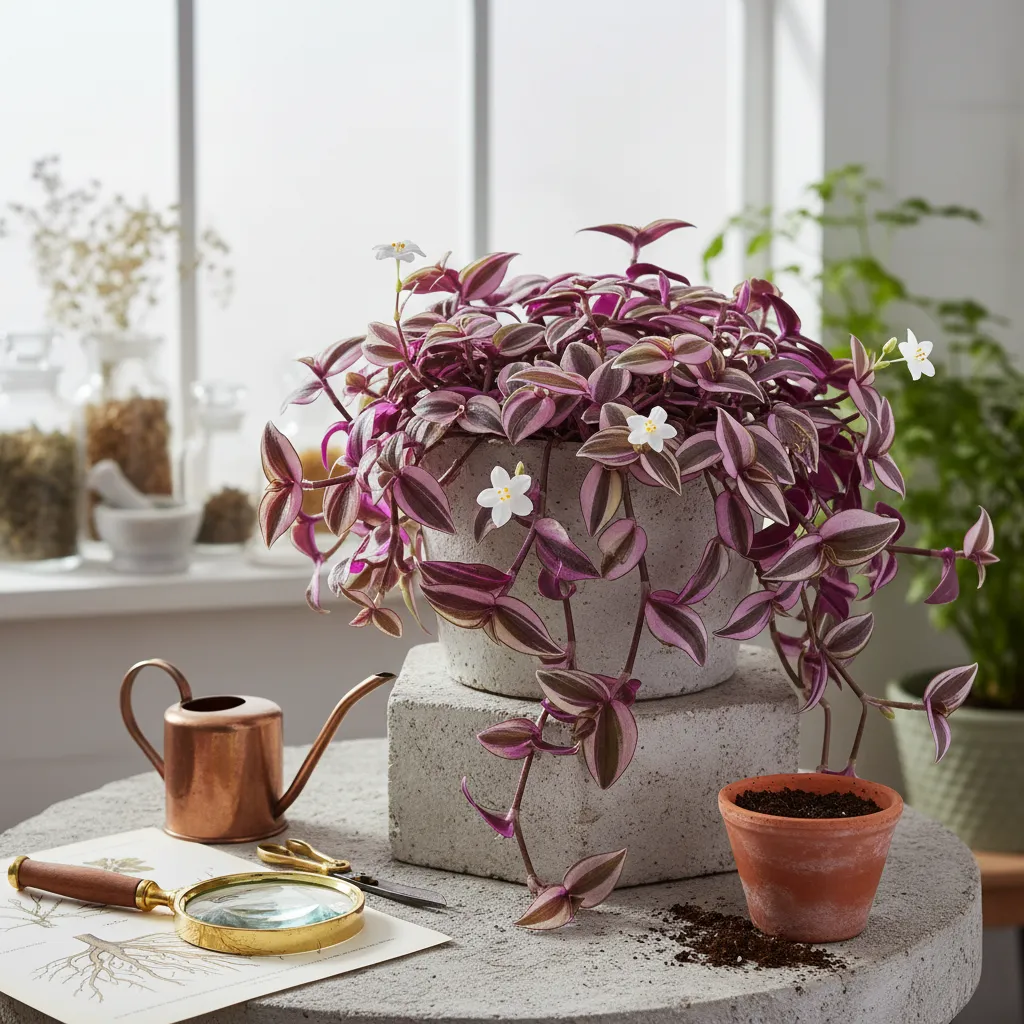
- Striking Variegated Foliage — Leaves display a vibrant mix of pink, creamy white, emerald green, and purple.
- Compact Growth Habit — Forms a dense, mounding, or trailing display, ideal for various indoor settings.
- Succulent Stems — Robust, often pink or purple-tinged stems add to its visual appeal and resilience.
- Low Maintenance — Relatively easy to care for, making it suitable for both novice and experienced plant enthusiasts.
- Fast Growing — Exhibits vigorous growth during the active season, quickly filling pots or baskets.
- Excellent for Hanging Baskets — Its trailing nature makes it a perfect choice for elevated displays.
02What is Tradescantia Nanouk?
Tradescantia Nanouk is a captivating cultivar of Tradescantia albiflora, a plant renowned for its striking variegated leaves and resilient nature. Officially known as Tradescantia albiflora 'Nanouk', it is commonly referred to by a myriad of names including Fantasy Venice, Tradescantia Tricolor, or simply Nanouk, reflecting its vibrant color palette.
This particular hybrid was developed in the Netherlands in 2012 by a breeder named Martti Van der Elst. The primary goal was to create a more compact and brightly colored form of Tradescantia albiflora, which has been successfully achieved, making Nanouk a highly desirable plant in the horticultural market. Its lineage traces back to tropical and subtropical regions of the Americas, where its wild ancestors thrive in humid, warm environments.
Botanically, Tradescantia Nanouk belongs to the Commelinaceae family, which is recognized for its diverse range of flowering herbaceous plants. This family includes other popular genera such as Callisia and Cyanotis, many of which share similar growth habits and care requirements. The 'Nanouk' designation specifically indicates its status as a distinct cultivar, carefully selected and propagated for its aesthetic qualities.
Understanding its botanical background helps contextualize its preferred growing conditions. As a hybrid, it often exhibits enhanced vigor and specific aesthetic traits that might differ slightly from its parent species. Its resilience to varying indoor conditions, coupled with its stunning appearance, solidifies its status as a must-have for plant enthusiasts.
| Common name | Tradescantia Nanouk |
|---|---|
| Scientific name | Tradescantia albiflora 'Nanouk'W |
| Family | Commelinaceae |
| Category | Indoor Plants |
| Origin region | Cultivated hybrid (Netherlands, 2012) |
| Native countries (parent species) | Mexico, South America |
| Plant slug | tradescantia-nanouk-pink |
03Key Benefits & Uses of Tradescantia Nanouk
Tradescantia Nanouk offers a wealth of benefits, from its stunning ornamental value to its adaptability, making it a highly versatile and rewarding plant for indoor environments. Its vibrant colors and easy-care nature contribute significantly to its popularity among plant enthusiasts.
- Exceptional Ornamental Value: The striking variegation of pink, white, green, and purple on its leaves provides a dynamic visual appeal, adding a pop of color to any room.
- Air Purification: Like many houseplants, Tradescantia Nanouk contributes to indoor air quality by absorbing certain volatile organic compounds (VOCs).
- Versatile Styling: Its trailing and mounding growth habit makes it suitable for hanging baskets, elevated shelves, tabletops, or cascading from plant stands.
- Rapid Growth: Nanouk grows relatively quickly, providing a fulfilling experience for growers who enjoy seeing their plants mature and expand over a short period.
- Low Maintenance: Generally easy to care for, it tolerates some neglect and is forgiving for beginners, requiring consistent but not overly complex attention.
- Easy Propagation: It readily propagates from stem cuttings, allowing enthusiasts to expand their collection or share with friends without much effort.
- Compact Size: Remains relatively compact, typically reaching 6-10 inches (15-25 cm) in height and spread, making it ideal for smaller spaces.
- Enhances Indoor Aesthetics: Its lush foliage and vibrant hues bring a touch of nature and a calming presence into living and working spaces.
- Therapeutic Hobby: Plant care is known to reduce stress and improve mental well-being, offering a rewarding and calming activity.
- Drought Tolerance: Its succulent stems help it retain water, allowing it to withstand short periods of drought better than many other houseplants.
- Adaptable to Various Light Conditions: While it thrives in bright, indirect light, it can tolerate lower light levels, though its variegation may be less pronounced.
- Pet-Friendly Status: It's generally considered non-toxic to pets, making it a safer option for homes with curious cats or dogs (though ingestion of large quantities could still cause mild digestive upset).
04Indoor Care & Maintenance for Tradescantia Nanouk
Providing the right conditions is crucial for maintaining the vibrant colors and healthy growth of your Tradescantia Nanouk. This section details optimal care practices for light, water, humidity, soil, and fertilization.
Light Requirements
Tradescantia Nanouk thrives in bright, indirect light, which is essential for maintaining its vivid pink, white, and green variegation. Direct, harsh sunlight, especially during peak afternoon hours, can scorch its delicate leaves, leading to faded colors and brown spots.
Conversely, insufficient light will cause the plant to become leggy, lose its vibrant coloring, and revert to a more basic green. An east-facing window is often ideal, providing gentle morning sun, or a few feet away from a south or west-facing window where light is filtered through sheer curtains.
Aim for at least 6-8 hours of bright, indirect light daily. If your plant starts to appear dull or stretched, consider moving it closer to a light source or supplementing with a grow light.
Watering Schedule
Watering Tradescantia Nanouk requires a balanced approach to prevent both drought stress and root rot. It prefers its soil to dry out slightly between waterings.
As a general rule, check the top 1-2 inches (2.5-5 cm) of soil; if it feels dry, it's time to water thoroughly until water drains from the bottom of the pot. Ensure the pot has drainage holes to prevent waterlogging.
During the active growing season (spring and summer), watering frequency will be higher, typically once a week or every 10 days. In cooler, dormant months (fall and winter), reduce watering significantly, perhaps every 2-3 weeks, as the plant's metabolic activity slows down. Overwatering is a common cause of issues like yellowing leaves and mushy stems.
Humidity Needs
Tradescantia Nanouk appreciates moderate to high humidity, mirroring its ancestral tropical environment. While it can tolerate average household humidity levels (around 40-50%), consistently dry air can lead to crisp leaf edges and stunted growth.
To increase humidity, you can place the plant on a pebble tray filled with water, ensuring the pot doesn't sit directly in the water. Grouping it with other plants also helps create a microclimate with elevated humidity. Regular misting can provide a temporary boost in humidity, but it's not a long-term solution and should be done in the morning to allow leaves to dry, preventing fungal issues.
Optimal Soil Mix
A well-draining, aerated potting mix is paramount for Tradescantia Nanouk. Heavy, compact soils retain too much moisture, leading to root rot.
A suitable mix typically includes a base of high-quality indoor potting soil amended with ingredients like perlite, coarse sand, or orchid bark. A common ratio is 2 parts potting soil to 1 part perlite/sand, which ensures excellent drainage and adequate aeration for the roots.
The pH preference for Tradescantia Nanouk is slightly acidic to neutral, typically between 6.0 and 7.0. Using a good quality potting mix designed for houseplants will generally fall within this range.
Fertilization Strategy
Tradescantia Nanouk is a relatively fast grower and benefits from regular fertilization during its active growing season. Fertilize every 2-4 weeks from spring through early fall using a balanced liquid fertilizer diluted to half strength.
Look for a fertilizer with an NPK ratio like 10-10-10 or 20-20-20. Avoid fertilizing during the dormant winter months when the plant's growth slows down, as this can lead to nutrient buildup and root damage.
Always water the plant before fertilizing to prevent root burn. Over-fertilization can manifest as browning leaf tips or a white crust on the soil surface.
Temperature Range
Tradescantia Nanouk prefers average room temperatures, flourishing between 60-80°F (15-27°C). It is not frost-tolerant, so it must be kept away from cold drafts and windows during colder months.
Sudden temperature fluctuations can stress the plant. Avoid placing it near heating or cooling vents that can cause rapid changes in temperature and humidity.
05Pests, Diseases & Disorders
While Tradescantia Nanouk is generally hardy, it can encounter common issues if its care requirements are not consistently met. Prompt identification and action are key to maintaining a healthy plant.
Explore Our Platforms
 InfiniCore DataWorks
 Nex-Automata
Yellowing Leaves
Yellow leaves on Tradescantia Nanouk usually indicate an issue with water or light. Overwatering is the most frequent culprit, leading to root rot. If the soil is consistently soggy and smells musty, this is likely the cause.
However, insufficient light can also cause lower leaves to yellow and drop. Additionally, very dry soil, leading to underwatering, can cause yellowing, often accompanied by crisp or brown edges.
Solution: Assess your watering routine. Allow the top soil to dry out between waterings. If overwatered, check roots for rot; repot if necessary. Ensure adequate bright, indirect light. Adjust watering frequency based on soil moisture levels.
Leggy Growth & Faded Variegation
When Tradescantia Nanouk stretches out with long spaces between leaves (legginess) and its vibrant pink and white colors fade, it's a clear sign of insufficient light. The plant is reaching for more light, and without adequate intensity, it cannot produce the pigments responsible for its striking variegation.
Solution: Move the plant to a brighter location with ample indirect light. Pruning back leggy stems will encourage bushier growth and more concentrated variegation. Consider a grow light if natural light is consistently inadequate.
Brown, Crispy Leaf Edges
Brown and crispy leaf edges are typically a symptom of low humidity or underwatering. Dry air can cause the leaves to lose moisture too quickly, especially in heated homes during winter. Direct, intense sunlight can also contribute to leaf scorch and crisping.
Solution: Increase humidity around the plant using a pebble tray, humidifier, or by grouping plants. Ensure you are watering thoroughly when the top soil is dry. Move the plant away from direct harsh sun.
Mushy Stems & Rot
Mushy stems, often accompanied by a foul odor, are a definitive sign of root rot, Almost always caused by overwatering. Excess moisture suffocates the roots, leading to fungal growth and stem decay.
Solution: Immediately cease watering. Gently remove the plant from its pot and inspect the roots. Trim away any black, mushy roots using sterilized scissors. Repot in fresh, well-draining soil and a clean pot. Adjust your watering schedule to allow the soil to dry out between waterings.
Pests: Spider Mites, Aphids, Mealybugs
Tradescantia Nanouk can occasionally fall victim to common houseplant pests like spider mites, aphids, and mealybugs. Spider mites cause tiny webs and stippling on leaves, aphids are small green or black insects often found on new growth, and mealybugs appear as fuzzy white cotton-like masses in leaf axils.
Solution: Isolate the infested plant immediately. For minor infestations, wipe leaves with a damp cloth or spray with a strong stream of water. For more persistent issues, use insecticidal soap or neem oil, ensuring thorough coverage of all leaf surfaces (top and bottom) and stems. Repeat treatment as per product instructions.
Lack of Growth
If your Tradescantia Nanouk isn't growing vigorously during the active season, it could be due to several factors. Insufficient light, lack of nutrients, or a root-bound condition are common causes.
Solution: Ensure the plant is receiving adequate bright, indirect light. Fertilize during the growing season with a diluted balanced fertilizer. Check if the plant is root-bound by gently easing it out of its pot; if roots are circling the pot excessively, it's time to repot into a slightly larger container.
06Propagation & Repotting Tradescantia Nanouk
Tradescantia Nanouk is famously easy to propagate, making it a joy to multiply and share. Repotting is straightforward and essential for maintaining a healthy root system.
Propagation Steps (Stem Cuttings)
Propagating Tradescantia Nanouk from stem cuttings is an incredibly successful method, allowing you to easily create new plants. This process is best done during the active growing season (spring and summer) for optimal results.
- Select Healthy Stems: Choose healthy, non-flowering stems approximately 4-6 inches (10-15 cm) long. Ensure each cutting has at least 2-3 nodes (the points where leaves attach to the stem).
- Make the Cut: Using clean, sharp scissors or pruners, make a cut just below a node. Remove the leaves from the bottom 1-2 inches (2.5-5 cm) of the stem to expose the nodes. These exposed nodes are where roots will emerge.
- Water Propagation (Optional but Recommended): Place the cuttings in a clear glass or jar filled with fresh water. Ensure the nodes are submerged but no leaves are in the water. Change the water every few days to keep it fresh and prevent bacterial growth. Place the jar in bright, indirect light. Roots typically begin to form within 1-2 weeks.
- Soil Propagation: Alternatively, you can plant the cuttings directly into a small pot filled with a well-draining potting mix (e.g., 50% potting soil, 50% perlite). Bury the node end of the cutting about 1-2 inches deep. Gently firm the soil around the cutting.
- Provide Humidity & Warmth: Whether in water or soil, maintain high humidity and warm temperatures for successful rooting. For soil cuttings, you can cover the pot with a plastic bag or dome to create a mini-greenhouse effect, ensuring to vent it daily to prevent mold.
- Transplanting (Water Propagated): Once roots are about 1-2 inches long (after 2-4 weeks), carefully transplant the water-rooted cuttings into a small pot with well-draining potting mix. Water thoroughly after transplanting.
- Ongoing Care: Treat new plants like mature ones, providing bright, indirect light and adjusting watering as they establish. New leaf growth indicates successful rooting.
Repotting Guide
Repotting your Tradescantia Nanouk is generally needed every 1-2 years, or when you observe signs of it being root-bound. This ensures the plant has fresh nutrients and ample space for root growth.
- Timing: The best time to repot is in spring or early summer when the plant is actively growing.
- Signs of Needing Repotting: Look for roots growing out of the drainage holes, stunted growth despite proper care, or the plant drying out much more quickly than usual.
- Choose the Right Pot: Select a new pot that is only one size larger than the current one (e.g., from a 4-inch to a 6-inch pot). Too large a pot can lead to excess moisture retention and root rot. Ensure it has drainage holes.
- Prepare the Potting Mix: Use a fresh, well-draining potting mix, ideally one with added perlite or bark for aeration.
- Remove the Plant: Gently loosen the soil around the edges of the existing pot. Tip the plant sideways and carefully ease it out, supporting the base of the stems. Try not to pull by the foliage.
- Inspect Roots: Examine the root ball. If it's densely packed, gently tease apart some of the outer roots. Trim any dead, mushy, or circling roots with clean, sharp shears.
- Place in New Pot: Add a layer of fresh potting mix to the bottom of the new pot. Center the plant in the pot, ensuring the top of the root ball is at the same level as it was in the old pot.
- Fill with Soil: Fill around the root ball with fresh potting mix, gently firming it down to remove large air pockets. Leave about an inch of space from the rim of the pot for watering.
- Water Thoroughly: Water the plant immediately after repotting to help settle the soil and reduce transplant shock.
- Post-Repotting Care: Place the repotted plant in its usual bright, indirect light location. Hold off on fertilizing for about 4-6 weeks to allow the roots to adjust.
07How to Grow Tradescantia Nanouk at Home
Growing Tradescantia Nanouk at home is a rewarding experience given its vibrant display and relatively straightforward care. Follow these steps to cultivate a thriving plant.
- Acquire Your Plant: Start with a healthy plant from a reputable nursery or a well-rooted cutting from a friend. Look for vibrant foliage and no signs of pests or disease.
- Choose the Right Pot: Select a pot with excellent drainage holes. Terracotta pots can be beneficial for those prone to overwatering, as they help wick away excess moisture. A ceramic or plastic pot works well too.
- Prepare the Soil: Use a high-quality, well-draining potting mix. A blend of regular potting soil with perlite (around 2:1 ratio) is ideal to prevent waterlogging and ensure good aeration.
- Planting: Gently remove the Nanouk from its nursery pot. If the roots are tightly coiled, gently loosen them. Place it in the new pot, ensuring the soil level is consistent with its previous planting depth. Fill around the root ball with your prepared soil mix, leaving about an inch from the pot rim.
- Initial Watering: Water thoroughly immediately after planting until water drains from the bottom. This helps settle the soil around the roots.
- Light Placement: Position your Tradescantia Nanouk in a spot that receives bright, indirect light. An east-facing window or a few feet from a south or west-facing window works best. Avoid direct, harsh afternoon sun to prevent leaf scorch.
- Establish a Watering Routine: Allow the top 1-2 inches (2.5-5 cm) of soil to dry out completely between waterings. Use your finger to check soil moisture. Water less frequently in winter.
- Maintain Humidity: While tolerant of average household humidity, Nanouk appreciates higher levels. Consider a humidifier, pebble tray, or grouping it with other plants to boost local humidity.
- Fertilization (Growing Season): During spring and summer, feed your plant every 2-4 weeks with a balanced liquid houseplant fertilizer diluted to half strength. Skip fertilization during fall and winter.
- Pruning for Bushiness: Pinch back leggy stems regularly to encourage bushier growth and maintain its compact form. You can use these cuttings for propagation!
- Pest & Disease Monitoring: Periodically inspect your plant for common pests like spider mites or mealybugs. Address any issues promptly with appropriate treatments like insecticidal soap or neem oil.
- Repotting as Needed: Repot every 1-2 years or when you see signs of root-binding, moving to a pot only one size larger to provide fresh soil and room for growth.
08Interesting Facts & Cultural Significance of Tradescantia Nanouk
Tradescantia Nanouk holds a unique place in the world of houseplants, not just for its beauty but also for its rapid rise to global popularity and interesting horticultural origins.
- Cultivar, Not Species: Unlike many plants, 'Nanouk' is not a naturally occurring species. It is a carefully bred cultivar of Tradescantia albiflora created in a controlled environment in the Netherlands in 2012. This distinguishes it from its wild relatives, which typically exhibit less intense variegation.
- Rapid Rise to Popularity: Since its introduction, Nanouk has become one of the most sought-after houseplants globally. Its vibrant colors and manageable size quickly captivated plant enthusiasts, leading to its widespread availability and recognition.
- "Fantasy Venice": One of its charming common names, "Fantasy Venice," likely refers to the dreamy, almost painted appearance of its multi-hued leaves, evoking images of a colorful, fantastical landscape. This name highlights its aesthetic appeal.
- Etymology of Tradescantia: The genus Tradescantia is named after John Tradescant the Elder and his son, John Tradescant the Younger, who were 17th-century naturalist-gardeners to King Charles I of England. They were instrumental in introducing many new plants to English gardens.
- Commelinaceae Family: Tradescantia belongs to the family Commelinaceae, often referred to as the "spiderwort family." Many members of this family, including Nanouk, share common traits like succulent stems and easy propagation, contributing to their resilience and popularity.
- Pinching for Bushiness: The plant's tendency to grow leggy if not pruned regularly is a characteristic shared by many Tradescantia species. This makes pinching back an essential cultural practice, encouraging fuller, bushier growth and promoting a more vibrant display of its variegated foliage.
- "Wandering Jew" Controversy: Historically, many Tradescantia species were commonly referred to as "Wandering Jew." However, due to the offensive nature of this term, the horticultural community has largely moved away from it, favoring scientific names or alternative common names like "Inchplant" or specific cultivar names like "Nanouk."
- Ecological Role (Parent Species): While Nanouk is a cultivated hybrid, its parent species, Tradescantia albiflora, plays an ecological role in its native habitats of Mexico and South America as a ground cover in humid, tropical undergrowth, often competing with other plants for light.
- Indicator of Light: The intensity of Nanouk's pink and purple hues is a direct indicator of its light exposure. Brighter, indirect light enhances these vibrant colors, while lower light levels cause the variegation to fade, reverting to more subdued green and white tones. This makes it a living barometer for optimal light conditions.
09Conclusion & Key Takeaways for Tradescantia Nanouk Care
Tradescantia Nanouk is a truly rewarding indoor plant, offering an explosion of color and attractive growth habits with relatively straightforward care. By understanding and consistently meeting its fundamental needs, you can ensure your Nanouk thrives and continues to be a vibrant focal point in your home.
Remember these key principles to cultivate a healthy and beautiful specimen: prioritize bright, indirect light for optimal variegation; practice careful watering, allowing the soil to dry slightly between sessions; prune regularly to maintain a bushy form; and address any potential pest or disease issues promptly. With its ease of propagation, you can also effortlessly expand your collection or share the beauty of Nanouk with others.
Key Takeaways:
- Light is King: Bright, indirect light is paramount for maintaining the striking pink and purple variegation. Insufficient light leads to legginess and faded colors.
- Mindful Watering: A consistent "dry slightly between waterings" approach prevents both drought stress and the dreaded root rot. Always check soil moisture before hydrating.
- Prune for Health & Beauty: Regular pinching encourages denser growth and enhances the plant's overall aesthetic, preventing a leggy appearance.
- Easy to Multiply: Tradescantia Nanouk readily propagates from stem cuttings, making it simple to create new plants or revive leggy specimens.
- Watch for Signals: Your plant will tell you what it needs. Yellowing leaves, faded colors, or crispy edges are all indicators that adjustments to its environment are necessary.
- Versatile Decorator: Its trailing nature means it excels in hanging baskets, shelves, or as a vibrant tabletop accent.
Embrace the vibrant charm of Tradescantia Nanouk, and it will undoubtedly reward you with lush, colorful foliage, enriching your indoor botanical sanctuary.
10Frequently Asked Questions
1. What is the best light for Tradescantia Nanouk?
The best light for Tradescantia Nanouk is bright, indirect light. This means a spot near a window (east-facing is often ideal) where it receives ample light but is shielded from direct, intense sunlight, especially during the scorching afternoon hours. Bright indirect light is crucial for maintaining its vibrant pink and purple variegation; too little light will cause the colors to fade and the plant to become leggy.
2. How often should I water my Tradescantia Nanouk?
You should water your Tradescantia Nanouk when the top 1-2 inches (2.5-5 cm) of soil feel dry to the touch. This typically translates to once a week to every 10 days during the active growing season (spring and summer), and less frequently during fall and winter (perhaps every 2-3 weeks). Always ensure the pot has drainage holes to prevent soggy soil, which can lead to root rot.
3. Why are my Tradescantia Nanouk leaves turning yellow?
Yellowing leaves on Tradescantia Nanouk are most commonly a sign of overwatering. Consistently wet soil suffocates the roots, leading to root rot. However, insufficient light or extreme underwatering can also cause yellowing. Check the soil moisture and assess your lighting conditions to diagnose the specific issue.
4. Is Tradescantia Nanouk toxic to pets?
Tradescantia Nanouk is generally considered non-toxic to pets according to the ASPCA. However, like with any plant, ingesting large quantities could potentially cause mild gastrointestinal upset. It's always best to monitor pets around plants and consult a vet if you are concerned.
5. How do I make my Tradescantia Nanouk bushier?
To make your Tradescantia Nanouk bushier, regularly pinch back or prune its stems. By cutting just above a node, you encourage new growth to branch out from that point, leading to a denser, fuller plant. These cuttings can also be used for propagation to create new plants.
6. Can Tradescantia Nanouk be propagated in water?
Yes, Tradescantia Nanouk can be very easily propagated in water. Simply cut a healthy stem section, remove the leaves from the bottom nodes, and place the cutting in a glass of water, ensuring the nodes are submerged. Roots typically develop within 1-2 weeks, after which you can transplant it into soil.
7. What type of soil does Tradescantia Nanouk prefer?
Tradescantia Nanouk prefers a well-draining, aerated potting mix. A good quality indoor potting soil amended with ingredients like perlite, coarse sand, or orchid bark (e.g., a 2:1 ratio of potting soil to perlite) works perfectly to ensure proper drainage and prevent root rot.
8. Why is my Nanouk losing its pink color?
If your Tradescantia Nanouk is losing its vibrant pink coloration and appears more green, it's typically an indication of insufficient light. The plant requires bright, indirect light to produce the pigments responsible for its stunning variegation. Move it to a brighter location to restore its colors.
9. How often should I fertilize my Tradescantia Nanouk?
Fertilize your Tradescantia Nanouk every 2-4 weeks during its active growing season (spring and summer) using a balanced liquid houseplant fertilizer diluted to half strength. Avoid fertilizing during the dormant fall and winter months.
10. What are the signs of root rot in Nanouk?
Signs of root rot in Tradescantia Nanouk include yellowing and drooping leaves, mushy stems near the soil line, stunted growth, and a musty smell from the soil. This condition is almost always caused by overwatering and poor drainage.
11. How do I fix leggy growth on my Tradescantia Nanouk?
To fix leggy growth, which means the stems are long with sparse leaves, first provide more bright, indirect light. Then, prune back the leggy stems, cutting just above a leaf node. This will encourage new, bushier growth and can also provide cuttings for propagation.
12. Does Tradescantia Nanouk need high humidity?
While Tradescantia Nanouk can tolerate average household humidity, it appreciates moderate to high humidity, especially if your indoor air is very dry. You can increase humidity using a pebble tray, a humidifier, or by grouping it with other plants.
13. What is the ideal temperature range for Tradescantia Nanouk?
Tradescantia Nanouk thrives in average room temperatures, ideally between 60-80°F (15-27°C). It is not tolerant of frost or sudden temperature drops, so keep it away from cold drafts and direct air conditioning or heating vents.
14. How often should I repot my Tradescantia Nanouk?
Repot your Tradescantia Nanouk every 1-2 years, or when you notice signs of it being root-bound, such as roots growing out of the drainage holes or the plant drying out very quickly. Choose a pot that is only one size larger than the current one.
15. What are common pests for Tradescantia Nanouk and how do I treat them?
Common pests for Tradescantia Nanouk include spider mites, aphids, and mealybugs. If you spot them, isolate the plant, wipe down leaves with a damp cloth, or treat with insecticidal soap or neem oil. Repeat treatment as per product instructions until the infestation is gone.
11Tradescantia Nanouk: References & Further Reading
Authoritative sources and related guides:
- Wikipedia — background reference
- PubMed — peer-reviewed studies
- Kew POWO — botanical reference
- NCBI PMC — open-access research
- WHO — global health authority
Related on Flora Medical Global
Reviewed by the Flora Medical Global Botanical Review Panel
Multi-disciplinary editorial group · Botany · Ethnobotany · Herbal-medicine literature
Who reviewed this: This page was checked by the Flora Medical Global Botanical Review Panel — an in-house editorial group of botany graduates, ethnobotany researchers, and horticulture practitioners who collectively maintain our 7,000+ plant encyclopedia. Meet the team.
Our 4-step verification process
1. Taxonomic verification
Scientific names and synonyms cross-checked against Kew POWO, World Flora Online, and The Plant List.
2. Phytochemical & medicinal cross-reference
Active compounds, traditional uses, and reported activities are cross-referenced with PubMed, USDA Dr. Duke's database, and peer-reviewed ethnobotanical literature.
3. Conservation & distribution check
Distribution, ecology, and conservation status confirmed against GBIF occurrence records and the IUCN Red List.
4. Editorial & safety review
Every entry passes an editorial pass for clarity, originality, and safety notices (toxicity, contraindications, dosage caveats) before publication.
Last reviewed:
Explore Our Platforms
Comments (0)
No comments yet. Be the first!