
Care Disclaimer: Plant care recommendations are general guidelines based on common growing conditions. Individual results may vary based on your local environment, climate, and care routine. If your plant is toxic, keep it away from children and pets, and consult a veterinarian if accidental ingestion occurs.
1.Actaea — Overview
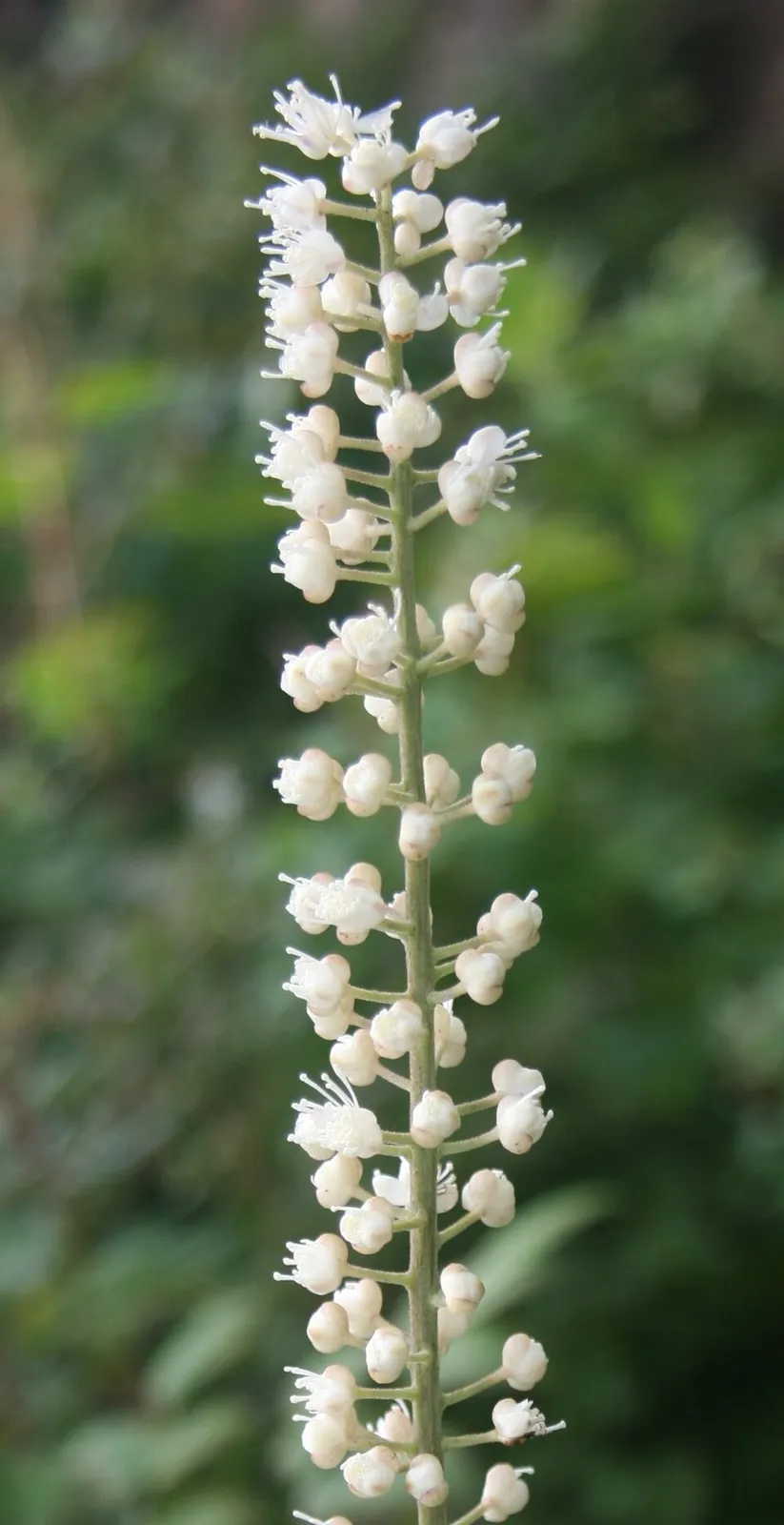
Actaea simplex, often recognized by its former classification as Cimicifuga simplex, is a distinguished perennial herbaceous plant belonging to the Ranunculaceae family. Native to the tranquil, shaded woodlands of eastern Asia, encompassing regions such as Japan, Korea, and Siberia, this species thrives in environments characterized by cool temperatures and consistent moisture. Morphologically, Actaea simplex presents a striking appearance, with its tall, slender flower stalks often reaching up to 2 meters, crowned by elegant racemes of fragrant white flowers that unfurl from late summer into early autumn, providing a vital nectar source for pollinators.
Its deeply dissected, ternate leaves are dark green, forming a dense, robust canopy that contributes significantly to the plant's ornamental appeal in garden settings. The plant's sturdy, rhizomatous root system enables it to anchor firmly in its native woodland soil, contributing to its perennial nature. The specific epithet 'simplex' denotes its characteristic unbranched flower stalks, a feature that historically helped differentiate it within the broader genus.
Taxonomically, recent molecular and morphological evidence has led to the reclassification of species formerly under the genus Cimicifuga into Actaea, underscoring its close botanical relationship. Historically, Actaea simplex has been a cornerstone in traditional Japanese (Kampo) and Chinese medicine, valued for its profound impact on reproductive health and its efficacy in managing various forms of pain. Beyond its medicinal uses, it is cherished in horticulture for its late-season bloom and its ecological role in supporting biodiversity.
Trusted Scientific References
1. Authoritative external sources for Actaea simplex
1.1 Wikipedia — Actaea simplex
1.2 Kew POWO (Plants of the World Online)
1.3 PubMed — peer-reviewed research
1.4 NCBI Taxonomy Browser
1.5 GBIF — Global Biodiversity
1.6Actaea should be interpreted through verified botanical identity, practical care, and responsible safety language. This recovery note adds the missing context needed for a complete profile: match light to the plant's habit, use well-drained soil, water according to season, and avoid unsupported medicinal or edible claims. For publishing, the plant can be presented as a source-backed garden plant with clear care guidance, common problem diagnosis, and conservative safety wording.
1.1.Actaea — Key Features
- ✓ <strong>Botanical Name</strong> — Actaea simplex (formerly Cimicifuga simplex)
- ✓ <strong>Common Names</strong> — Bugbane, Black Snakeroot, Cohosh, Fairy Candles
- ✓ <strong>Family</strong> — Ranunculaceae (Buttercup family)
- ✓ <strong>Native Region</strong> — Eastern Asia (Japan, Korea, Siberia)
- ✓ <strong>Primary Medicinal Use</strong> — Menopausal symptom relief, pain management
- ✓ <strong>Key Active Compounds</strong> — Cycloartane triterpenoids (actein, cimicifugoside), flavonoids
- ✓ <strong>Growth Habit</strong> — Perennial herb, up to 2 meters tall with white flower spikes
- ✓ <strong>Preferred Habitat</strong> — Shaded, moist woodlands with rich, humus-laden soil
- ✓ <strong>Traditional Systems</strong> — Kampo (Japanese), Traditional Chinese Medicine (TCM)
- ✓ <strong>Unique Feature</strong> — Known for its late-summer to autumn bloom and reclassification from Cimicifuga
1.2.Actaea — Quick Summary
- ✓ Actaea simplex (Black Cohosh) is a perennial herb from Asia, known for its tall white flower spikes.
- ✓ Traditionally used in Kampo and TCM for menopausal symptoms, pain, and reproductive health.
- ✓ Rich in cycloartane triterpenoids, flavonoids, and phenylpropanoids.
- ✓ Requires shade, moist, rich soil for cultivation.
- ✓ Available as tinctures, decoctions, and standardized extracts.
- ✓ Potential side effects include GI upset, headaches, and rare liver issues.
- ✓ Contraindicated in pregnancy, lactation, and caution advised with liver disease or hormone-sensitive conditions.
2.Actaea — Scientific Identity
3.Actaea — Quick Facts
4.Actaea — Appearance & Identification
5.Actaea — Native Habitat
6.Actaea — Water Requirements
- ✓ Site Selection — Choose a location with partial to full shade, mimicking its natural woodland habitat, as direct sun can scorch its leaves.
- ✓ Soil Preparation — Requires rich, humus-laden, well-draining soil with a slightly acidic to neutral pH (6.0-7.0), enriched with compost or organic matter.
- ✓ Watering — Maintain consistent soil moisture; Actaea simplex is not drought-tolerant and will suffer if the soil dries out, especially during flowering.
- ✓ Planting — Plant rhizomes or young plants in spring or early autumn, ensuring adequate spacing (60-90 cm apart) to accommodate their mature size.
- ✓ Fertilization — Apply a balanced organic fertilizer in spring to support vigorous growth, particularly in nutrient-poor soils.
- ✓ Mulching — A 5-10 cm layer of organic mulch (e.g., leaf mold, wood chips) helps retain soil moisture, suppress weeds, and regulate soil temperature.
- ✓ Pruning — Remove spent flower stalks after blooming for aesthetic purposes or to prevent self-seeding; cut back foliage to the ground in late autumn or early spring.
- ✓ Pest and Disease Management — Generally robust, but monitor for slugs and snails on young foliage; ensure good air circulation to prevent fungal issues in humid conditions.
Reviewed by the Flora Medical Global Botanical Review Panel
Multi-disciplinary editorial group · Botany · Ethnobotany · Herbal-medicine literature
Who reviewed this: This page was checked by the Flora Medical Global Botanical Review Panel — an in-house editorial group of botany graduates, ethnobotany researchers, and horticulture practitioners who collectively maintain our 7,000+ plant encyclopedia. Meet the team.
Our 4-step verification process
1. Taxonomic verification
Scientific names and synonyms cross-checked against Kew POWO, World Flora Online, and The Plant List.
2. Phytochemical & medicinal cross-reference
Active compounds, traditional uses, and reported activities are cross-referenced with PubMed, USDA Dr. Duke's database, and peer-reviewed ethnobotanical literature.
3. Conservation & distribution check
Distribution, ecology, and conservation status confirmed against GBIF occurrence records and the IUCN Red List.
4. Editorial & safety review
Every entry passes an editorial pass for clarity, originality, and safety notices (toxicity, contraindications, dosage caveats) before publication.
Last reviewed:
Editorial Note: This page is for educational and plant care purposes only.
Written by: Flora Medical Global Editorial Team
Reviewed by: Flora Medical Global Botanical Review Panel
Last Updated: June 16, 2026







Actaea — Comments & Community Reviews
Rate this plant