| Mealybugs | Medium | Mealybugs on Akebia quinata appear as small, white, cottony masses, often found in clusters on the undersides of leaves, along stems, and in leaf axils. These soft-bodied insects feed on plant sap, weakening the vine and leading to stunted growth. Affected leaves may turn yellow, become distorted, or drop prematurely. A sticky residue, known as honeydew, is excreted by the mealybugs, which can attract sooty mold, a black fungus that further detracts from the plant's appearance and can impede photosynthesis. Heavy infestations can cover large portions of the plant, making it appear sickly and unhealthy. The cottony masses are their protective ovisacs, which can contain numerous tiny eggs. | Mealybugs are tiny, sap-sucking insects that are attracted to Akebia quinata, especially when the plant is stressed from improper watering, low humidity, or nutrient deficiencies. They thrive in warm, humid conditions that are often prevalent in indoor environments. Mealybugs reproduce rapidly, and their cottony appearance helps protect them from predators and environmental factors. They can be introduced to the plant through new plant purchases, contaminated tools, or even by being carried in on clothing or pets. Their preference for sheltered locations like leaf axils makes them difficult to spot until an infestation becomes significant. |
| Spider Mites | Medium | Fine webbing, stippled yellowing leaves | Dry air and dusty conditions |
| Leaf Spot | Medium | Leaf spot diseases on Akebia quinata typically manifest as discolored spots on the foliage, varying in size, shape, and color depending on the specific pathogen. Common symptoms include small, circular or irregular brown, black, or reddish-brown spots. These spots may have a distinct border, sometimes yellow or darker than the center. In some cases, especially with severe infections, the spots can enlarge, merge together, and cause large portions of the leaf to turn yellow, wither, and eventually fall off. The undersides of the leaves may show corresponding sporulation, appearing as dark powdery masses. This can weaken the plant and reduce its photosynthetic capacity. | Leaf spot diseases on Akebia quinata are largely caused by fungal pathogens, such as species of Cercospora, Septoria, or Alternaria. These fungi are often present in the soil or on plant debris and are spread by splashing water, wind, or contaminated tools. They require moist conditions and moderate temperatures to infect the leaves. Infection typically occurs through wounds in the leaf tissue or stomata. Overcrowding and poor air circulation can create a microclimate conducive to fungal spore germination and infection. |
| Leaf Spot | Medium | Leaf spot diseases on Akebia quinata typically manifest as discolored spots on the leaves, which can vary in size, shape, and color depending on the specific pathogen. Common symptoms include small, circular to irregular brown or black spots, often with a yellow halo around them. In more severe cases, these spots may enlarge and merge, causing large blighted areas. The centers of the spots can sometimes dry out and fall away, creating a 'shot-hole' appearance. Heavily infected leaves may become yellow, wither, and eventually drop from the plant, leading to reduced foliage and weakened plant health. The disease is favored by wet conditions, such as prolonged leaf wetness from rain or overhead watering. | Leaf spot diseases on Akebia quinata are most commonly caused by fungal or bacterial pathogens. Fungal pathogens like Phyllosticta, Alternaria, or Septoria species are frequent culprits. These pathogens overwinter on infected plant debris or in the soil. Spores are spread by splashing water (rain or irrigation), wind, and on tools or hands. The disease thrives in humid conditions and when leaves remain wet for extended periods, allowing for spore germination and infection. Bacterial leaf spot pathogens can also cause similar symptoms, though they are often more watery or slimy in appearance. |
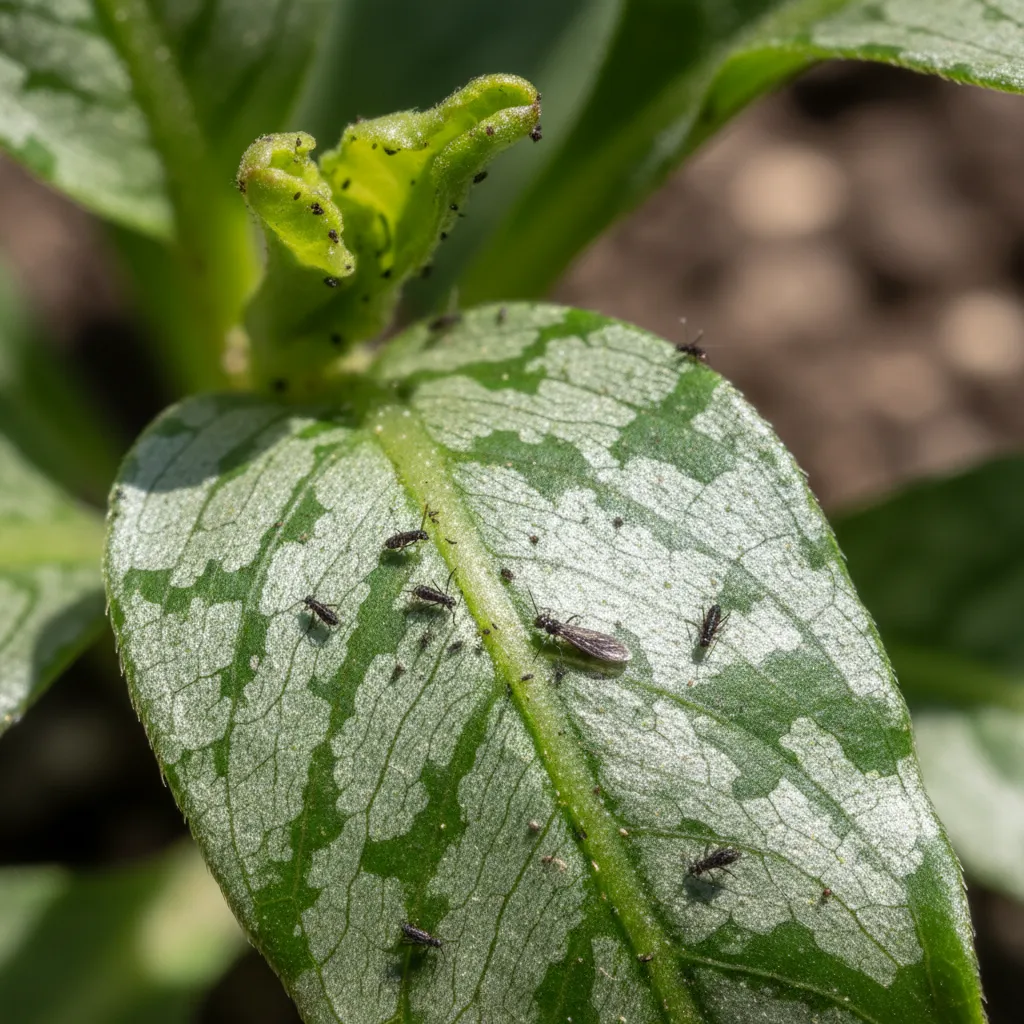
| Thrips | Medium | Thrips infestation on Akebia quinata can lead to distorted and discolored new growth. You may observe silvery or stippled patches on the leaves, often accompanied by tiny black specks, which are their excrement. Young leaves and flower buds are particularly susceptible. Severe infestations can cause leaves to become curled, twisted, and ultimately drop. These tiny insects have rasping-sucking mouthparts, which they use to scrape the surface of plant cells and then ingest the exuding sap and cell contents. This feeding damage can weaken the plant, reduce its flowering potential, and make it more vulnerable to other diseases. The damage can sometimes be mistaken for other issues, making careful observation crucial. | Thrips are tiny, slender insects that commonly infest a wide variety of plants, including Akebia quinata. There are many species of thrips, but they generally share similar feeding habits and life cycles. They thrive in warm, dry conditions and reproduce rapidly. Adult thrips can have wings and are capable of flying, which aids in their dispersal. They lay their eggs within plant tissues, which hatch into small, wingless larvae that also feed on the plant. Both larvae and adults contribute to plant damage. They are often found in flowers and on new growth where their food source is most abundant. |
| Spider Mites | Medium | Spider mites are tiny arachnids that infest Akebia quinata, causing stippling on the leaves, which appear as tiny yellow or white dots. As the infestation progresses, the leaves can turn pale and bronze, eventually leading to leaf drop. You may observe fine webbing spun by the mites, particularly on the undersides of leaves and along stems. These mites thrive in dry conditions and can reproduce rapidly, especially in warm weather. Their feeding causes damage by piercing plant cells and drawing out the contents, resulting in the characteristic stippled appearance. Severely infested plants will look unhealthy, with reduced vigor and an overall dull appearance. | Spider mites are tiny pests that are not insects but arachnids, closely related to spiders. They are typically very small, often less than 1/50th of an inch, and can be difficult to see with the naked eye. Tetranychus urticae, the two-spotted spider mite, is a common species. They are attracted to stressed plants and thrive in hot, dry, and dusty conditions. Windy conditions can also help disperse them. They reproduce rapidly in favorable environments, with a new generation emerging every few weeks, leading to quick infestations that can devastate a plant if left unchecked. |
| Mealybugs | Medium | Mealybugs on Akebia quinata appear as small, white, cottony masses, typically found in clusters in leaf axils, on stems, and sometimes on the undersides of leaves. These insects feed on plant sap, causing stunted growth, yellowing of leaves, and leaf drop. A sticky, clear substance called honeydew is often excreted by mealybugs, which can attract sooty mold, a black fungus that grows on the honeydew. This sooty mold can further inhibit photosynthesis. In heavy infestations, the plant can become severely weakened, making it more susceptible to other diseases and pests. The cottony appearance is a key identifier, and their tendency to hide in crevices makes them challenging to completely eradicate. | Mealybugs are small, oval-shaped insects that belong to the Pseudococcidae family. They are soft-bodied and covered with a white, waxy, cottony material, which provides protection. These pests are often introduced to plants through infested cuttings, new plants, or can be carried by wind or on the clothing of gardeners. They thrive in warm, dry conditions and are prolific breeders, laying clusters of small, pinkish eggs in cottony masses. Their stylets are used to pierce plant tissues and extract sap, weakening the plant and facilitating the spread of honeydew and potential diseases. |
| Mealybugs | Medium | White cottony masses on stems and leaves | Warm humid conditions attract mealybugs |
| Spider Mites | Medium | Spider mites on Akebia quinata are microscopic pests that cause subtle damage initially. You might notice fine, stippled discoloration on the leaves, appearing as tiny yellow or white dots. As the infestation worsens, these spots can coalesce, giving the leaves a dusty or bronzed appearance. Look closely at the undersides of leaves for tiny, moving specks, which are the mites themselves. You may also spot fine, silken webbing, especially in severe infestations, often between leaves and stems or on the leaf surface. Affected leaves will eventually turn yellow, dry out, and can drop prematurely. Severely infested vines appear generally unhealthy and can be covered in webbing. | Spider mites thrive in hot, dry conditions, making indoor Akebia quinata vulnerable, especially during the dry winter months or when plants are placed near heat sources like radiators. They reproduce rapidly in these conditions. Spider mites feed by piercing plant cells and sucking out the sap, leading to the characteristic stippling and damage. They are difficult to see with the naked eye, often making their presence known only when damage is significant. Infestations can be spread by wind, contaminated tools, or by bringing in infested plants or clothing. |
| Powdery Mildew | Medium | Powdery mildew on Akebia quinata appears as a white or grayish powdery growth on the surface of leaves, stems, and sometimes flowers. This fungal disease typically starts as small, isolated spots that can enlarge and merge to cover entire leaves and stems. The affected areas may look like a dusting of flour. As the infection progresses, the leaves can become distorted, yellowed, stunted, and may eventually fall off. In severe cases, the flowers can also be affected, leading to reduced blooming. This disease thrives in conditions of high humidity and moderate temperatures, often occurring when air circulation is poor. | Powdery mildew on Akebia quinata is caused by various species of fungi in the order Erysiphales. These fungi are obligate parasites, meaning they can only grow on living plant tissue. They spread via airborne spores that are carried by wind or splashing water. The disease favors conditions of high humidity, moderate temperatures (between 60-80°F or 15-27°C), and poor air circulation. Shaded areas with limited airflow and dense foliage also promote its development. It can infect new growth and mature tissues. |
| Powdery Mildew | Low | White powdery coating on leaf surfaces | Poor air circulation and high humidity |
| Powdery Mildew | Low | Powdery mildew on Akebia quinata appears as white, powdery patches on the surface of leaves, stems, and sometimes flowers. These patches can start as small, isolated spots and gradually enlarge to cover significant areas of the plant. The affected areas may become distorted, and in severe cases, leaves can turn yellow, wither, and drop. This disease thrives in conditions with high humidity, moderate temperatures, and poor air circulation, often in shaded areas. It is caused by a fungus that lives on the surface of the plant, feeding on the leaf tissues. While not typically lethal, it weakens the plant by interfering with photosynthesis and can reduce the aesthetic appeal and vigor of the Akebia vine. | Powdery mildew is caused by various species of obligate biotrophic fungi, commonly from the order Erysiphales. These fungi require living plant tissue to survive and reproduce. They spread via spores, which are easily carried by wind, water splash, or on contaminated tools and clothing. The disease is favored by environmental conditions such as high humidity, moderate temperatures (between 60-80°F or 15-27°C), and reduced light intensity or shade. Poor air circulation within a dense canopy also creates ideal conditions for spore germination and mycelial growth on plant surfaces. |
| Leaf Spot | Low | Brown or black spots on leaves with yellow halos | Fungal or bacterial infection from wet foliage |
| Root Rot | High | Root rot in Akebia quinata typically manifests as a general decline of the plant's health. Leaves may turn yellow and wilt, even when the soil appears moist. Growth will be stunted, and the vine may produce fewer, smaller leaves. The most definitive symptom is the presence of soft, mushy, dark, and foul-smelling roots when the plant is gently removed from its pot. The crown of the plant, where the roots meet the stem, may also appear waterlogged and discolored. In severe cases, the entire root system can be compromised, leading to rapid wilting and death of the plant. This disease thrives in waterlogged conditions and can spread rapidly within the root ball. | Root rot in Akebia quinata is primarily caused by an overabundance of moisture in the soil, creating anaerobic conditions that favor the growth of various fungal pathogens, most commonly Phytophthora and Pythium species. These fungi are present in the soil and infect the roots when they are stressed by waterlogging, poor drainage, or overwatering. Compacted soil and insufficient aeration further exacerbate the problem by reducing oxygen availability to the roots, making them more susceptible to infection. Overwatering is the most common human-induced factor that leads to root rot. |
| Root Rot | High | Yellowing leaves, mushy stems, foul soil odor | Overwatering and poor drainage |
| Root Rot | High | Root rot in Akebia quinata typically manifests as a general decline in plant health. Leaves may turn yellow prematurely and wilt, even when the soil surface appears moist. Stunted growth is a common early sign, with new shoots appearing smaller and less vigorous than usual. The plant may become more susceptible to other stress factors. Upon closer examination of the root system, you will observe dark, mushy, and foul-smelling roots, indicating advanced rot. In severe cases, the entire root ball can disintegrate, leading to rapid plant death. This disease can affect both young and mature plants, but young seedlings are particularly vulnerable. The symptoms can be insidious, making early detection crucial for effective intervention. | Root rot in Akebia quinata is primarily caused by fungal pathogens, most commonly species of Pythium and Phytophthora. These pathogens thrive in waterlogged and poorly drained soil conditions. Overwatering is the most common human-induced factor that creates an ideal environment for these fungi to infect the roots. Compacted soil also reduces aeration, further stressing the roots and making them more susceptible to infection. When the soil remains saturated for extended periods, the oxygen levels drop, creating anaerobic conditions that favor fungal growth and activity, leading to the decay of root tissues. |







Akebia Quinata — Comments & Community Reviews
Rate this plant
No reviews yet. Be the first!