


Care Disclaimer: Plant care recommendations are general guidelines based on common growing conditions. Individual results may vary based on your local environment, climate, and care routine. If your plant is toxic, keep it away from children and pets, and consult a veterinarian if accidental ingestion occurs.
1.Butternut Squash — Overview
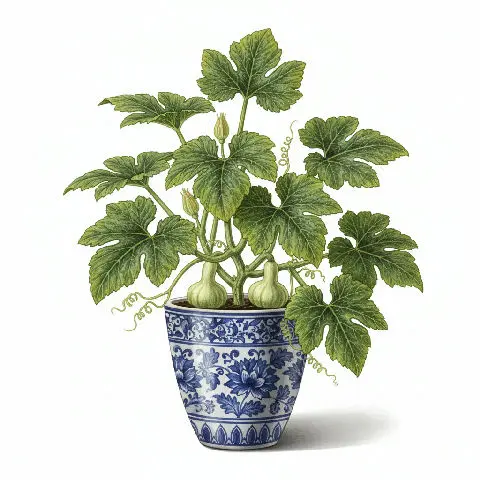
Butternut squash, scientifically known as Cucurbita moschata, is a widely cultivated winter squash celebrated globally for its distinctive sweet, nutty flavor and exceptional culinary versatility. This robust vining annual, belonging to the Cucurbitaceae family, is believed to have originated in the Americas, with archaeological evidence pointing to its significant role in ancient Mesoamerican diets over 10,000 years ago.
Unlike some other Cucurbita species, C. moschata varieties are particularly noted for their natural resistance to common garden pests like the squash vine borer and diseases such as powdery mildew, making them a favored crop.
The plant typically exhibits a sprawling, vining growth habit, capable of extending several meters, though more compact bush varieties have been developed for smaller garden spaces. Its large, palmate, and deeply lobed leaves are often covered in fine, bristly hairs. Yellow, trumpet-shaped monoecious flowers, meaning separate male and female blossoms appear on the same plant, rely primarily on insect pollination for fruit development. The fruit itself is botanically classified as a pepo, a type of berry characterized by a hard rind, fleshy interior, and numerous seeds.
The classic butternut squash is recognized by its hourglass or bell shape, smooth, tan-yellow skin, and firm, vibrant orange flesh. Beyond the well-known butternut cultivar, the species C. moschata encompasses a diverse range of other types, including certain cheese pumpkins and Dickinson pumpkins, often hybridized to enhance specific attributes like sweetness, extended storage life, or disease resilience. Nutritionally, Butternut squash is a powerhouse, exceptionally rich in beta-carotene, a vital precursor to Vitamin A, which imparts its characteristic orange hue.
It also supplies considerable amounts of Vitamin C, various B vitamins (especially folate), potassium, dietary fiber, and magnesium, contributing to its status as a valuable component of a healthy diet, supporting vision, immune function, and digestive wellness. Its adoption into traditional healing systems, particularly in modern Ayurvedic practices, highlights its recognized therapeutic potential.
Trusted Scientific References
1. Authoritative external sources for Cucurbita moschata
1.1 Wikipedia — Cucurbita moschata
1.2 Kew POWO (Plants of the World Online)
1.3 PubMed — peer-reviewed research
1.4 NCBI Taxonomy Browser
1.5 GBIF — Global Biodiversity
1.1.Butternut Squash — Key Features
- ✓ <strong>High Beta</strong> — Carotene Content — Excellent source of pro-Vitamin A for vision and immunity.
- ✓ <strong>Rich in Dietary Fiber</strong> — Promotes healthy digestion and gut microbiome balance.
- ✓ <strong>Contains Bioactive Cucurbitacins</strong> — Offers potential anti-inflammatory benefits.
- ✓ <strong>Sweet, Nutty Flavor Profile</strong> — Highly prized for culinary versatility.
- ✓ <strong>Extended Storage Life</strong> — Can be stored for several months under proper conditions.
- ✓ <strong>Natural Disease Resistance</strong> — Notable for resistance to squash vine borer and powdery mildew.
- ✓ <strong>Ayurvedic Dosha Balancing</strong> — Traditionally used to pacify Vata and Pitta doshas.
- ✓ <strong>Supports Cardiovascular Health</strong> — Contributes potassium and beneficial fatty acids.
- ✓ <strong>Antioxidant Powerhouse</strong> — Protects cells from oxidative stress.
- ✓ <strong>Low Glycemic Index</strong> — Aids in stable blood sugar management.
1.2.Butternut Squash — Quick Summary
- ✓ Nutrient-dense winter squash, rich in beta-carotene and Vitamin C.
- ✓ Supports digestive health, immune function, and cardiovascular wellness.
- ✓ Contains beneficial cucurbitacins with anti-inflammatory properties.
- ✓ Valued in both traditional diets and modern Ayurvedic practices.
- ✓ Versatile culinary ingredient with a sweet, nutty flavor.
- ✓ Generally safe for consumption, with specific precautions for certain health conditions.
2.Butternut Squash — Scientific Identity
3.Butternut Squash — Quick Facts
4.Butternut Squash — Appearance & Identification
5.Butternut Squash — Native Habitat
6.Butternut Squash — Water Requirements
- ✓ Climate Preference — Thrives in warm-temperate climates, requiring a long growing season with ample sunshine.
- ✓ Soil Requirements — Prefers well-drained, fertile loamy soil with a pH between 6.0 and 7.0.
- ✓ Sowing Techniques — Seeds can be direct-sown after the last frost or started indoors 3-4 weeks prior to transplanting.
- ✓ Watering Regimen — Requires consistent and ample moisture, especially during flowering and fruit development, to prevent stress.
- ✓ Growth Habit Management — Traditionally a vining plant, it benefits from trellising or ample space; bush varieties are available for smaller gardens.
- ✓ Pollination Needs — Relies on insect pollination, primarily bees, for successful fruit set, so healthy pollinator populations are beneficial.
- ✓ Pest and Disease Resistance — Exhibits natural resistance to squash vine borer and powdery mildew, simplifying organic cultivation.
- ✓ Harvesting Indicators — Fruits are typically harvested in early autumn when the rind is firm, deep tan, and the stem begins to dry and harden, usually cut with pruning shears to avoid damage.
Reviewed by the Flora Medical Global Botanical Review Panel
Multi-disciplinary editorial group · Botany · Ethnobotany · Herbal-medicine literature
Who reviewed this: This page was checked by the Flora Medical Global Botanical Review Panel — an in-house editorial group of botany graduates, ethnobotany researchers, and horticulture practitioners who collectively maintain our 7,000+ plant encyclopedia. Meet the team.
Our 4-step verification process
1. Taxonomic verification
Scientific names and synonyms cross-checked against Kew POWO, World Flora Online, and The Plant List.
2. Phytochemical & medicinal cross-reference
Active compounds, traditional uses, and reported activities are cross-referenced with PubMed, USDA Dr. Duke's database, and peer-reviewed ethnobotanical literature.
3. Conservation & distribution check
Distribution, ecology, and conservation status confirmed against GBIF occurrence records and the IUCN Red List.
4. Editorial & safety review
Every entry passes an editorial pass for clarity, originality, and safety notices (toxicity, contraindications, dosage caveats) before publication.
Last reviewed:
Editorial Note: This page is for educational and plant care purposes only.
Written by: Flora Medical Global Editorial Team
Reviewed by: Flora Medical Global Botanical Review Panel
Last Updated: June 16, 2026







Butternut Squash — Comments & Community Reviews
Rate this plant