
Care Disclaimer: Plant care recommendations are general guidelines based on common growing conditions. Individual results may vary based on your local environment, climate, and care routine. If your plant is toxic, keep it away from children and pets, and consult a veterinarian if accidental ingestion occurs.
1.Cactus Dahlia — Overview
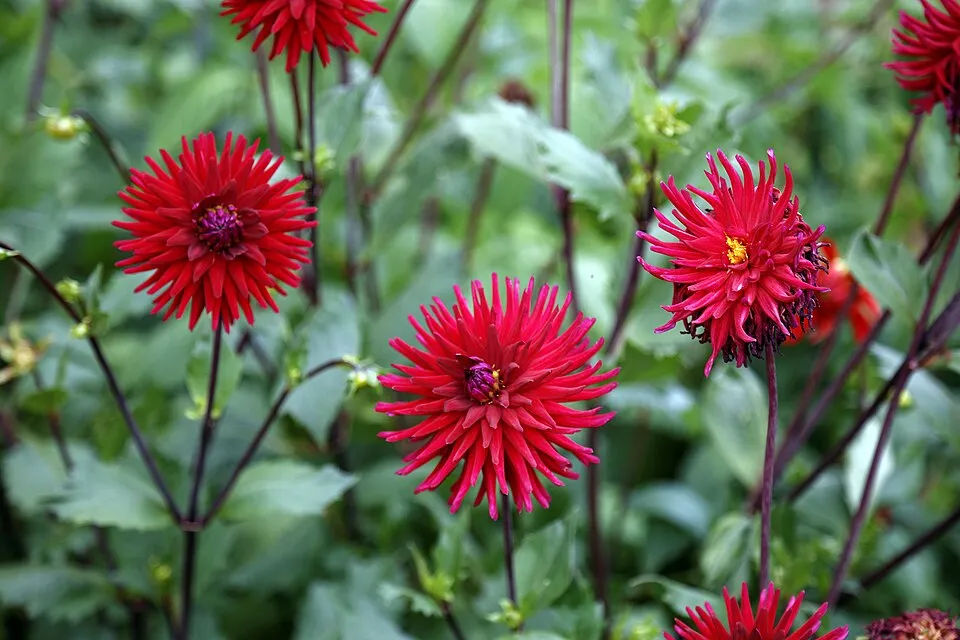
The Cactus Dahlia, scientifically known as Dahlia Cactus, is a captivating herbaceous perennial belonging to the extensive Asteraceae family and the order Asterales. This distinctive plant is primarily indigenous to the sun-drenched regions of Mexico and parts of Central America, where it naturally flourishes in well-drained, fertile soils under full sun exposure.
What truly sets the Cactus Dahlia apart within its genus is its unique floral morphology, characterized by striking, spiky petals that radiate outwards, strongly resembling the formidable blooms of certain cacti. These vibrant flowers come in an impressive array of hues, including intense reds, bright yellows, and fiery oranges, making them a dramatic focal point in any landscape.
Its robust stems typically reach heights of 1 to 1.5 meters, adorned with lush, dark green leaves that are ovate to deeply lobed. Beneath the soil, the plant develops small, fleshy tubers, which are crucial for its propagation and contribute to its horticultural appeal. In garden settings, the Cactus Dahlia is highly prized for its ornamental value, utilized effectively in borders, beds, or as standalone specimens to add a splash of vivid color and unique texture.
It thrives best in warm climates, ideally within USDA Hardiness Zones 8 to 11, though it can be cultivated as an annual in cooler temperate regions. Beyond its aesthetic charm, the plant’s vibrant blossoms are known to attract a variety of pollinators, enhancing local biodiversity and contributing to a lively garden ecosystem. Its resilience and striking appearance make the Cactus Dahlia a favorite among gardeners seeking both beauty and a touch of the exotic.
Trusted Scientific References
1. Authoritative external sources for Dahlia Cactus
1.1 Wikipedia — Dahlia Cactus
1.2 Kew POWO (Plants of the World Online)
1.3 PubMed — peer-reviewed research
1.4 NCBI Taxonomy Browser
1.5 GBIF — Global Biodiversity
1.6Cactus Dahlia should be interpreted through verified botanical identity, practical care, and responsible safety language. This recovery note adds the missing context needed for a complete profile: match light to the plant's habit, use well-drained soil, water according to season, and avoid unsupported medicinal or edible claims. For publishing, the plant can be presented as a source-backed garden plant with clear care guidance, common problem diagnosis, and conservative safety wording.
1.1.Cactus Dahlia — Key Features
- ✓ <strong>Vibrant, spiky flowers</strong> — Distinctive, cactus-like blooms in a wide array of colors, creating a dramatic visual impact.
- ✓ <strong>Lush foliage</strong> — Dark green, ovate to lobed leaves growing on sturdy, upright stems.
- ✓ <strong>Propagative tubers</strong> — Produces small underground tubers that facilitate easy propagation and overwintering in suitable climates.
- ✓ <strong>Pollinator magnet</strong> — Highly attractive to bees, butterflies, and other beneficial insects, promoting garden biodiversity.
- ✓ <strong>Perennial growth habit</strong> — Returns annually in warmer climates (USDA Zones 8-11), offering long-term garden enjoyment.
- ✓ <strong>Versatile landscaping plant</strong> — Ideal for use in garden borders, beds, containers, and as a striking focal point.
- ✓ <strong>Warm climate hardy</strong> — Thrives optimally in regions with mild winters and full sun exposure.
- ✓ <strong>Moderate maintenance</strong> — Relatively easy to grow and care for, suitable for both novice and experienced gardeners.
- ✓ <strong>Traditional folk uses</strong> — Historically noted for potential mild diuretic and anti-inflammatory properties in folk medicine.
- ✓ <strong>Rich in phytochemicals</strong> — Contains a diverse profile of compounds including flavonoids, terpenes, and alkaloids.
1.2.Cactus Dahlia — Quick Summary
- ✓ Dahlia cactus (Dahlia Cactus) is a perennial herb from the Asteraceae family, native to Mexico and Central America, cherished for its unique ornamental value.
- ✓ It features distinctive spiky blooms resembling cactus flowers, thriving in full sun and well-drained soil, reaching heights of 1-1.5 meters.
- ✓ Primarily an ornamental plant for USDA Hardiness Zones 8-11, it significantly enhances garden aesthetics and attracts pollinators.
- ✓ Traditionally, mild diuretic and anti-inflammatory properties have been attributed to Dahlia species, though scientific backing for Dahlia Cactus specifically is limited.
- ✓ Phytochemical analysis reveals the presence of flavonoids, terpenes, and alkaloids, contributing to its botanical interest and potential biological activities.
- ✓ Generally considered non-toxic, caution is advised for individuals with Asteraceae allergies, and any medicinal use should be under the guidance of a qualified healthcare professional.
2.Cactus Dahlia — Scientific Identity
3.Cactus Dahlia — Quick Facts
4.Cactus Dahlia — Appearance & Identification
5.Cactus Dahlia — Native Habitat
6.Cactus Dahlia — Water Requirements
- ✓ Full Sun Exposure — Requires at least 6-8 hours of direct sunlight daily for optimal growth and abundant flowering.
- ✓ Well-Drained Soil — Prefers loamy, well-draining soil rich in organic matter to prevent tuber rot.
- ✓ Optimal Soil pH — Thrives in slightly acidic to neutral soil, with a pH range of 6.0 to 7.0.
- ✓ Regular Watering — Maintain consistent moisture, especially during dry periods, but avoid waterlogging.
- ✓ Warm Climate Preference — Best suited for USDA Hardiness Zones 8-11; can be grown as an annual in cooler regions.
- ✓ Tuber Propagation — Easily propagated from tubers, which can be divided in spring before planting.
- ✓ Adequate Spacing — Plant tubers or starts 18-24 inches apart to ensure good air circulation and growth.
- ✓ Fertilization — Apply a balanced, low-nitrogen fertilizer every 4-6 weeks during the growing season to encourage blooming.
Reviewed by the Flora Medical Global Botanical Review Panel
Multi-disciplinary editorial group · Botany · Ethnobotany · Herbal-medicine literature
Who reviewed this: This page was checked by the Flora Medical Global Botanical Review Panel — an in-house editorial group of botany graduates, ethnobotany researchers, and horticulture practitioners who collectively maintain our 7,000+ plant encyclopedia. Meet the team.
Our 4-step verification process
1. Taxonomic verification
Scientific names and synonyms cross-checked against Kew POWO, World Flora Online, and The Plant List.
2. Phytochemical & medicinal cross-reference
Active compounds, traditional uses, and reported activities are cross-referenced with PubMed, USDA Dr. Duke's database, and peer-reviewed ethnobotanical literature.
3. Conservation & distribution check
Distribution, ecology, and conservation status confirmed against GBIF occurrence records and the IUCN Red List.
4. Editorial & safety review
Every entry passes an editorial pass for clarity, originality, and safety notices (toxicity, contraindications, dosage caveats) before publication.
Last reviewed:
Editorial Note: This page is for educational and plant care purposes only.
Written by: Flora Medical Global Editorial Team
Reviewed by: Flora Medical Global Botanical Review Panel
Last Updated: June 16, 2026







Cactus Dahlia — Comments & Community Reviews
Rate this plant