
Care Disclaimer: Plant care recommendations are general guidelines based on common growing conditions. Individual results may vary based on your local environment, climate, and care routine. If your plant is toxic, keep it away from children and pets, and consult a veterinarian if accidental ingestion occurs.
1.Candytuft — Overview
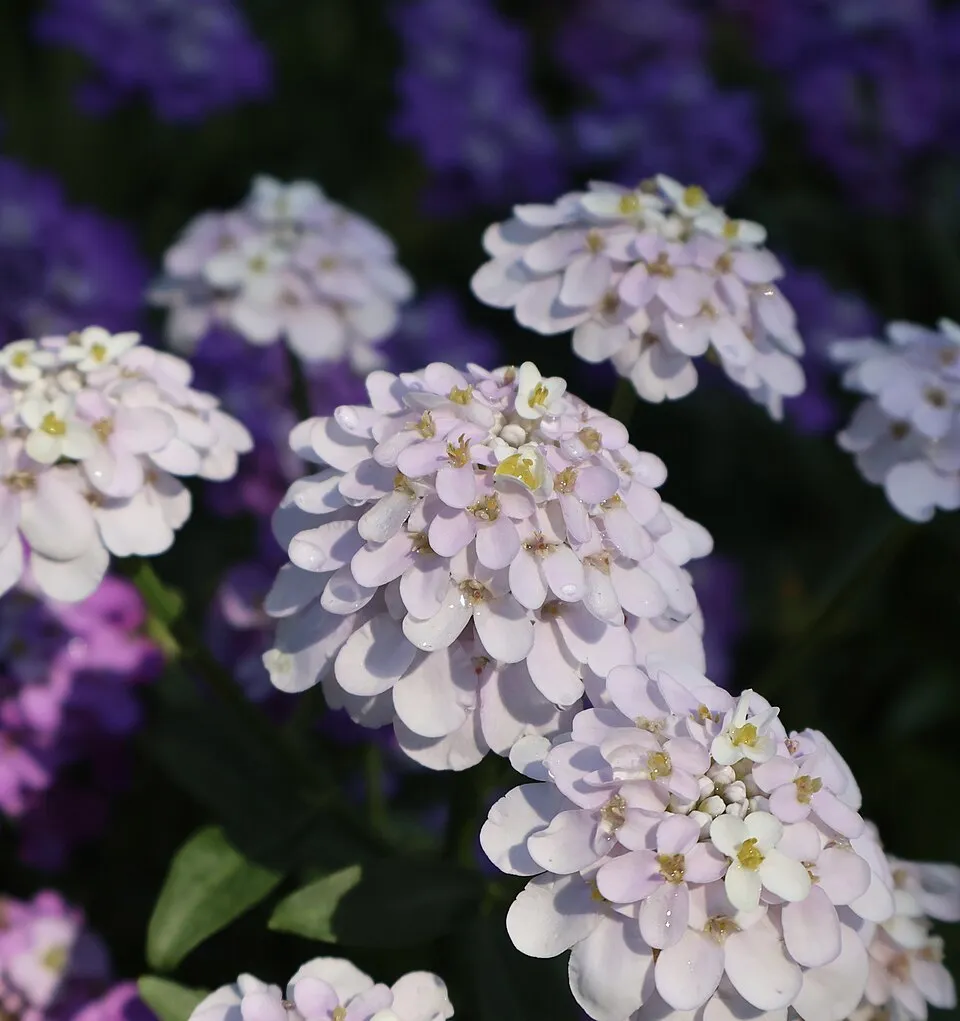
Iberis sempervirens, commonly known as Candytuft, is an exquisite evergreen perennial renowned for its dense, spreading habit and profusion of delicate flowers. Native to the sun-drenched Mediterranean basin, particularly Southern Europe, this hardy member of the Brassicaceae family thrives in rocky, well-drained, and often calcareous soils, enduring full sun to partial shade. The plant forms lush, dark green foliage year-round, creating an attractive backdrop for its spectacular bloom.
From late spring through early summer, and often reblooming into autumn, Candytuft produces a carpet of small, cross-shaped flowers, typically brilliant white, though cultivars may display pink or purple hues. These flowers are arranged in flattened clusters (corymbs or racemes) atop stiff stems, characteristic of its botanical family, which also includes familiar vegetables like cabbage and broccoli. While primarily celebrated for its ornamental value in rock gardens, borders, and as groundcover due to its drought tolerance and low maintenance, Candytuft also possesses a history of traditional medicinal application.
Modern research has begun to unravel its rich phytochemical composition, identifying compounds such as flavonoids, glycosides, and essential oils, which are likely responsible for its purported biological activities, though caution regarding its toxicity is paramount.
Trusted Scientific References
1. Authoritative external sources for Iberis sempervirens
1.1 Wikipedia — Iberis sempervirens
1.2 Kew POWO (Plants of the World Online)
1.3 PubMed — peer-reviewed research
1.4 NCBI Taxonomy Browser
1.5 GBIF — Global Biodiversity
1.6Candytuft should be interpreted through verified botanical identity, practical care, and responsible safety language. This recovery note adds the missing context needed for a complete profile: match light to the plant's habit, use well-drained soil, water according to season, and avoid unsupported medicinal or edible claims. For publishing, the plant can be presented as a source-backed garden plant with clear care guidance, common problem diagnosis, and conservative safety wording.
1.1.Candytuft — Key Features
- ✓ <strong>Botanical Name</strong> — Iberis sempervirens
- ✓ <strong>Common Name</strong> — Candytuft
- ✓ <strong>Family</strong> — Brassicaceae (Mustard family)
- ✓ <strong>Native Region</strong> — Mediterranean Basin, Southern Europe
- ✓ <strong>Growth Habit</strong> — Low-growing, mounding, evergreen groundcover
- ✓ <strong>Flower Color</strong> — Predominantly pure white, sometimes pink or purple cultivars
- ✓ <strong>Bloom Time</strong> — Late spring to early summer, often with repeat blooms
- ✓ <strong>Hardiness Zones</strong> — USDA 3-9
- ✓ <strong>Soil Preference</strong> — Well-drained, lean, gravelly, adaptable to various pH levels
- ✓ <strong>Special Feature</strong> — Drought-tolerant, attracts pollinators, considered toxic if ingested
1.2.Candytuft — Quick Summary
- ✓ Iberis sempervirens, or Candytuft, is a beautiful evergreen perennial known for its profuse white flowers.
- ✓ Native to the Mediterranean, it's a hardy, drought-tolerant plant thriving in well-drained soil and full sun.
- ✓ Traditionally noted for diuretic and expectorant properties, but it is toxic if ingested and not for internal use.
- ✓ Phytochemically rich in flavonoids, glycosides, and essential oils, contributing to its biological activities.
- ✓ Primarily cultivated as an ornamental groundcover, border plant, or for rock gardens.
- ✓ Essential to observe strict safety protocols, recognizing its ornamental-only recommendation due to toxicity.
2.Candytuft — Scientific Identity
3.Candytuft — Quick Facts
4.Candytuft — Appearance & Identification
5.Candytuft — Native Habitat
6.Candytuft — Water Requirements
- ✓ Climate and Hardiness — Thrives in USDA Hardiness Zones 3-9, exhibiting excellent cold tolerance but generally not suited for highly humid climates where it may suffer.
- ✓ Light Requirements — Prefers full sun, receiving at least 6-8 hours of unfiltered light daily, but can tolerate light afternoon shade in exceptionally hot regions.
- ✓ Soil Preference — Requires very well-drained, lean, gravelly, or sandy soil; it is adaptable to a wide pH range from acidic to neutral to alkaline, but heavy clay soils should be avoided.
- ✓ Planting and Spacing — Plant nursery stock in early spring after the last frost, or sow seeds indoors 6-8 weeks prior; space plants 12-18 inches apart to allow for spreading groundcover formation.
- ✓ Watering and Fertilization — Water regularly until established, then it becomes highly drought-tolerant, requiring minimal supplemental water. Fertilization is generally not needed, though an annual spring application of compost can enhance growth.
- ✓ Pruning and Maintenance — Shear back by approximately one-third after the first flush of blooms to encourage a second flowering and maintain a dense, bushy habit; prune to 3-4 inches above ground in early spring to prevent legginess.
- ✓ Propagation — Best propagated by root division every 3-5 years in the autumn, as seeds from hybrid cultivars may not grow true to the parent plant's characteristics.
- ✓ Pest and Disease Management — Generally resistant to most pests and diseases; however, ensure good air circulation to mitigate the risk of powdery mildew in persistently humid conditions.
Reviewed by the Flora Medical Global Botanical Review Panel
Multi-disciplinary editorial group · Botany · Ethnobotany · Herbal-medicine literature
Who reviewed this: This page was checked by the Flora Medical Global Botanical Review Panel — an in-house editorial group of botany graduates, ethnobotany researchers, and horticulture practitioners who collectively maintain our 7,000+ plant encyclopedia. Meet the team.
Our 4-step verification process
1. Taxonomic verification
Scientific names and synonyms cross-checked against Kew POWO, World Flora Online, and The Plant List.
2. Phytochemical & medicinal cross-reference
Active compounds, traditional uses, and reported activities are cross-referenced with PubMed, USDA Dr. Duke's database, and peer-reviewed ethnobotanical literature.
3. Conservation & distribution check
Distribution, ecology, and conservation status confirmed against GBIF occurrence records and the IUCN Red List.
4. Editorial & safety review
Every entry passes an editorial pass for clarity, originality, and safety notices (toxicity, contraindications, dosage caveats) before publication.
Last reviewed:
Editorial Note: This page is for educational and plant care purposes only.
Written by: Flora Medical Global Editorial Team
Reviewed by: Flora Medical Global Botanical Review Panel
Last Updated: June 16, 2026







Candytuft — Comments & Community Reviews
Rate this plant