


Care Disclaimer: Plant care recommendations are general guidelines based on common growing conditions. Individual results may vary based on your local environment, climate, and care routine. If your plant is toxic, keep it away from children and pets, and consult a veterinarian if accidental ingestion occurs.
1.Cantaloupe — Overview
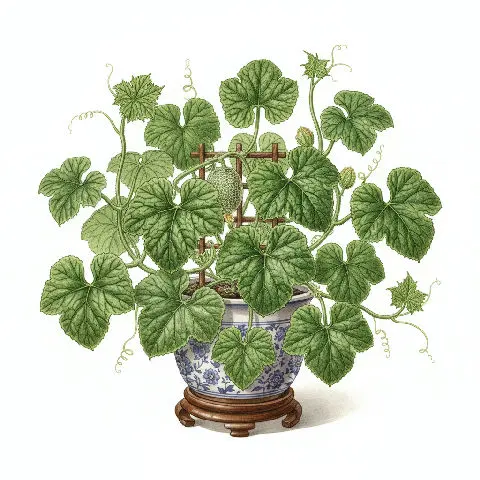
Cucumis melo, universally recognized as cantaloupe or muskmelon in American commerce, is a highly cultivated annual species within the diverse Cucurbitaceae family. This tender plant typically exhibits a sprawling, vine-like growth habit, with robust stems extending several meters, equipped with tendrils for climbing. Its leaves are broadly lobed, often featuring a rough, hirsute texture, and are arranged alternately along the stem. Cantaloupe plants are monoecious, producing separate male and female flowers on the same plant.
These fragrant, bright yellow blossoms attract a variety of pollinators, predominantly bees, crucial for fruit set. The fruit itself is renowned for its succulent, sweet, orange flesh, encased in a rind that can be smooth, distinctly netted, or ribbed depending on the specific cultivar. Optimal growth occurs in warm, frost-free climates with ample sunlight and prefers well-drained, fertile soil, ideally with a pH between 6.0 and 6.8. Harvested primarily in the summer and fall, a ripe cantaloupe is characterized by a distinct sweet aroma and a 'full slip' from the vine, indicating readiness.
Major cultivation regions include the United States (notably California, Arizona, Texas), Mediterranean countries, and various parts of Asia, where it contributes significantly to both agricultural economies and local food systems. Beyond its economic value, Cucumis melo also plays an agroecological role, with its extensive root system aiding in soil health and erosion control.
Trusted Scientific References
1. Authoritative external sources for Cucumis melo
1.1 Wikipedia — Cucumis melo
1.2 Kew POWO (Plants of the World Online)
1.3 PubMed — peer-reviewed research
1.4 NCBI Taxonomy Browser
1.5 GBIF — Global Biodiversity
1.6Cantaloupe should be interpreted through verified botanical identity, practical care, and responsible safety language. This recovery note adds the missing context needed for a complete profile: match light to the plant's habit, use well-drained soil, water according to season, and avoid unsupported medicinal or edible claims. For publishing, the plant can be presented as a source-backed garden plant with clear care guidance, common problem diagnosis, and conservative safety wording.
1.1.Cantaloupe — Key Features
- ✓ <strong>Botanical Name</strong> — Cucumis melo.
- ✓ <strong>Family</strong> — Cucurbitaceae.
- ✓ <strong>Common Names</strong> — Cantaloupe, Muskmelon (US).
- ✓ <strong>Edible Part</strong> — Sweet, aromatic, orange fruit flesh.
- ✓ <strong>Primary Nutrients</strong> — Vitamins A (beta-carotene), C, and Potassium.
- ✓ <strong>Growth Habit</strong> — Sprawling annual vine with tendrils.
- ✓ <strong>Ripening Indicator</strong> — Distinct aroma and 'full slip' from the vine.
- ✓ <strong>Culinary Uses</strong> — Fresh, salads, smoothies, desserts, savory dishes.
- ✓ <strong>Health Benefits</strong> — Hydration, vision, immunity, digestion, heart health.
- ✓ <strong>Cultivation</strong> — Requires warm climate, full sun, and well-drained soil.
1.2.Cantaloupe — Quick Summary
- ✓ Hydrating and Nutrient-Rich — High water content, packed with essential Vitamins A (from beta-carotene) and C.
- ✓ Antioxidant Powerhouse — Abundant in carotenoids and Vitamin C, offering robust cellular protection.
- ✓ Digestive and Heart Health — Fiber promotes gut regularity, while potassium supports cardiovascular function.
- ✓ Versatile Culinary Fruit — Ideal for fresh consumption, smoothies, salads, and creative desserts.
- ✓ Essential Hygiene — Always thoroughly wash the rind before cutting to prevent microbial transfer.
- ✓ Moderate Consumption Advised — Especially for individuals managing blood sugar or kidney conditions.
2.Cantaloupe — Scientific Identity
3.Cantaloupe — Quick Facts
4.Cantaloupe — Appearance & Identification
5.Cantaloupe — Native Habitat
6.Cantaloupe — Water Requirements
- ✓ Climate Preference — Requires warm, sunny conditions with a long, frost-free growing season for optimal fruit development and sweetness.
- ✓ Soil Requirements — Thrives in well-drained, fertile sandy loam or loam soils with a pH range of 6.0 to 6.8, enriched with organic matter.
- ✓ Planting Techniques — Seeds are typically direct-sown after the last frost date when soil temperatures reach at least 18°C (65°F), or seedlings can be transplanted.
- ✓ Watering Regimen — Consistent and deep watering is crucial, especially during flowering and fruit set; avoid overhead watering to prevent fungal diseases.
- ✓ Fertilization Schedule — Apply a balanced fertilizer at planting, followed by phosphorus and potassium-rich feeds as fruits begin to develop to enhance yield and flavor.
- ✓ Support and Spacing — Allow ample space for vines to sprawl, or use trellises to support the fruit, which can improve air circulation and reduce disease.
- ✓ Pest and Disease Management — Regularly monitor for common cucurbit pests like aphids and squash bugs, and implement preventative measures against powdery mildew and other fungal issues.
- ✓ Harvesting Indicators — Harvest when the fruit 'slips' easily from the vine with a gentle tug, develops a sweet aroma, and the netting on the rind becomes pronounced.
Reviewed by the Flora Medical Global Botanical Review Panel
Multi-disciplinary editorial group · Botany · Ethnobotany · Herbal-medicine literature
Who reviewed this: This page was checked by the Flora Medical Global Botanical Review Panel — an in-house editorial group of botany graduates, ethnobotany researchers, and horticulture practitioners who collectively maintain our 7,000+ plant encyclopedia. Meet the team.
Our 4-step verification process
1. Taxonomic verification
Scientific names and synonyms cross-checked against Kew POWO, World Flora Online, and The Plant List.
2. Phytochemical & medicinal cross-reference
Active compounds, traditional uses, and reported activities are cross-referenced with PubMed, USDA Dr. Duke's database, and peer-reviewed ethnobotanical literature.
3. Conservation & distribution check
Distribution, ecology, and conservation status confirmed against GBIF occurrence records and the IUCN Red List.
4. Editorial & safety review
Every entry passes an editorial pass for clarity, originality, and safety notices (toxicity, contraindications, dosage caveats) before publication.
Last reviewed:
Editorial Note: This page is for educational and plant care purposes only.
Written by: Flora Medical Global Editorial Team
Reviewed by: Flora Medical Global Botanical Review Panel
Last Updated: June 16, 2026







Cantaloupe — Comments & Community Reviews
Rate this plant