

Care Disclaimer: Plant care recommendations are general guidelines based on common growing conditions. Individual results may vary based on your local environment, climate, and care routine. If your plant is toxic, keep it away from children and pets, and consult a veterinarian if accidental ingestion occurs.
1.Cirsium — Overview
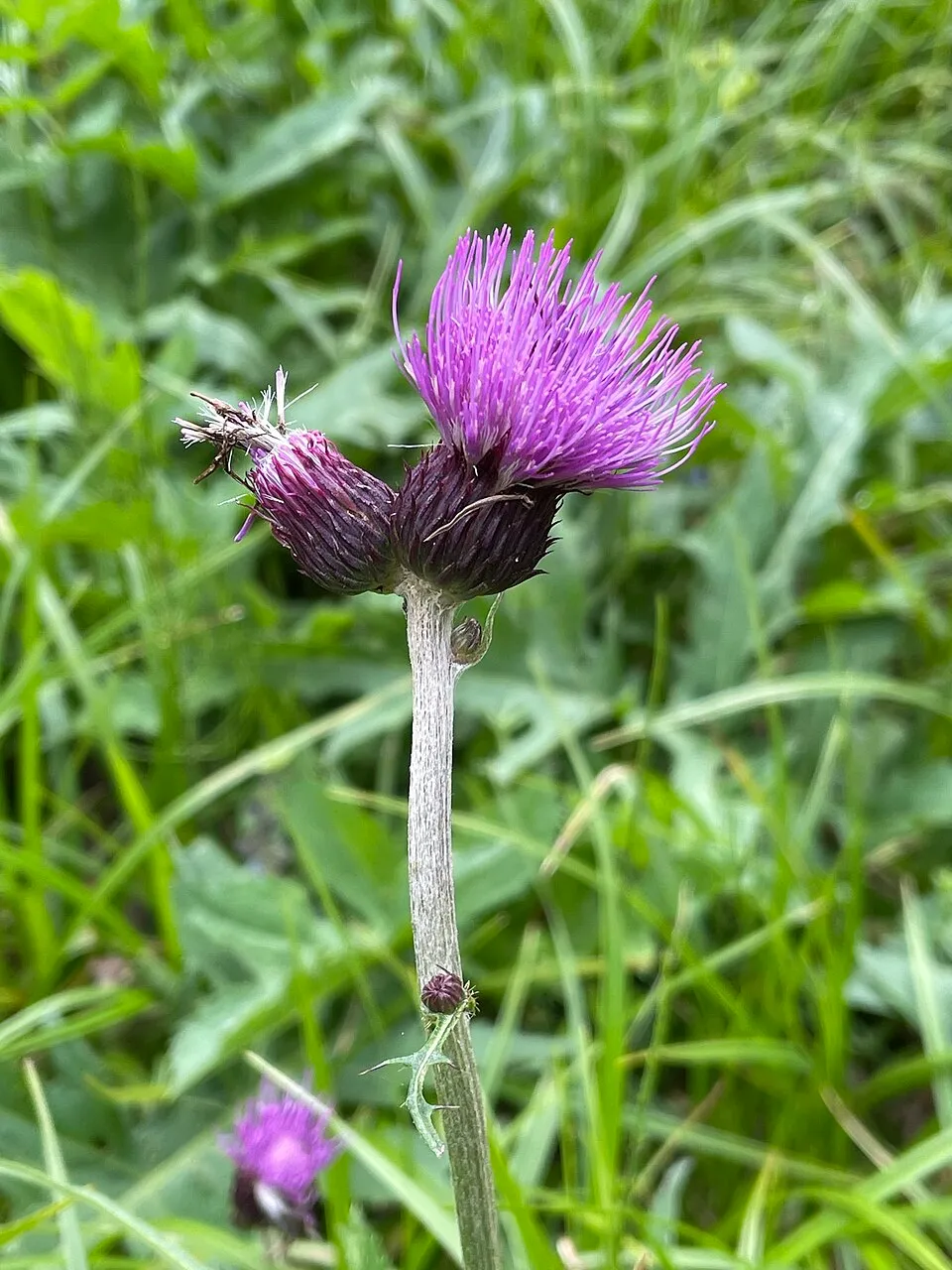
Cirsium rivulare, commonly known as the meadow thistle, is a captivating perennial herbaceous plant belonging to the expansive Asteraceae family. This robust species typically forms dense clumps, reaching an impressive height of 0.6 to 1.2 meters, with some specimens exceeding this. Its stems are notably tall, sturdy, and often exhibit a fine, slightly hairy texture. The foliage is distinctive, characterized by deeply lobed, dark green leaves adorned with spiny edges, presenting a unique aesthetic.
From late spring through early summer, Cirsium rivulare produces striking, globe-shaped flower heads that bloom in shades from soft pink to vibrant purple. These vibrant inflorescences are highly attractive to a diverse array of pollinators, including various species of bees and butterflies, making it an excellent addition to wildlife-friendly gardens and ecological restoration projects. The plant flourishes in moist, well-drained soils and demonstrates a preference for full sun exposure to partial shade, highlighting its adaptability. Native to the European continent, it is frequently encountered in its natural habitat across wet meadows, lush grasslands, and along the banks of rivers, showcasing its resilience to varying environmental conditions.
A notable feature is its deep taproot system, which enables efficient access to groundwater, rendering the plant relatively drought-resistant once firmly established. While primarily perennial, Cirsium rivulare can occasionally exhibit biennial characteristics under certain climatic or soil conditions, demonstrating its flexible life cycle. Overall, beyond its ecological value as a nectar source, Cirsium rivulare contributes significant ornamental appeal to naturalistic landscapes.
Trusted Scientific References
1. Authoritative external sources for Cirsium rivulare
1.1 Wikipedia — Cirsium rivulare
1.2 Kew POWO (Plants of the World Online)
1.3 PubMed — peer-reviewed research
1.4 NCBI Taxonomy Browser
1.5 GBIF — Global Biodiversity
1.6Cirsium should be interpreted through verified botanical identity, practical care, and responsible safety language. This recovery note adds the missing context needed for a complete profile: match light to the plant's habit, use well-drained soil, water according to season, and avoid unsupported medicinal or edible claims. For publishing, the plant can be presented as a source-backed garden plant with clear care guidance, common problem diagnosis, and conservative safety wording.
1.1.Cirsium — Key Features
- ✓ <strong>Botanical Name</strong> — Cirsium rivulare, commonly known as Meadow Thistle.
- ✓ <strong>Family Affiliation</strong> — Member of the large and diverse Asteraceae (Daisy) family.
- ✓ <strong>Striking Flowers</strong> — Produces attractive pink to purple globe-shaped flower heads.
- ✓ <strong>Pollinator Magnet</strong> — Highly attractive to bees, butterflies, and other beneficial pollinators.
- ✓ <strong>Traditional Medicinal Uses</strong> — Historically used for anti-inflammatory, diuretic, and liver-protective purposes.
- ✓ <strong>Phytochemical Richness</strong> — Contains a spectrum of bioactive compounds including flavonoids, phenolic acids, and terpenoids.
- ✓ <strong>Habitat Preference</strong> — Thrives in moist meadows, grasslands, and riverbanks across Europe.
- ✓ <strong>Deep Taproot System</strong> — Contributes to its drought resistance once established.
- ✓ <strong>Ecological Importance</strong> — Serves as an important nectar source and adds aesthetic value to natural landscapes.
- ✓ <strong>Research Interest</strong> — Growing interest in its antioxidant, antimicrobial, and potential antiproliferative activities.
1.2.Cirsium — Quick Summary
- ✓ Cirsium rivulare, the meadow thistle, is a European native in the Asteraceae family.
- ✓ Traditionally valued for anti-inflammatory, diuretic, and liver-protective properties.
- ✓ Rich in flavonoids, phenolic acids, and terpenoids, contributing to its antioxidant effects.
- ✓ Cultivated in moist, well-drained soil, preferring sun to partial shade.
- ✓ Usage includes infusions, decoctions, tinctures, and topical applications.
- ✓ Caution advised due to potential for allergies, GI upset, and toxicity concerns from related species.
2.Cirsium — Scientific Identity
3.Cirsium — Quick Facts
4.Cirsium — Appearance & Identification
5.Cirsium — Native Habitat
6.Cirsium — Water Requirements
- ✓ Soil Preference — Thrives in moist, well-drained soil enriched with moderate to high organic content.
- ✓ Light Requirements — Prefers full sun exposure to partial shade for optimal growth and flowering.
- ✓ Propagation — Can be propagated effectively by sowing seeds in either spring or fall; root division is also an option for established plants.
- ✓ Spacing — When planting seedlings, ensure a spacing of approximately 30-45 cm (12-18 inches) between plants to allow for adequate growth and air circulation.
- ✓ Watering — Requires consistent watering to maintain soil moisture, ensuring the soil remains damp but never waterlogged.
- ✓ Fertilization — Benefits from a balanced plant food application during the growing season, especially in poorer soils, to support vigorous growth.
- ✓ Pest & Disease Management — Generally robust, but monitor for common thistle pests like aphids or rust fungi; ensure good air circulation to prevent fungal issues.
- ✓ Hardiness — Cirsium rivulare is hardy in USDA zones 4-8, tolerating cold winters and a range of temperate climates.
Reviewed by the Flora Medical Global Botanical Review Panel
Multi-disciplinary editorial group · Botany · Ethnobotany · Herbal-medicine literature
Who reviewed this: This page was checked by the Flora Medical Global Botanical Review Panel — an in-house editorial group of botany graduates, ethnobotany researchers, and horticulture practitioners who collectively maintain our 7,000+ plant encyclopedia. Meet the team.
Our 4-step verification process
1. Taxonomic verification
Scientific names and synonyms cross-checked against Kew POWO, World Flora Online, and The Plant List.
2. Phytochemical & medicinal cross-reference
Active compounds, traditional uses, and reported activities are cross-referenced with PubMed, USDA Dr. Duke's database, and peer-reviewed ethnobotanical literature.
3. Conservation & distribution check
Distribution, ecology, and conservation status confirmed against GBIF occurrence records and the IUCN Red List.
4. Editorial & safety review
Every entry passes an editorial pass for clarity, originality, and safety notices (toxicity, contraindications, dosage caveats) before publication.
Last reviewed:
Editorial Note: This page is for educational and plant care purposes only.
Written by: Flora Medical Global Editorial Team
Reviewed by: Flora Medical Global Botanical Review Panel
Last Updated: June 16, 2026







Cirsium — Comments & Community Reviews
Rate this plant