
Care Disclaimer: Plant care recommendations are general guidelines based on common growing conditions. Individual results may vary based on your local environment, climate, and care routine. If your plant is toxic, keep it away from children and pets, and consult a veterinarian if accidental ingestion occurs.
1.Cyperus Papyrus Dwarf — Overview
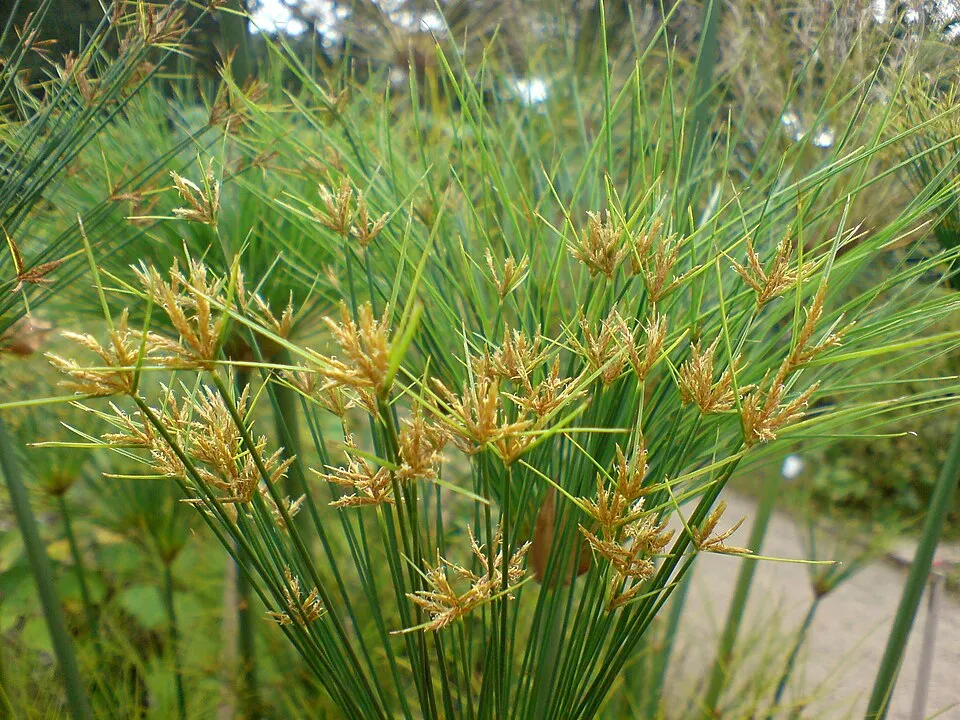
Cyperus papyrus, commonly known as papyrus or Egyptian reed, is a majestic perennial aquatic sedge belonging to the Cyperaceae family, a diverse group of grass-like plants. Native to the vast wetlands, riverbanks, and shallow lakes of Africa, particularly around the Nile Delta where it was once abundant, its natural range extends to Madagascar and parts of the southern Mediterranean. This remarkable plant is characterized by its robust, triangular-shaped stems, or culms, which can reach impressive heights of up to 4 meters (13 feet) in its wild form.
The stems are topped by a distinctive, dense, umbrella-like inflorescence composed of numerous bright green, thread-like rays, creating a visually striking 'feather-duster' effect. Small, inconspicuous greenish-brown flowers emerge from these rays, eventually developing into small, nut-like fruits dispersed by water. While the species can be quite tall, ornamental selections like 'Dwarf Form' (often marketed as 'Nanus' or 'King Tut®') typically grow to a more manageable 0.6 to 1 meter (2-3 feet).
These dwarf cultivars maintain the characteristic form but are better suited for container culture and smaller water features, offering increased shade tolerance compared to their towering wild counterparts. Papyrus plays a crucial ecological role in its native habitats, providing shelter and sustenance for wildlife, while also historically serving as the primary source material for ancient Egyptian papyrus paper.
Trusted Scientific References
1. Authoritative external sources for Cyperus papyrus
1.1 Wikipedia — Cyperus papyrus
1.2 Kew POWO (Plants of the World Online)
1.3 PubMed — peer-reviewed research
1.4 NCBI Taxonomy Browser
1.5 GBIF — Global Biodiversity
1.6Cyperus Papyrus Dwarf should be interpreted through verified botanical identity, practical care, and responsible safety language. This recovery note adds the missing context needed for a complete profile: match light to the plant's habit, use well-drained soil, water according to season, and avoid unsupported medicinal or edible claims. For publishing, the plant can be presented as a source-backed garden plant with clear care guidance, common problem diagnosis, and conservative safety wording.
1.1.Cyperus Papyrus Dwarf — Key Features
- ✓ <strong>Iconic Wetland Plant</strong> — Instantly recognizable for its tall, triangular stems and umbrella-like inflorescence.
- ✓ <strong>Historical Significance</strong> — The original source material for ancient Egyptian papyrus paper.
- ✓ <strong>Ornamental Appeal</strong> — Dwarf cultivars are highly valued for their tropical aesthetics in water features and containers.
- ✓ <strong>Vigorous Growth</strong> — Establishes quickly and grows robustly in suitable moist to wet environments.
- ✓ <strong>Ecological Contributor</strong> — Supports biodiversity, aids in water purification, and prevents soil erosion.
- ✓ <strong>Edible Rhizomes and Culms</strong> — Historically consumed as a starchy food source in its native regions.
- ✓ <strong>Craft Versatility</strong> — Stems are widely used for weaving and various traditional handicrafts.
- ✓ <strong>Low Maintenance (Once Established)</strong> — Requires consistent moisture but is otherwise easy to care for in optimal conditions.
- ✓ <strong>Hardy in Warm Climates</strong> — Perennial in USDA Zones 9-12, often cultivated as an annual in colder regions.
- ✓ <strong>Drought Intolerance</strong> — Requires constant moisture; cannot tolerate dry soil conditions.
1.2.Cyperus Papyrus Dwarf — Quick Summary
- ✓ Cyperus papyrus is a distinctive wetland sedge, historically vital for ancient paper and crafts.
- ✓ Dwarf varieties are popular ornamental plants, ideal for water gardens and containers.
- ✓ Contains flavonoids and essential oils, offering potential but unproven medicinal properties.
- ✓ Thrives in wet, sunny conditions and is propagated by rhizome division.
- ✓ Known primarily for its ecological role, historical utility, and ornamental value rather than direct medicinal use.
- ✓ Generally safe for handling and ornamental cultivation, with edible rhizomes from clean sources.
2.Cyperus Papyrus Dwarf — Scientific Identity
3.Cyperus Papyrus Dwarf — Quick Facts
4.Cyperus Papyrus Dwarf — Appearance & Identification
5.Cyperus Papyrus Dwarf — Native Habitat
6.Cyperus Papyrus Dwarf — Water Requirements
- ✓ Site Selection — Thrives best in full sun to partial shade, with dwarf cultivars showing greater tolerance for shaded conditions; requires warm temperatures to flourish.
- ✓ Soil Requirements — Prefers rich, organic soil; can be planted directly into moist garden beds or in containers with a heavy, loamy substrate.
- ✓ Watering — Essential to maintain consistently wet conditions, ideally with the plant's base submerged in 1-6 inches of standing water, such as in ponds or water gardens.
- ✓ Propagation — Easily propagated by dividing the robust rhizomes in spring, or alternatively, by collecting and sowing the small seeds.
- ✓ Fertilization — Benefits from regular, heavy fertilization during its active growing season to support its vigorous growth and lush foliage.
- ✓ Winter Care — In regions below USDA Zone 9, it must be protected from frost; plants can be overwintered indoors in a bright, consistently moist environment, preferably with the pot placed in water.
- ✓ Maintenance — Trim old, yellowing, or browned culms close to the rhizome base to encourage continuous new growth and maintain a tidy appearance.
- ✓ Container Growing — Excellent for container culture, especially dwarf varieties, ensuring the container has no drainage holes or is placed in a larger water-filled vessel to maintain constant moisture.
Reviewed by the Flora Medical Global Botanical Review Panel
Multi-disciplinary editorial group · Botany · Ethnobotany · Herbal-medicine literature
Who reviewed this: This page was checked by the Flora Medical Global Botanical Review Panel — an in-house editorial group of botany graduates, ethnobotany researchers, and horticulture practitioners who collectively maintain our 7,000+ plant encyclopedia. Meet the team.
Our 4-step verification process
1. Taxonomic verification
Scientific names and synonyms cross-checked against Kew POWO, World Flora Online, and The Plant List.
2. Phytochemical & medicinal cross-reference
Active compounds, traditional uses, and reported activities are cross-referenced with PubMed, USDA Dr. Duke's database, and peer-reviewed ethnobotanical literature.
3. Conservation & distribution check
Distribution, ecology, and conservation status confirmed against GBIF occurrence records and the IUCN Red List.
4. Editorial & safety review
Every entry passes an editorial pass for clarity, originality, and safety notices (toxicity, contraindications, dosage caveats) before publication.
Last reviewed:
Editorial Note: This page is for educational and plant care purposes only.
Written by: Flora Medical Global Editorial Team
Reviewed by: Flora Medical Global Botanical Review Panel
Last Updated: June 16, 2026







Cyperus Papyrus Dwarf — Comments & Community Reviews
Rate this plant