
Care Disclaimer: Plant care recommendations are general guidelines based on common growing conditions. Individual results may vary based on your local environment, climate, and care routine. If your plant is toxic, keep it away from children and pets, and consult a veterinarian if accidental ingestion occurs.
1.Deutzia Gracilis — Overview
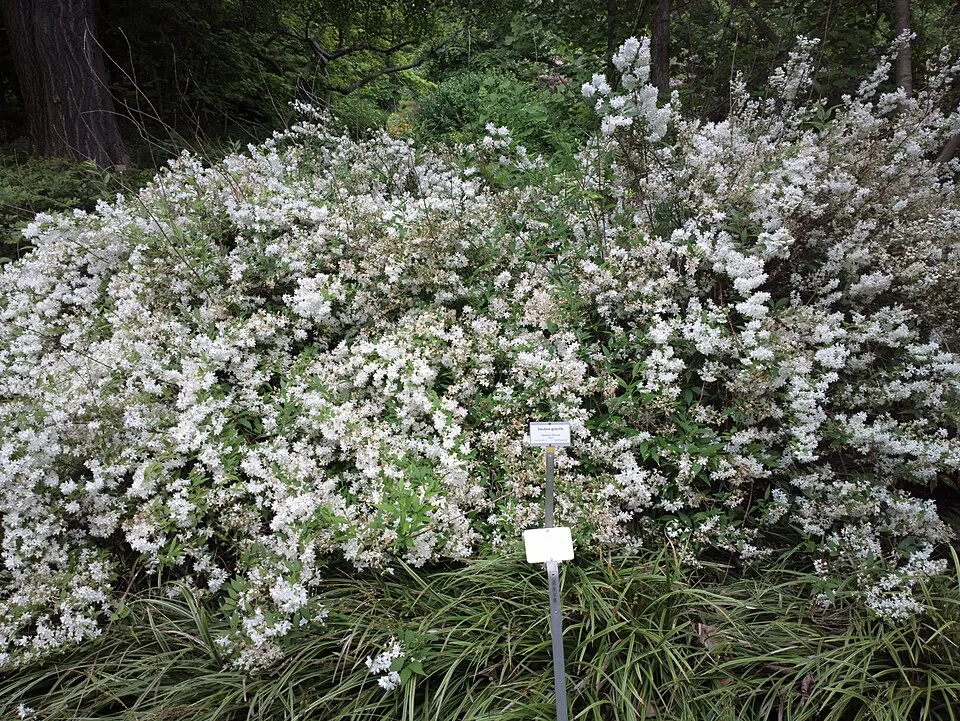
Deutzia gracilis, commonly known as slender Deutzia or Japanese Snow Flower, is a captivating deciduous shrub prized for its elegant form and abundant floral display. Typically growing to a height of 2 to 5 feet (60 to 150 cm) and spreading similarly, it develops a dense, rounded habit with gracefully arching, slender brown stems that are notably smooth. Its ovate to lanceolate leaves, ranging from 1 to 4 inches (2.5 to 10 cm) in length, exhibit a vibrant, glossy green throughout the growing season, often transitioning into appealing shades of yellow, red, or burgundy in autumn, particularly noticeable in cultivars like 'Nikko'.
The plant’s most striking feature is its profusion of small, star-shaped to bell-shaped white or pale pink flowers, each approximately 1 inch (2.5 cm) in diameter. These blossoms emerge in dense racemes or clusters from late spring to early summer, typically May to June, creating a spectacular, cascading effect. Taxonomically, Deutzia gracilis is a member of the genus Deutzia within the family Hydrangeaceae, making it a botanical relative of well-known Hydrangea species.
Its native range is confined to the mountainous regions of East Asia, predominantly in central and southern Japan, where it thrives in temperate woodlands and forest margins, often as an understory plant adapted to dappled light conditions. Historically, while primarily cultivated for its ornamental value, its origin in regions with rich ethnobotanical traditions suggests a potential, albeit currently undocumented, for broader applications that warrant further scientific exploration.
Trusted Scientific References
1. Authoritative external sources for Deutzia gracilis
1.1 Wikipedia — Deutzia gracilis
1.2 Kew POWO (Plants of the World Online)
1.3 PubMed — peer-reviewed research
1.4 NCBI Taxonomy Browser
1.5 GBIF — Global Biodiversity
1.6Deutzia Gracilis should be interpreted through verified botanical identity, practical care, and responsible safety language. This recovery note adds the missing context needed for a complete profile: match light to the plant's habit, use well-drained soil, water according to season, and avoid unsupported medicinal or edible claims. For publishing, the plant can be presented as a source-backed garden plant with clear care guidance, common problem diagnosis, and conservative safety wording.
1.1.Deutzia Gracilis — Key Features
- ✓ <strong>Striking Floral Display</strong> — Profusion of small, white, star-shaped flowers in racemes during late spring to early summer.
- ✓ <strong>Graceful Arching Stems</strong> — Slender, smooth stems that create an elegant, rounded, and spreading habit.
- ✓ <strong>Vibrant Foliage</strong> — Glossy green leaves that often develop attractive yellow, red, or burgundy fall color.
- ✓ <strong>Compact Growth Habit</strong> — Typically reaching 2-5 feet in height and spread, suitable for various garden sizes.
- ✓ <strong>High Adaptability</strong> — Tolerates a range of soil types, pH levels, and is drought-tolerant once established.
- ✓ <strong>Pest and Disease Resistance</strong> — Generally free from significant insect pests and plant diseases.
- ✓ <strong>Deer Resistance</strong> — Seldom damaged by deer, making it a good choice for areas with wildlife.
- ✓ <strong>Cold and Pollution Tolerance</strong> — Exhibits good resistance to cold temperatures and urban air pollution.
- ✓ <strong>Low Maintenance</strong> — Requires minimal care beyond annual post-flowering pruning.
- ✓ <strong>Ethnobotanical Potential</strong> — Origin in East Asia suggests potential, albeit undocumented, traditional uses.
1.2.Deutzia Gracilis — Quick Summary
- ✓ Elegant deciduous shrub with abundant white, star-shaped flowers in late spring.
- ✓ Native to East Asia, thriving in temperate woodlands.
- ✓ Highly adaptable and low-maintenance, tolerant of drought and pollution.
- ✓ Primarily an ornamental plant, ideal for borders, hedges, and cottage gardens.
- ✓ Non-toxic to common pets (dogs, cats, horses).
- ✓ Minimal pest and disease issues, making it a robust garden choice.
2.Deutzia Gracilis — Scientific Identity
3.Deutzia Gracilis — Quick Facts
4.Deutzia Gracilis — Appearance & Identification
5.Deutzia Gracilis — Native Habitat
6.Deutzia Gracilis — Water Requirements
- ✓ Site Selection — Thrives best in full sun to partial shade; in hotter climates, provide afternoon shade to prevent leaf scorch.
- ✓ Soil Requirements — Prefers moist, well-drained soils of most types and is adaptable to a wide range of pH levels.
- ✓ Watering — Establish with regular watering; once mature, it is drought-tolerant.
- ✓ Pruning — Annual pruning is recommended immediately after flowering to maintain shape and promote new blooms, as flowers appear on old growth.
- ✓ Propagation — Can be effectively propagated by softwood cuttings taken during the summer months.
- ✓ Pest and Disease Management — Generally resistant to most pests and diseases, though occasional aphids or leaf miners may occur.
- ✓ Environmental Tolerance — Highly resistant to adverse conditions including cold, air pollution, and transplant shock.
- ✓ Frost Protection — Protect from late spring frosts, which can damage emerging buds and new growth.
Reviewed by the Flora Medical Global Botanical Review Panel
Multi-disciplinary editorial group · Botany · Ethnobotany · Herbal-medicine literature
Who reviewed this: This page was checked by the Flora Medical Global Botanical Review Panel — an in-house editorial group of botany graduates, ethnobotany researchers, and horticulture practitioners who collectively maintain our 7,000+ plant encyclopedia. Meet the team.
Our 4-step verification process
1. Taxonomic verification
Scientific names and synonyms cross-checked against Kew POWO, World Flora Online, and The Plant List.
2. Phytochemical & medicinal cross-reference
Active compounds, traditional uses, and reported activities are cross-referenced with PubMed, USDA Dr. Duke's database, and peer-reviewed ethnobotanical literature.
3. Conservation & distribution check
Distribution, ecology, and conservation status confirmed against GBIF occurrence records and the IUCN Red List.
4. Editorial & safety review
Every entry passes an editorial pass for clarity, originality, and safety notices (toxicity, contraindications, dosage caveats) before publication.
Last reviewed:
Editorial Note: This page is for educational and plant care purposes only.
Written by: Flora Medical Global Editorial Team
Reviewed by: Flora Medical Global Botanical Review Panel
Last Updated: June 16, 2026







Deutzia Gracilis — Comments & Community Reviews
Rate this plant