
Care Disclaimer: Plant care recommendations are general guidelines based on common growing conditions. Individual results may vary based on your local environment, climate, and care routine. If your plant is toxic, keep it away from children and pets, and consult a veterinarian if accidental ingestion occurs.
1.Dianthus Chinensis — Overview
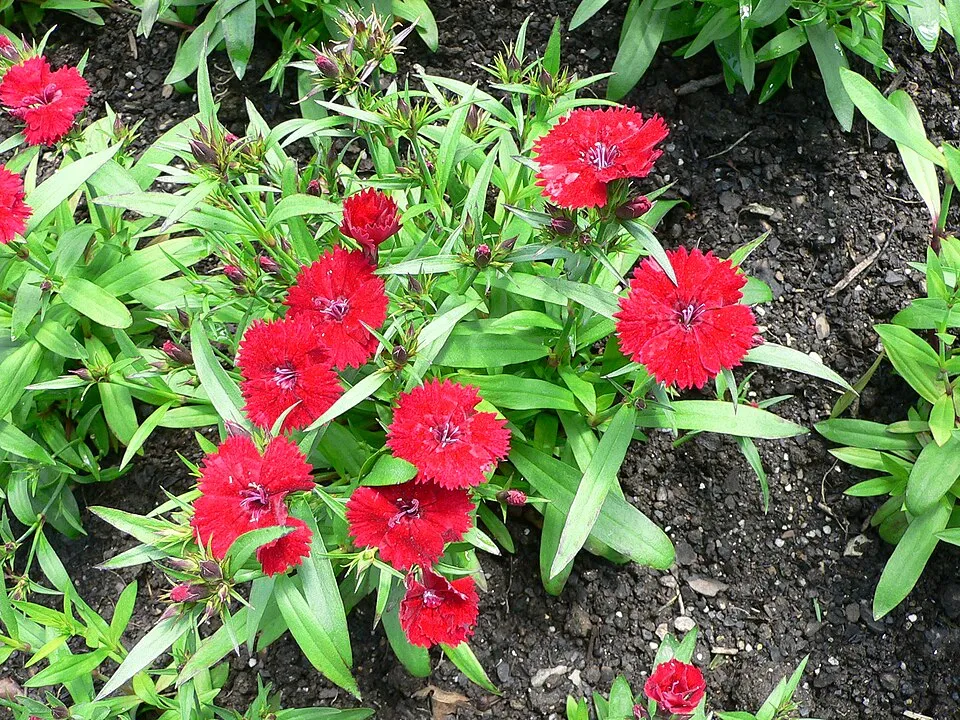
Dianthus chinensis, commonly known as Chinese Pink or Rainbow Pink, is an exquisite perennial herbaceous flowering plant belonging to the Caryophyllaceae family. This species is indigenous to East Asia, particularly China and Korea, where it thrives in a diverse array of natural habitats including sandy forest margins, dry hillsides, mountain scrub, rocky ravines, and along meadows and streamsides. The plant typically achieves a height of 30 to 70 centimeters, presenting slender, linear, grey-green leaves that can extend up to 15 centimeters in length.
Its most captivating feature is its profusion of vibrant, aromatic flowers, which bloom in a spectrum of colors including delicate pinks, fiery reds, and pure whites. These blooms are often characterized by their distinctive fringed or serrated petal margins, lending them an eye-catching, unique appearance. While naturally a perennial, Dianthus chinensis is frequently cultivated as an annual or biennial in temperate gardens due to its vigorous first-year flowering and subsequent decline.
Flowering typically occurs from late spring through late summer, specifically from July to August, making it a popular choice for ornamental landscapes and supporting local biodiversity and pollinators within USDA hardiness zones 5-8.
Trusted Scientific References
1. Authoritative external sources for Dianthus chinensis
1.1 Wikipedia — Dianthus chinensis
1.2 Kew POWO (Plants of the World Online)
1.3 PubMed — peer-reviewed research
1.4 NCBI Taxonomy Browser
1.5 GBIF — Global Biodiversity
1.6Dianthus Chinensis should be interpreted through verified botanical identity, practical care, and responsible safety language. This recovery note adds the missing context needed for a complete profile: match light to the plant's habit, use well-drained soil, water according to season, and avoid unsupported medicinal or edible claims. For publishing, the plant can be presented as a source-backed garden plant with clear care guidance, common problem diagnosis, and conservative safety wording.
1.1.Dianthus Chinensis — Key Features
- ✓ <strong>Botanical Name</strong> — Dianthus chinensis L.
- ✓ <strong>Common Names</strong> — Chinese Pink, Rainbow Pink, China Pink, Annual Pink.
- ✓ <strong>Plant Family</strong> — Caryophyllaceae (Carnation Family).
- ✓ <strong>Native Range</strong> — Indigenous to China and Korea in East Asia.
- ✓ <strong>Medicinal Uses</strong> — Diuretic, Antiphlogistic, Anthelmintic, Emmenagogue, Febrifuge.
- ✓ <strong>Key Constituents</strong> — Flavonoids, Triterpenoid Saponins, Glycosides, Phenolic Acids.
- ✓ <strong>Habitat Preference</strong> — Diverse, found in sandy forest margins, hillsides, and meadows.
- ✓ <strong>Ornamental Value</strong> — Highly prized for its vibrant, fringed, and aromatic flowers.
- ✓ <strong>USDA Hardiness</strong> — Generally hardy in USDA zones 5 through 8.
- ✓ <strong>Traditional System</strong> — Primarily utilized in Traditional Chinese Medicine (TCM).
1.2.Dianthus Chinensis — Quick Summary
- ✓ Dianthus chinensis, or Chinese Pink, is a vibrant perennial native to East Asia, cherished for its ornamental and medicinal value.
- ✓ Valued in traditional Chinese medicine (TCM) for its potent diuretic, anti-inflammatory, and antimicrobial properties.
- ✓ Rich in bioactive compounds like flavonoids, saponins, and glycosides, contributing to its diverse therapeutic actions.
- ✓ Commonly utilized for supporting urinary tract health, addressing menstrual irregularities, and treating various skin conditions.
- ✓ Requires well-drained soil and ample sunlight for optimal growth, thriving with consistent yet moderate care.
- ✓ Strongly contraindicated during pregnancy and requires professional consultation for individuals with pre-existing health conditions.
2.Dianthus Chinensis — Scientific Identity
3.Dianthus Chinensis — Quick Facts
4.Dianthus Chinensis — Appearance & Identification
5.Dianthus Chinensis — Native Habitat
6.Dianthus Chinensis — Water Requirements
- ✓ Soil Preference — Thrives in well-drained, sandy or loamy soils with a slightly acidic to neutral pH range of 6.0 to 7.0, avoiding heavy clay.
- ✓ Light Requirements — Prefers full sun exposure for optimal flowering and growth, though it can tolerate light partial shade; avoids deep shade.
- ✓ Watering Regimen — Requires regular watering to maintain consistent soil moisture, but it is crucial to avoid overwatering to prevent root rot.
- ✓ Propagation Techniques — Can be successfully propagated from seeds, typically sown in spring, or through stem cuttings taken in early summer.
- ✓ Maintenance Practices — Deadheading spent flowers encourages continuous blooming throughout the growing season and improves plant vigor.
- ✓ Fertilization Schedule — Apply a balanced, all-purpose fertilizer during the active growing period to support healthy development and abundant flowering.
- ✓ Spacing Recommendations — Space plants approximately 30-38 centimeters (12-15 inches) apart to ensure adequate air circulation and prevent fungal diseases.
- ✓ Hardiness and Climate — Hardy in USDA zones 5-8 and UK zone 7, tolerating moderate cold but benefiting from winter protection in colder regions.
Reviewed by the Flora Medical Global Botanical Review Panel
Multi-disciplinary editorial group · Botany · Ethnobotany · Herbal-medicine literature
Who reviewed this: This page was checked by the Flora Medical Global Botanical Review Panel — an in-house editorial group of botany graduates, ethnobotany researchers, and horticulture practitioners who collectively maintain our 7,000+ plant encyclopedia. Meet the team.
Our 4-step verification process
1. Taxonomic verification
Scientific names and synonyms cross-checked against Kew POWO, World Flora Online, and The Plant List.
2. Phytochemical & medicinal cross-reference
Active compounds, traditional uses, and reported activities are cross-referenced with PubMed, USDA Dr. Duke's database, and peer-reviewed ethnobotanical literature.
3. Conservation & distribution check
Distribution, ecology, and conservation status confirmed against GBIF occurrence records and the IUCN Red List.
4. Editorial & safety review
Every entry passes an editorial pass for clarity, originality, and safety notices (toxicity, contraindications, dosage caveats) before publication.
Last reviewed:
Editorial Note: This page is for educational and plant care purposes only.
Written by: Flora Medical Global Editorial Team
Reviewed by: Flora Medical Global Botanical Review Panel
Last Updated: June 16, 2026







Dianthus Chinensis — Comments & Community Reviews
Rate this plant