
Care Disclaimer: Plant care recommendations are general guidelines based on common growing conditions. Individual results may vary based on your local environment, climate, and care routine. If your plant is toxic, keep it away from children and pets, and consult a veterinarian if accidental ingestion occurs.
1.Dicentra — Overview
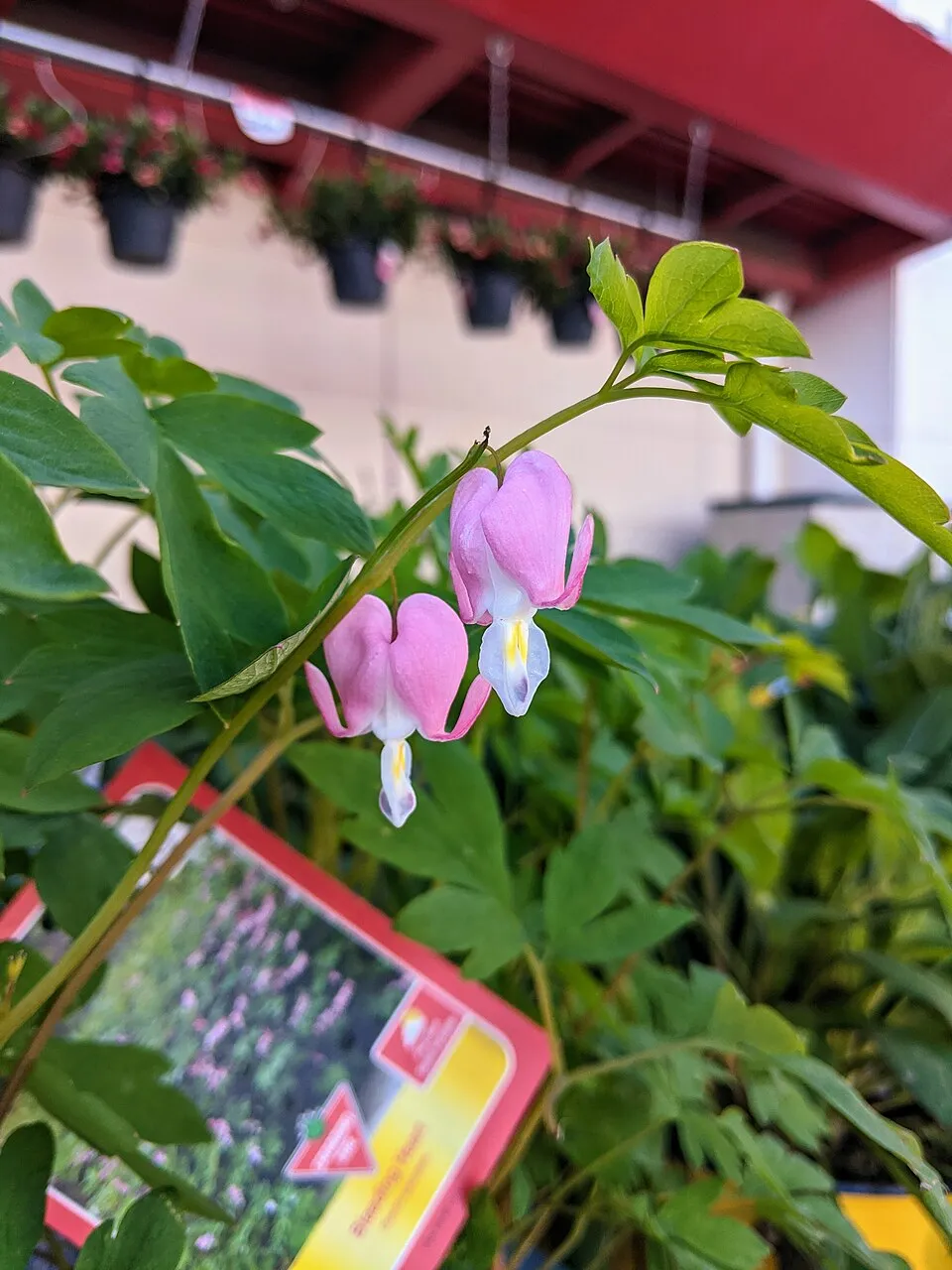
Dicentra spectabilis, widely recognized as bleeding heart, is a captivating perennial herbaceous plant originating from the temperate regions of East Asia, specifically encompassing northern China, Japan, and Korea. This botanical marvel is celebrated for its distinctive heart-shaped flowers, which gracefully droop from arching stems, presenting a whimsical and elegant display. The blooms typically manifest in shades of vibrant rose-pink, white, or red, often with contrasting inner petals.
Its foliage is deeply lobed and fern-like, exhibiting an attractive bluish-green hue that beautifully complements the delicate flowers. The plant forms robust, bushy clumps, commonly reaching heights of 2 to 3 feet (60 to 90 cm) and spreading up to 4 feet (120 cm) wide. Emerging in early spring with reddish new growth, it quickly develops into one of the season's first flowering perennials, typically blooming from late spring to early summer.
Bleeding heart thrives in light to partial shade, mimicking its natural woodland habitat, and prefers consistently moist, well-drained soils rich in organic matter. While traditionally classified under the genus Dicentra, modern taxonomy frequently places it in Lamprocapnos spectabilis within the family Papaveraceae (formerly Fumariaceae), maintaining its hardiness across USDA zones 2-8. The plant’s aesthetic appeal makes it a favored choice for shaded borders, cottage gardens, and woodland settings, though its foliage tends to senesce and die back by mid-summer, especially in hotter or drier conditions.
Trusted Scientific References
1. Authoritative external sources for Dicentra spectabilis
1.1 Wikipedia — Dicentra spectabilis
1.2 Kew POWO (Plants of the World Online)
1.3 PubMed — peer-reviewed research
1.4 NCBI Taxonomy Browser
1.5 GBIF — Global Biodiversity
1.6Dicentra should be interpreted through verified botanical identity, practical care, and responsible safety language. This recovery note adds the missing context needed for a complete profile: match light to the plant's habit, use well-drained soil, water according to season, and avoid unsupported medicinal or edible claims. For publishing, the plant can be presented as a source-backed garden plant with clear care guidance, common problem diagnosis, and conservative safety wording.
1.1.Dicentra — Key Features
- ✓ <strong>Distinctive Heart</strong> — Shaped Flowers — Iconic pink, white, or red blooms.
- ✓ <strong>Native to East Asia</strong> — Indigenous to China, Japan, and Korea.
- ✓ <strong>Hardy Perennial</strong> — Thrives in USDA Zones 2-8.
- ✓ <strong>Potentially Toxic Plant</strong> — All parts contain poisonous alkaloids.
- ✓ <strong>Traditional Analgesic & Sedative</strong> — Historically used for pain and anxiety.
- ✓ <strong>Rich in Isoquinoline Alkaloids</strong> — Primary active chemical constituents.
- ✓ <strong>Shade</strong> — Loving — Prefers light to partial shade conditions.
- ✓ <strong>Early Spring Bloomer</strong> — One of the first perennials to flower.
- ✓ <strong>Summer Senescence</strong> — Foliage often dies back by mid-summer.
- ✓ <strong>Attractive Fern</strong> — Like Foliage — Bluish-green, finely divided leaves.
1.2.Dicentra — Quick Summary
- ✓ Toxic ornamental plant with traditional medicinal uses.
- ✓ Known for potent analgesic and sedative properties.
- ✓ Rich in isoquinoline alkaloids, demanding extreme caution.
- ✓ Thrives in shade, boasts unique heart-shaped flowers.
- ✓ Foliage senesces in summer, popular for spring gardens.
- ✓ Medicinal use strictly limited to expert guidance; not for self-medication.
2.Dicentra — Scientific Identity
3.Dicentra — Quick Facts
4.Dicentra — Appearance & Identification
5.Dicentra — Native Habitat
6.Dicentra — Water Requirements
- ✓ Soil Preparation — Bleeding heart thrives in rich, well-drained soil generously amended with organic matter to ensure optimal growth.
- ✓ Moisture Requirements — Maintain consistent soil moisture, providing regular watering, especially during dry periods, to prevent the foliage from senescing prematurely.
- ✓ Light Conditions — Plant in light to partial shade, ideally where it receives morning sun and afternoon shade; it can tolerate full sun only in consistently cool and moist climates.
- ✓ Planting Time and Spacing — The ideal planting times are early spring or fall, with individual plants spaced approximately 12 to 18 inches (30-45 cm) apart to allow for mature growth.
- ✓ Mulching — Apply a layer of organic mulch around the base of the plants to help retain soil moisture, regulate soil temperature, and suppress weed growth.
- ✓ Propagation — Propagate by dividing established clumps in late fall or very early spring, or from fresh seeds, which require cold, moist stratification for successful germination.
- ✓ Maintenance and Senescence — Cut back the foliage after flowering to potentially delay summer senescence, and remove dead stems once they wither completely.
- ✓ Hardiness — This plant is hardy and well-suited for cultivation in USDA Plant Hardiness Zones 2 through 8, tolerating cold winter temperatures.
Reviewed by the Flora Medical Global Botanical Review Panel
Multi-disciplinary editorial group · Botany · Ethnobotany · Herbal-medicine literature
Who reviewed this: This page was checked by the Flora Medical Global Botanical Review Panel — an in-house editorial group of botany graduates, ethnobotany researchers, and horticulture practitioners who collectively maintain our 7,000+ plant encyclopedia. Meet the team.
Our 4-step verification process
1. Taxonomic verification
Scientific names and synonyms cross-checked against Kew POWO, World Flora Online, and The Plant List.
2. Phytochemical & medicinal cross-reference
Active compounds, traditional uses, and reported activities are cross-referenced with PubMed, USDA Dr. Duke's database, and peer-reviewed ethnobotanical literature.
3. Conservation & distribution check
Distribution, ecology, and conservation status confirmed against GBIF occurrence records and the IUCN Red List.
4. Editorial & safety review
Every entry passes an editorial pass for clarity, originality, and safety notices (toxicity, contraindications, dosage caveats) before publication.
Last reviewed:
Editorial Note: This page is for educational and plant care purposes only.
Written by: Flora Medical Global Editorial Team
Reviewed by: Flora Medical Global Botanical Review Panel
Last Updated: June 16, 2026







Dicentra — Comments & Community Reviews
Rate this plant