
Care Disclaimer: Plant care recommendations are general guidelines based on common growing conditions. Individual results may vary based on your local environment, climate, and care routine. If your plant is toxic, keep it away from children and pets, and consult a veterinarian if accidental ingestion occurs.
1.Doronicum — Overview
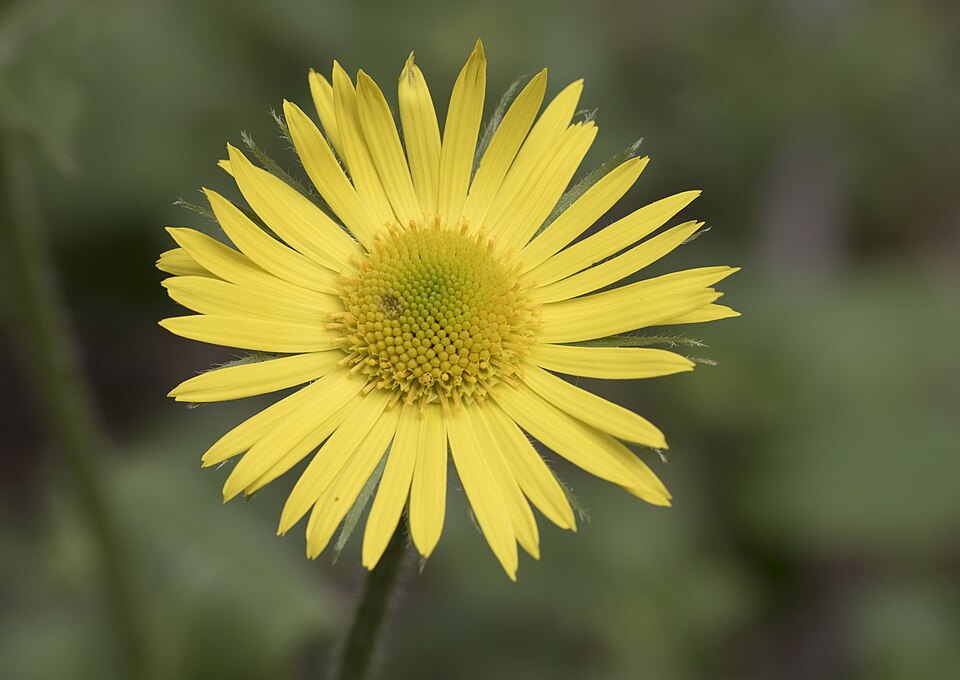
Doronicum orientale, widely recognized as Oriental Leopard's Bane or False Leopard's Bane, is a resilient perennial herb belonging to the expansive Asteraceae family. Native to the mountainous and woodland regions across Europe and Central Asia, this species forms striking basal rosettes of broad, heart-shaped leaves that can extend up to 30 cm.
These prominently veined leaves, often with serrated margins, create a lush green carpet in spring, adding significant ornamental value to any garden setting.
As late spring transitions into early summer, Doronicum orientale produces vibrant, large yellow daisy-like flowers. These solitary, sunflower-like blooms, typically around 5 cm in diameter, are borne on slender, upright stems that reach heights of 30 to 60 cm. Their cheerful appearance makes them particularly effective in brightening shady garden areas, attracting essential pollinators such as bees and butterflies during their blooming period from April to June.
The plant thrives in moist, fertile, well-draining soil, preferring partial to full shade, and is commonly found in woodland clearings, meadows, and subalpine zones. Its robust nature allows it to flourish in USDA hardiness zones 3 to 7, making it a favored choice for cottage gardens, shade borders, and naturalized ground cover.
Trusted Scientific References
1. Authoritative external sources for Doronicum orientale
1.1 Wikipedia — Doronicum orientale
1.2 Kew POWO (Plants of the World Online)
1.3 PubMed — peer-reviewed research
1.4 NCBI Taxonomy Browser
1.5 GBIF — Global Biodiversity
1.6Doronicum should be interpreted through verified botanical identity, practical care, and responsible safety language. This recovery note adds the missing context needed for a complete profile: match light to the plant's habit, use well-drained soil, water according to season, and avoid unsupported medicinal or edible claims. For publishing, the plant can be presented as a source-backed garden plant with clear care guidance, common problem diagnosis, and conservative safety wording.
1.1.Doronicum — Key Features
- ✓ <strong>Striking Yellow Blooms</strong> — Large, daisy-like flowers provide early spring color in shady garden areas.
- ✓ <strong>Heart</strong> — shaped Basal Leaves — Forms an attractive ground cover with prominent, veined foliage.
- ✓ <strong>Asteraceae Family Member</strong> — Shares characteristics with other well-known medicinal plants like Arnica.
- ✓ <strong>Rich in Sesquiterpene Lactones</strong> — Contains doronolides known for anti-inflammatory effects.
- ✓ <strong>Traditional Medicinal Uses</strong> — Employed in European folk and Ayurvedic practices for pain and inflammation.
- ✓ <strong>Shade</strong> — Tolerant Perennial — Ideal for woodland gardens and shaded borders, thriving in cooler climates.
- ✓ <strong>Attracts Pollinators</strong> — Flowers provide nectar for bees and butterflies, enhancing garden biodiversity.
- ✓ <strong>Resilient and Hardy</strong> — Tolerates USDA zones 3-7, making it suitable for a wide range of temperate regions.
- ✓ <strong>Diverse Phytochemical Profile</strong> — Contains flavonoids, phenolic acids, and tannins alongside lactones.
- ✓ <strong>Versatile Application</strong> — Used in various forms, including tinctures, poultices, and topical gels.
1.2.Doronicum — Quick Summary
- ✓ Oriental Leopard's Bane is a perennial herb from the Asteraceae family, prized for its bright yellow, daisy-like flowers and heart-shaped foliage.
- ✓ Traditionally used in European and Ayurvedic herbalism for its anti-inflammatory, analgesic, and wound-healing properties.
- ✓ Rich in sesquiterpene lactones, flavonoids, and phenolic acids, contributing to its diverse therapeutic actions.
- ✓ Primarily used topically for joint pain, muscle strains, and skin irritations; internal use requires caution.
- ✓ Thrives in partial to full shade with moist, well-draining soil, making it a robust garden ornamental.
- ✓ Essential to consult a healthcare professional before internal use due to potential side effects and contraindications.
2.Doronicum — Scientific Identity
3.Doronicum — Quick Facts
4.Doronicum — Appearance & Identification
5.Doronicum — Native Habitat
6.Doronicum — Water Requirements
- ✓ Soil Preference — Thrives in moist, well-draining soil rich in organic matter, ideally with a slightly acidic to neutral pH.
- ✓ Light Requirements — Prefers partial shade to full shade, making it an excellent choice for underplanting larger trees or shrubs.
- ✓ Watering Regimen — Requires consistent moisture, especially during dry periods and active growth; avoid waterlogging to prevent root rot.
- ✓ Climate Hardiness — Resilient in colder climates, capable of surviving in USDA hardiness zones 3 to 7, tolerating winter temperatures well.
- ✓ Propagation Methods — Can be propagated by division of rhizomes in early spring or autumn, or by seeds sown in autumn for spring germination.
- ✓ Pests and Diseases — Generally robust, but watch for slugs and snails, especially on young foliage; powdery mildew can occur in overly humid, poorly ventilated conditions.
- ✓ Fertilization — Benefits from an annual application of balanced organic compost or slow-release fertilizer in early spring to support vigorous growth.
Reviewed by the Flora Medical Global Botanical Review Panel
Multi-disciplinary editorial group · Botany · Ethnobotany · Herbal-medicine literature
Who reviewed this: This page was checked by the Flora Medical Global Botanical Review Panel — an in-house editorial group of botany graduates, ethnobotany researchers, and horticulture practitioners who collectively maintain our 7,000+ plant encyclopedia. Meet the team.
Our 4-step verification process
1. Taxonomic verification
Scientific names and synonyms cross-checked against Kew POWO, World Flora Online, and The Plant List.
2. Phytochemical & medicinal cross-reference
Active compounds, traditional uses, and reported activities are cross-referenced with PubMed, USDA Dr. Duke's database, and peer-reviewed ethnobotanical literature.
3. Conservation & distribution check
Distribution, ecology, and conservation status confirmed against GBIF occurrence records and the IUCN Red List.
4. Editorial & safety review
Every entry passes an editorial pass for clarity, originality, and safety notices (toxicity, contraindications, dosage caveats) before publication.
Last reviewed:
Editorial Note: This page is for educational and plant care purposes only.
Written by: Flora Medical Global Editorial Team
Reviewed by: Flora Medical Global Botanical Review Panel
Last Updated: June 16, 2026







Doronicum — Comments & Community Reviews
Rate this plant