

Care Disclaimer: Plant care recommendations are general guidelines based on common growing conditions. Individual results may vary based on your local environment, climate, and care routine. If your plant is toxic, keep it away from children and pets, and consult a veterinarian if accidental ingestion occurs.
1.Helleborus Niger — Overview
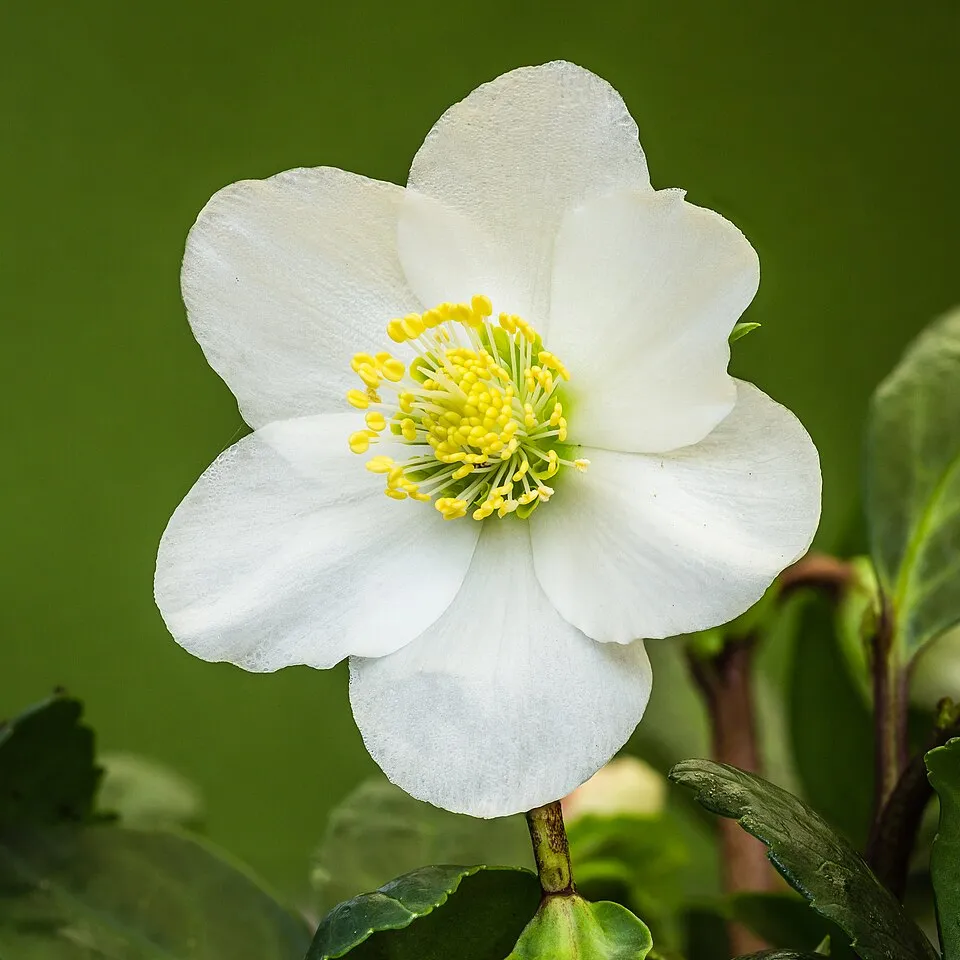
Helleborus niger, widely recognized as the Black Hellebore or Christmas Rose, is a captivating perennial herb within the Ranunculaceae family, celebrated for its striking resilience and early winter inflorescence. This species is indigenous to the mountainous regions of Central and Southern Europe, thriving particularly across the eastern Alps and Balkan territories.
Its robust, evergreen foliage comprises dark green, leathery leaves, distinctly palmate with typically five to nine lobes, often reaching up to 20 centimeters in width. These leaves retain their vibrant hue throughout the year, providing sustained visual interest even amidst the most severe winter conditions.
The plant is highly esteemed for its remarkably early flowering period, producing solitary, cup-shaped blossoms that emerge from late winter through early spring, frequently pushing through snow-covered ground. The exquisite blooms initially present as a pristine greenish-white to creamy-white, gradually developing a delicate pinkish tint as they mature, imparting a unique charm to the dormant garden landscape. Helleborus niger naturally flourishes in shaded or partially shaded environments, preferring rich, humus-laden, and well-drained soil with a neutral to slightly alkaline pH.
Its preferred habitats include deciduous woodlands and forest margins, where it benefits from consistent moisture while ensuring sufficient drainage to prevent root rot. While primarily revered for its ornamental splendor in contemporary horticulture, Helleborus niger historically held significant, albeit perilous, medicinal relevance due to its potent bioactive compounds, particularly cardenolides, which underscore its profound inherent toxicity.
Trusted Scientific References
1. Authoritative external sources for Helleborus niger
1.1 Wikipedia — Helleborus niger
1.2 Kew POWO (Plants of the World Online)
1.3 PubMed — peer-reviewed research
1.4 NCBI Taxonomy Browser
1.5 GBIF — Global Biodiversity
1.6Helleborus Niger should be interpreted through verified botanical identity, practical care, and responsible safety language. This recovery note adds the missing context needed for a complete profile: match light to the plant's habit, use well-drained soil, water according to season, and avoid unsupported medicinal or edible claims. For publishing, the plant can be presented as a source-backed garden plant with clear care guidance, common problem diagnosis, and conservative safety wording.
1.1.Helleborus Niger — Key Features
- ✓ <strong>Early Winter to Spring Blooms</strong> — Flowers emerge from late winter, often through snow, providing vital garden color.
- ✓ <strong>Evergreen Foliage</strong> — Dark green, leathery leaves provide year-round interest and structure.
- ✓ <strong>Shade</strong> — Loving Perennial — Thrives in partial to full shade, ideal for woodland gardens and under deciduous trees.
- ✓ <strong>Extreme Toxicity</strong> — Contains potent cardenolides, making all parts poisonous if ingested.
- ✓ <strong>Deer and Rabbit Resistant</strong> — Its toxic nature deters common garden pests like deer and rabbits.
- ✓ <strong>Native to Europe</strong> — Indigenous to mountainous regions of Central and Southern Europe.
- ✓ <strong>Ranunculaceae Family</strong> — A distinguished member of the buttercup family.
- ✓ <strong>Long</strong> — Lasting Flowers — Blooms are durable and change color from white to pink as they age.
- ✓ <strong>Low Maintenance (Ornamental)</strong> — Once established, requires minimal care for ornamental purposes.
- ✓ <strong>Resilient and Hardy</strong> — Tolerates cold temperatures and provides beauty in harsh winter conditions.
1.2.Helleborus Niger — Quick Summary
- ✓ Helleborus niger is known as Black Hellebore or Christmas Rose, famous for early winter blooms.
- ✓ Native to Central and Southern European mountains, thriving in shade.
- ✓ Contains highly toxic cardenolides, making all parts poisonous if ingested.
- ✓ Historically used as a dangerous purgative, emetic, and emmenagogue.
- ✓ Primarily valued today as an ornamental plant for its beauty and resilience.
- ✓ Handling requires caution due to potential skin irritation.
2.Helleborus Niger — Scientific Identity
3.Helleborus Niger — Quick Facts
4.Helleborus Niger — Appearance & Identification
5.Helleborus Niger — Native Habitat
6.Helleborus Niger — Water Requirements
- ✓ Planting Time — Plant Helleborus niger in early spring or fall to allow for robust root establishment before extreme weather.
- ✓ Site Selection — Choose a location with dappled or partial shade, ideally under deciduous trees where winter sun and summer shade are provided.
- ✓ Soil Requirements — Hellebores thrive in rich, moist, well-draining soil with a neutral to slightly alkaline pH, typically between 6.5 and 7.5.
- ✓ Planting Depth — Ensure the crown of the plant sits just below the soil surface; planting too deeply can inhibit flower production.
- ✓ Soil Amendments — Amend heavy or clay soils with generous amounts of compost or well-rotted manure to improve drainage and fertility.
- ✓ Watering Regimen — Water regularly during the first year to establish roots; once mature, Helleborus niger is drought-tolerant but appreciates deep watering during dry spells.
- ✓ Pruning — In late winter or early spring, remove any old, damaged, or unsightly foliage at the base to encourage new growth and better flower display.
- ✓ Pest and Disease Management — Generally pest-resistant, but watch for aphids, slugs, or black spot in humid conditions; ensure good air circulation.
Reviewed by the Flora Medical Global Botanical Review Panel
Multi-disciplinary editorial group · Botany · Ethnobotany · Herbal-medicine literature
Who reviewed this: This page was checked by the Flora Medical Global Botanical Review Panel — an in-house editorial group of botany graduates, ethnobotany researchers, and horticulture practitioners who collectively maintain our 7,000+ plant encyclopedia. Meet the team.
Our 4-step verification process
1. Taxonomic verification
Scientific names and synonyms cross-checked against Kew POWO, World Flora Online, and The Plant List.
2. Phytochemical & medicinal cross-reference
Active compounds, traditional uses, and reported activities are cross-referenced with PubMed, USDA Dr. Duke's database, and peer-reviewed ethnobotanical literature.
3. Conservation & distribution check
Distribution, ecology, and conservation status confirmed against GBIF occurrence records and the IUCN Red List.
4. Editorial & safety review
Every entry passes an editorial pass for clarity, originality, and safety notices (toxicity, contraindications, dosage caveats) before publication.
Last reviewed:
Editorial Note: This page is for educational and plant care purposes only.
Written by: Flora Medical Global Editorial Team
Reviewed by: Flora Medical Global Botanical Review Panel
Last Updated: June 16, 2026







Helleborus Niger — Comments & Community Reviews
Rate this plant