
Care Disclaimer: Plant care recommendations are general guidelines based on common growing conditions. Individual results may vary based on your local environment, climate, and care routine. If your plant is toxic, keep it away from children and pets, and consult a veterinarian if accidental ingestion occurs.
1.Hen and Chicks — Overview
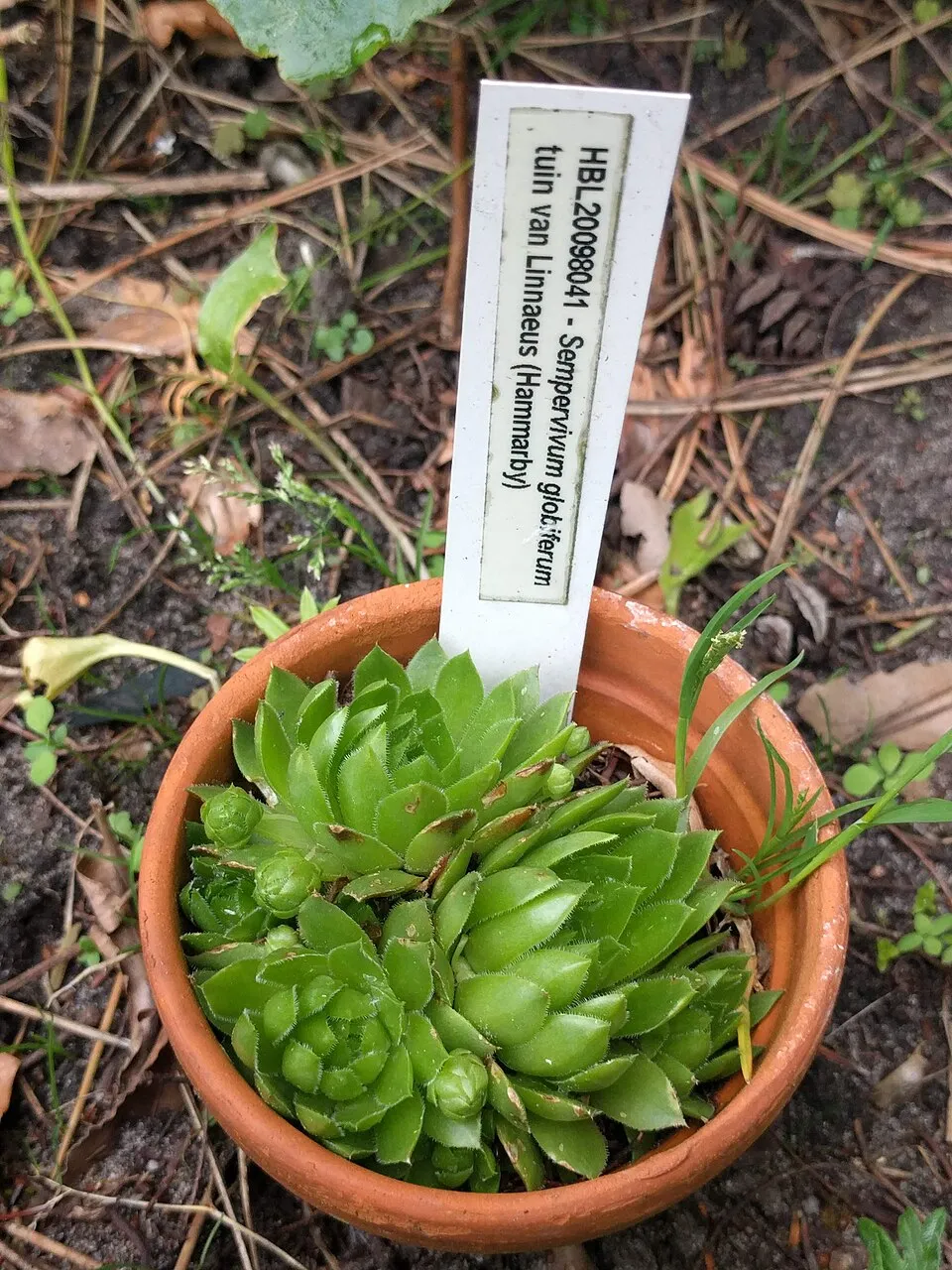
Sempervivum, commonly known as Hen and Chicks or Houseleeks, are a captivating genus of approximately 40-50 species of succulent, evergreen plants belonging to the Crassulaceae family. Native primarily to the mountainous regions of southern Europe, from the Pyrenees to the Balkans, and extending into parts of North Africa and the Middle East, these resilient perennials have adapted to thrive in harsh, rocky environments.
Their most distinctive morphological feature is their dense, symmetrical rosettes of fleshy leaves, which can range from 1 to 6 inches in diameter. The coloration is remarkably diverse, spanning vibrant greens, reds, purples, and blues, often exhibiting seasonal shifts in response to sunlight and temperature.
The common name "Hen and Chicks" aptly describes their unique propagation method. The central, mature rosette, the "hen," produces numerous smaller offsets, or "chicks," via stolons that cluster around the base of the mother plant. These chicks can easily root and grow into new independent plants, contributing to the mat-forming, clumping habit seen in established gardens.
While the rosettes are typically low-growing, usually reaching no more than 10 cm in height, they can spread up to 50 cm. Sempervivum species are monocarpic, meaning individual rosettes will flower once, producing an upright stalk with star-shaped blooms, typically pink or pale yellow, before the mother rosette naturally senesces and dies. However, the numerous offsets ensure the plant's continued presence.
Their exceptional hardiness, drought tolerance, and minimal maintenance requirements make them highly valued in xeriscaping, rock gardens, green roofs, and container plantings worldwide.
Trusted Scientific References
1. Authoritative external sources for Sempervivum Garden
1.1 Wikipedia — Sempervivum Garden
1.2 Kew POWO (Plants of the World Online)
1.3 PubMed — peer-reviewed research
1.4 NCBI Taxonomy Browser
1.5 GBIF — Global Biodiversity
1.6Hen and Chicks Garden should be interpreted through verified botanical identity, practical care, and responsible safety language. This recovery note adds the missing context needed for a complete profile: match light to the plant's habit, use well-drained soil, water according to season, and avoid unsupported medicinal or edible claims. For publishing, the plant can be presented as a source-backed garden plant with clear care guidance, common problem diagnosis, and conservative safety wording.
1.1.Hen and Chicks — Key Features
- ✓ <strong>Rosette</strong> — forming succulent with fleshy leaves.
- ✓ <strong>Produces "chicks" (offsets)</strong> — Produces "chicks" (offsets) from a "hen" (mother plant).
- ✓ <strong>Exceptionally hardy and drought</strong> — tolerant.
- ✓ <strong>Native to European</strong> — Native to European mountainous regions.
- ✓ <strong>Varied leaf coloration,</strong> — Varied leaf coloration, often changing with seasons.
- ✓ <strong>Monocarpic flowering (rosette</strong> — Monocarpic flowering (rosette dies after blooming).
- ✓ <strong>Ideal for rock</strong> — Ideal for rock gardens, green roofs, xeriscaping.
- ✓ <strong>Traditional topical use</strong> — Traditional topical use for skin irritations, burns, stings.
- ✓ <strong>Requires full sun</strong> — Requires full sun and excellent drainage.
- ✓ <strong>Minimal watering needs</strong> — Minimal watering needs once established.
1.2.Hen and Chicks — Quick Summary
- ✓ Hardy succulent known as Hen and Chicks, valued for low-maintenance beauty.
- ✓ Traditionally used topically for skin ailments like burns, stings, and warts.
- ✓ Contains mucilage, tannins, and organic acids, contributing to soothing and astringent effects.
- ✓ Thrives in full sun and well-draining, nutrient-poor soil with minimal water.
- ✓ Primarily for external use; internal consumption is not recommended.
- ✓ Propagates easily from "chicks" (offsets), forming dense, attractive mats.
2.Hen and Chicks — Scientific Identity
3.Hen and Chicks — Quick Facts
4.Hen and Chicks — Appearance & Identification
5.Hen and Chicks — Native Habitat
6.Hen and Chicks — Water Requirements
- ✓ Light Requirements — Plant Sempervivum in full sun for optimal growth and vibrant coloration; provide partial shade in extreme heat to prevent leaf-scorch, especially in glasshouses.
- ✓ Soil and Drainage — Utilize free-draining, nutrient-low soil, such as a specialized succulent mix or a blend of sand, perlite, and soil; heavy clay soils require amendment with grit or pea-sized gravel.
- ✓ Watering Schedule — Water sparingly and deeply only when the soil is completely dry, typically every few weeks in summer and monthly in winter; avoid waterlogging to prevent root rot.
- ✓ Temperature Tolerance — Sempervivum are exceptionally hardy and frost-tolerant, capable of surviving temperatures down to -20ºC, making them suitable for outdoor cultivation in many climates.
- ✓ Ventilation and Spacing — Ensure good air circulation, particularly in protected environments like greenhouses, and avoid overcrowding to prevent fungal issues and maintain rosette shape.
- ✓ Propagation by Offsets — Easily propagate by gently separating the "chicks" (offsets) from the mother "hen" and planting them in well-draining soil; allow offsets to callus for a few days before planting.
- ✓ Fertilization — Feeding is generally unnecessary as these plants thrive in poor soil; if desired, apply a controlled-release, low-nitrogen fertilizer once in spring.
- ✓ Repotting — Repot young plants in early spring when the soil is dry, using a suitable container with drainage holes and fresh, well-draining potting mix, ensuring the crown is not planted too deeply.
Reviewed by the Flora Medical Global Botanical Review Panel
Multi-disciplinary editorial group · Botany · Ethnobotany · Herbal-medicine literature
Who reviewed this: This page was checked by the Flora Medical Global Botanical Review Panel — an in-house editorial group of botany graduates, ethnobotany researchers, and horticulture practitioners who collectively maintain our 7,000+ plant encyclopedia. Meet the team.
Our 4-step verification process
1. Taxonomic verification
Scientific names and synonyms cross-checked against Kew POWO, World Flora Online, and The Plant List.
2. Phytochemical & medicinal cross-reference
Active compounds, traditional uses, and reported activities are cross-referenced with PubMed, USDA Dr. Duke's database, and peer-reviewed ethnobotanical literature.
3. Conservation & distribution check
Distribution, ecology, and conservation status confirmed against GBIF occurrence records and the IUCN Red List.
4. Editorial & safety review
Every entry passes an editorial pass for clarity, originality, and safety notices (toxicity, contraindications, dosage caveats) before publication.
Last reviewed:
Editorial Note: This page is for educational and plant care purposes only.
Written by: Flora Medical Global Editorial Team
Reviewed by: Flora Medical Global Botanical Review Panel
Last Updated: June 16, 2026







Hen and Chicks — Comments & Community Reviews
Rate this plant