
Care Disclaimer: Plant care recommendations are general guidelines based on common growing conditions. Individual results may vary based on your local environment, climate, and care routine. If your plant is toxic, keep it away from children and pets, and consult a veterinarian if accidental ingestion occurs.
1.Ipomoea Alba — Overview
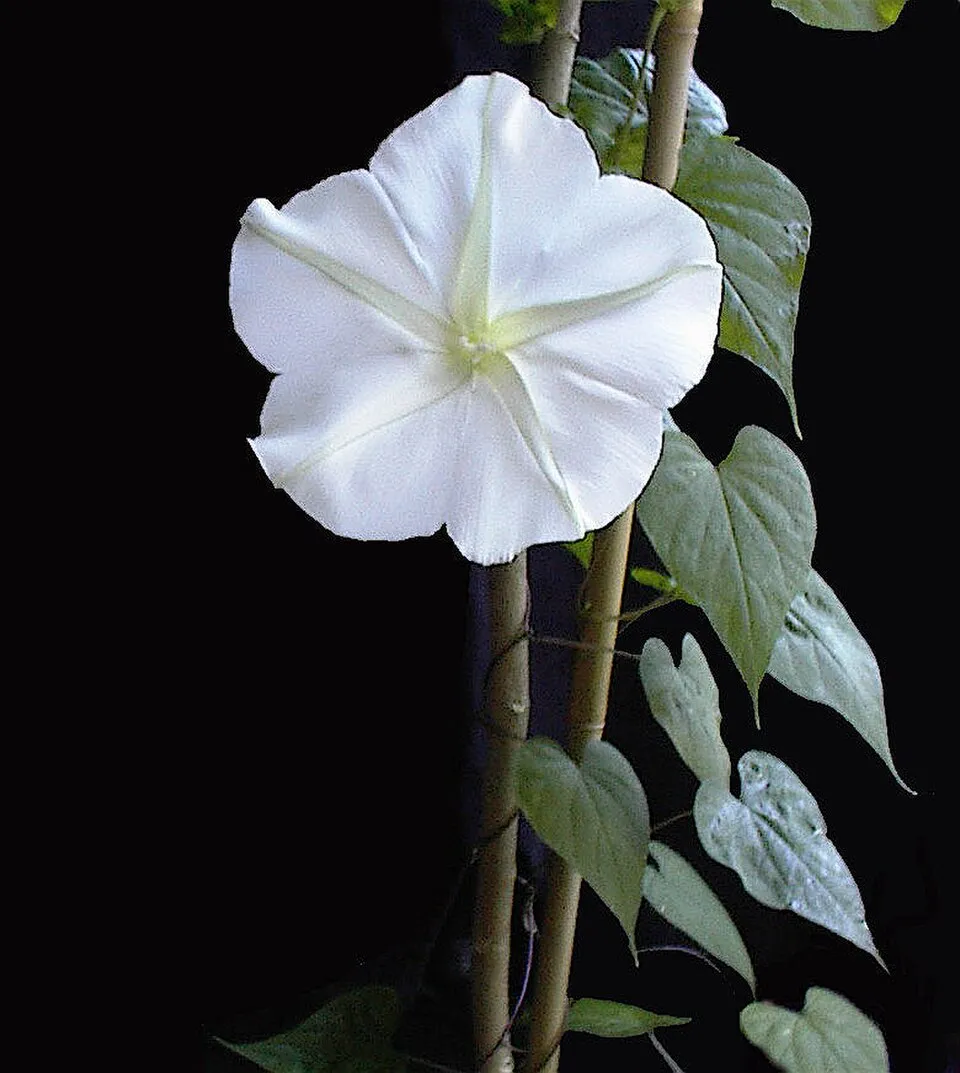
Ipomoea alba, commonly known as Moonflower or Night-blooming Morning Glory, is a robust, twining perennial vine belonging to the Convolvulaceae family. This vigorous climber can extend upwards of 30 feet, showcasing a lush canopy of large, heart-shaped, entire leaves that are typically 3-6 inches long and wide, presenting a glossy, dark green surface. The plant's most enchanting feature is its spectacular, fragrant, trumpet-shaped white flowers, which measure 4-6 inches in diameter.
These ethereal blooms perform a dramatic opening act at dusk, releasing a sweet perfume, and gracefully close by mid-morning, a characteristic that gives the plant its evocative common name. Pollination is primarily facilitated by moths and other nocturnal insects. Following successful pollination, the vine produces ovoid capsule fruits, roughly 1 inch long, which eventually split open to release small, dark seeds.
Native to the tropical and subtropical regions of the Americas, Ipomoea alba has successfully naturalized across many other warm climates globally. It is prized in horticulture for its rapid growth and profuse nocturnal flowering, making it an excellent choice for covering trellises, fences, and arbors, providing both striking visual appeal and a delightful evening fragrance, particularly in USDA hardiness zones 10-12 where it grows as a perennial, or as an annual in cooler regions.
Trusted Scientific References
1. Authoritative external sources for Ipomoea alba
1.1 Wikipedia — Ipomoea alba
1.2 Kew POWO (Plants of the World Online)
1.3 PubMed — peer-reviewed research
1.4 NCBI Taxonomy Browser
1.5 GBIF — Global Biodiversity
1.6Ipomoea Alba should be interpreted through verified botanical identity, practical care, and responsible safety language. This recovery note adds the missing context needed for a complete profile: match light to the plant's habit, use well-drained soil, water according to season, and avoid unsupported medicinal or edible claims. For publishing, the plant can be presented as a source-backed garden plant with clear care guidance, common problem diagnosis, and conservative safety wording.
1.1.Ipomoea Alba — Key Features
- ✓ <strong>Botanical Name</strong> — Ipomoea alba
- ✓ <strong>Common Name</strong> — Moonflower, Night-blooming Morning Glory, Tropical White Morning Glory
- ✓ <strong>Family</strong> — Convolvulaceae (Morning Glory family)
- ✓ <strong>Striking Nocturnal Flowers</strong> — Large (4-6 inches), pure white, trumpet-shaped, highly fragrant blooms that open at night.
- ✓ <strong>Vigorous Vining Habit</strong> — A fast-growing, twining vine capable of reaching lengths of 10-30 feet or more in a single season.
- ✓ <strong>Heart</strong> — shaped Leaves — Features glossy, dark green, entire, heart-shaped foliage.
- ✓ <strong>Tropical Origin</strong> — Native to tropical and subtropical regions of the Americas, thriving in warm climates.
- ✓ <strong>Traditional Medicinal Use</strong> — Historically valued in folk medicine for its purgative, anti-inflammatory, and wound-healing properties, used with extreme caution.
- ✓ <strong>Ornamental Value</strong> — Popular for creating dramatic nighttime garden displays on trellises, fences, and arbors.
- ✓ <strong>Known Toxicity</strong> — Contains compounds that are toxic if ingested, particularly concentrated in the seeds, posing risks to humans and animals.
1.2.Ipomoea Alba — Quick Summary
- ✓ Nocturnal Blooms — Features large, fragrant white flowers that dramatically open at dusk and close by morning.
- ✓ Potent Purgative — Traditionally used for its strong cathartic effects, primarily due to resin glycosides.
- ✓ Toxic Plant — All parts, especially the seeds, are considered toxic if ingested by humans or animals.
- ✓ Ornamental Vine — Widely cultivated for its rapid growth and stunning nighttime floral display in gardens.
- ✓ Traditional Topical Uses — Applied externally for wound healing, anti-inflammatory support, and minor pain relief.
2.Ipomoea Alba — Scientific Identity
3.Ipomoea Alba — Quick Facts
4.Ipomoea Alba — Appearance & Identification
5.Ipomoea Alba — Native Habitat
6.Ipomoea Alba — Water Requirements
- ✓ Site Selection — Plant Ipomoea alba in spring after the last frost, ensuring a location that receives full sun (at least six hours of direct sunlight daily) for optimal growth and prolific flowering.
- ✓ Soil Requirements — Prefers rich, loamy, well-drained soil with a slightly acidic to neutral pH range (6.0-7.5); it can tolerate a variety of soil types but thrives in good conditions.
- ✓ Watering Regimen — Maintain consistent soil moisture for young plants, ensuring the soil is moist but not waterlogged to prevent root rot. Water established plants when the top inch of soil feels dry.
- ✓ Temperature & Humidity — Thrives in warm temperatures, ideally above 60°F (15°C), and prefers relatively high humidity, making it suitable for tropical and subtropical climates, or as an annual in cooler zones.
- ✓ Support Structure — Due to its vigorous vining habit, provide a sturdy trellis, arbor, fence, or other climbing structure for the plant to ascend, as it can reach 10-20 feet in a single season.
- ✓ Fertilization — Fertilize every three to four weeks with a half-strength, high-phosphorus fertilizer during the blooming period to promote abundant flower production rather than excessive foliage.
- ✓ Propagation — Easily propagated from seeds; soaking seeds overnight or lightly nicking their hard coating before planting can significantly improve germination rates. It also self-seeds readily.
- ✓ Pruning & Overwintering — Prune in the fall to shape or thin the vines. In cold climates, Ipomoea alba is typically grown as an annual and allowed to die back, as it is challenging to overwinter indoors.
Reviewed by the Flora Medical Global Botanical Review Panel
Multi-disciplinary editorial group · Botany · Ethnobotany · Herbal-medicine literature
Who reviewed this: This page was checked by the Flora Medical Global Botanical Review Panel — an in-house editorial group of botany graduates, ethnobotany researchers, and horticulture practitioners who collectively maintain our 7,000+ plant encyclopedia. Meet the team.
Our 4-step verification process
1. Taxonomic verification
Scientific names and synonyms cross-checked against Kew POWO, World Flora Online, and The Plant List.
2. Phytochemical & medicinal cross-reference
Active compounds, traditional uses, and reported activities are cross-referenced with PubMed, USDA Dr. Duke's database, and peer-reviewed ethnobotanical literature.
3. Conservation & distribution check
Distribution, ecology, and conservation status confirmed against GBIF occurrence records and the IUCN Red List.
4. Editorial & safety review
Every entry passes an editorial pass for clarity, originality, and safety notices (toxicity, contraindications, dosage caveats) before publication.
Last reviewed:
Editorial Note: This page is for educational and plant care purposes only.
Written by: Flora Medical Global Editorial Team
Reviewed by: Flora Medical Global Botanical Review Panel
Last Updated: June 16, 2026







Ipomoea Alba — Comments & Community Reviews
Rate this plant