
Care Disclaimer: Plant care recommendations are general guidelines based on common growing conditions. Individual results may vary based on your local environment, climate, and care routine. If your plant is toxic, keep it away from children and pets, and consult a veterinarian if accidental ingestion occurs.
1.Ixora Maui — Overview
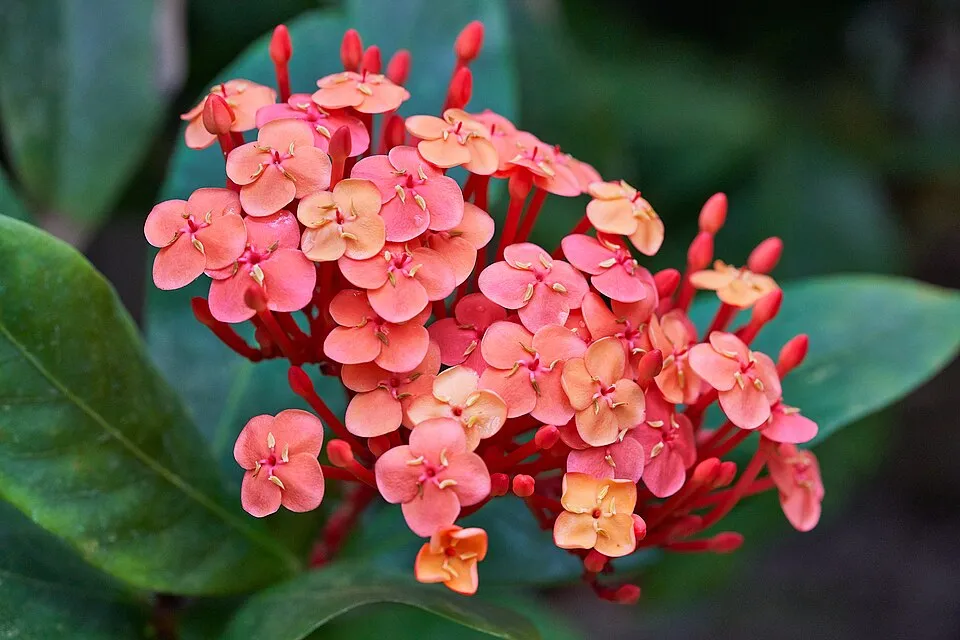
Ixora Maui, a popular and visually striking cultivar, is a hybrid within the expansive genus Ixora, which belongs to the botanical family Rubiaceae, known for its diverse flowering plants. This evergreen shrub typically forms a compact, rounded silhouette, generally reaching heights of 3 to 6 feet (approximately 0.9 to 1.8 meters) in cultivated settings, though it can achieve larger dimensions under optimal growing conditions in its preferred tropical and subtropical habitats. Its foliage is characterized by glossy, leathery leaves that are ovate to lanceolate in shape, arranged either oppositely or in whorls along the stems, providing a lush green backdrop to its vibrant blooms.
The most distinguishing feature of Ixora Maui is its prolific inflorescence, presenting as dense, rounded clusters of numerous small, tubular flowers. These flower clusters, botanically described as corymbs or thryses, exhibit a stunning array of colors, most commonly vibrant shades of red, orange, or salmon pink. The blooming period is remarkably continuous in warm climates, with successive flushes of flowers appearing throughout the year, often intensified after periods of rainfall.
Ixora Maui thrives in warm, humid environments with ample sunlight and requires well-draining, slightly acidic soil to flourish. While primarily valued as an ornamental plant for its breathtaking floral displays in landscaping, container gardening, and as a specimen plant, its close relatives in the Ixora genus have a history of traditional medicinal applications, suggesting potential, though largely unexplored, pharmacological properties for this hybrid.
Trusted Scientific References
1. Authoritative external sources for Ixora hybrid
1.1 Wikipedia — Ixora hybrid
1.2 Kew POWO (Plants of the World Online)
1.3 PubMed — peer-reviewed research
1.4 NCBI Taxonomy Browser
1.5 GBIF — Global Biodiversity
1.6Ixora Maui should be interpreted through verified botanical identity, practical care, and responsible safety language. This recovery note adds the missing context needed for a complete profile: match light to the plant's habit, use well-drained soil, water according to season, and avoid unsupported medicinal or edible claims. For publishing, the plant can be presented as a source-backed garden plant with clear care guidance, common problem diagnosis, and conservative safety wording.
1.1.Ixora Maui — Key Features
- ✓ <strong>Evergreen Shrub</strong> — Maintains foliage year-round.
- ✓ <strong>Vibrant Blooms</strong> — Produces dense clusters of red, orange, or pink flowers.
- ✓ <strong>Continuous Flowering</strong> — Blooms prolifically throughout the year in warm climates.
- ✓ <strong>Glossy Foliage</strong> — Features attractive, leathery, ovate to lanceolate leaves.
- ✓ <strong>Compact Growth Habit</strong> — Typically grows 3-6 feet tall, suitable for various landscaping uses.
- ✓ <strong>Tropical Origin</strong> — Thrives in warm, humid environments.
- ✓ <strong>Acid</strong> — Loving Plant — Prefers slightly acidic soil conditions.
- ✓ <strong>Attracts Pollinators</strong> — Flowers can attract butterflies and hummingbirds.
- ✓ <strong>Low Maintenance</strong> — Relatively easy to care for with proper conditions.
- ✓ <strong>Adaptable</strong> — Can be grown in ground or in containers.
1.2.Ixora Maui — Quick Summary
- ✓ Ixora Maui is a vibrant, evergreen ornamental shrub from the Rubiaceae family.
- ✓ Known for its dense clusters of red, orange, or pink tubular flowers blooming year-round.
- ✓ Thrives in full sun, warm temperatures, high humidity, and acidic, well-draining soil.
- ✓ While primarily ornamental, other Ixora species have traditional anti-inflammatory and antioxidant uses.
- ✓ Requires consistent moisture and regular pruning for optimal flowering and shape.
- ✓ Generally considered low toxicity, but internal consumption is not recommended.
2.Ixora Maui — Scientific Identity
3.Ixora Maui — Quick Facts
4.Ixora Maui — Appearance & Identification
5.Ixora Maui — Native Habitat
6.Ixora Maui — Water Requirements
- ✓ Sunlight — Requires full sun (8-10 hours daily) for optimal growth and abundant flowering; protect from harsh direct summer sun.
- ✓ Soil — Thrives in moist, well-drained, organic-rich soil with a slightly acidic pH (5.5-6.5); alkaline soil can cause chlorosis.
- ✓ Watering — Needs consistent moisture; soil should remain damp but not waterlogged, reducing frequency slightly in winter.
- ✓ Temperature and Humidity — Prefers warm environments above 60°F (15°C) and high humidity; mist daily or use a pebble tray.
- ✓ Fertilization — Feed with slow-release pellets in spring or liquid fertilizer weekly during the growing season to encourage blooms.
- ✓ Pruning — Tolerates heavy pruning; trim after blooming or as needed to maintain shape, encourage bushier growth, and promote new flowers.
- ✓ Propagation — Can be propagated from semi-hardwood cuttings in spring, often requiring rooting hormone and bottom heat for success.
- ✓ Pests and Diseases — Monitor for aphids, mealybugs, and scale; treat with insecticidal soap or neem oil; ensure good air circulation to prevent sooty mold.
Reviewed by the Flora Medical Global Botanical Review Panel
Multi-disciplinary editorial group · Botany · Ethnobotany · Herbal-medicine literature
Who reviewed this: This page was checked by the Flora Medical Global Botanical Review Panel — an in-house editorial group of botany graduates, ethnobotany researchers, and horticulture practitioners who collectively maintain our 7,000+ plant encyclopedia. Meet the team.
Our 4-step verification process
1. Taxonomic verification
Scientific names and synonyms cross-checked against Kew POWO, World Flora Online, and The Plant List.
2. Phytochemical & medicinal cross-reference
Active compounds, traditional uses, and reported activities are cross-referenced with PubMed, USDA Dr. Duke's database, and peer-reviewed ethnobotanical literature.
3. Conservation & distribution check
Distribution, ecology, and conservation status confirmed against GBIF occurrence records and the IUCN Red List.
4. Editorial & safety review
Every entry passes an editorial pass for clarity, originality, and safety notices (toxicity, contraindications, dosage caveats) before publication.
Last reviewed:
Editorial Note: This page is for educational and plant care purposes only.
Written by: Flora Medical Global Editorial Team
Reviewed by: Flora Medical Global Botanical Review Panel
Last Updated: June 16, 2026







Ixora Maui — Comments & Community Reviews
Rate this plant