

Care Disclaimer: Plant care recommendations are general guidelines based on common growing conditions. Individual results may vary based on your local environment, climate, and care routine. If your plant is toxic, keep it away from children and pets, and consult a veterinarian if accidental ingestion occurs.
1.Knautia — Overview
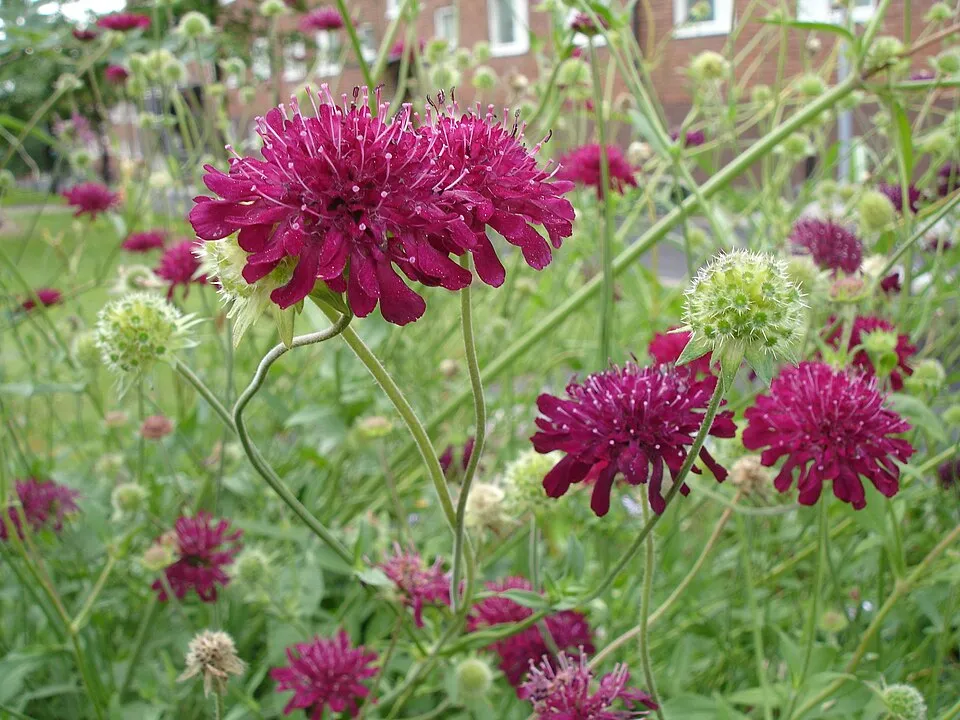
Knautia macedonica, commonly known as Macedonian Scabious or Crimson Scabious, is an attractive herbaceous perennial belonging to the Caprifoliaceae family, formerly classified under Dipsacaceae. This species is indigenous to Southeastern Europe, particularly the Balkan Peninsula, including countries such as Albania, Bulgaria, Greece, Romania, and Turkey. It typically forms a compact, bushy mound, reaching heights of 1 to 2 feet, with a similar spread. The basal foliage consists of finely dissected, lacy green leaves that provide a delicate texture.
From this rosette, numerous slender, upright, and often branching stems emerge, each culminating in a distinctive pincushion-like flower head. These vibrant blooms, ranging from deep crimson to rich burgundy, are composed of many tiny florets clustered together, creating a domed appearance. Flowering profusely from early summer through to the first hard frosts, Knautia macedonica is a long-blooming plant that significantly contributes to garden aesthetics. Its unique floral structure and extended bloom period make it a magnet for a diverse array of pollinators, including bees, butterflies, and hummingbirds, enhancing biodiversity in garden settings.
While its individual lifespan is relatively short for a perennial, typically 2-3 years, it readily self-seeds, ensuring its continuous presence in the landscape. This resilience, combined with its drought tolerance once established and preference for full sun and well-drained soil, makes it a low-maintenance yet visually striking choice for borders, cottage gardens, rockeries, and naturalized areas.
Trusted Scientific References
1. Authoritative external sources for Knautia macedonica
1.1 Wikipedia — Knautia macedonica
1.2 Kew POWO (Plants of the World Online)
1.3 PubMed — peer-reviewed research
1.4 NCBI Taxonomy Browser
1.5 GBIF — Global Biodiversity
1.6Knautia should be interpreted through verified botanical identity, practical care, and responsible safety language. This recovery note adds the missing context needed for a complete profile: match light to the plant's habit, use well-drained soil, water according to season, and avoid unsupported medicinal or edible claims. For publishing, the plant can be presented as a source-backed garden plant with clear care guidance, common problem diagnosis, and conservative safety wording.
1.1.Knautia — Key Features
- ✓ <strong>Botanical Name</strong> — Knautia macedonica
- ✓ <strong>Family</strong> — Caprifoliaceae (formerly Dipsacaceae)
- ✓ <strong>Common Names</strong> — Macedonian Scabious, Crimson Scabious, Pincushion Flower
- ✓ <strong>Native Region</strong> — Southeastern Europe (Balkans)
- ✓ <strong>Flower Color</strong> — Deep crimson to burgundy
- ✓ <strong>Bloom Time</strong> — Early summer to first frost
- ✓ <strong>Growth Habit</strong> — Herbaceous perennial, bushy mound, 1-2 feet tall
- ✓ <strong>Pollinator Appeal</strong> — Attracts bees, butterflies, hummingbirds
- ✓ <strong>Soil Preference</strong> — Well-drained, tolerant of various soil types
- ✓ <strong>Sun Exposure</strong> — Full sun (6-8 hours daily)
- ✓ <strong>Water Needs</strong> — Drought-tolerant once established
- ✓ <strong>Maintenance</strong> — Low, generally pest and disease resistant
- ✓ <strong>Uses</strong> — Ornamental, cut flowers, pollinator gardens
1.2.Knautia — Quick Summary
- ✓ Vibrant crimson-burgundy flowers attract pollinators.
- ✓ Native to Southeastern Europe, thrives in full sun and well-drained soil.
- ✓ Low maintenance, drought-tolerant once established.
- ✓ Primarily ornamental, no established medicinal uses.
- ✓ Self-seeds readily, ensuring continuous presence.
- ✓ Excellent for cottage gardens, borders, and cut flowers.
2.Knautia — Scientific Identity
3.Knautia — Quick Facts
4.Knautia — Appearance & Identification
5.Knautia — Native Habitat
6.Knautia — Water Requirements
- ✓ Site Selection — Choose a location with full sun exposure, receiving at least 6-8 hours of direct sunlight daily.
- ✓ Soil Preparation — Ensure well-drained soil; amend heavy clay with compost and perlite to improve drainage. Prefers slightly alkaline conditions.
- ✓ Planting Depth — Plant at the same depth as it was in its nursery container, ensuring the crown is level with the soil surface.
- ✓ Spacing — Space multiple plants 12-15 inches apart to allow for good air circulation and prevent overcrowding.
- ✓ Watering — Water regularly during the first year until established; then deep and infrequent watering is preferred, allowing soil to dry between waterings.
- ✓ Mulching — Apply a 2-inch layer of organic mulch around the base to retain soil moisture, suppress weeds, and regulate soil temperature.
- ✓ Deadheading — Promptly remove spent flowers (deadhead) to encourage continuous blooming and prevent unwanted self-seeding.
- ✓ Winter Care — In colder zones (5-9), plants die back to the ground and re-emerge in spring; no special winter protection is typically needed within its hardiness range.
Reviewed by the Flora Medical Global Botanical Review Panel
Multi-disciplinary editorial group · Botany · Ethnobotany · Herbal-medicine literature
Who reviewed this: This page was checked by the Flora Medical Global Botanical Review Panel — an in-house editorial group of botany graduates, ethnobotany researchers, and horticulture practitioners who collectively maintain our 7,000+ plant encyclopedia. Meet the team.
Our 4-step verification process
1. Taxonomic verification
Scientific names and synonyms cross-checked against Kew POWO, World Flora Online, and The Plant List.
2. Phytochemical & medicinal cross-reference
Active compounds, traditional uses, and reported activities are cross-referenced with PubMed, USDA Dr. Duke's database, and peer-reviewed ethnobotanical literature.
3. Conservation & distribution check
Distribution, ecology, and conservation status confirmed against GBIF occurrence records and the IUCN Red List.
4. Editorial & safety review
Every entry passes an editorial pass for clarity, originality, and safety notices (toxicity, contraindications, dosage caveats) before publication.
Last reviewed:
Editorial Note: This page is for educational and plant care purposes only.
Written by: Flora Medical Global Editorial Team
Reviewed by: Flora Medical Global Botanical Review Panel
Last Updated: June 16, 2026







Knautia — Comments & Community Reviews
Rate this plant