
Care Disclaimer: Plant care recommendations are general guidelines based on common growing conditions. Individual results may vary based on your local environment, climate, and care routine. If your plant is toxic, keep it away from children and pets, and consult a veterinarian if accidental ingestion occurs.
1.Larkspur — Overview
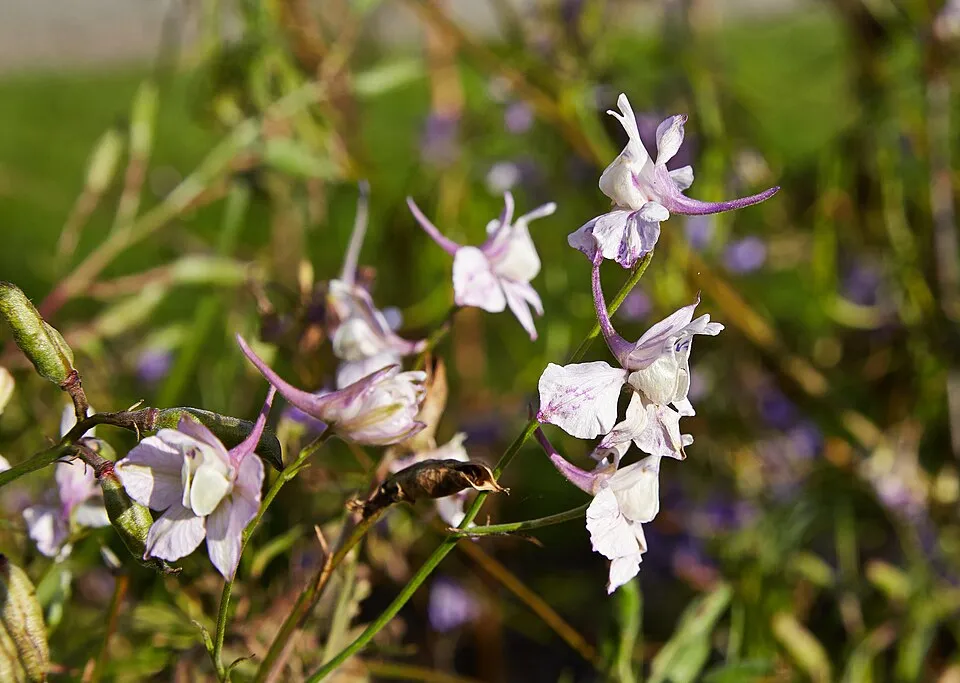
Larkspur, scientifically known as Consolida ajacis and sometimes referred to by its synonym Delphinium consolida, is a captivating annual herb belonging to the Ranunculaceae family. This species typically grows as an erect plant, reaching heights of 60 to 90 centimeters, characterized by its slender, often branched stems. Its foliage consists of finely dissected, fern-like leaves that are a rich dark green, providing a delicate texture.
The plant's most striking feature is its inflorescence, a narrow raceme bearing numerous flowers, each distinguished by a spurred calyx. These vibrant blooms appear in a spectrum of colors, including various shades of blue, purple, white, and pink, and can be either single or double in form. Flowering generally occurs from late spring through early summer, attracting a diverse range of pollinators.
Consolida ajacis thrives in well-drained soils and is commonly found in temperate climates across its native range of Europe and parts of Asia, having also naturalized in many other regions worldwide. It adapts to various habitats, from open meadows and cultivated gardens to roadsides and woodland edges, often spreading rapidly if conditions are favorable. While widely admired as an ornamental for its aesthetic appeal in floral arrangements and garden displays, its botanical significance extends to its unique chemical profile.
Trusted Scientific References
1. Authoritative external sources for Consolida ajacis
1.1 Wikipedia — Consolida ajacis
1.2 Kew POWO (Plants of the World Online)
1.3 PubMed — peer-reviewed research
1.4 NCBI Taxonomy Browser
1.5 GBIF — Global Biodiversity
1.6Larkspur should be interpreted through verified botanical identity, practical care, and responsible safety language. This recovery note adds the missing context needed for a complete profile: match light to the plant's habit, use well-drained soil, water according to season, and avoid unsupported medicinal or edible claims. For publishing, the plant can be presented as a source-backed garden plant with clear care guidance, common problem diagnosis, and conservative safety wording.
1.1.Larkspur — Key Features
- ✓ <strong>Scientific Name</strong> — Consolida ajacis (syn. Delphinium consolida)
- ✓ <strong>Family</strong> — Ranunculaceae (Buttercup Family)
- ✓ <strong>Common Names</strong> — Larkspur, Field Larkspur, Doubtful Knight's Spur
- ✓ <strong>Growth Habit</strong> — Erect annual herb, 60-90 cm tall, slender stems
- ✓ <strong>Distinctive Flowers</strong> — Spurred calyx, vibrant blue, purple, pink, white blooms
- ✓ <strong>Primary Constituents</strong> — Diterpenoid alkaloids (consolidanine, delphisine)
- ✓ <strong>Traditional Uses</strong> — External poultices for pain, ectoparasiticide
- ✓ <strong>Toxicity</strong> — High alkaloid content renders it toxic, especially internally
- ✓ <strong>Medicinal Potential</strong> — Investigated for analgesic, muscle relaxant, antimicrobial effects
- ✓ <strong>Habitat</strong> — Meadows, open woodlands, well-drained soils in temperate regions
1.2.Larkspur — Quick Summary
- ✓ Botanical Beauty — Larkspur (Consolida ajacis) is an annual ornamental herb cherished for its vibrant blue, purple, white, and pink flowers.
- ✓ Potent Alkaloids — Contains toxic diterpenoid alkaloids like consolidanine and delphisine, known for affecting the nervous system.
- ✓ Traditional Niche — Historically used externally for pain, lice, and as a counter-venom in some folk traditions, with limited internal Ayurvedic use for nervine support in low doses.
- ✓ Caution Advised — Generally considered toxic and not recommended for modern internal herbal medicine due to significant safety concerns.
- ✓ Research Focus — Modern studies explore its analgesic, muscle relaxant, and antimicrobial potential, primarily focusing on its alkaloid mechanisms.
- ✓ Strict Contraindications — Absolutely contraindicated in pregnancy, lactation, children, and individuals with heart, liver, or kidney conditions.
2.Larkspur — Scientific Identity
3.Larkspur — Quick Facts
4.Larkspur — Appearance & Identification
5.Larkspur — Native Habitat
6.Larkspur — Water Requirements
- ✓ Seed Sowing — Sow Larkspur seeds directly into the garden in late autumn or early spring, as they often benefit from a period of cold stratification for optimal germination.
- ✓ Light Requirements — Prefers full sun to partial shade, requiring at least 6 hours of direct sunlight daily to promote robust growth and abundant flowering.
- ✓ Soil Preferences — Thrives in well-drained, fertile loamy soil that is rich in organic matter, ideally with a neutral to slightly alkaline pH for best results.
- ✓ Watering Regimen — Maintain consistent moisture for young plants until they are well-established; mature plants are more drought-tolerant but benefit from regular watering during dry spells, avoiding waterlogging.
- ✓ Nutrient Management — Amend the soil with compost or a balanced slow-release fertilizer at planting time to support vigorous growth and healthy bloom development throughout the season.
- ✓ Spacing and Thinning — Thin seedlings to 15-30 cm apart to ensure adequate air circulation and prevent fungal diseases, promoting stronger stems and larger, more vibrant blooms.
- ✓ Pest and Disease Control — Generally resistant to most common pests, but monitor for powdery mildew in humid conditions; ensuring good air circulation is key to mitigating disease risk.
- ✓ Support Structures — Taller varieties of Consolida ajacis may benefit from staking or other support to prevent lodging, especially in windy conditions or when heavily laden with flowers.
Reviewed by the Flora Medical Global Botanical Review Panel
Multi-disciplinary editorial group · Botany · Ethnobotany · Herbal-medicine literature
Who reviewed this: This page was checked by the Flora Medical Global Botanical Review Panel — an in-house editorial group of botany graduates, ethnobotany researchers, and horticulture practitioners who collectively maintain our 7,000+ plant encyclopedia. Meet the team.
Our 4-step verification process
1. Taxonomic verification
Scientific names and synonyms cross-checked against Kew POWO, World Flora Online, and The Plant List.
2. Phytochemical & medicinal cross-reference
Active compounds, traditional uses, and reported activities are cross-referenced with PubMed, USDA Dr. Duke's database, and peer-reviewed ethnobotanical literature.
3. Conservation & distribution check
Distribution, ecology, and conservation status confirmed against GBIF occurrence records and the IUCN Red List.
4. Editorial & safety review
Every entry passes an editorial pass for clarity, originality, and safety notices (toxicity, contraindications, dosage caveats) before publication.
Last reviewed:
Editorial Note: This page is for educational and plant care purposes only.
Written by: Flora Medical Global Editorial Team
Reviewed by: Flora Medical Global Botanical Review Panel
Last Updated: June 16, 2026







Larkspur — Comments & Community Reviews
Rate this plant