

Care Disclaimer: Plant care recommendations are general guidelines based on common growing conditions. Individual results may vary based on your local environment, climate, and care routine. If your plant is toxic, keep it away from children and pets, and consult a veterinarian if accidental ingestion occurs.
1.Lettuce — Overview
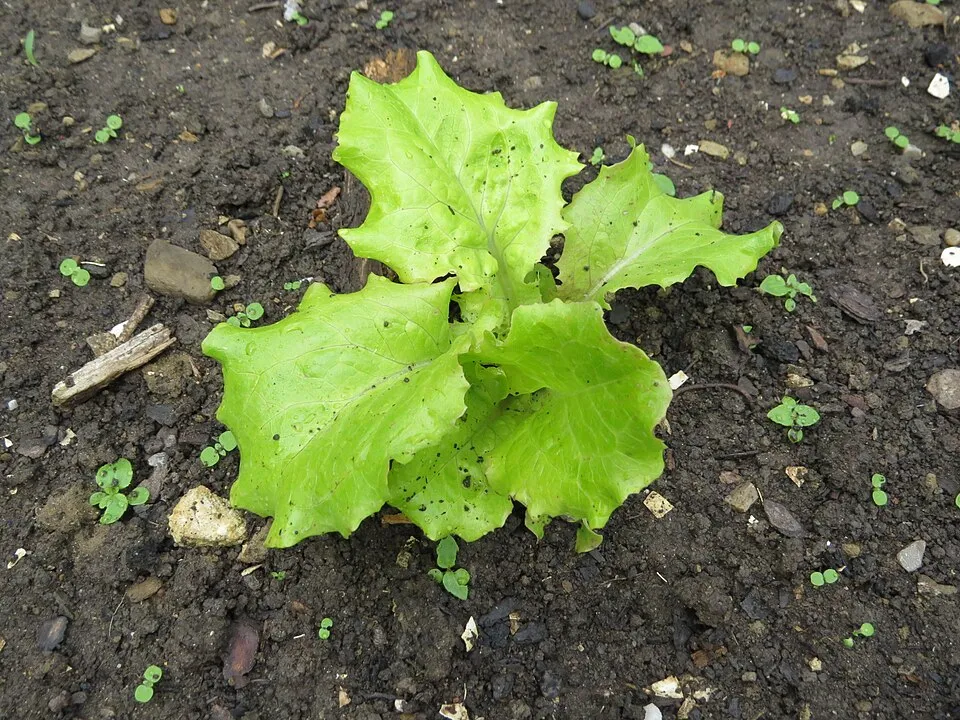
Lactuca sativa, commonly known as lettuce, is an annual or biennial herbaceous plant belonging to the daisy family, Asteraceae. Its morphology is characterized by a short basal stem that, depending on the cultivar, can develop into a dense head of leaves, a loose rosette, or an elongated stalk. The leaves are the primary edible part, exhibiting remarkable diversity in form, ranging from smooth, buttery textures to crisp, crinkled variations, and colors spanning from pale green to deep red or burgundy.
As the plant matures, particularly under warm conditions, the stem elongates in a process known as 'bolting,' producing a branched inflorescence with numerous small, yellow capitula. Each capitulum comprises several ray florets, ultimately giving rise to small, dry, single-seeded achenes, often adorned with a feathery pappus for wind dispersal. Originally domesticated from wild Lactuca species in ancient Egypt, lettuce has a long history of cultivation, thriving primarily in temperate climates, though modern breeding has yielded varieties tolerant of hotter conditions.
Its shallow, fibrous root system necessitates consistent moisture for optimal growth. While widely cultivated globally as a leaf vegetable, certain varieties like Celtuce are grown for their edible stems, and some traditional uses involve the seeds.
Trusted Scientific References
1. Authoritative external sources for Lactuca sativa
1.1 Wikipedia — Lactuca sativa
1.2 Kew POWO (Plants of the World Online)
1.3 PubMed — peer-reviewed research
1.4 NCBI Taxonomy Browser
1.5 GBIF — Global Biodiversity
1.6Lettuce should be interpreted through verified botanical identity, practical care, and responsible safety language. This recovery note adds the missing context needed for a complete profile: match light to the plant's habit, use well-drained soil, water according to season, and avoid unsupported medicinal or edible claims. For publishing, the plant can be presented as a source-backed garden plant with clear care guidance, common problem diagnosis, and conservative safety wording.
1.1.Lettuce — Key Features
- ✓ <strong>Botanical Classification</strong> — Member of the Asteraceae family.
- ✓ <strong>Edible Parts</strong> — Primarily leaves, but stems (Celtuce) and seeds are also used.
- ✓ <strong>Nutritional Powerhouse</strong> — High in Vitamins K, A, C, and essential minerals.
- ✓ <strong>Antioxidant Rich</strong> — Contains carotenoids, flavonoids, and phenolic acids.
- ✓ <strong>Hydrating</strong> — Composed of approximately 95% water.
- ✓ <strong>Digestive Aid</strong> — Good source of dietary fiber.
- ✓ <strong>Mild Sedative Properties</strong> — Due to lactucarium compounds.
- ✓ <strong>Diverse Cultivars</strong> — Wide range of leaf shapes, textures, and colors.
- ✓ <strong>Global Staple</strong> — Widely cultivated and consumed worldwide.
- ✓ <strong>Versatile Culinary Use</strong> — From salads to cooked dishes.
1.2.Lettuce — Quick Summary
- ✓ Lactuca sativa (Lettuce) is a leafy vegetable from the Asteraceae family.
- ✓ Rich in Vitamin K, Vitamin A, and antioxidants for bone, vision, and cellular health.
- ✓ Contains fiber and water, supporting digestive health and hydration.
- ✓ Offers mild sedative properties, particularly in wilder varieties, due to lactucarium.
- ✓ Low in calories, making it excellent for weight management.
- ✓ Generally safe for consumption, but interactions with anticoagulants require caution.
2.Lettuce — Scientific Identity
3.Lettuce — Quick Facts
4.Lettuce — Appearance & Identification
5.Lettuce — Native Habitat
6.Lettuce — Water Requirements
- ✓ Soil Preparation — Thrives in fertile, loose, consistently moist, well-drained soils with an optimal pH range of 6.0-6.7.
- ✓ Sunlight Requirements — Prefers full sun in cooler weather but benefits from light shade in warmer climates to prevent bolting and bitterness.
- ✓ Watering — Requires consistent moisture; keep soil moist but not waterlogged to support rapid, uninterrupted growth.
- ✓ Temperature Control — Best grown in cool weather, with ideal temperatures between 15-18°C (60-65°F); high temperatures above 24°C (75°F) can induce bolting.
- ✓ Harvesting — Depending on the variety, lettuce is ready for harvest between 30-70 days; prompt harvesting prevents leaves from becoming bitter.
- ✓ Pest and Disease Management — Monitor for common pests like aphids and slugs; ensure good air circulation to prevent fungal diseases; practice crop rotation.
- ✓ Fertilization — Incorporate organic matter like compost into the soil; light feeding with a balanced fertilizer can support vigorous leaf development.
- ✓ Variety Selection — Choose varieties suited to your local climate and desired growth habit (e.g., heat-tolerant types for warmer regions, loose-leaf for continuous harvest).
Reviewed by the Flora Medical Global Botanical Review Panel
Multi-disciplinary editorial group · Botany · Ethnobotany · Herbal-medicine literature
Who reviewed this: This page was checked by the Flora Medical Global Botanical Review Panel — an in-house editorial group of botany graduates, ethnobotany researchers, and horticulture practitioners who collectively maintain our 7,000+ plant encyclopedia. Meet the team.
Our 4-step verification process
1. Taxonomic verification
Scientific names and synonyms cross-checked against Kew POWO, World Flora Online, and The Plant List.
2. Phytochemical & medicinal cross-reference
Active compounds, traditional uses, and reported activities are cross-referenced with PubMed, USDA Dr. Duke's database, and peer-reviewed ethnobotanical literature.
3. Conservation & distribution check
Distribution, ecology, and conservation status confirmed against GBIF occurrence records and the IUCN Red List.
4. Editorial & safety review
Every entry passes an editorial pass for clarity, originality, and safety notices (toxicity, contraindications, dosage caveats) before publication.
Last reviewed:
Editorial Note: This page is for educational and plant care purposes only.
Written by: Flora Medical Global Editorial Team
Reviewed by: Flora Medical Global Botanical Review Panel
Last Updated: June 16, 2026







Lettuce — Comments & Community Reviews
Rate this plant