

Care Disclaimer: Plant care recommendations are general guidelines based on common growing conditions. Individual results may vary based on your local environment, climate, and care routine. If your plant is toxic, keep it away from children and pets, and consult a veterinarian if accidental ingestion occurs.
1.Leucospermum — Overview
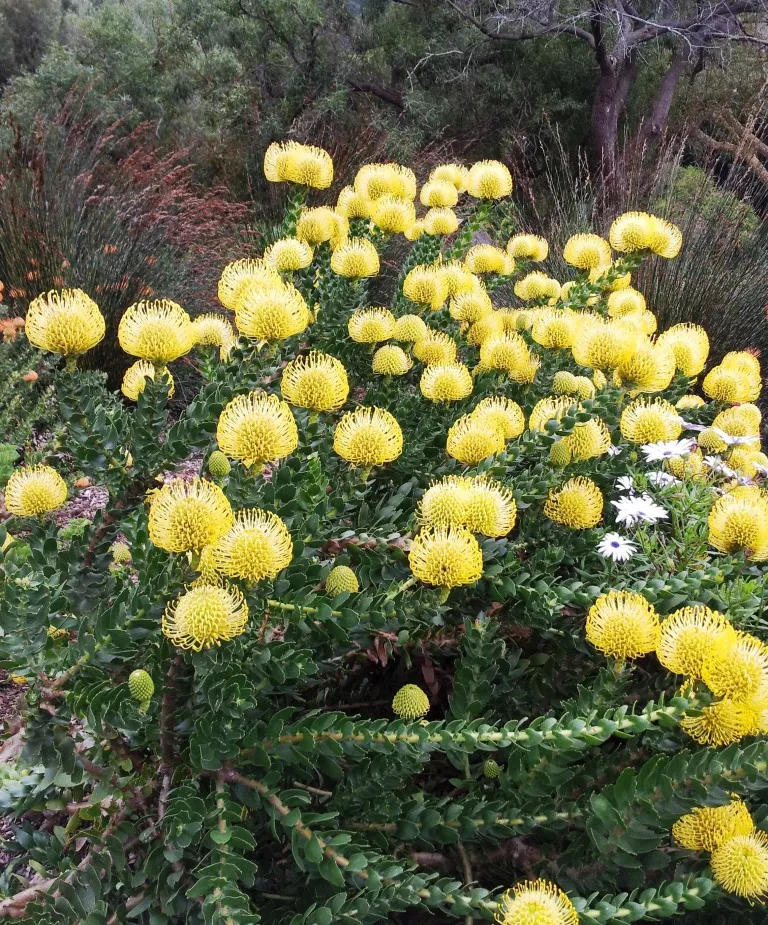
Leucospermum cordifolium, commonly known as the Pincushion Protea, is an exquisite evergreen shrub belonging to the Proteaceae family, indigenous to the biodiverse Cape Floral Kingdom of South Africa's Western Cape. This species is renowned for its striking and uniquely structured inflorescences, which bear a remarkable resemblance to a pincushion, characterized by numerous stiff, brightly colored styles that radiate outwards from a central, domed cluster of perianth segments. These captivating blooms typically display a vibrant spectrum of colors, ranging from fiery oranges and reds to sunny yellows and deep crimson, creating a dramatic visual spectacle.
The plant's specific epithet, 'cordifolium,' directly references its distinctive heart-shaped, leathery leaves, which are a glossy green and provide an elegant backdrop to the showy flowers. Leucospermum cordifolium generally attains a height and spread of 1 to 2 meters, forming an attractive, rounded, and bushy silhouette. Its primary flowering season occurs during late winter and spring, attracting an array of native pollinators, particularly birds and various insect species.
This resilient plant is exceptionally well-suited to Mediterranean-type climates, thriving in conditions of full sun exposure and requiring well-drained, acidic soils. Its unparalleled ornamental appeal and inherent durability have established it as a highly sought-after plant for cut flower production globally, as well as a stunning and water-wise addition to fynbos-inspired and xeriscape gardens.
Trusted Scientific References
1. Authoritative external sources for Leucospermum cordifolium
1.1 Wikipedia — Leucospermum cordifolium
1.2 Kew POWO (Plants of the World Online)
1.3 PubMed — peer-reviewed research
1.4 NCBI Taxonomy Browser
1.5 GBIF — Global Biodiversity
1.6Leucospermum should be interpreted through verified botanical identity, practical care, and responsible safety language. This recovery note adds the missing context needed for a complete profile: match light to the plant's habit, use well-drained soil, water according to season, and avoid unsupported medicinal or edible claims. For publishing, the plant can be presented as a source-backed garden plant with clear care guidance, common problem diagnosis, and conservative safety wording.
1.1.Leucospermum — Key Features
- ✓ <strong>Unique 'Pincushion' Inflorescences</strong> — Distinctive flower shape with radiating styles.
- ✓ <strong>Vibrant Color Palette</strong> — Flowers range from orange, red, yellow to crimson.
- ✓ <strong>Evergreen Foliage</strong> — Leathery, heart-shaped, glossy green leaves.
- ✓ <strong>Drought</strong> — Tolerant — Low water needs once established.
- ✓ <strong>Mediterranean Climate Adaptability</strong> — Ideal for similar climatic zones.
- ✓ <strong>Phosphorus Sensitivity</strong> — Cannot tolerate phosphorus fertilizers.
- ✓ <strong>Attracts Pollinators</strong> — Appeals to birds (hummingbirds) and insects.
- ✓ <strong>Cut Flower Longevity</strong> — Excellent vase life for floral arrangements.
- ✓ <strong>Low Maintenance</strong> — Relatively easy to care for with proper conditions.
- ✓ <strong>South African Native</strong> — Endemic to the Western Cape region.
1.2.Leucospermum — Quick Summary
- ✓ Iconic ornamental shrub from South Africa with 'pincushion' flowers.
- ✓ Thrives in full sun, well-drained, acidic soil, and Mediterranean climates.
- ✓ Highly sensitive to phosphorus; requires specialized fertilization.
- ✓ Primarily cultivated for its vibrant cut flowers and striking garden presence.
- ✓ No established medicinal uses, but contains general plant compounds like flavonoids and tannins.
- ✓ Drought-tolerant once established, requiring minimal watering.
2.Leucospermum — Scientific Identity
3.Leucospermum — Quick Facts
4.Leucospermum — Appearance & Identification
5.Leucospermum — Native Habitat
6.Leucospermum — Water Requirements
- ✓ Soil Requirements — Thrives in well-drained, acidic soil; gritty or sandy loam is ideal. Avoid heavy clay soils.
- ✓ Sun Exposure — Requires full sun exposure for optimal growth and flowering; at least 6 hours of direct sunlight daily.
- ✓ Watering — Once established, it is drought-tolerant, but benefits from deep watering every 2-4 weeks during dry periods. Overwatering is detrimental.
- ✓ Fertilization — Do not use phosphorus-containing fertilizers; they are highly sensitive. Use low-phosphorus options like blood meal or fish emulsion if needed.
- ✓ Pruning — Prune after flowering to maintain shape and encourage bushier growth. Avoid cutting into old, woody stems beyond two years of growth.
- ✓ Temperature — Hardy to approximately 27°F (-3°C). Protect from prolonged hard freezes.
- ✓ Drainage — Excellent drainage is crucial; consider raised beds or specialized potting mixes for containers.
- ✓ Climate — Best suited for Mediterranean climates, adapting well to coastal conditions with cool summers.
Reviewed by the Flora Medical Global Botanical Review Panel
Multi-disciplinary editorial group · Botany · Ethnobotany · Herbal-medicine literature
Who reviewed this: This page was checked by the Flora Medical Global Botanical Review Panel — an in-house editorial group of botany graduates, ethnobotany researchers, and horticulture practitioners who collectively maintain our 7,000+ plant encyclopedia. Meet the team.
Our 4-step verification process
1. Taxonomic verification
Scientific names and synonyms cross-checked against Kew POWO, World Flora Online, and The Plant List.
2. Phytochemical & medicinal cross-reference
Active compounds, traditional uses, and reported activities are cross-referenced with PubMed, USDA Dr. Duke's database, and peer-reviewed ethnobotanical literature.
3. Conservation & distribution check
Distribution, ecology, and conservation status confirmed against GBIF occurrence records and the IUCN Red List.
4. Editorial & safety review
Every entry passes an editorial pass for clarity, originality, and safety notices (toxicity, contraindications, dosage caveats) before publication.
Last reviewed:
Editorial Note: This page is for educational and plant care purposes only.
Written by: Flora Medical Global Editorial Team
Reviewed by: Flora Medical Global Botanical Review Panel
Last Updated: June 16, 2026







Leucospermum — Comments & Community Reviews
Rate this plant