

Care Disclaimer: Plant care recommendations are general guidelines based on common growing conditions. Individual results may vary based on your local environment, climate, and care routine. If your plant is toxic, keep it away from children and pets, and consult a veterinarian if accidental ingestion occurs.
1.Nicotiana Alata — Overview
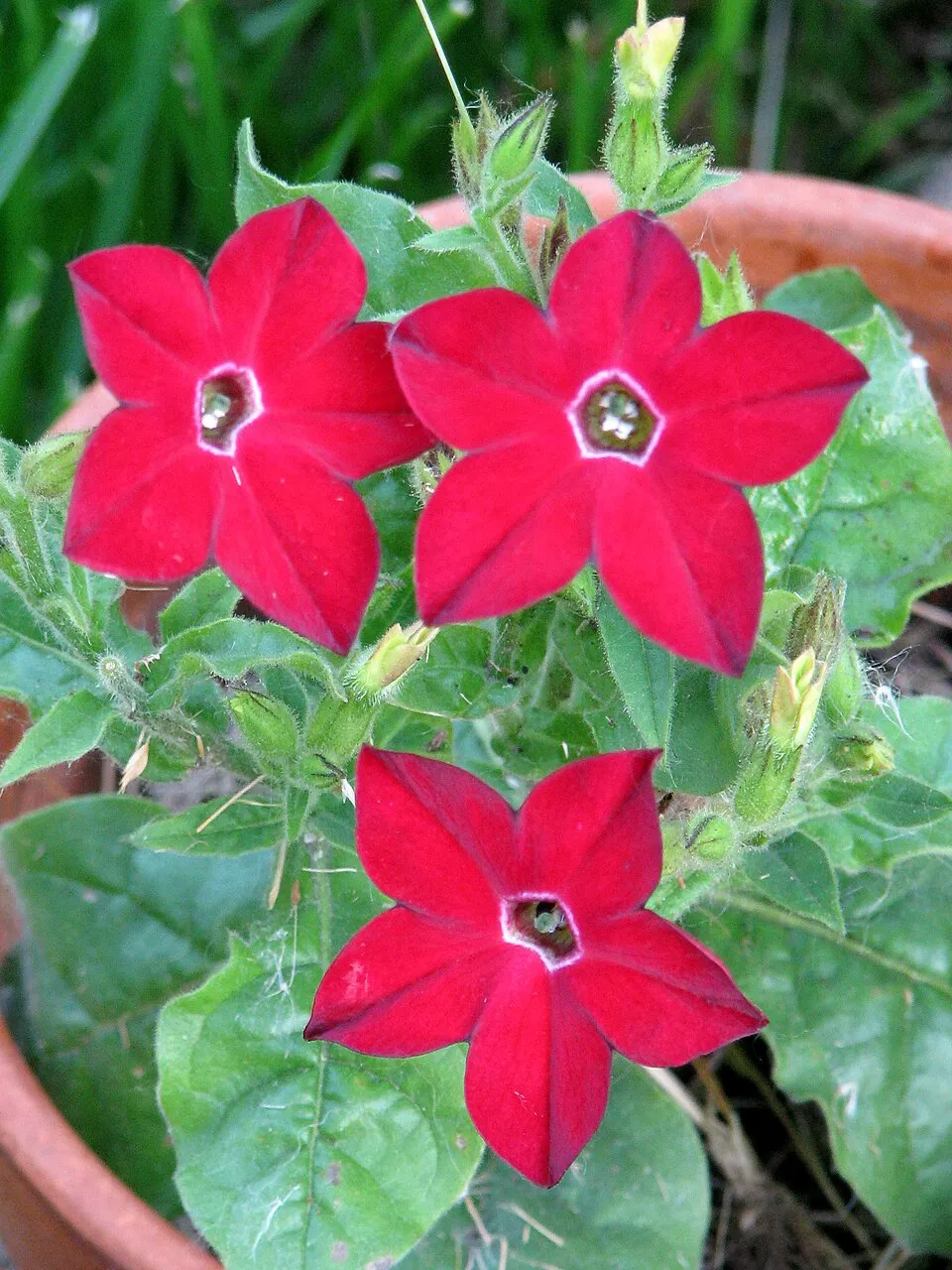
Nicotiana alata, commonly known as Flowering Tobacco or Jasmine Tobacco, is a captivating ornamental plant belonging to the Solanaceae family, native to the verdant regions of South America. This herbaceous annual or short-lived perennial is highly prized for its striking trumpet-shaped flowers, which unfurl primarily in the evening to release a potent, sweet, and alluring fragrance. The plant typically achieves a height of 3 to 5 feet, presenting large, ovate basal leaves that diminish in size higher up the stem.
Its morphological characteristics, including the distinct points to its petals and generally larger foliage, help differentiate the true species from its more compact, unscented hybrid relatives often sold in nurseries, such as Nicotiana x sanderae. Thriving in full sun to partial shade, especially appreciating afternoon relief in warmer climates, Nicotiana alata prefers moist, well-drained soil rich in organic matter. Its nocturnal blooming cycle and intoxicating scent make it a favored choice for moonlit gardens, attracting various nighttime pollinators, most notably moths.
Beyond its aromatic appeal, it serves as an excellent filler in containers, provides a dramatic mass planting in borders, or adds vertical interest to rock gardens, making it a versatile addition to diverse landscape designs.
Trusted Scientific References
1. Authoritative external sources for Nicotiana alata
1.1 Wikipedia — Nicotiana alata
1.2 Kew POWO (Plants of the World Online)
1.3 PubMed — peer-reviewed research
1.4 NCBI Taxonomy Browser
1.5 GBIF — Global Biodiversity
1.6Nicotiana Alata should be interpreted through verified botanical identity, practical care, and responsible safety language. This recovery note adds the missing context needed for a complete profile: match light to the plant's habit, use well-drained soil, water according to season, and avoid unsupported medicinal or edible claims. For publishing, the plant can be presented as a source-backed garden plant with clear care guidance, common problem diagnosis, and conservative safety wording.
1.1.Nicotiana Alata — Key Features
- ✓ <strong>Fragrant, trumpet</strong> — shaped flowers with a strong, sweet evening scent.
- ✓ <strong>Nocturnal blooming, attracting</strong> — Nocturnal blooming, attracting moths and other nighttime pollinators.
- ✓ <strong>Ornamental annual or tender perennial, reaching 3</strong> — 5 feet in height.
- ✓ <strong>Contains toxic pyridine</strong> — Contains toxic pyridine alkaloids, including nicotine, anabasine, and nornicotine.
- ✓ <strong>Native to South</strong> — Native to South America, part of the Solanaceae (nightshade) family.
- ✓ <strong>Requires consistent moisture and well</strong> — drained, fertile soil.
- ✓ <strong>Adaptable to full</strong> — Adaptable to full sun or partial shade, especially in hot climates.
- ✓ <strong>Relatively low maintenance</strong> — Relatively low maintenance once established in suitable conditions.
- ✓ <strong>Can serve as</strong> — Can serve as a host for tobacco mosaic virus, impacting nearby Solanaceae crops.
- ✓ <strong>Ideal for moon</strong> — Ideal for moon gardens, containers, and mass plantings.
1.2.Nicotiana Alata — Quick Summary
- ✓ Nicotiana alata is a fragrant, ornamental plant native to South America.
- ✓ Known for its sweet, trumpet-shaped flowers that bloom at night.
- ✓ Contains toxic alkaloids, including nicotine, making it poisonous if ingested.
- ✓ Primarily grown for its aesthetic appeal and ability to attract nocturnal pollinators.
- ✓ Requires moist, well-drained soil and full sun to partial shade for optimal growth.
- ✓ Not recommended for any medicinal application due to its toxicity profile.
2.Nicotiana Alata — Scientific Identity
3.Nicotiana Alata — Quick Facts
4.Nicotiana Alata — Appearance & Identification
5.Nicotiana Alata — Native Habitat
6.Nicotiana Alata — Water Requirements
- ✓ Seed Propagation — Sow small seeds directly on the soil surface indoors 6-8 weeks before the last frost, as they require light for germination; transplant outdoors after danger of frost, ensuring 12-14 inches of spacing.
- ✓ Soil Requirements — Prefers well-drained, fertile soil rich in organic matter; tolerates a range of soil types including sandy and loamy, with an optimal pH of 6.0-7.0.
- ✓ Light Exposure — Thrives in full sun (at least 6 hours direct sunlight daily) for optimal growth and flowering, though it benefits from partial afternoon shade in hot southern climates.
- ✓ Watering — Requires moderate, consistent watering, especially during dry periods; N. alata has a low tolerance for drought conditions and performs best with regular moisture.
- ✓ Fertilization — Generally low-maintenance; a balanced, slow-release fertilizer at planting or a light liquid feed every 4-6 weeks during peak growing season is sufficient for vigorous growth.
- ✓ Pest and Disease Management — Relatively resistant to most pests due to its alkaloid content, but may occasionally encounter aphids or fungal spots in overly humid conditions; avoid planting near other Solanaceae vegetables to prevent tobacco mosaic virus spread.
- ✓ Pruning and Deadheading — Deadhead spent flowers to encourage continuous blooming throughout the season and prevent unwanted self-seeding, which can lead to leggy growth.
Reviewed by the Flora Medical Global Botanical Review Panel
Multi-disciplinary editorial group · Botany · Ethnobotany · Herbal-medicine literature
Who reviewed this: This page was checked by the Flora Medical Global Botanical Review Panel — an in-house editorial group of botany graduates, ethnobotany researchers, and horticulture practitioners who collectively maintain our 7,000+ plant encyclopedia. Meet the team.
Our 4-step verification process
1. Taxonomic verification
Scientific names and synonyms cross-checked against Kew POWO, World Flora Online, and The Plant List.
2. Phytochemical & medicinal cross-reference
Active compounds, traditional uses, and reported activities are cross-referenced with PubMed, USDA Dr. Duke's database, and peer-reviewed ethnobotanical literature.
3. Conservation & distribution check
Distribution, ecology, and conservation status confirmed against GBIF occurrence records and the IUCN Red List.
4. Editorial & safety review
Every entry passes an editorial pass for clarity, originality, and safety notices (toxicity, contraindications, dosage caveats) before publication.
Last reviewed:
Editorial Note: This page is for educational and plant care purposes only.
Written by: Flora Medical Global Editorial Team
Reviewed by: Flora Medical Global Botanical Review Panel
Last Updated: June 16, 2026







Nicotiana Alata — Comments & Community Reviews
Rate this plant