
Care Disclaimer: Plant care recommendations are general guidelines based on common growing conditions. Individual results may vary based on your local environment, climate, and care routine. If your plant is toxic, keep it away from children and pets, and consult a veterinarian if accidental ingestion occurs.
1.Nigella — Overview
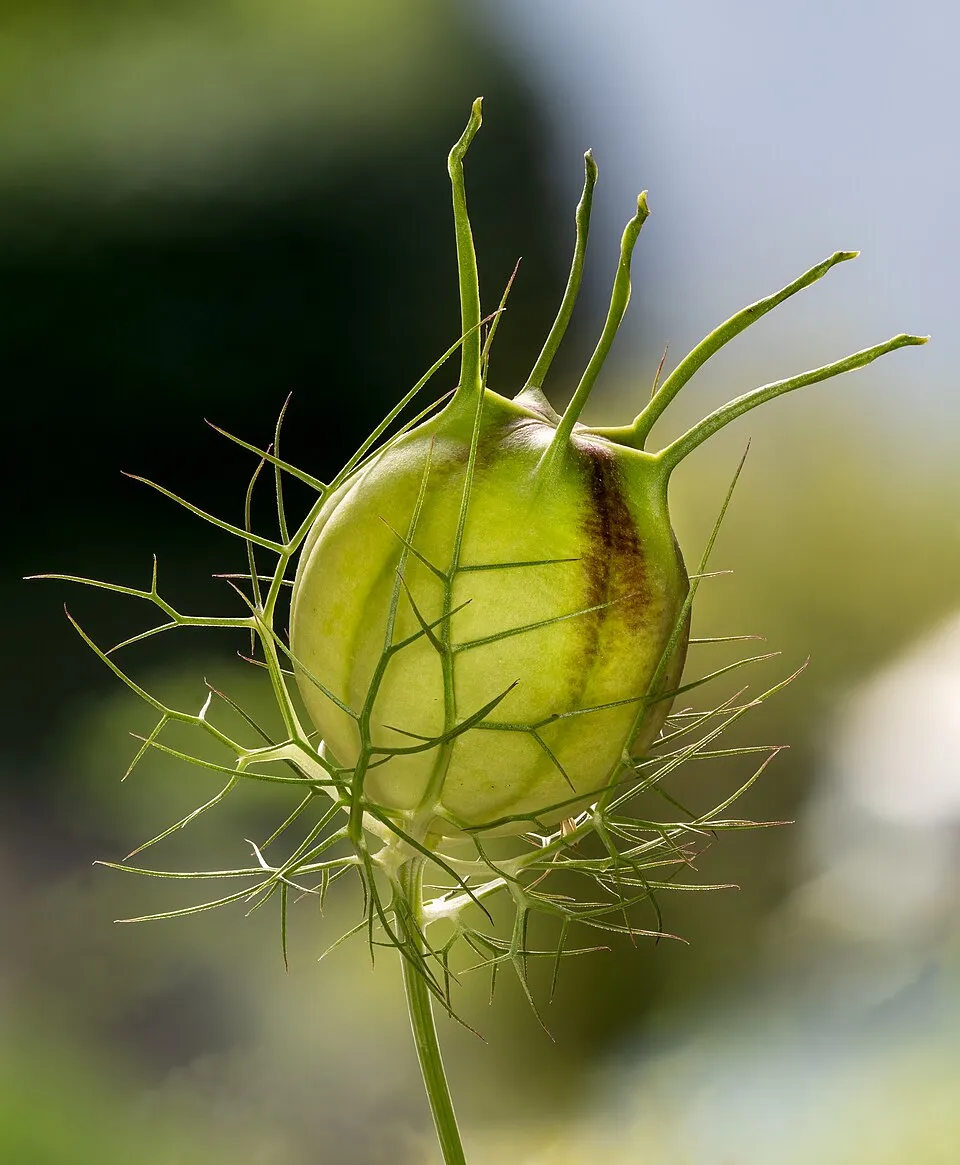
Nigella damascena, commonly known as Love-in-a-mist, is an enchanting annual flowering plant belonging to the Ranunculaceae family, which notably includes buttercups and delphiniums. Native to southern Europe, particularly the Mediterranean region, and North Africa, it has become naturalized and adventive in many temperate zones worldwide due to its popularity as an ornamental.
This delicate herb typically achieves a height of 20-50 cm (8-20 inches), characterized by its distinctively airy and intricate foliage. The leaves are finely dissected, thread-like, and ferny, creating a soft, misty green backdrop that gives the plant its whimsical common name.
The flowers of Love-in-a-mist are typically 2.5-4 cm (1-1.5 inches) in diameter, featuring five petal-like sepals that range in color from sky blue to white, pink, or purple, often with darker venation. A unique feature is the lacy 'involucre' of finely cut bracts that encircles the flower, appearing to enshroud it in a 'mist'. The plant blooms from early summer through early autumn, attracting pollinators.
Following anthesis, it develops striking, inflated, balloon-like seed pods, which are highly prized in dried floral arrangements for their ornamental value. These capsules contain numerous small, black, triangular seeds. It is crucial to differentiate these seeds from those of Nigella sativa, or Black Cumin, which is a different species within the same genus, widely recognized for its culinary and extensive medicinal applications.
While N. damascena shares its genus with N. sativa, its primary use has historically been ornamental, with more limited traditional medicinal documentation.
Trusted Scientific References
1. Authoritative external sources for Nigella damascena
1.1 Wikipedia — Nigella damascena
1.2 Kew POWO (Plants of the World Online)
1.3 PubMed — peer-reviewed research
1.4 NCBI Taxonomy Browser
1.5 GBIF — Global Biodiversity
1.6Nigella should be interpreted through verified botanical identity, practical care, and responsible safety language. This recovery note adds the missing context needed for a complete profile: match light to the plant's habit, use well-drained soil, water according to season, and avoid unsupported medicinal or edible claims. For publishing, the plant can be presented as a source-backed garden plant with clear care guidance, common problem diagnosis, and conservative safety wording.
1.1.Nigella — Key Features
- ✓ <strong>Common Name</strong> — Love-in-a-mist, reflecting its ethereal foliage.
- ✓ <strong>Botanical Family</strong> — Ranunculaceae, the buttercup family.
- ✓ <strong>Growth Habit</strong> — Annual flowering plant, typically 20-50 cm tall.
- ✓ <strong>Foliage</strong> — Finely dissected, thread-like, ferny leaves.
- ✓ <strong>Flowers</strong> — Delicate blue, white, pink, or purple blooms surrounded by a lacy involucre.
- ✓ <strong>Seed Pods</strong> — Unique, inflated, balloon-like capsules used ornamentally.
- ✓ <strong>Seeds</strong> — Small, black, triangular seeds, distinct from N. sativa.
- ✓ <strong>Traditional Uses</strong> — Folk remedies for mild digestive issues and respiratory support.
- ✓ <strong>Chemical Profile</strong> — Characterized by alkaloids like damascenine.
- ✓ <strong>Primary Use</strong> — Primarily cultivated as an ornamental garden plant.
1.2.Nigella — Quick Summary
- ✓ Ornamental annual with delicate, misty foliage and blue flowers.
- ✓ Produces distinctive inflated seed pods, popular in dried arrangements.
- ✓ Traditionally used in folk medicine for mild digestive and respiratory support.
- ✓ Contains alkaloids like damascenine, contributing to its unique profile.
- ✓ Distinct from Nigella sativa (Black Cumin) in medicinal use and chemistry.
- ✓ Exercise caution; limited scientific research supports its medicinal efficacy.
2.Nigella — Scientific Identity
3.Nigella — Quick Facts
4.Nigella — Appearance & Identification
5.Nigella — Native Habitat
6.Nigella — Water Requirements
- ✓ Seed Sowing — Sow Nigella damascena seeds directly into well-drained soil in early spring after the last frost, as they generally do not transplant well.
- ✓ Sunlight Requirements — Ensure the plant receives full sun to partial shade, with full sun promoting more abundant flowering and stronger growth.
- ✓ Soil Preference — Love-in-a-mist thrives in average, well-drained soil; it tolerates a range of soil types but prefers moderately fertile conditions.
- ✓ Watering — Water regularly to keep the soil consistently moist, especially during dry periods, but avoid overwatering to prevent root rot.
- ✓ Spacing — Space seeds or seedlings approximately 6-8 inches (15-20 cm) apart to allow for proper air circulation and growth.
- ✓ Fertilization — Fertilizing is generally not required in average soil, but a light application of balanced fertilizer can be used if soil fertility is poor.
- ✓ Pest and Disease Management — Nigella damascena is relatively pest and disease-free, though occasional issues with aphids or powdery mildew may occur, treat with organic solutions if needed.
- ✓ Harvesting — Harvest seed pods when they turn brown and dry on the plant for ornamental use, or collect seeds when fully mature for propagation or traditional applications.
Reviewed by the Flora Medical Global Botanical Review Panel
Multi-disciplinary editorial group · Botany · Ethnobotany · Herbal-medicine literature
Who reviewed this: This page was checked by the Flora Medical Global Botanical Review Panel — an in-house editorial group of botany graduates, ethnobotany researchers, and horticulture practitioners who collectively maintain our 7,000+ plant encyclopedia. Meet the team.
Our 4-step verification process
1. Taxonomic verification
Scientific names and synonyms cross-checked against Kew POWO, World Flora Online, and The Plant List.
2. Phytochemical & medicinal cross-reference
Active compounds, traditional uses, and reported activities are cross-referenced with PubMed, USDA Dr. Duke's database, and peer-reviewed ethnobotanical literature.
3. Conservation & distribution check
Distribution, ecology, and conservation status confirmed against GBIF occurrence records and the IUCN Red List.
4. Editorial & safety review
Every entry passes an editorial pass for clarity, originality, and safety notices (toxicity, contraindications, dosage caveats) before publication.
Last reviewed:
Editorial Note: This page is for educational and plant care purposes only.
Written by: Flora Medical Global Editorial Team
Reviewed by: Flora Medical Global Botanical Review Panel
Last Updated: June 16, 2026







Nigella — Comments & Community Reviews
Rate this plant