
Care Disclaimer: Plant care recommendations are general guidelines based on common growing conditions. Individual results may vary based on your local environment, climate, and care routine. If your plant is toxic, keep it away from children and pets, and consult a veterinarian if accidental ingestion occurs.
1.Nymphaea — Overview
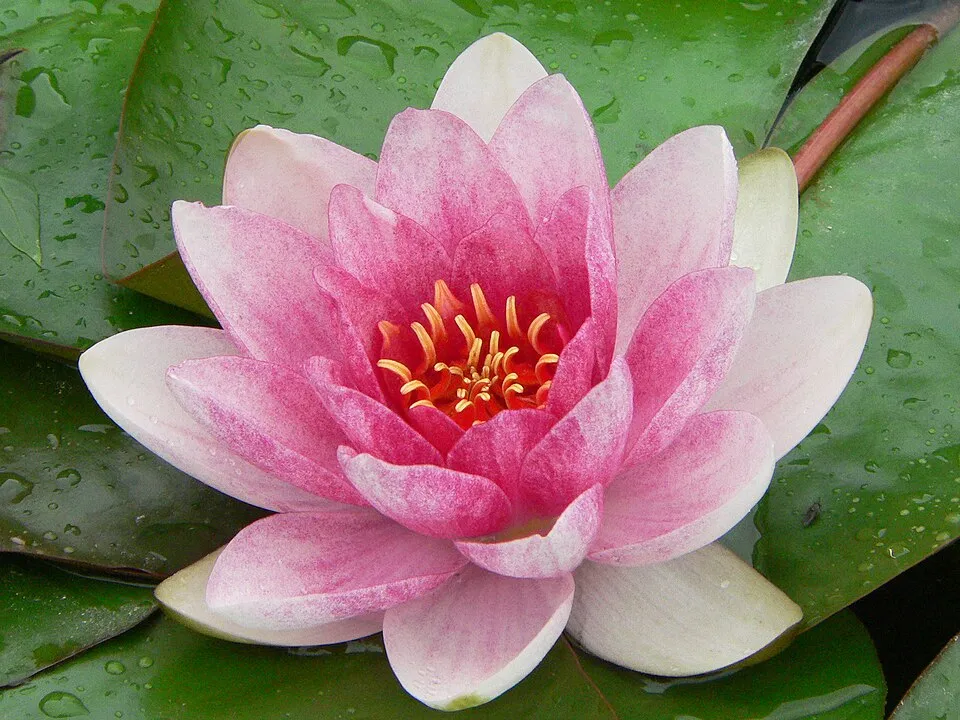
The Nymphaea Garden, a captivating hybrid within the Nymphaea genus, is widely cherished as a water lily, renowned for its striking aesthetic and historical significance in both horticulture and ethnobotanical practices. These meticulously developed hybrids boast an impressive spectrum of colors, encompassing pure whites, bright yellows, soft pinks, deep reds, and vivid blues, frequently displaying multi-toned petals and varied forms. The leaves, characteristically round or heart-shaped with a distinct notch, elegantly rest on the water's surface, creating a verdant tableau for the emerging blooms. Each exquisite flower ascends from the water on a robust stem, unfurling its intricate and often fragrant petals to reveal its full splendor.
Nymphaea hybrids are perennial aquatic plants, firmly anchored by their rhizomatous root systems in the muddy substrate of ponds, lakes, or specialized water gardens, with the rhizomes also serving as vital storage organs. The life cycle of the Nymphaea Garden is a marvel of natural engineering: it begins as a dormant rhizome, which then sends forth submersed roots and leaves. Eventually, submerged stems elongate, reaching the surface to unfurl their foliage and subsequently produce flower buds. These buds, encased by protective sepals, rise to the water's surface and open, typically in the morning, to display their vibrant glory and attract pollinators through their color and scent.
As the day progresses, the flowers may gently close, sometimes submerging, only to reopen the next day or to begin the process of developing seeds within a fleshy fruit. The resilience and longevity of Nymphaea hybrids make them a favored selection for creating serene and visually opulent aquatic landscapes, adapting well to various water depths given sufficient sunlight. Taxonomically, Nymphaea belongs to the Nymphaeaceae family, one of the most ancient lineages of flowering plants, with approximately 50 wild species predominantly found in tropical regions of the Northern Hemisphere. Historically, Nymphaea species have been cultivated since at least 2000 B.C., with modern varieties categorized into hardy hybrids, tropical day-blooming, and tropical night-blooming types.
Trusted Scientific References
1. Authoritative external sources for Nymphaea hybrid
1.1 Wikipedia — Nymphaea hybrid
1.2 Kew POWO (Plants of the World Online)
1.3 PubMed — peer-reviewed research
1.4 NCBI Taxonomy Browser
1.5 GBIF — Global Biodiversity
1.1.Nymphaea — Key Features
- ✓ <strong>Stunning Ornamental Aquatic Plant</strong> — Prized for its beauty in water gardens and ponds.
- ✓ <strong>Rhizomatous Perennial</strong> — Grows from an underground stem, returning year after year.
- ✓ <strong>Diverse Flower Colors and Shapes</strong> — Bred for a wide array of vibrant hues and petal forms.
- ✓ <strong>Floating, Notched Leaves</strong> — Distinctive round or heart-shaped foliage resting on the water surface.
- ✓ <strong>Traditional Calming Agent</strong> — Historically used for its anxiolytic and sedative effects.
- ✓ <strong>Rich in Antioxidants</strong> — Contains flavonoids and phenolics that combat oxidative stress.
- ✓ <strong>Requires Full Sun Exposure</strong> — Thrives in environments with ample direct sunlight.
- ✓ <strong>Pollinator Attractor</strong> — Its fragrant and colorful blooms draw bees and other pollinators.
- ✓ <strong>Hardy in Zones 5</strong> — 10 — Adaptable to a broad range of temperate climates for hardy varieties.
- ✓ <strong>Anchored in Substrate</strong> — Requires rooting in mud or heavy soil, not free-floating.
1.2.Nymphaea — Quick Summary
- ✓ Nymphaea Garden is an ornamental aquatic hybrid with traditional medicinal uses.
- ✓ Valued for its calming, anti-inflammatory, and astringent properties.
- ✓ Rich in bioactive compounds like flavonoids, tannins, and specific alkaloids.
- ✓ Requires full sun and proper aquatic substrate for successful cultivation.
- ✓ Should be used with caution, particularly by pregnant women, children, and those on certain medications.
- ✓ Offers potential benefits for anxiety, inflammation, and digestive health.
2.Nymphaea — Scientific Identity
3.Nymphaea — Quick Facts
4.Nymphaea — Appearance & Identification
5.Nymphaea — Native Habitat
6.Nymphaea — Water Requirements
- ✓ Full Sun Exposure — Nymphaea Garden hybrids require at least 5-6 hours of direct sunlight daily for optimal growth and prolific flowering.
- ✓ Substrate Anchoring — Plant rhizomes firmly in heavy clay soil or a specialized aquatic planting mix at the bottom of a pond or in a submerged container.
- ✓ Appropriate Water Depth — Ensure the water depth is suitable for the specific cultivar, typically ranging from 1 to 3 feet above the rhizome, allowing leaves and flowers to reach the surface.
- ✓ Regular Fertilization — Fertilize with slow-release aquatic plant fertilizer tablets pushed into the soil around the rhizome, following package directions, especially during the growing season.
- ✓ Spring Division — Divide crowded rhizomes every 2-3 years in the spring before new growth begins to maintain plant vigor and encourage blooming.
- ✓ Deadheading — Remove spent flowers and yellowing leaves regularly to encourage continuous blooming and maintain the aesthetic appeal of the water garden.
- ✓ Winter Protection — For hardy varieties, ensure rhizomes are planted deep enough to prevent freezing in winter; tropical varieties may need to be brought indoors in colder climates.
- ✓ Pest and Disease Monitoring — Regularly inspect for common issues like waterlily aphids, beetles, midges, and fungal leaf spots, treating promptly with appropriate aquatic-safe methods.
Reviewed by the Flora Medical Global Botanical Review Panel
Multi-disciplinary editorial group · Botany · Ethnobotany · Herbal-medicine literature
Who reviewed this: This page was checked by the Flora Medical Global Botanical Review Panel — an in-house editorial group of botany graduates, ethnobotany researchers, and horticulture practitioners who collectively maintain our 7,000+ plant encyclopedia. Meet the team.
Our 4-step verification process
1. Taxonomic verification
Scientific names and synonyms cross-checked against Kew POWO, World Flora Online, and The Plant List.
2. Phytochemical & medicinal cross-reference
Active compounds, traditional uses, and reported activities are cross-referenced with PubMed, USDA Dr. Duke's database, and peer-reviewed ethnobotanical literature.
3. Conservation & distribution check
Distribution, ecology, and conservation status confirmed against GBIF occurrence records and the IUCN Red List.
4. Editorial & safety review
Every entry passes an editorial pass for clarity, originality, and safety notices (toxicity, contraindications, dosage caveats) before publication.
Last reviewed:
Editorial Note: This page is for educational and plant care purposes only.
Written by: Flora Medical Global Editorial Team
Reviewed by: Flora Medical Global Botanical Review Panel
Last Updated: June 16, 2026







Nymphaea — Comments & Community Reviews
Rate this plant