
Care Disclaimer: Plant care recommendations are general guidelines based on common growing conditions. Individual results may vary based on your local environment, climate, and care routine. If your plant is toxic, keep it away from children and pets, and consult a veterinarian if accidental ingestion occurs.
1.Oenothera Fireworks — Overview
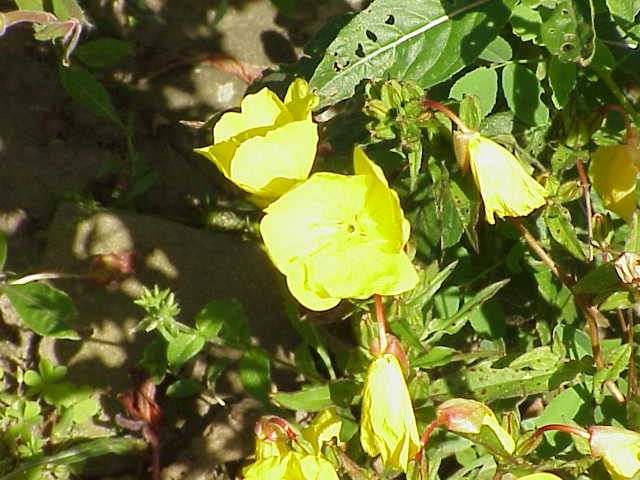
Oenothera 'Fireworks', a captivating cultivar of Oenothera fruticosa, is a vibrant perennial celebrated for its profusion of brilliant yellow-orange, cup-shaped flowers. These striking blooms emerge from distinctively reddish buds and are held atop equally red-tinged stems, creating a dazzling display reminiscent of exploding fireworks in the garden. This compact and bushy plant typically grows to about 18 to 36 inches (45-90 cm) tall, forming a neat clump that adds a burst of long-lasting color from late spring through summer, generally from April to July.
Its lance-shaped leaves, about 2-3 inches long, provide a lush green backdrop. Native to a wide range across Eastern North America, from Southern New England to New York, Tennessee, and Missouri, extending south to Florida and Oklahoma, Oenothera fruticosa thrives in diverse habitats including dry woods, roadsides, and open meadows. It is a vital component of local ecosystems, attracting a variety of pollinators such as bees, butterflies, and hummingbirds with its cheerful blossoms.
In warmer southern regions, the plant often forms an evergreen basal rosette that may take on a reddish-purple hue during colder months, adding interest even when not in bloom. Its taxonomic classification places it within the Onagraceae, commonly known as the Evening Primrose family, and it is also known by common names such as Narrowleaf Evening-primrose and Sundrops.
Trusted Scientific References
1. Authoritative external sources for Oenothera fruticosa
1.1 Wikipedia — Oenothera fruticosa
1.2 Kew POWO (Plants of the World Online)
1.3 PubMed — peer-reviewed research
1.4 NCBI Taxonomy Browser
1.5 GBIF — Global Biodiversity
1.6Oenothera Fireworks should be interpreted through verified botanical identity, practical care, and responsible safety language. This recovery note adds the missing context needed for a complete profile: match light to the plant's habit, use well-drained soil, water according to season, and avoid unsupported medicinal or edible claims. For publishing, the plant can be presented as a source-backed garden plant with clear care guidance, common problem diagnosis, and conservative safety wording.
1.1.Oenothera Fireworks — Key Features
- ✓ <strong>Scientific Name</strong> — Oenothera fruticosa (cultivar 'Fireworks').
- ✓ <strong>Family</strong> — Onagraceae (Evening Primrose family).
- ✓ <strong>Bloom Time</strong> — Late spring through summer (April-July).
- ✓ <strong>Flower Color</strong> — Brilliant yellow-orange, cup-shaped, emerging from reddish buds.
- ✓ <strong>Height</strong> — Typically 18-36 inches (0.45-0.9 meters) tall.
- ✓ <strong>Medicinal Value</strong> — Contains Gamma-Linolenic Acid (GLA) in seeds (genus-wide), along with flavonoids and tannins.
- ✓ <strong>Primary Uses</strong> — Anti-inflammatory, skin health support, hormonal balance (derived from Oenothera genus research).
- ✓ <strong>Habitat</strong> — Native to eastern North America; thrives in dry woods, roadsides, and meadows.
- ✓ <strong>Pollinator Attractor</strong> — Highly attractive to bees, butterflies, and hummingbirds.
- ✓ <strong>Cultivation</strong> — Prefers full sun and well-drained soil; drought-tolerant once established.
1.2.Oenothera Fireworks — Quick Summary
- ✓ Oenothera 'Fireworks' is a stunning cultivar of Oenothera fruticosa, celebrated for its vibrant yellow-orange blooms and reddish stems.
- ✓ While primarily ornamental, its genus Oenothera is renowned in herbal medicine, especially for the benefits of O. biennis.
- ✓ Key chemical constituents include Gamma-Linolenic Acid (GLA), flavonoids, and tannins, contributing to anti-inflammatory and antioxidant properties.
- ✓ Traditionally utilized for supporting skin health, hormonal balance, and joint comfort, primarily through Oenothera seed oil.
- ✓ Cultivation is straightforward, requiring full sun and well-drained soil, and it acts as an excellent pollinator attractor.
- ✓ Important safety considerations include potential gastrointestinal upset, interactions with blood thinners, and caution for pregnant individuals or those with seizure disorders.
2.Oenothera Fireworks — Scientific Identity
3.Oenothera Fireworks — Quick Facts
4.Oenothera Fireworks — Appearance & Identification
5.Oenothera Fireworks — Native Habitat
6.Oenothera Fireworks — Water Requirements
- ✓ Light Requirement — Oenothera 'Fireworks' thrives in full sun, needing at least 6 hours of direct sunlight daily for optimal flowering and robust growth.
- ✓ Soil Preference — Prefers well-drained soil but is highly adaptable, tolerating a range of soil types including poor, sandy, brackish, or lime soils; it dislikes heavy, wet clay.
- ✓ Planting Guidelines — Plant in spring or fall, ensuring plants are spaced 12-18 inches (30-45 cm) apart to allow for adequate air circulation and mature spread.
- ✓ Watering Regimen — Water regularly during dry spells, particularly crucial during the first growing season to establish a strong, healthy root system; it becomes drought-tolerant once established.
- ✓ Propagation Techniques — Easily propagated by seed, stem cuttings taken in spring or early summer, or by division of mature clumps during spring or fall.
- ✓ Maintenance Practices — Deadhead spent flowers to encourage continuous blooming throughout the season and to prevent excessive self-seeding, though some naturalization can be desirable.
- ✓ Hardiness Zone — Generally hardy in USDA Zones 4-8, forming a persistent basal rosette in milder climates that may exhibit reddish-purple coloration in winter.
- ✓ Pest and Disease Control — Relatively resistant to most pests and diseases; however, monitor for powdery mildew in humid conditions or root rot if planted in poorly drained soil.
Reviewed by the Flora Medical Global Botanical Review Panel
Multi-disciplinary editorial group · Botany · Ethnobotany · Herbal-medicine literature
Who reviewed this: This page was checked by the Flora Medical Global Botanical Review Panel — an in-house editorial group of botany graduates, ethnobotany researchers, and horticulture practitioners who collectively maintain our 7,000+ plant encyclopedia. Meet the team.
Our 4-step verification process
1. Taxonomic verification
Scientific names and synonyms cross-checked against Kew POWO, World Flora Online, and The Plant List.
2. Phytochemical & medicinal cross-reference
Active compounds, traditional uses, and reported activities are cross-referenced with PubMed, USDA Dr. Duke's database, and peer-reviewed ethnobotanical literature.
3. Conservation & distribution check
Distribution, ecology, and conservation status confirmed against GBIF occurrence records and the IUCN Red List.
4. Editorial & safety review
Every entry passes an editorial pass for clarity, originality, and safety notices (toxicity, contraindications, dosage caveats) before publication.
Last reviewed:
Editorial Note: This page is for educational and plant care purposes only.
Written by: Flora Medical Global Editorial Team
Reviewed by: Flora Medical Global Botanical Review Panel
Last Updated: June 16, 2026







Oenothera Fireworks — Comments & Community Reviews
Rate this plant