
Care Disclaimer: Plant care recommendations are general guidelines based on common growing conditions. Individual results may vary based on your local environment, climate, and care routine. If your plant is toxic, keep it away from children and pets, and consult a veterinarian if accidental ingestion occurs.
1.Oenothera Speciosa — Overview
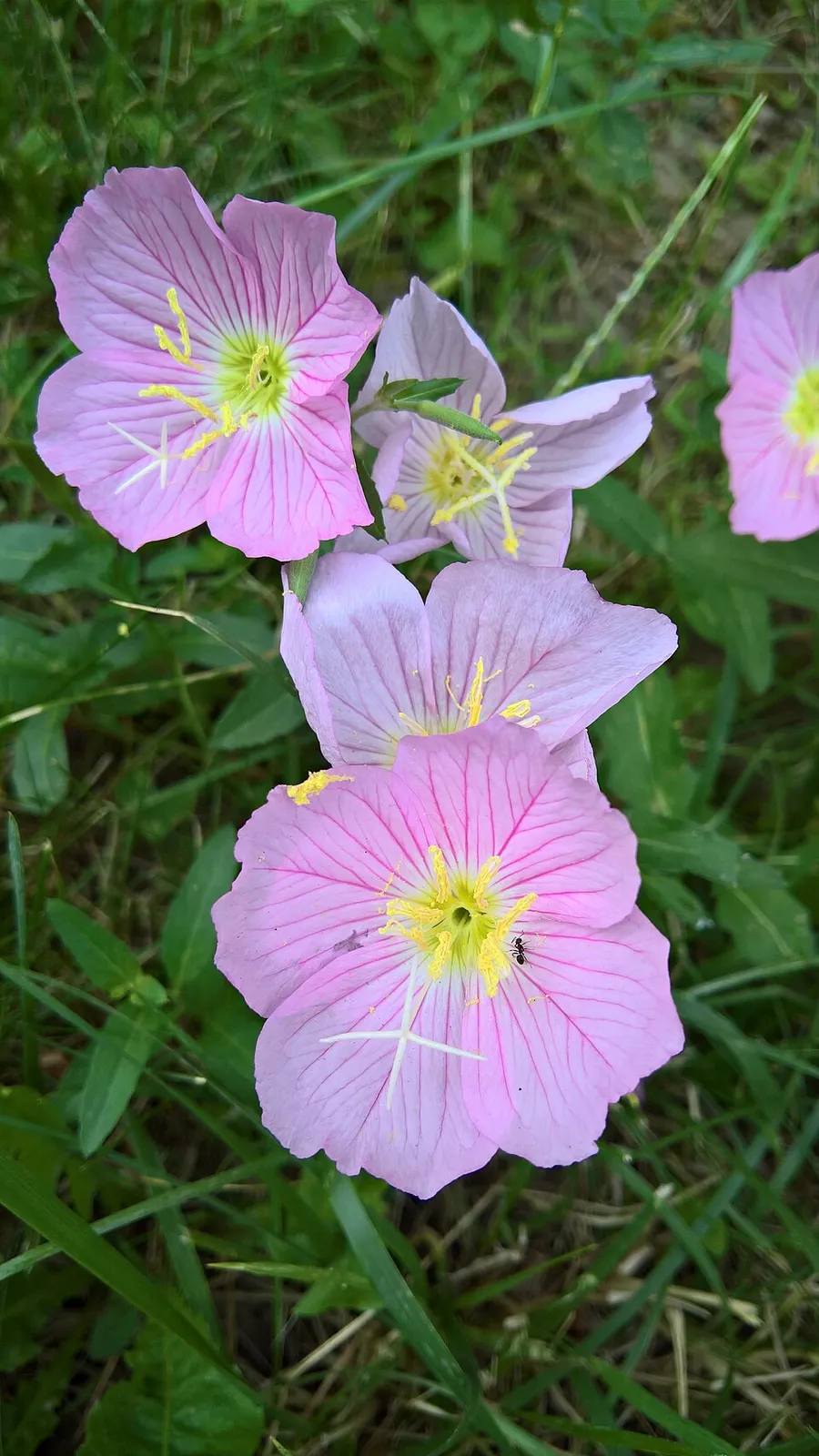
Oenothera speciosa, commonly known as Pink Evening Primrose, Showy Evening Primrose, or Pinkladies, is an enchanting and robust herbaceous perennial belonging to the Onagraceae family. Native to the southern and central United States, extending into Mexico, this species thrives across a wide range of challenging environments. Its morphology is characterized by lanceolate to oblanceolate leaves, which may be lobed or toothed, forming dense, spreading mats.
The plant typically reaches heights of 1 to 2 feet and spreads widely, making it an excellent groundcover. Its most striking feature is the delicate, cup-shaped flowers, which typically display hues from white to light pink, often accented with a yellow throat, with color intensity varying based on environmental factors like temperature and light. Uniquely, while many Oenothera species open their flowers in the evening, some populations of Oenothera speciosa, particularly in its southern range, open their blossoms in the morning, closing them by evening, adding to its whimsical charm.
This highly adaptable plant demonstrates remarkable resilience to drought and poor soil conditions, making it a favored choice for xeriscaping, rock gardens, and naturalized landscapes. Despite its delicate appearance, Oenothera speciosa is a vigorous grower and can form extensive colonies, sometimes requiring management to prevent overspreading. Its aesthetic appeal, hardiness, and role in attracting vital pollinators like bees and butterflies underscore its ecological and horticultural value.
Trusted Scientific References
1. Authoritative external sources for Oenothera speciosa
1.1 Wikipedia — Oenothera speciosa
1.2 Kew POWO (Plants of the World Online)
1.3 PubMed — peer-reviewed research
1.4 NCBI Taxonomy Browser
1.5 GBIF — Global Biodiversity
1.6Oenothera Speciosa should be interpreted through verified botanical identity, practical care, and responsible safety language. This recovery note adds the missing context needed for a complete profile: match light to the plant's habit, use well-drained soil, water according to season, and avoid unsupported medicinal or edible claims. For publishing, the plant can be presented as a source-backed garden plant with clear care guidance, common problem diagnosis, and conservative safety wording.
1.1.Oenothera Speciosa — Key Features
- ✓ <strong>Botanical Name</strong> — Oenothera speciosa, commonly known as Pink Ladies or Showy Evening Primrose.
- ✓ <strong>Family Affiliation</strong> — Belongs to the Onagraceae family (Evening Primrose family).
- ✓ <strong>Native Range</strong> — Indigenous to the southern and central United States and Mexico.
- ✓ <strong>Flower Characteristics</strong> — Produces charming, cup-shaped flowers, typically white to pink, sometimes opening in the morning.
- ✓ <strong>Growth Habit</strong> — A spreading herbaceous perennial forming dense mats, capable of aggressive colonization.
- ✓ <strong>Ecological Role</strong> — Attracts essential pollinators such as bees and butterflies, enhancing garden biodiversity.
- ✓ <strong>Hardiness</strong> — Highly drought-tolerant and adaptable to various soil conditions, including poor and rocky soils.
- ✓ <strong>Medicinal Distinction</strong> — While containing GLA, it is less studied and not commercially harvested for medicinal purposes compared to Oenenothera biennis.
- ✓ <strong>Ornamental Value</strong> — Widely cultivated for its aesthetic appeal in xeriscapes, rock gardens, and naturalized landscapes.
- ✓ <strong>Resilient Nature</strong> — Known for its robustness and ability to thrive in challenging environments.
1.2.Oenothera Speciosa — Quick Summary
- ✓ Showy Evening Primrose is a hardy, ornamental perennial native to the central and southern US.
- ✓ Valued for its delicate pink-to-white flowers and vigorous groundcover habit, attracting pollinators.
- ✓ Contains Gamma-linolenic Acid (GLA) in its seeds, similar to Oenothera biennis.
- ✓ Not typically harvested or marketed for medicinal properties; less studied than other Evening Primrose species.
- ✓ Potential health benefits are largely extrapolated from GLA research on O. biennis, including anti-inflammatory and skin support.
- ✓ Primarily used in landscaping for its beauty, adaptability, and ecological benefits.
2.Oenothera Speciosa — Scientific Identity
3.Oenothera Speciosa — Quick Facts
4.Oenothera Speciosa — Appearance & Identification
5.Oenothera Speciosa — Native Habitat
6.Oenothera Speciosa — Water Requirements
- ✓ Sunlight — Prefers full sun to partial shade; ample sunlight encourages more profuse blooming.
- ✓ Soil Type — Highly adaptable to various soil types, thriving in well-drained, sandy, or even poor, rocky soils; avoid heavy, waterlogged conditions.
- ✓ Watering — Drought-tolerant once established, requiring minimal supplemental irrigation; overwatering can lead to root rot.
- ✓ Propagation — Primarily propagates from seeds, which can be sown directly in fall or spring, or through division of established clumps in early spring or fall.
- ✓ Spacing — Plant individuals 12-24 inches apart, as the plant spreads vigorously via rhizomes to form colonies.
- ✓ Pruning — Deadhead spent flowers to encourage continuous blooming and prevent excessive self-seeding; cut back foliage in late fall or early spring for tidiness.
- ✓ Pest and Disease Resistance — Generally robust and resistant to most common pests and diseases, making it a low-maintenance garden choice.
- ✓ Management of Spread — Due to its aggressive spreading habit in ideal conditions, consider planting in areas where spread is acceptable or use root barriers to contain its growth.
Reviewed by the Flora Medical Global Botanical Review Panel
Multi-disciplinary editorial group · Botany · Ethnobotany · Herbal-medicine literature
Who reviewed this: This page was checked by the Flora Medical Global Botanical Review Panel — an in-house editorial group of botany graduates, ethnobotany researchers, and horticulture practitioners who collectively maintain our 7,000+ plant encyclopedia. Meet the team.
Our 4-step verification process
1. Taxonomic verification
Scientific names and synonyms cross-checked against Kew POWO, World Flora Online, and The Plant List.
2. Phytochemical & medicinal cross-reference
Active compounds, traditional uses, and reported activities are cross-referenced with PubMed, USDA Dr. Duke's database, and peer-reviewed ethnobotanical literature.
3. Conservation & distribution check
Distribution, ecology, and conservation status confirmed against GBIF occurrence records and the IUCN Red List.
4. Editorial & safety review
Every entry passes an editorial pass for clarity, originality, and safety notices (toxicity, contraindications, dosage caveats) before publication.
Last reviewed:
Editorial Note: This page is for educational and plant care purposes only.
Written by: Flora Medical Global Editorial Team
Reviewed by: Flora Medical Global Botanical Review Panel
Last Updated: June 16, 2026







Oenothera Speciosa — Comments & Community Reviews
Rate this plant