

Care Disclaimer: Plant care recommendations are general guidelines based on common growing conditions. Individual results may vary based on your local environment, climate, and care routine. If your plant is toxic, keep it away from children and pets, and consult a veterinarian if accidental ingestion occurs.
1.Okra — Overview
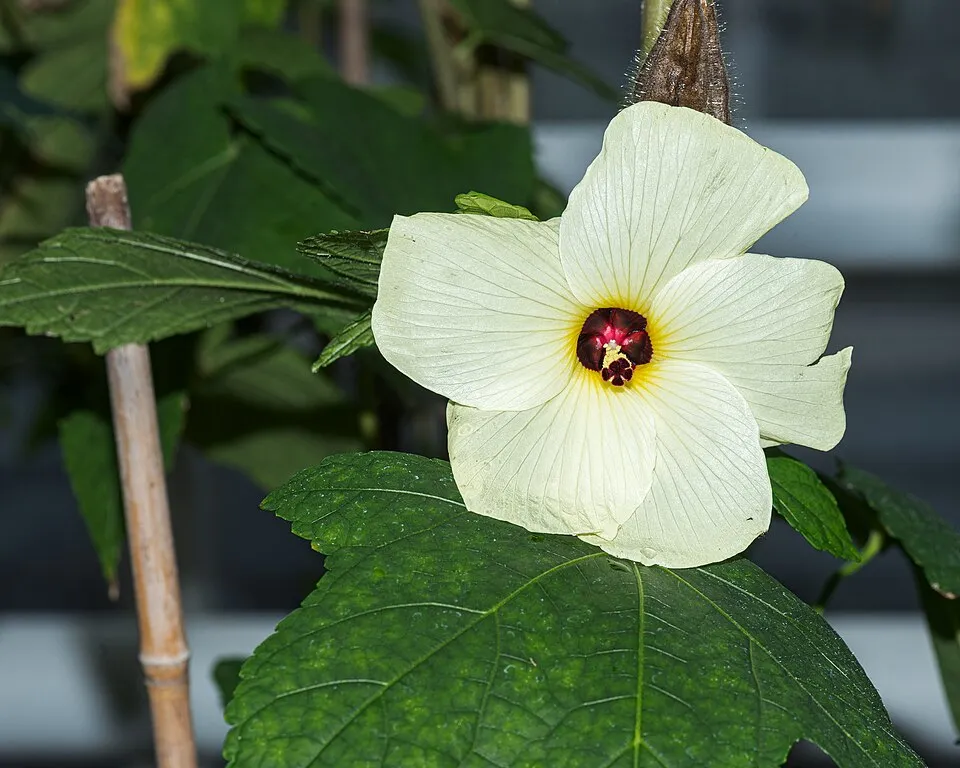
Okra, scientifically known as Abelmoschus esculentus, is a fascinating warm-season annual belonging to the Malvaceae family, commonly recognized as the mallow family. This robust flowering plant is highly valued for its distinctive green, ridged seed pods, often affectionately termed 'lady's fingers' due to their slender, elongated shape. Native to tropical and subtropical regions of Africa and Asia, okra has been cultivated for centuries and is now a culinary staple across diverse cultures, including the Southern United States, the Caribbean, and India.
The plant itself typically grows 3 to 4 feet tall, featuring broad, palmate leaves and showy, hibiscus-like yellow flowers with a deep purple center, which are also edible. The most prominent characteristic of okra pods is their mucilaginous texture when cut or cooked, a property derived from complex polysaccharides. While this 'slime' can be polarizing, it is highly prized in many cuisines for its ability to thicken stews, gumbos, and soups, contributing a unique mouthfeel and richness.
Beyond its culinary versatility, Abelmoschus esculentus is celebrated for its significant nutritional profile, being a powerhouse of vitamins, minerals, and dietary fiber, solidifying its role as a healthy and enriching vegetable in global diets and traditional medicine systems.
Trusted Scientific References
1. Authoritative external sources for Abelmoschus esculentus
1.1 Wikipedia — Abelmoschus esculentus
1.2 Kew POWO (Plants of the World Online)
1.3 PubMed — peer-reviewed research
1.4 NCBI Taxonomy Browser
1.5 GBIF — Global Biodiversity
1.6Okra should be interpreted through verified botanical identity, practical care, and responsible safety language. This recovery note adds the missing context needed for a complete profile: match light to the plant's habit, use well-drained soil, water according to season, and avoid unsupported medicinal or edible claims. For publishing, the plant can be presented as a source-backed garden plant with clear care guidance, common problem diagnosis, and conservative safety wording.
1.1.Okra — Key Features
- ✓ <strong>Edible Seed Pods</strong> — The primary culinary and medicinal part, known for its unique texture.
- ✓ <strong>Mucilaginous Content</strong> — High in soluble fiber and mucilage, providing thickening properties and digestive benefits.
- ✓ <strong>Rich in Nutrients</strong> — Excellent source of vitamins C, K, A, folate, and essential minerals like magnesium and potassium.
- ✓ <strong>Potent Antioxidant</strong> — Contains flavonoids, polyphenols, and vitamin C that combat oxidative stress.
- ✓ <strong>Digestive Aid</strong> — Promotes gut health, regularity, and soothes digestive tracts.
- ✓ <strong>Blood Sugar Regulator</strong> — Helps stabilize glucose levels due to high fiber content.
- ✓ <strong>Anti</strong> — inflammatory Properties — Contributes to reducing inflammation throughout the body.
- ✓ <strong>Warm</strong> — Season Annual — Thrives in tropical and subtropical climates, requiring ample sun.
- ✓ <strong>Versatile Culinary Use</strong> — Employed in stews, gumbos, fried, roasted, and pickled dishes worldwide.
- ✓ <strong>Low Calorie, High Fiber</strong> — Ideal for weight management and a healthy diet.
1.2.Okra — Quick Summary
- ✓ Okra (Abelmoschus esculentus) is a nutrient-rich vegetable from the mallow family, known for its edible pods.
- ✓ It's a powerhouse of fiber, vitamins (C, K, A, folate), minerals, and antioxidants.
- ✓ Traditionally used for digestive health, blood sugar regulation, and anti-inflammatory support.
- ✓ The mucilaginous texture is key to its culinary and medicinal properties.
- ✓ Cultivated globally, it's a warm-season crop requiring full sun and consistent moisture.
- ✓ Generally safe, but moderation is advised for those with kidney stone risk or on certain medications.
2.Okra — Scientific Identity
3.Okra — Quick Facts
4.Okra — Appearance & Identification
5.Okra — Native Habitat
6.Okra — Water Requirements
- ✓ Climate and Soil — Okra thrives in warm-season conditions, requiring full sun exposure and well-drained soil rich in organic matter. Temperatures consistently above 55°F (13°C) are ideal.
- ✓ Planting — Seeds can be directly sown outdoors after the last frost, or started indoors for an earlier harvest. Plant seeds about 1 inch deep and 3-6 inches apart in rows, with rows 3 feet apart.
- ✓ Watering — Requires consistent moisture, especially during flowering and pod development. Aim for about 1 inch of water per week, either from rain or irrigation.
- ✓ Fertilization — Benefits from regular feeding with a balanced fertilizer or compost, particularly as flowers and pods begin to form, to support robust growth and yield.
- ✓ Pest and Disease Management — Common issues include aphids, corn earworms, spider mites, and whiteflies. Powdery mildew and root rot (in poorly drained soil) can also occur. Deer may browse leaves but typically avoid pods.
- ✓ Harvesting — Pods are ready for harvest approximately 4 months after sowing, when they are young and tender, usually 2-4 inches long. Harvest frequently (every 1-2 days) to encourage continuous production.
- ✓ Handling — The fine hairs on okra pods can cause skin irritation for some individuals; wearing gloves during harvest is recommended. These hairs wash off easily before consumption.
Reviewed by the Flora Medical Global Botanical Review Panel
Multi-disciplinary editorial group · Botany · Ethnobotany · Herbal-medicine literature
Who reviewed this: This page was checked by the Flora Medical Global Botanical Review Panel — an in-house editorial group of botany graduates, ethnobotany researchers, and horticulture practitioners who collectively maintain our 7,000+ plant encyclopedia. Meet the team.
Our 4-step verification process
1. Taxonomic verification
Scientific names and synonyms cross-checked against Kew POWO, World Flora Online, and The Plant List.
2. Phytochemical & medicinal cross-reference
Active compounds, traditional uses, and reported activities are cross-referenced with PubMed, USDA Dr. Duke's database, and peer-reviewed ethnobotanical literature.
3. Conservation & distribution check
Distribution, ecology, and conservation status confirmed against GBIF occurrence records and the IUCN Red List.
4. Editorial & safety review
Every entry passes an editorial pass for clarity, originality, and safety notices (toxicity, contraindications, dosage caveats) before publication.
Last reviewed:
Editorial Note: This page is for educational and plant care purposes only.
Written by: Flora Medical Global Editorial Team
Reviewed by: Flora Medical Global Botanical Review Panel
Last Updated: June 16, 2026







Okra — Comments & Community Reviews
Rate this plant